The “Top Forty” Sex List: Why Every Sexual Encounter is Not the Same

Sex means lots of things to lots of people; and lots of different things to the same person at different times. As Hamlet said, “There are more things in heaven and earth, Horatio, than are dreamt of in your philosophy.”

A short list, then, of some of the kinds of sex that we humans have invented, along with a few reasons or motives. With apologies to Elizabeth Barrett Browning, “How do I love thee? Let me count the ways…”

1. Make-up Sex. Here we have nothing more or less than sex after a fight or some injury done by one partner to the other. It is usually very satisfying.
2. Charity or Sympathy Sex. One partner feels sorry for the other and tries to make their love feel better, using sex as the vehicle. In some quarters the recipient of “charity sex” has to give a receipt for tax purposes to the person who made the donation. A few women have told me that their relationship with their future husband began because they felt sorry for him.
3. Nonstop Sex. This is the domain of the hyper-aroused and the very young. If you are older, you might want to be careful, unless you have Viagra and an oxygen tank handy, not to mention paddle electrodes to jolt your overtaxed heart.
4. Celebration Sex. This usually follows an award, a victory, a promotion, a raise, or a graduation, and finds everyone feeling pretty wonderful.
5. Anniversary/Birthday Sex. Not typically quite so wonderful as #4, but it can be very good depending on how the pair feel about the event. Alternatively, one member of the couple might simply be performing as a duty for the occasion.
6. Making Babies Sex. This carnal contact is done by the calendar for a purpose other than lust. It can easily lose the magic of other kinds of less purposeful and more spontaneous intimacy, but at least the Pope and Rick Santorum would approve.
7. Obligatory Sex (aka “Let’s Get It Over With” Sex). One of the two participants is doing this out of a sense of duty to the other or simply to stop being pestered over it. It is not usually the romantic experience of their dreams for either party.
8. Desperation Sex. If one of the companions is afraid the other might end the relationship, she may use sex to try to remind her lover of the excitement she can generate.
9. Insecurity Sex. The type of intimacy that falls under this heading is related to #8, but not identical to it. In this instance the insecure person wants sex as a form of reassurance that she is still loved and needed.
10. “I Love You” Sex. What is described here is just about the best: when the lovers are both in love and in heat; affection and physical attraction are at their peak.
11. Practice Sex. In this example it is usually (but not always) a young male who is trying to get as far as he can with his date and “go boldly where no man has gone before;” or, at least, this particular callow youth wants to lose his virginity, and needs some experience with the purely mechanical aspects of the act. Sorry for the Star Trek quote.

File:Pavel Filonov ManWoman.jpg

12. “Better Late Than Never” Sex. It is 3 AM and you are exhausted from a week of hard work and from partying earlier in the evening. Still…
13. “Everyone Else is Doing It, So I’d Better, Too” Sex. A young female (less often a teenaged boy) feels like everyone else is getting in on the act and that she is therefore missing something. The next available male is targeted.
14. Pressured Sex. Some men stop when a woman says “no,” some don’t. Not everyone is good at saying “no,” whether in a sexual situation or in the fully clothed world of business and social life. Some women are afraid that they will lose the male if they don’t perform. Some males are bullies and a few are rapists. Nothing about these scenarios is good.
15. Enticement Sex. Here we have an attempt by one partner to “capture” the other early in the relationship by giving him the sexual time of his life.
16. Intoxicated Sex. Too much alcohol or too high on drugs, disinhibited people often do things that they wouldn’t do sober, sometimes not even remembering why, how, or with whom. Beware.
17. Self-Conscious Sex. “Turn off the lights, I don’t want you to see me undress; don’t look at me until we are in bed.” Shame and a negative body image come alive in this moment.
18. Anxious Sex. This heading covers a lot of ground, from those who are inexperienced, to those who fear a performance failure, to those who worry that they will be badly evaluated by their partner.
19. Hostile Sex. One person does this to the other, attempting to express anger and cause pain; physical, psychological, or both. The goal is to demean and/or control the other, not to express love. Don’t be on either end of this.
20. Performance Sex. Basically, this category includes strip tease. The one “on stage” is motivated by a desire to please or to be admired, or both.
21. Selfish Sex (aka Fast Sex). This type of physical contact is a cousin to Obligatory Sex. However, in this example, it is usually the man who satisfies himself quickly, not out of duty, but simply because his needs are all that matter to him.
22. Slow Sex. The intent here is to savor every moment and allow for a build up of tension in order to achieve a more satisfying release.
23. “The Kids (Parents, Neighbors) Might Hear Us” Sex. The partners are very cautious and can’t be as spontaneous as they would like, for obvious reasons.

http://upload.wikimedia.org/wikipedia/commons/thumb/a/a9/Malakas_and_Maganda_Colored.jpg/256px-Malakas_and_Maganda_Colored.jpg

24. Role Playing Sex. Remember playing “Doctor” as a kid? Adults, too, can make just about anything into a game. The role play might involve dressing up, but certainly entails some portion of pretending to different identities.
25. “Make Believe” Sex. Item #25 is not quite the same as #24. Rather, at least one partner (usually secretly) is imagining that you are someone else. S/he might be thinking you are his ex, a porn star, an unrequited love, Gisele Bündchen, Brad Pitt, or anyone of his choosing.
26. “I Need to Be Held” Sex. One member of the couple wants to be held — needs the physical contact. For her or him, the sex that develops is more about closeness than mating. Indeed, there is some emerging research suggesting that the experience of physical pain is reduced if your hand is held by a loved one.
27. Risky or Dangerous Sex. Are you in the “Mile High” Club? Meaning, have you had sex in a commercial airplane washroom? The partners who go for this sort of thing enjoy the idea that sex in places where they might be seen or discovered adds an element of excitement. There are also those who use physical dangers/pain to enliven the experience, or to play out sadistic or masochistic urges.
28. Reunion Sex. If you and your love have been separated for a long time you probably feel about ready to burst when the reunion happens. It can be very pleasurable. Fulfillment of an aching longing usually is.
29. Professional Sex. This simply amounts to a visit with a prostitute or call girl/guy.
30. Seduction Sex. What we have here is not the enticement of #15, but rather some combination of playfulness, animal instinct, desire, a wish to please, and the satisfaction of successfully turning someone in your direction and getting him to follow your agenda.
31. Conquest Sex. When sex is about “scoring,” it is more like a game of football than love. “Frat” boys are especially prone to trying to “prove” themselves by seeing whether one particular woman or many young women can be added to their “count” of sexual conquests. Women aren’t entirely immune to this either, unfortunately. Keeping score changes everything and the object of your intention is, indeed, objectified and dehumanized.
32. Revenge Sex. Do you want to get back at some one who has done you harm? Stealing her lover usually does the trick, but at great cost to your own morality.
33. Novelty Sex. Bored? Working your way through the Kama Sutra or some other manual of sexual invention might be just the thing for those nights when the TV offers “nothing good on.” Just be sure you keep your chiropractor’s phone number on speed dial.
34. Recreational Sex. Nothing is to be found here but physical attraction and a way to pass the time. No harm done, unless one considers hurt feelings, STDs, pregnancy — you name it.
35. “Sexting” or Phone Sex or Cybersex. These behaviors are examples of human ingenuity that Ben Franklin probably didn’t have in mind when he experimented with electricity. His work did, however, add to the lexicon of dating expressions; as when a woman tells a man to “go fly a kite.”
36. Extramarital Sex aka “Cheating.” I’d include in this category any sex that happens outside of a committed relationship that is not freely sanctioned by both partners.
37. “Everything But…” Sex. Folks of certain moral (usually religious) persuasions come to define sexual activity as acceptable so long as it does not go beyond specified boundaries. The limits can be narrowly defined so that very little physical contact is permitted or allow every kind of physical contact known to man with the exception of intercourse. In the latter event, the danger is that one can maintain the letter of the religious law, but violate its spirit.
38. Good-bye Sex. One of the lovers knows it is the last time. Sometimes s/he communicates this before the act, sometimes not. In any case, the act is changed by the knowledge held by one or both people.
39. “Friends With Benefits” Sex. I’ve written about this here: Looking for Trouble? Why Being “Friends with Benefits” Might Not be to Your Benefit. Best to think carefully before you risk losing a friend.
40. Everyday Sex. This is the typically unremarkable, but satisfying garden-variety physical encounter of a loving couple; but probably not done in the garden.
File:Homosapiens09-ademc.jpg

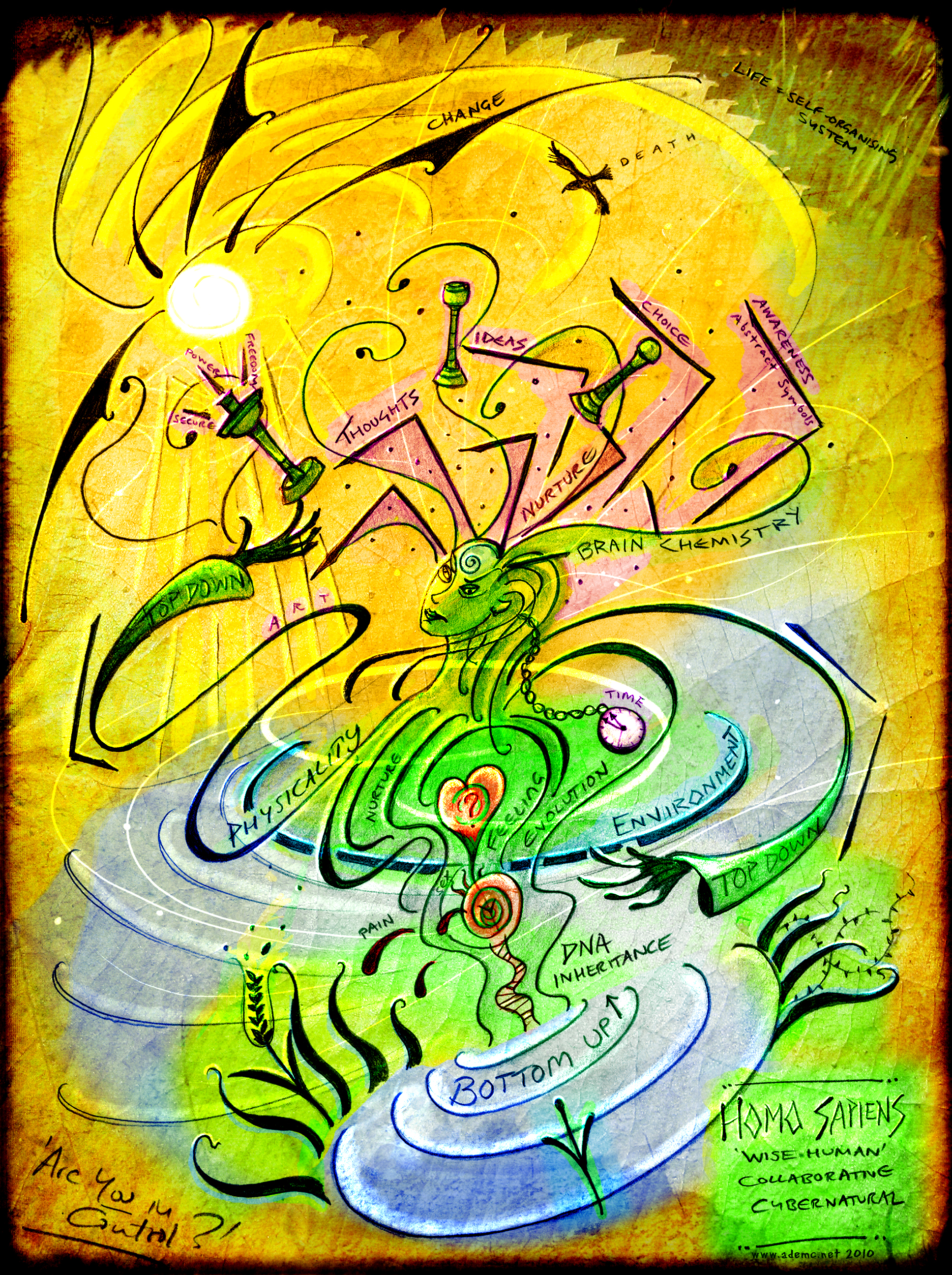
The top photograph by Zambonia is of Fernand Léger’s 1921 painting Man and Woman. The second image is called A Man and a Woman (Adam and Eve) by Pavel Filonov. Next is Malakas and Maganda by Dragonbite. The pictured couple are considered to be the first man and woman according to Philippine folklore. Finally, an art work called Homosapiens09by Ade mc Ade McO-Campbell. It is described as a “simplistic representation of differing forces or elements within a man or woman.” All are sourced from Wikimedia Commons.

Be Careful Who You Mess With

http://upload.wikimedia.org/wikipedia/commons/thumb/e/ec/Bunker_Berlin_Masturbation_Machine.JPG/256px-Bunker_Berlin_Masturbation_Machine.JPG

Stewart had a way with words. You had to if your name was Stewart Slonimsky and you were the nerdiest kid in your class. He was a little bit of a lot of things you didn’t want to be: a little bit awkward, a little bit overweight, a little bit short, a little bit shy, and a little bit funny-looking because of his coke-bottle-thick horn-rimmed glasses.

Kids made fun of his name early and late. Even in the first few grades, the boys would mock him as he walked by. Small groups made a sibilant “ssssssssss” sound under their breath, imitating the S.S. initials that Stewart’s parents, Steve and Sonia Slonimsky, stuck him with. It was just loud enough for Stu to hear it, but not loud enough for teachers and other adults to catch on. Then, when TV taught everyone the meaning of “SS,” Hitler’s Schutzstaffel corp of war criminals, Stewart would get lots of “Heil Hitler!” shouts on the playground, as the bullies shot their right arms out at him in the Nazi salute.

Stewart’s superior brain saved him. He learned to disarm his oppressors with a few words as time passed. When Dominic Dallessandro, all brawn and no brains, gave Stewart a hard time, Stewart nicknamed him “Dim Dom” and threatened something worse, ending Dom’s taunts. When Frank “Julie” Julianovich did the Hitler SS thing, Stu called him “Family Jewels” and alluded to inadequacies of his sexual equipment that got big laughs even from “Julie’s” buddies. Yes, Stewart had perfected the art of flaying his opponents with his tongue, inflicting injuries greater than any physical harm they might threaten him. By the second year in high school, no one messed with Stu anymore.

Ironically enough, Stu was passably likable if you were on his good side and willing to help if your homework was too challenging. But the praise from teachers and the admiration of his intellect from his peers went to his head. By the last two years of high school, Stewart could be fairly described as full of himself. His opinions sounded like proclamations from on high. Fools were not suffered gladly. If you didn’t have as much brain power as he did, Stu could be disdainful and dismissive, rarely willing to give you the time of day; the kind of kid who, just with a look, communicated “I can do something really hard and you can’t.”

My friend’s parents kept his ego pretty well pumped up. Both were graduates of the University of Chicago, an elite school known to attract people who were both super-bright and rather odd. Humility didn’t come quickly to them; they believed Stewart was just as unique as they were. Moreover, mom and dad Slonimsky talked publicly about unconventional ideas that, for the 1960s, were pretty shocking. One dinner at their home featured a discussion of nudist colonies and “free love.” Mr. Slonimsky even asked me what I thought about the latter. The only thing the 16-year-old virgin version of myself could say was, “You mean it usually costs something?”

As I said, most instructors were enamored of Stu. He made their classes exciting, and if the teachers were smart enough, they enjoyed the intellectual repartee he triggered—the back-and-forth jousting between people who see things from different and novel angles. All this encouraged his willingness to offer ideas no one else dared to utter.

An English class essay topic gave Stewart’s imagination free rein. We were required to write about anything that “would make the world a better place to live.” It was the kind of question that one heard asked to finalists in the Miss America Pageant. The teacher was Miss Elvira Thompson, a throwback to the nineteenth century who had given up even the pretense of teaching creatively some years before. She was hardened, straight-laced, priggish, and close to retirement, and she hated her job. She looked a little bit like this:

http://upload.wikimedia.org/wikipedia/commons/thumb/6/6b/Old_woman_BM_GR1852.3-27.9.jpg/256px-Old_woman_BM_GR1852.3-27.9.jpg

Predictably, in 1963, most kids wrote about nuclear disarmament, better race relations, a cure for cancer, and the like. But not Stewart. We knew something had happened when Miss Thompson made an announcement just a few minutes before the end of our next class, as a prelude to handing back the papers.

“Class, usually I don’t like to single out one student for a special comment, but this is an exception. One of you has written an essay so different and unorthodox that everyone in the class should know of it as an example for you not to follow. It is possibly the worst paper of its kind I’ve had the displeasure to read in 40 years of teaching.”

Thompson took a deep breath and paused, her face contorting as she searched for adjectives disgusting enough to describe her visceral reaction to the essay. Words failed her. She passed the papers back to us and said, “Mr. Slonimsky, see me after class. The rest of you are dismissed.”

I waited outside the room for Thompson to finish with him. We walked to lunch together, though Stewart looked like he’d already eaten something really unappetizing. His expression was blank, and his skin, never full of color, was more pasty than usual.

“What happened?”

“She said that she thinks I’m sick, crazy, and disturbed; actually, the sickest, craziest, and most disturbed student she has ever had. She said it’s the most offensive paper she’s ever read. She wants me to go to a shrink.”

“What could you have written to get her so upset?”

Slonimsky looked straight ahead and jammed his left fist toward me. I extricated the crumpled paper from his hand. At the top of it, in red pencil, was the grade: F-. I started to read it as we sat down to lunch.

SOMETHING TO MAKE THE WORLD A BETTER PLACE TO LIVE

by

Stewart Slonimsky

I believe the world would be a much superior place in which to live if every school, office building, home, park, and recreation area were equipped with a masturbation machine. The device would resemble a Coca-Cola dispenser from the outside. It would be self-cleaning and self-sterilizing. Once you have inserted the price of $1.00 in coins into the machine (depending on your sex, height, weight, and age), you would then insert…

Stewart interrupted me and began to sputter.

“See! She didn’t like it. She didn’t even get to the part about it relieving frustration; lowering the rate of mental illness, venereal disease, and divorce; minimizing violence; and cutting down on out-of-wedlock births and abortions. She ignored the fact that it would make the world a happier place! What’s with her, anyway? She probably thinks masturbation is a sin, makes you go blind, and crap like that. Look at this: all these big red ‘Xs’ after the word ‘insert.’ A lot of nerve she’s got!”

I could not argue with Stewart. No one could ever successfully argue with Stewart. Doubtless, there was something worthwhile about the idea. But expecting Miss Thompson to appreciate it, a woman who probably hadn’t permitted herself a sexual impulse since before the Great Depression, represented a big misjudgment. That was Stewart. He thought his ideas were self-evidently brilliant and everyone should accept them without hesitation.

Stewart’s parents supported him, of course. They even complained about the teacher to the principal. But those days were before parents felt empowered to make demands and engage legal counsel. Miss Thompson was on her way to retirement by the end of the year anyway. Elvira Thompson survived, and so did Stewart, who was already seen as peculiar if brilliant by his classmates. He wasn’t required to go to a psychiatrist in the end. But every so often Stewart would comment at lunch about “that bitch Elvira Thomson.” He didn’t forget, and he didn’t forgive.

I lost track of Stewart after graduation. We went to different colleges about a thousand miles apart. He proved to be an engineering and technology guy. I was more into psychology and history.

If you do some research, you will discover that Stewart was ahead of his time when he wrote his essay. A number of manufacturers still make masturbation machines today. They started about 20 years after Stewart first had the idea, with crudely assembled rubber hoses and vacuums converted from floor-model home vacuum cleaners.

In thinking back to that time, I searched Stewart on the internet. It turns out the Stu had the last laugh. He became an inventor and made a fortune. As you’ve probably guessed, one of his products is indeed a masturbation machine, although much smaller, portable, and less public than the “coke machine” version he first wrote about. It looks pretty sleek. On the side of it there is the picture of a sexy and alluring woman, the sort of female, I suppose, that a man might fantasize about “in the act” of using the device.

Oh, yes, I almost forgot that the machine has a name. It is called the “Elvira T. Dominatrix Masturbation Dream Maker: Pleasure Dome Model.”

In case you are wondering, there is no “Stewart Slonimsky.” What you’ve just read is a work of fiction. The top image is Berlin Masturbation Machine art exhibit, 3/27/11 by user:Ctac. It is followed by Head of an Old Woman, probably a nurse, ca. the third or second century B.C; artist unknown, photographed by Jastrow. Both are sourced from Wikimedia Commons.

The Emotional Cost of Sex: Why Some People Don’t Bother

http://upload.wikimedia.org/wikipedia/commons/thumb/4/44/Sexy_secretary_e.jpg/256px-Sexy_secretary_e.jpg

In Philip Roth’s The Human Stain, the narrator describes how his changed attitude toward sex drove him to move from the city to the seclusion of the countryside:

My point is that by moving here I had altered deliberately my relationship to the sexual caterwaul, and not because the exhortations or, for that matter, my erections had been effectively weakened by time, but because I couldn’t meet the costs of its clamoring anymore, could no longer marshal the wit, the strength, the patience, the illusion, the irony, the ardor, the egoism, the resilience — or the toughness, or the shrewdness, or the falseness, the dissembling, the dual being, the erotic professionalism — to deal with its array of misleading and contradictory meanings.

The complaint is not unknown. Indeed, some men profess that they prefer sex with prostitutes because it takes care of the problems that drive Roth’s narrator to isolate himself from sexual encounters altogether. For those men, the exchange of dollars and cents does away with the “misleading and contradictory meanings” and the emotional and behavioral role-playing that they find so bothersome.

We do a lot for sex; or, at least for the connectedness and commitment that we hope comes with it. Would the amount spent on cosmetics, hair supplies, skin creams, Viagra, sex toys, personal trainers, gym classes, face lifts, breast implants, hair plugs, bar bells, watches, clothing, cars and jewelry amount to nearly so much without the hope of a sexual or romantic payoff?

How much time is spent choosing those items and activities? How much time in using them? How much time in wondering whether they have done the job intended? How much time watching to see if anyone notices the difference?

Thumbnail for version as of 11:13, 15 December 2006

Sex is in the air in perfume and pheromones and aftershave. It is on the air of radio broadcasts and TV programming. It sells cars, shoes, and itself. But don’t, please don’t point out the obvious. In that event you would be considered crude. By comparison there is some honesty in the professional transaction of money for sex; one could argue, more than is inherent in the pursuit of a trophy spouse or the prospective mate’s willingness to become a sexual hood ornament.

But Roth’s point is more subtle than any of these things. He is referring to learning the steps of the mating dance and performing them to perfection, even when you don’t like the music. Part of it is the sheer effort involved, the fashioning of disguises, worry that you are boring, the time to make yourself look good, the forced concentration on the other person when you are stifling a yawn, the calculations designed to impress, the compromises, the things said to promote yourself, and those unsaid to hide that which is unbecoming.

Then there are the questions of strategies and tactics, the intracranial meeting of your own personal staff of generals to call the shots as if you were embarked on a military campaign: when to phone or text, when to touch, when to flatter or smile or laugh, when to be unpredictable and what you can predict about the target’s vulnerabilities and impregnabilities.

If one’s heart is aflutter, there will inevitably be some attempt to comprehend what is going on despite your flustered, pulsating state of body and mind. Your conception of the union’s status may not coincide with what the other thinks or hopes, but it consumes much time and psychic energy so long as the interaction matters to you, regardless of the accuracy of your assessment.

Curiously, Roth’s character does not mention the frank danger of sex. The dreaded way it can injure, the extraordinary vulnerability that can come with it — the nakedness in every sense, involving every sense.

He seems more concerned with the way that it captures you, throws you about, wreaks havoc with your balance and equanimity; and pitches your brain into the trash heap because there is no reasoning with all the impulses that hold sway, making your gray matter a vestigial organ. Sex presses you to do things you wouldn’t otherwise do, and experience half-crazed feelings of pre-relationship desire, early relationship passion, and end-of-relationship desperation as you hold on for fear it will slip away.

How is it that we keep up our grades or maintain a full-time job with all this going on?

Some don’t, you know. The burden of the sexual road show can’t bear it or spare the time to do those other things.

http://upload.wikimedia.org/wikipedia/commons/2/28/Sexy.png

If you are young enough, the excitement of it, not to mention your raging hormones make the carnal marketplace seem the only place to be; an arena that will define you as popular, alluring, or powerful. For a few, it comes naturally. For most, it is a little like learning to skate before you’ve learned to walk; too much, too soon. But still, our genetic programming pushes most of us into the fray.

Time strips away the appeal and ratchets up the cost that sex exacts, just as Roth suggests. The hormonal flush diminishes gradually, while the desperation mounts. Psychic scars make one hesitate, but the clock is running. Not just the ticking biological time bomb, but the worry that you are gradually becoming invisible to members of the opposite sex because your shining externals don’t have the glow of their best years. Your receding hairline, or growing waist line tell you that your “use by” date is approaching much too fast. Meanwhile there appears to be no end of competitors who want to budge into line; less weathered or younger or richer or just simply smarter and better looking.

It is more than enough to make one nauseous, anxious, or depressed.

Some do, temporarily or permanently, throw in the towel — give up on the sex project. You can have a rich life without it, but it certainly is a different life than the wildly urgent existence of the sexual being, where youthful animal instinct meets the combustible allure of the primordial creature in heat.

You can find celibacy meet-up groups around the world, although not all of the folks in these are abstinent by choice. But some are like Roth’s fictional character, choosing to be free of the trouble of sex. A portion of those who opt for continence may do it as a kind of discipline or as a way to concentrate on other things and grow personally; perhaps to sublimate their sexual energies, focusing on something beyond and above the narcotic of flesh and the grip of Mother Nature’s hard-wired programming.

Resisting temptation is always an interesting and difficult project, so there is doubtless something to be gained in it, much as there is in any kind of philosophical or religious abstinence, like a day of fasting.

For how long would you traverse this solitary highway?

Well, as the tire ads say, that is “where the rubber meets the road.” Assuming, of course, that you have a choice.

But, there are as many ways to live as there are people who are living. And one such way could include a span of time without sex. The world is beautiful and forever new if you only look hard enough. Intimacy does not require some sort of penetration of bodies.

As for myself, if I were to take a break, I’d do it in winter in a forbidding place where I wouldn’t see too many winsome strangers, some of whom might want to be won.

I’d have lots to do — things of importance to me.

When spring comes and the comely shed their overcoats?

That would be another matter.

http://upload.wikimedia.org/wikipedia/commons/thumb/7/7e/Monique_Olsen.jpg/256px-Monique_Olsen.jpg

The images, in order: Sexy Secretary Drawing by Dimorsitanos, Animated Icon of a Sexy Dancing Girl by Jochen Gros, With Reference to Sexy by Mickey esta en la casa, and Monique Olsen by Christopher Peterson. All are sourced from Wikimedia Commons.

The Ultimate Comment on Marrying Younger Women

Pablo Casals and his Wife, Martita, 1960 - copyright Lisl Steiner

They used to be called “May/December” romances — a younger woman and an older man. The lady was variously described as a “gold digger” or a “trophy wife,” more often the latter now. Sometimes you see the reverse, a woman senior to the man — a gigolo, if he is “kept” by her.

The relationship involves a kind of social exchange. The aging man trades his status or wealth for the woman’s beauty, fertility, and a return to the springtime of life.

When my daughters, both young women, hear about such things, all they can say is “gross.” The female isn’t the “gross” part.

Other factors do play in. Sometimes the tally of years is irrelevant. The puzzle pieces don’t always fit in age-acceptable matters of romance. Should a rare magic happen, age similarities or differences matter little.

The man who marries a woman of greater years, like the woman who enjoys a seasoned man, might also have unresolved parental issues. Transference is what Freudians would call it. Put another way, the adult child’s unconscious invites a second chance for the kind of love represented by the parental stunt-double — the new, older person; especially where such love was never won from the parent.

Nor should we overlook the attractions of mortality itself: another soul speeding to death’s gate before oneself. For those of us at war with time, the brevity of the rose’s bloom makes it even more appealing than if it were everlasting. We value things and people, in part, because we won’t always have them. The perishable delights of life create urgency and the desire to hold on tight before Cinderella’s clock strike’s midnight — and we all turn into pumpkins.

There is, however, a less dark possibility. Pablo Casals, the famous cellist/conductor of the mid-20th century was 81-years-old when he married his 20-year-old cello student, Marta Montañez Martínez. Robert Baldock, Casals biographer, wrote: “No one who knew them or saw them together during the final years of Casals life could doubt … that they married for love.” Indeed, Casals said his attraction to his wife came, in no small measure, from her physical resemblance to his mother in her youth.

Still, people being people, some wondered about the match. The musician put it this way in 1970, three years before his death:

I was aware … that some people noted a certain discrepancy in our ages — a bridegroom of course is not usually thirty years older than his father-in-law. But Martita and I were not too concerned about what others thought; it was, after all, we who were getting married — not they. If some had misgivings, I can only say our love has deepened in the intervening years.

An apocryphal version of the student/maestro story is amusing. Casals got engaged and then informed his MD of his upcoming nuptials. The physician expressed alarm.

“You’d better think before you do anything — this might be lethal!”

Casals didn’t respond right away, but appeared to consider the doctor’s words. Only then came the answer.

“Well, you know, if she dies, she dies.”

Quite vigorous for most of his remaining years, Casals passed away at age 96 in 1973. The Immortal Beloved lives yet.

The image above is of Pablo Casals and his wife, Martita 1960 by Lisl Steiner, with permission: http://www.lislsteiner.com/