What “Fidelio” Tells Us About Life

http://upload.wikimedia.org/wikipedia/commons/f/f7/Fidelio_12._April_1904_Aktien-Theater%2C_Heilbronn.jpg

I’m not much of an opera lover. The stories are mostly preposterous, and I prefer instrumental music to vocal music most of the time. But, every so often opera puts words to music in a way that is immensely touching and wise. For me, the best example of this comes in the vocal quartet “Mir ist so wunderbar,” from Beethoven’s only opera “Fidelio.

Beethoven sets the drama up quickly. Florestan, housed in a dungeon, is the political prisoner of an evil and corrupt Governor named Pizarro. Florestan’s wife, Leonore, doesn’t know whether Florestan is living or dead. But, ever faithful, she disguises herself as a man using the name “Fidelio” (so much for the preposterous part) and gets a job at the prison. Her boss, the jailer Rocco, has a beautiful adult daughter named Marzelline, who is being pursued by a prison guard called Jacquino. But as soon as Marzelline gets a look at her dad’s new assistant, she pushes Jaquino away and has eyes only for Fidelio. Fidelio can’t exactly reject his boss’s daughter, and he lets her and her father assume that a marriage will be near at hand.

At this point, Fidelio (“faithful one”), Marzelline, Rocco, and Jaquino sing a vocal quartet that is touching because of its gorgeous music, but even more, because it describes the poignancy of the human dilemma in which these four decent people find themselves.

As the musical lines of the four voices weave in and out, Fidelio expresses her worries over her husband, the possibility that she will not find him,  and the anguish she feels at Marzelline’s affection for her;  Jaquino articulates his heartbreak at having been jilted by Marzelline for Fidelio; Marzelline sings as a young woman in love; and her father, Rocco, looks forward to the happiness of these two good young people — his daughter and Fidelio — and their domestic life together.

The music touches us because of what we know that they do not. Marzelline will have her heart broken, as she must very soon, when she discovers that her future husband is a woman. Rocco, too, will have his future hopes for this daughter dashed. Fidelio faces danger if Florestan lives and she attempts to rescue him, and her own unhappiness if she has arrived too late to save him. And there is no certainty that Jaquino will ever win over Marzelline, even as a “rebound romance,” once Fidelio’s identity and true gender as Leonore are revealed.

But there is more, and it is what Beethoven’s opera tells us about life by way of this music. It is that even decent and good people such as these four will sometimes be at cross purposes that frustrate them and hurt them. The disappointment will not happen because any one of them wanted to harm any other one of them. It will occur simply because that is the nature of human existence. And Beethoven made art of this fact of life. We feel for the characters, however absurd the opera’s premise, because we’ve been there too, been in difficult relationships where pain was inevitable despite our best efforts to avoid it for ourselves and avoid inflicting it on others.

The disappointments that are bound up with living, the tragedy that touches virtually every life before its end (and, often, because of its end), is the stuff of opera, life, and of psychotherapy, too. Fidelio moves us because it is a story of self sacrificing love and courage. And the irony of great art that comments on human suffering, such is this vocal quartet, is that just as Beethoven moves us to tears, he touches our heart in a way that enlivens us, and makes life worth living in the moment that we share the beauty and wisdom of his vision.

—

The above image is a poster for an April 12, 1904 performance of Fidelio, sourced from Wikimedia Commons.

Father’s Day

Father’s Day can be complicated.

Like any day of honor, some tributes are deserved more than others, or not at all.

Some obligations are carried out with joy, while others are a matter of dutiful routine.

And sometimes there is pain, where once there was (or should have been) pleasure.

But, for myself, Father’s Day is pretty simple.

While I miss my dad (who died 11 years ago), the sense of loss is no longer great. He was 88 when he stroked-out in July 2000, soon to be followed by my mother in February 2001, and our family dog in November 2001: a tough 16 months.

The experience taught me what Hamlet’s uncle Claudius knew when he said to his wife (Hamlet’s mother), “O Gertrude, Gertrude, when sorrows come, they come not single spies, but in battalions.”

“When will dad be OK again?” my children asked my own wife. It took a little while, but eventually time and the loving support of family and friends did the job of healing.

But being healed isn’t the same as being indifferent and, as I said earlier, I still miss my father.

If you saw the movie “Peggy Sue Got Married” with Kathleen Turner and Nicholas Cage, think back to the scene of her time-travel from middle age to age 16; specifically, to the moment when she talked to her deceased grandmother on the phone, now suddenly back to life.

I’d give a lot to have a moment like that with my dad.


My father was a good story-teller. One of his favorites was about his time as a star Chicago Cubs pitcher.

He wasn’t, of course.

Somehow, all the records of his “career” in the major leagues had been “lost,” or so he told us. He also informed me and my brothers that he’d been able to pitch nearly every day, and was so reliable and dependable that his teammates called him “Rain or Shine” Milt Stein (able to pitch, “rain or shine”). We all came to value this funny tale and, in fact, had my wife and I had a male child, the boy’s middle name would have been “Rainer,” as in “rain or shine,” in honor of the newborn’s grandfather.

Another story he told frequently was based in fact rather than imagination.

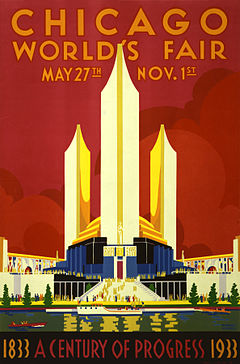
Twenty year old Milt Stein had a tough time in 1932, the depth of the Great Depression. He could find little steady work, though he had enough to eat thanks to living with his parents. Finally, he landed a full-time job at the opening of the 1933 Chicago World’s Fair. His boss told him that he could work every day if he wished (although he didn’t have to), but work and money were so dear that he did — 170 consecutive days from May 27th into November.

http://upload.wikimedia.org/wikipedia/commons/thumb/a/ab/Chicago_world%27s_fair%2C_a_century_of_progress%2C_expo_poster%2C_1933.jpg/240px-Chicago_world%27s_fair%2C_a_century_of_progress%2C_expo_poster%2C_1933.jpg

It was a few years after my dad died when I first realized that these two stories were actually different ways of telling the same morality tale: my dad was “Rain or Shine” Milt Stein, reliable and hard-working, both on the imaginary playing field of his “major league” career and at the World’s Fair performing a real job.

I don’t even know if my father was aware of the connection between these stories.

Dad was an intelligent, but uncomplicated man. If he had lived in a more prosperous time he’d certainly have graduated college. But, as things turned out he worked as a postal supervisor, raised three boys, and was married to the same woman for almost 60 years.

When I was very little, my father played a game of make-believe with me. In those days before everyone had some sort of recording device, he used our floor model vacuum cleaner extension as a pretend microphone for a radio show he fashioned out of his imagination. We would take turns speaking into the nozzle as he interviewed me.

I guess my career in interviewing people goes pretty far back.

http://upload.wikimedia.org/wikipedia/commons/thumb/2/2f/Blue_vacuum_cleaner.svg/200px-Blue_vacuum_cleaner.svg.png

I owe my love of baseball, a sense of fair play, and a strong work ethic to my father; and the fact that years later, each night at bedtime, I would reach into my own imagination as he did with me during our “radio show,” to tell my young daughters a story; a different one nearly every night, especially with my first-born.

Dad was not a perfect man or a perfect father. His three sons all saw too little of him because of his dedication to work and the shadow of the Great Depression on his view of matters financial. He deferred to my mother too much for our well-being.

But it is Father’s Day, not the day to get into his shortcomings.

In 1985 Milton Stein’s youngest brother, my Uncle Harry, died suddenly. I’d not been very close to my uncle, so that loss didn’t much affect me except for the fact that it made my dad’s mortality palpable to me: if Harry, my father’s youngest brother could die, then surely my father would, possibly soon. The family history of heart disease had killed Harry, and my dad had narrowly escaped alive from his own heart attack at age 47, over 25 years before.

In the wake of Harry’s death, I asked my “old man” (now genuinely old) if he’d be open to doing a videotaped history of his life, with me as the interviewer — the “radio show” with the roles reversed. He complied readily.

I still have the four hours of video that my father and I created together. Much of it is filled with the detail of his life, but at a few points my normally controlled dad let down his guard.

Most moving of all was his recollection of returning to the USA from WWII service in Europe. He hadn’t seen my mom for about two years. He called her as soon as he was situated on American soil.

As I’ve detailed elsewhere (Love Letters), the catch in Milton Stein’s voice and the tears in his eyes as he recalled hearing the woman he ached for — the love of his life — would have been unforgettable even without the video evidence.

I’m sure that you can tell I have a soft spot for my dad.

And, lucky me, I have two wonderful daughters who will make me feel like the most important person in the world on Father’s Day.

But, I’m even luckier than that.

They make me feel like it is Father’s Day every day.

—

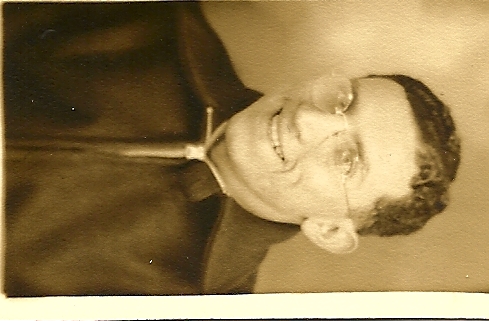
The photos above are all of my father, with the obvious exception of the vacuum cleaner, made available from the Open Clip Art Library; and the poster from the 1933 Chicago World’s Fair, created by Weimer Pursell, silkscreen print by Neely Printing Co., Chicago; both sourced from Wikimedia Commons.

The first picture of my dad is probably from some time in the early to mid-1930s. The second photo looks as though he was a teenager when it was taken.

The night time snap-shot probably took my dad by surprise while he was on a date, before he met his wife-to-be (my mother). It was likely shot by a street photographer, who would have handed my father a numbered envelope that identified the negative. Dad would have had to mail the envelope to the company with payment in order to get developed copies of the picture.

I recall seeing such photographers in downtown Chicago at least as late as the 1960s. Now, of course, just about everyone carries his own camera/phone.

The final image is of the young Stein family in late 1959: my mom and dad and, left to right, Jack, myself, and Eddie.

“I Know How You Feel”

Correct answer? I don’t. How could I?

But I may still be able to be helpful to you without absolutely knowing “how you feel.”

Why don’t I know exactly how you feel? I am not you. I am not your age or perhaps your gender. Maybe I’m not your religion. I wasn’t born in the same place under the same circumstances. My parents made more money or maybe less. They survived the Great Depression well, or badly, or not at all. And so on.

The point is, I’m not in your skin, so I can’t know precisely what it feels like to be there. It’s true, I might well have some idea, perhaps even a very good one. What might that idea be based on?

First of all, we are both human and have a certain set of broadly shared, although not identical life experiences. Secondly, as a therapist, I’ve talked to thousands of people who have told me what they think about certain things and how some events effected them. So I know the range of what is possible in reaction to an enormous number of events. I’ve also read much in the way of text books, been told much by my teachers, and have shared in the richness of emotion, perception, and experience found in great memoirs and novels.

And yet, despite all of this, I am open to surprise. My father died in the year 2000 at the age of 88. Rather suddenly. I’d known he was mortal at least since the time of his heart attack when I was 11. Prior to his death I’d counseled numerous people who were suffering from losses. I listened to their stories. Still, despite dad’s advanced age, I was shocked at the abruptness of his death, the “here today, gone tomorrow” reality of it. And surprised, too, by how tired I was for months afterward. As if some of the life force taken from him had been taken from me too. And even with this experience now well under my belt, even with having “lived” a loss like this (rather than just read about it or heard about it), I can’t say for sure that “I know how you feel” if you tell me about the death of your father. Your relationship with your dad might have been different enough, and his life circumstance different enough to explain some of this lack of identity.

You might ask me: “How then can you help me in grieving my own loss?” In several ways. I can listen to you and bear witness to your pain. I can be sympathetic. I can accept the emotions and stories you share: the varied combination of sadness, anger, exhaustion, and sense of separation from the world that comes with the death of a loved one. I can abide with you, acknowledge your pain, and let you knowI will “be there” until it passes. And, if you will accept the comfort, our relationship will help to reattach you to life, even while you are grieving something that tends to detached you from it.

You will never be exactly the same as you were before your loss, of course. But, you will very likely heal if you share your grief. If you hold it in or try to “move on” too quickly or shed your tears only privately — then your sadness might well pass more slowly or not at all. Human contact in the aftermath of a loss is crucial. A supportive spouse, friend or therapist can help. Time usually does the rest.