
Chicago must be a lousy place to be a street person. Not that there is any good place to be homeless. But the cold, wet, and wind are an awful combination. From November until well into April — nearly six months in all — the weather is pretty foul: 131 days a year below freezing with upwards of 37 inches of snow, on average.
I took the Metra train downtown on a recent Friday and made the mile walk on Jackson Street going east from Union Station to Orchestra Hall. Within about a block I saw a man, probably in his 30s, with sandy hair and skin that was just a bit ruddy, betraying a little too much exposure to the elements. Temperature was in the 40s (Fahrenheit) and a fine mist would later develop into some serious precipitation. The windchill doubtless made it colder by a few degrees. It was a typical Chicago wind in Winter: unfriendly.
The man had a sign identifying him as a homeless veteran. Hung around his neck by a string appeared to be his discharge papers, covered in plastic, to let passers-by know that his military service was documented. I saw a white-haired fellow give the vet a dollar; perhaps the model stimulated me to reach into my pocket for the only change I had, 50 cents. The vet said, “God bless you.”
The interaction raised an issue I’ve never thought about deeply. Oh, I’ve thought about it a bit many times. How can you not if you live in a city where many such apparent down-and-outers also live? Sometimes I’d give a little money, most times not. What is the right thing to do in a situation like this?
I suppose that most of us don’t think about it because to do so is emotionally troubling. It is hard to face — face to face — the unfairness of the world. We’d rather not, I imagine, consider the possibility that “there, but for the grace of God, go I.” We just walk past or say “no” when asked to spare some change. If we make eye contact, the abstraction becomes real, the idea of a beggar becomes one particular human being. And if we look too long, or think about him or her, or exchange words, we are now in a relationship of sorts. He is no longer a stranger.
The veteran to whom I gave two quarters got me to thinking of all this, but I didn’t see too many more handwritten signs or encounter any verbal solicitations on my way to Michigan Avenue. Still, there was the middle-aged man whose sandwich board declared CAPITALISM IS RUINING AMERICA, but he appeared to be making a political statement, not requesting assistance. Somewhere along the way, I decided on a plan. I would always have at least half a dollar in change and give it to whomever was the first street person whose path I crossed on any given day.
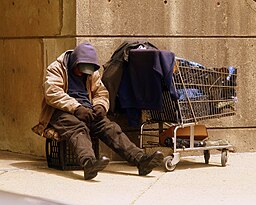
Some ask the question, “How do you know if they really need it or what they are going to do with it? Maybe they’ll just buy a bottle of wine.” Maybe they will. I surely don’t know and though I’m a clinical psychologist, can’t trust an assessment based on appearances or a few words, unless the man is staggering and smelling of alcohol.
The clergyman F. Forrester Church addressed this in a 1988 TV interview that appeared on PBS and is transcribed in Bill Moyers: A World of Ideas:
Well, again, there is no perfect solution. Later in his life, Tolstoy, the great Russian novelist, was utterly born again in his own sense of illumination with Christ. The first thing he decided was to take all his royalties, every bit of them, and to give them to the poor. Now this upset his wife and eleven children, because all of a sudden, in Christian Socialism, as he called it, Tolstoy was going to spread everything evenly. The second problem was that when Tolstoy went out and gave this money to the poor in his neighborhood, they all drank themselves into a stupor. He came back and said, ‘How can I act morally?’ He does the right thing, he gets the wrong results.
As long as one recognizes that one can do the right thing and get the wrong results, what one does is give what money is in one’s pocket walking down the street. When a person says to me, ‘I’m gonna use this for food,’ I don’t say to him, ‘Well, be sure you use it for food.’ I say, ‘I don’t care what you use it for — here’s a little extra.'”
Church’s position is not one that everyone takes. Some suspect that the street person must have done something to deserve misfortune — made bad decisions, didn’t take school seriously, failed to work hard enough. I’m sure there are times when they are right. Many assume that the panhandler is mentally ill or an addict. Others will give money to shelters or to charitable organizations that serve the poor; passing by the signs, tin cups, and quietly voiced solicitations without action or guilt. A small number will organize politically on behalf of the underprivileged or pray for them. And then there are those who do nothing, think nothing about it, and smoke a cigar.
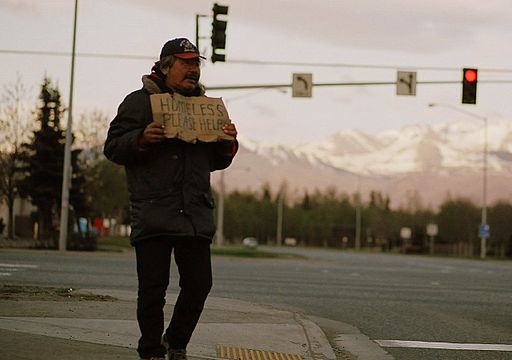
I was getting closer to Symphony Center now. My mind was drifting to other solicitations and other times. When I was in school a man looking for help appealed to what he believed was a shared ethnic origin. On a different occasion I saw a gorgeous, fair-skinned woman in her early 20s dressed in black, wearing a hooded cape. She asked for money too — to support Satan worship! Then there was the man who played classical tunes on the tuba (badly) before and after Chicago Symphony concerts in front of Orchestra Hall. Was he legless? I seem to remember that. One day, I believe it was near Christmas time, several members of the orchestra’s brass section stood beside him encouraging patrons to donate.
On concert days, a slender and gracious woman faithfully stands at the pedestrian entrance to the Grant Park South parking garage, just in front of Symphony Center, as she has for a number of years. She sells StreetWise, (a modest sized weekly written by the homeless and which benefits them) quietly calling out the name of the paper and wishing you a good night whether you buy or not. The sellers are themselves homeless. Nor should I forget the mother I’d seen in Oak Brook, probably in her 30s, with weathered skin, unwashed dishwater blond hair, and the saddest possible expression. Her sign told of her family’s desperation. She stood at the lip of the ramp exiting the Tri-State Tollway at 22nd Street, only two miles from one Chicago’s most tony shopping centers. I know that I gave her some folding money at least once. I responded similarly to a woman who could have been her sister by all appearances, whose handwritten cardboard described a recent injury to her leg (which was clearly in a cast); her small child sat with her, next to the mother’s crutches. I passed her on Adams Street, also on the way to a concert, simply a different route and a different day.
There must be humiliation in this. To ask for something not earned and to take it; to be assertive when the world has knocked you flat. Maybe I should always have some small denomination, fast-food gift certificates with me, like those sold by McDonald’s? One of my children has been known to give a piece of fruit from her lunch when a poor soul approaches her. It is surely safer than taking out your wallet in public, where someone can snatch it away.
For at least one man, there was no humiliation, but rather entitlement. When I gave him a dollar a number of years ago, he complained that I hadn’t given him more. He called me names as I walked away.
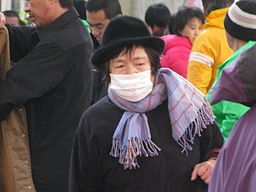
In the Great Depression they wrote songs about poverty. Perhaps the most famous is about a World War I veteran written in 1931, Brother, Can You Spare a Dime, lyrics by Yip Harburg, music by Jay Gorney:
They used to tell me I was building a dream, and so I followed the mob,
When there was earth to plow, or guns to bear, I was always there right on the job.
They used to tell me I was building a dream, with peace and glory ahead,
Why should I be standing in line, just waiting for bread?
Once I built a railroad, I made it run, made it race against time.
Once I built a railroad; now it’s done. Brother, can you spare a dime?
Once I built a tower, up to the sun, brick, and rivet, and lime;
Once I built a tower, now it’s done. Brother, can you spare a dime?
Once in khaki suits, gee we looked swell,
Full of that Yankee Doodly Dum,
Half a million boots went slogging through Hell,
And I was the kid with the drum!
Say, don’t you remember, they called me Al; it was Al all the time.
Why don’t you remember, I’m your pal? Buddy, can you spare a dime?
Once in khaki suits, gee we looked swell,
Full of that Yankee Doodly Dum,
Half a million boots went slogging through Hell,
And I was the kid with the drum!
Say, don’t you remember, they called me Al; it was Al all the time.
Say, don’t you remember, I’m your pal? Buddy, can you spare a dime?
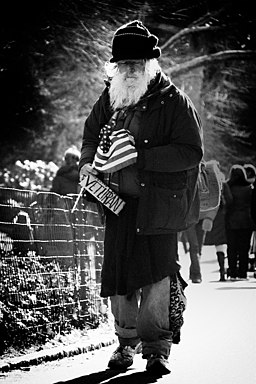
Entering Orchestra Hall for the day’s Chicago Symphony concert, I thought about the lady who was standing in front of an auxiliary entrance to Union Station a few weeks back. That gateway led directly down to the tracks, so I needed to consult the schedule that was placed to the left of the doors. She must have seen that I looked puzzled and offered to help. She asked where I was going and I answered, thinking that she would have more knowledge than I. But I quickly found the “where” and “when” of my train’s departure on the board. As I started to walk toward the tracks she surprised me by asking if I could spare some change. As I reached into my pocket, I said, “I thought you worked here.” “I wish!” she answered, thanked me, and resumed her post of potential assistance, as an entrée to making herself a real person with a service to offer, no longer a stranger without value who could be more easily ignored.
At the concert’s intermission, I remembered the ancient Greek word xenia which refers to strangers or those of foreign origin. You probably know the word xenophobia, derived from the Greek, which refers to a fear of strangers or outlanders. But there is another word, philoxenia, that describes the concept of hospitality and the mutual obligations between stranger and host. In the world that gave us Homer’s Iliad and Odyssey, the host was expected to offer hospitality without asking questions, and to give the guest a gift at the time of his departure. In turn, the guest was expected to be respectful of the host, not to take advantage of his generosity.
Indeed, it was a violation of this concept of philoxenia that set off the Trojan War, when Paris, a son of Troy’s King Priam, made off with Menelaus’s wife Helen (soon to become Helen of Troy) while staying as a guest in his home. Isn’t this something akin to what we fear in the encounter with the street person? Not that our wife will be stolen, but that we will nonetheless be ripped-off?
I took the same route back to Union Station after the concert, encountering more damp and blustery weather. As you will recall, I now had a plan to give change at the outset of my journey on foot, which I’d done a few hours before. So, as I defined it, I’d taken care of my obligation. Walking west I was almost run down by a heavy woman on a pretty fast-moving motorized device, a speedier and less restricting version of a wheel-chair. She mechanically announced, “Beep-beep, beep-beep” to no one in particular, as she moved through and overtook the rush hour pedestrians heading toward the train station. Another woman was standing on the north sidewalk of Jackson Street feeding pigeons and having a good time of it.
There were more homeless or presumed homeless people out now, perhaps because they knew that the streets would be filled with the working stiffs leaving downtown for home. Then, in a single block I saw four different solicitors, including the veteran to whom I’d given my 50 cents earlier; no end of folks really, in the economic mess we find ourselves in as a nation; no, as a world.
My plan clearly was failing. But where shall I find a new one?
—
For a follow-up to this essay from the perspective of a homeless man, please go to Man’s Humanity to Man.
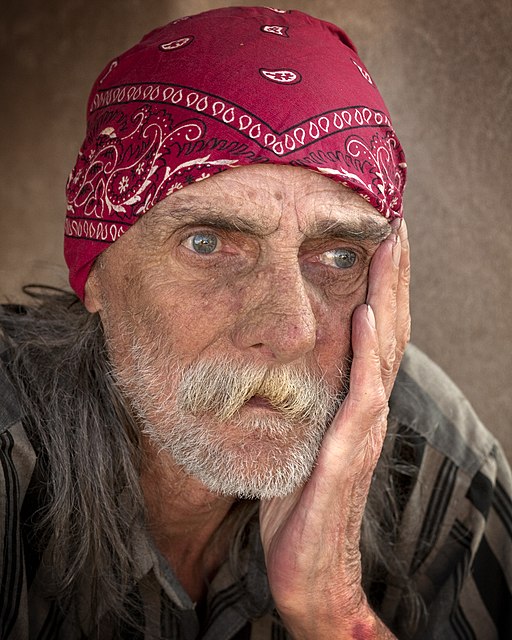
The first photo is called Portrait of a Homeless Manby Larry Allen Skalstad. Next is Homeless Veteranon the streets of Boston, MA by Matthew Woitunski. The third image is titled Homeless Man in Anchorage, Alaskaby Andrew Brown. It is followed by Japanese Homeless Woman Seeking Help in Hamamatsu City, Japan by Comessu, then Homeless Veteran in New Yorkby JMSuarez. Finally, a Homeless Portraitureof the same man in the first image, again by Larry Allen Skalstad. All of these are sourced from Wikimedia Commons.


