An Unwritten Diary

Its title is All His Life. The book’s cover illustrates a beautiful baby boy with garlands hung above the newborn’s crib, topped with a ribbon sewed into and above the fabric.

The 9″ x 12″ object has a satin-like covering, perhaps rayon. For the time, the volume probably wasn’t cheap. A gift, I suspect.

The first printed page offered the following:

All his life
is written here.
In pictured prose
And records clear —
From Infant small
To manly state,
Are told events
Both small and great.

The hardcover was published in 1944, but I came along later.

This particular copy of All His Life was about me.

The pages are yellow now, despite the old plastic bag in which the volume has been housed. I’m not pristine myself.

After naming the doctors who delivered me, the date, and the time, Jeanette Stein wrote her first question to my dad:

Is he cute??

Dad’s answer:

Don’t expect too much at first!!

I guess Milton Stein never got trained as a cheerleader!

The remainder of the 60-page volume is filled with more babies and boys, in colorfully lithographed paintings by Edna Mason Kaula, and space for answers to more printed questions. My mother’s elegant handwriting is featured in each response.

For example, the 11th page lists early visitors to the hospital or our apartment in the Logan Square neighborhood. Many spaces instruct the writer to “paste snapshot here.” Two blank spots are shaped like feet, two others like hands, all awaiting a bit of ink on those body parts for an imprint of my tiny appendages.

Gerald M. Stein’s weight at birth remains readable, written with a fountain pen in the same deep blue used for all the other entries. The mass-market ballpoint variety was new and uncommon.

Then?

Nothing? The last entry listed my height.

No first words, date of an initial carriage ride, or timing of the first smile. No record of when I discovered my hands. Nor can one find evidence of when Gerry began to walk or photos of anyone else, though I have an album including many early childhood pictures.

The publisher’s plan anticipated the growing young man would take over entering information after a while. I didn’t even know my parents received such a present until they died in their 80s, over 20 years ago.

Empty room for entries included friends’ names, hobbies, teachers, favorite subjects, ambitions, and space for “my philosophy,” which makes me laugh. Not the kind of thoughtfulness I possessed as an infant or a young man.

Funny about that in another way, as well. I only began dedicated reading of philosophy at age 65.

There is a blank spot for adult fingerprints. Perhaps someone imagined I’d take up a life of crime! Ah, but the times were more innocent, as evidenced by a place for my social security number, making identity theft easier. That common form of illegality took more years to emerge.

I’m sure my birth overjoyed my parents. Moreover, I quelled my mom’s fears by turning into a good-looking, curly-haired little boy. Well-behaved, too, by all reports.

Why then no additional attention to the book? I imagine my folks had plenty to do, buying the required necessities, doctor’s appointments, teaching me language, and learning how to handle a vulnerable creature. Everything was the first time for them and for me.

Mom told my wife she didn’t understand how to put me into the crib and just dropped me in at first. I hope she bent over a bit. Guidance from her mother couldn’t have been helpful, given grandma’s tendency to criticize.

Still, I would like to know more about my first few years. My children might, too. The time and its history fled like a sandcastle’s erasure by the incoming tide. So are the names of my parents’ youthful friends and distant relatives in the surviving photos stored in the bedroom closet.

Some people look familiar, but not even nicknames or occupations remain, except perhaps in the memory of a few of their descendants. As Goethe expected, names vanish “like sound and smoke.”

Most of us hope to make a mark on the world, something to outlast our lifetime. Children and grandchildren are the only posterity I care much about. That and the continuation of a habitable planet, a republican form of democracy (also called a democratic republic), along with the presence of enough enlightened and committed people to make it so.

As I got older, having achieved more in my life than I imagined (though nothing of grand, historical importance), my ambition slipped away. No major loss. I never persuaded myself of the meaningful value of what the Western World was selling. I didn’t even try.

Beyond what I’ve said, I will add a couple of things you’ll find contradictory and add one more thought as a bonus:

  • I don’t find most well-educated people as rational as they think. And, yes, I include Dr. Stein in this group on occasion.
  • Despite humanity’s irrational pursuits, life can be delightful. I find myself smiling and laughing more than ever.
  • I take myself less seriously, too,

No advice today, just the above observations. Make of these statements as much or as little as you wish. And I should add, try not to carry grudges, but give as much love as you can muster. You will never run out.

Any other way will reduce your well-being and the happiness of those you care about — and those you will care about if you know them.

I guess there was some advice after all.

Whatever Became of Julius Rosenwald and William Schuman?

Have you ever opened the old photo album of a parent or grandparent and wondered, “Who are these people?” So many smiling faces lost to the passage of time.

We spend lots of effort at the job of being remembered. No one wants to be forgotten, unless, like the old-time actress Greta Garbo, you “want to be alone.”

Indeed, one of the chief reasons people skip high school reunions is the fear of not being recalled.

Look around you at the buildings. Once gone, the person whose name appears on the edifice loses control. Buildings get torn down, names get changed.

Take Dyche Stadium, Northwestern University’s football field in Evanston, Illinois. The edifice opened in 1926, named after William Dyche, an NU grad in the Class of 1882, who later became the Mayor of Evanston and oversaw the venue’s creation. To the dismay of the Dyche family, NU sold the rights to the name in 1997 to Pat Ryan, then the Chairman of Northwestern’s Board of Trustees. For eight-million dollars, Dyche Stadium became Ryan Field.

256px-Ryan_Field

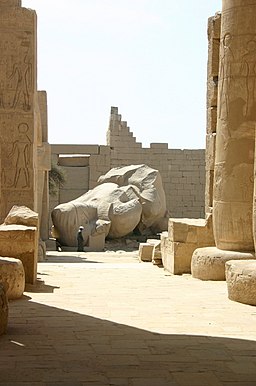
Percy Bysshe Shelley would have understood. His poem Ozymandias tells a similar story about the collapse and destruction of an ancient monument to a once formidable and arrogant ruler. An inscribed pedestal is the only thing left:

“My name is Ozymandias, king of kings:
Look on my works, ye Mighty, and despair!”
Nothing beside remains. Round the decay
Of that colossal wreck, boundless and bare
The lone and level sands stretch far away.

http://upload.wikimedia.org/wikipedia/commons/thumb/a/af/S_F-E-CAMERON_EGYPT_2005_RAMASEUM_01319.JPG/256px-S_F-E-CAMERON_EGYPT_2005_RAMASEUM_01319.JPG

If the exception proves the rule, then we should talk about Julius Rosenwald. You probably don’t know his name and Rosenwald wouldn’t have cared.

Julius Rosenwald (pictured at the top) was President of Sears, Roebuck, and Company from 1908 to 1924, and the Chairman of its Board until his death in 1932. In 1917 he established the Rosenwald Fund, a charitable enterprise designed to have no endowment, i.e. an untouchable bankroll to be invested for the purpose of the charity’s survival. Rather, Rosenwald intended the Fund to disperse grants “for the well-being of mankind” until there was nothing left. The money was gone by 1948; and with it, any chance we might hear about it in our time. Only a 2015 documentary on the philanthropist’s life has (for the moment) reintroduced his name to the public.

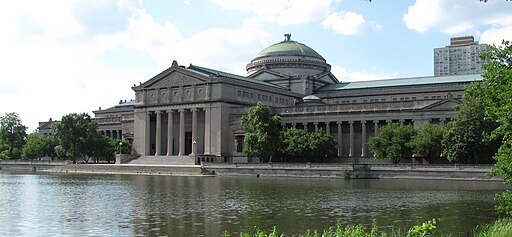
During its existence Rosenwald’s fund distributed about $70 million, with much money going to the establishment of over 5000 schools in the South, aimed at educating black youth. Rosenwald was also a principal founder of Chicago’s Museum of Science and Industry, seeding it with five-million dollars and serving as its president from 1927 to 1932. At the time, people in Chicago were as likely to refer to the structure as the “Rosenwald Museum” as they were the Museum of Science and Industry.

http://upload.wikimedia.org/wikipedia/commons/thumb/4/4e/Museum_of_Science_and_Industry.jpg/512px-Museum_of_Science_and_Industry.jpg

William Schuman’s name, on the other hand, was never a household word. But in his day (1910-1992), only Aaron Copland was a more prominent living American composer in the classical world. Moreover, as president of the Juilliard School and then of the emerging Lincoln Center, no one had a greater influence on serious music in the middle portion of the last century. Schuman also wrote 10 symphonies among other works, and won the first Pulitzer Prize ever given for musical composition. His Symphony #3 is arguably the greatest such piece written by an American.

William Schuman: Symphony No. 3

Yet, the centenary of his birth in 2010 was hardly noticed by performing groups and the major US orchestras pay him little attention. I asked an orchestral executive why, with few exceptions, deceased 20th century Americans like Schuman are not performed. His wry answer: once dead “it is easier to say ‘no’ to them.” All the friends in high places who programmed Schuman’s music are now gone, along with his music, except for occasional performances and recordings. The musicians and executives of our own time don’t know his work and don’t care, or so it seems.

Schuman would have agreed, I suspect, with the notion that a composer’s life is like trying to create art on a block of ice on a hot day in July, to paraphrase Arthur Miller. In other words, you hope those notes will last and be played, but the odds are against you.

Shakespeare treated the fleeting memory of our existence more gently in the words he gave to Prospero, the sorcerer, in The Tempest. Prospero’s comment comes as he ends a brief staged performance — a play within a play. What he says refers not only to the matter of creating illusions in the theater, but also to the insubstantial and temporary nature of life itself, not just our names:

Our revels now are ended. These our actors,
As I foretold you, were all spirits, and

Are melted into air, into thin air…

We are such stuff
As dreams are made on; and our little life
Is rounded with a sleep.

The irony implicit in Shelley’s and Shakespeare’s words is that while they talk of the transience of things, their names and works live on. Though it’s not called Dyche Stadium any more, the place Dyche built still stands along with the “Rosenwald Museum.”

Got to run. A recording of Schuman’s Symphony #3 is coming on the radio. Perhaps his music, like that of Gustav Mahler, will be revived 50-years after his death.

The future is full of surprises.

Who knows. Somebody at the reunion might remember you after all.

—

The top video is the trailer for the 2015 documentary, Rosenwald. The 1970 photo of Ryan Field (formerly Dyche Stadium) comes from Greenstrat. Steve F-E-Cameron is the author of the Temple of Ramses II, Luxor, Egypt. The photo of the Museum of Science and Industry is courtesy of Knarfol. All of these are sourced from Wikimedia Commons. The final image is the Columbia LP (long playing record) cover of William Schuman’s Symphony #3 with the smiling Schuman facing the photographer.