When Ideas Change and What Can Change Them

http://upload.wikimedia.org/wikipedia/commons/thumb/1/12/We_Can_Do_It%21.jpg/500px-We_Can_Do_It%21.jpg

Every so often some event comes along and turns everything you thought you knew upside down.

I’m talking about those times when a new experience tells you, in a very personal way, that there are limits to what you were certain was the truth.

I’ll give you two examples:

  • On one side, the belief that anything is possible if only you try hard enough.
  • On the other, the belief that, even with the best effort, the thing you hope for is out of reach.

First, take the following self-made man:

He came from an all-white world, but one of hard times, hard knocks, and hard lessons. Work was something that was required from an early age because the family needed money. His dad had two jobs, while the mom held down the home fortress, stretching food to make sure that no one starved, mending clothes because not enough dollars were available for new ones; and besides, things were used until they fell apart, not tossed away simply because fashion required a different “look” or a shinier, crisper, less frayed exterior.

This young man saw a few people in his hardscrabble Pennsylvania steel mill neighborhood — friends and others either a bit older or younger — give up on life and turn to alcohol or drugs. But most of his contemporaries learned to make a living, even if nothing very fancy or prestigious.

The mill seemed a likely destination for this boy too, just as it was for many of his buddies. Yet after a long period as a mediocre student, he alone found a way to go to college and surprised himself by being accepted into a fine graduate school, working to pay his own tuition.

Then, looking up at career goals that seemed unreachable, he took a deep breath and started ascending, never hesitating for fear that he would asphyxiate as the air thinned at the top; afraid, too, that like Icarus of the Greek myth, he might fly close to the sun and fall because his feathered wax wings, like the cheap clothes he wore, would give way.

http://upload.wikimedia.org/wikipedia/commons/thumb/4/4c/Bol%2C_Hans_-_Landscape_with_the_Fall_of_Icarus.jpg/500px-Bol%2C_Hans_-_Landscape_with_the_Fall_of_Icarus.jpg

But he did make it on the wings he had fashioned for himself, with little help from anyone. And eventually made lots of money with it. He married a beauty, had two eager and active children, came to live in a tony suburb and hung out with people who had also made it, many of whom had gone to the best schools from the beginning. Some of these men, of course, were “…born on third base and thought they’d hit a triple,” to quote Tom Harkin. No matter, he was proud to be among them.

What the man in question believed was not that he had succeeded because of great talent, since he remembered that for much of his early schooling he had been a mediocre student. Rather, he recollected the moment in his late teens when he resolved to do better and let nothing stop him.

This, he told himself — a relentless drive that would not be denied — was the secret of his success.

This, he came to believe, was what would lead any “average” person (as he thought himself to be) to that success.

And this rule, he was certain, would apply to his children too.

But as they reached their teens, the life he had imagined for his children began to look as far away as the top of his own career ladder had seemed when, as a younger man, he’d stood at the bottom.

No amount of urging from mom and dad closed the distance. No amount of “tough love” on one side or encouragement from him and his wife on the other seemed to get them nearer to anything that looked like the future he had imagined for them. No amount of tutoring created the academic excellence that the adult couple so valued and that the children had been taught was so important.

What happened to his kids could have happened to anyone’s children. Genetics and biology had trumped tutoring, encouragement, insistence, and a good home life. Both teens were afflicted with some combination of biologically based mental health issues and learning problems. The details don’t really matter. Take your pick from Depression, Mania, Borderline Personality Disorder, ADHD, Dyslexia, Executive Functioning Problems, and any other emotional or academic hurdle you care to name.

The point is that, despite the parents’ best efforts — despite all the advantages of money and books and cultural opportunities and a nice neighborhood and outside help for school work and therapy and medication — the kids had major problems that were persistent.

The man struggled with his children’s struggles. Moreover, the pain and perplexity in his kids seemed to fly in the face of his view of life, that “when the going gets tough, the tough get going” and triumph. He’d lived that way for so long, it had never occurred to him that his own children might frustrate his view of things.

Until they began to have major emotional and academic problems, he’d viewed society’s failures as not having tried hard enough.

For him, just as for his kids, the question became: now what?

http://upload.wikimedia.org/wikipedia/commons/thumb/1/1b/Goltzius_Ikarus.jpg/500px-Goltzius_Ikarus.jpg

It was hard to let go of a principle that had served him so well for so long. It was hard to live in the echo-chamber world of all those with lots of money and lots of things and fancy cars and impressive titles and think that he’d been wrong to believe in a just world where people get what they deserve and deserve what they get. Oh, sure, he’d always made a few exceptions to this rule, but only for those who were accident victims or had terrible illnesses. Instead, he’d thought people should be able to overcome almost anything: poverty, indifferent parenting, poor schools, and the like.

But then there was the fact that his kids (who had everything) didn’t seem to be able to “overcome.” It made him angry, sometimes at them, sometimes at himself; and depressed; and sleepless. He was caught between his desire to push them harder and his desire to hold them and weep.

With therapy and time, things changed. He began to put less weight on the importance of achievement, status, and material success. His tendency to blame some of those in our society who struggle to make their way diminished, and he was more open to considering the possibility that sometimes (more often than he had previously thought) the law of the jungle that prevails in the “free market” did not give everyone a fair shake.

And he became a volunteer, giving his time away to tutor kids in an inner city school (time for which his clients would have paid hundreds of dollars). His world of black and white became grayer.

The change had consequences. He was a more sympathetic father. He was more accepting of his own limitations and of the frailty of life — the frank difficulty of some people in some conditions to “overcome.”

Now he didn’t feel quite right living where he lived anymore, hobnobbing with society’s winners, some of whom had simply had the good luck to be born with a silver spoon in their mouth. He moved to a more economically and ethnically diverse neighborhood.

His life had changed along with his view of the world.

http://upload.wikimedia.org/wikipedia/commons/thumb/f/f5/Draper_Herbert_James_Mourning_for_Icarus.jpg/500px-Draper_Herbert_James_Mourning_for_Icarus.jpg

And now let’s look at an inner city Chicago high school for the other “belief changing” setting:

My old high school.

In the 11 years that the Mather High School Class of 1964/65 (my graduating class) has been giving college scholarships to Mather seniors — over $100,000 worth — we have learned a few things about the lives of the kids at this public institution, part of the world of “have-nots.”

Its student body has gone from being almost all-Jewish, as it was when we attended, to becoming a “multi-ethnic stew” according to the Chicago Tribune’s Charles Storch.

And yet…

Like us, many of them come from families not far removed from a life across the ocean.

Like us, they have lived in the modest dwellings that we used to inhabit in the West Rogers Park neighborhood of Chicago.

And like us, many come from humble economic backgrounds, though they are much more financially stressed than we ever were.

But unlike us, those students who aspire to a higher education are seen as peculiar by many of their classmates. Indeed, they are often asked why they work so hard at school and why they want to go to college, and not just by their peers.

Many of the parents of these teens are so busy trying to make ends meet that it is difficult to give attention or appreciation to what their kids are trying to achieve. Often the parents have only a vague idea of what college might be and what it can lead to.

The students, like their parents, come from a world of hard-knocks, where things go wrong more often than they go right; where being unable to pay your bills and being out of work are “normal.”

The kids come from homes where, at a tender age, they have talked to collection-agents on the phone, where they don’t expect anything but hand-me-down clothing, and where a fancy dinner is something they can only dream about.

Our class is a largely successful group that has given these kids a good deal of money in the form of scholarships, for which these children are very grateful.

But we have discovered that the money gives them something more.

The kids have told us that the idea that a group of educated and successful people are willing to give them money is almost unimaginable. And that it means to them that the future to which they aspire (and which few around them seem to fully appreciate) is really possible.

In those circumstances, the Zeolite Scholarship not only validates their dreams, but it says something that many of them have heard all too little in their short lives;

“We believe in you. What you’ve hoped for is not out of reach.”

So what do we have in these two examples?

1. A man who didn’t see himself except in the qualities he admired in successful others, until fate laid him low and gave him insight into the humanity he shared with the less fortunate.

2. A bunch of kids who couldn’t imagine that they shared anything with a group of much older, more prosperous and ethnically different adults, until those same adults told them that they did and staked their money on the truth of it.

My friends and I do see ourselves in them and, by so doing, cause some of them to see themselves in us.

We shared a neighborhood and now, some of these kids have come to embrace our sense of “possibility.”

If you have been lucky and successful in life, I hope that you will consider “paying forward” your own good fortune to these talented and needy children.

Tax-deductible checks made out to the Zeolite Scholarship Fund may be sent to:

Zeolite Scholarship Fund

c/o Jeff Carren

515 N. State Street, Suite 2800

Chicago, IL 60654

USA

Thank you.

—

The top image is a poster called We Can Do It! from Westinghouse, associated with the World War II icon “Rosie the Riveter.” The pictured woman is actually Geraldine Doyle (1924-2010). The poster is the work of J. Howard Miller and was used by the War Production Co-ordinating Committee. The painting that follows is called Landscape with the Fall of Icarus by Hans Bol (1534-1593). The third image is sourced from graduatesyorkshire.com/ The fourth picture is Icarus, painted by Hendrick Goltzius in 1588, followed by  Lament for Icarus by Herbert James Draper, done in 1898. All but the third image are sourced from Wikimedia Commons.

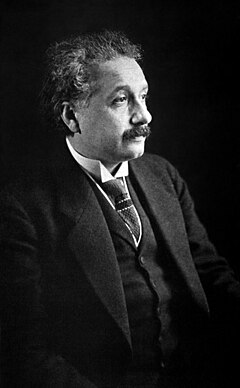
Einstein on the Subject of What is Important

http://upload.wikimedia.org/wikipedia/commons/thumb/1/11/Albert_Einstein_photo_1921.jpg/240px-Albert_Einstein_photo_1921.jpg

Not everything that can be counted counts, and not everything that counts can be counted.

Albert Einstein (1879-1955)

—

The above image is Professor Albert Einstein Visits the U.S. from The Scientific American 12:5 (1921), 482-485, on page 483. It is sourced from Wikimedia Commons.

What Would You Kill For?


What do you live for? What would you die for? What would you kill for?

Pretty interesting questions, you have to admit.

I heard them several days ago on an NPR broadcast of a 2008 documentary by Karen Michel called Live? Die? Kill? It was part of the Third Coast International Audio Festival. She asked those questions of a number of people within 30 miles of her home in Pleasant Valley, NY.

Michel’s interviews were face to face, all apparently very brief. I was intrigued. And so I tried my hand at an internet version of the same thing, emailing the questions to 80 people, requesting short answers, and guaranteeing the anonymity of their responses.

Who are these people? A very well-educated crowd with lots of graduate degrees, almost all urban-dwellers, few people of color, few who are gay; largely Jewish, Christian, and atheist/agnostic, with virtually no fundamentalists.

None of my patients, in case you were wondering.

Politics? Most are left of center. Also, the vast majority are over 50, although I did endeavor to include some in their 20s and 30s.  Still, this sample is in no way intended to represent any larger group. They exemplify the population of people who I knew well enough to think that they might give me answers. Take it for what it is.

Nearly all of the three dozen respondents took the task seriously. But two people did make a joke out of the last question. For example, one said he would kill for “being able to drive a golf ball 300 yards.”

At least, I’m hoping it was a joke.

Not everyone was certain of his or her answer, or even of the question:

Questions two and three are easy to answer:  I would die for or kill for my children. Question one is more difficult because I’m not sure exactly what you are asking?  Is it a question about the future and goals, the overall purpose of my life?  I’m not a very future oriented (or past oriented) person.  I live pretty much in the now (though a list of what I’m supposed to do is useful for achieving a good night’s sleep).

I don’t think I have any particular mission in life.  I live trying to do what needs to be done, to enjoy the world and to care for my loved ones.

Her husband also wasn’t sure about what precisely he lives for: “I don’t live for anything, I think. I live day-to-day, and try to do the things that are right and that make me and others happy.”

They sound well matched, don’t they? For them, questions of purpose don’t seem troublesome. But not everyone felt this way:

I wish I could say there is someone or something I would live or die for. This probably comes from being childless. When I was young, I would have answered this question with the name of my first husband… until he cheated and broke my heart.

Since I am a firm believer in not killing, including animals and even insects (except mosquitos trying to bite me), there is nothing I would kill for. The only time I could ever envision killing would be to kill myself. After a life of suffering from depression, there have been times when I concluded that suicide must always be an option for me.

The hardest question is “what do I live for?” I live because I am alive. I don’t live for anyone or anything. Again, I think not having children influences my answer to this question.

A quite different response came from a woman whose return email to me embraced the task with particular enthusiasm; and whose answers confirmed a view of living that glories in ideas of freedom and spontaneity.

This sounds like fun! My pleasure:

1. I live for glee and pursue it shamelessly. Where do I find it? In the most unexpected places. How do I encounter it? Through my addiction to surprises and change, adventure, and risk.

2. I would die for love, I really would. What do I love? Innocence. I would immolate myself if I thought I could save purity, innocence and hope (faith).

3. I would kill out of despair, only for rage. What do I rage against? Naivety, blind stupidity that refuses pain or rejects unwelcome aspects of truth. If I saw such horror before me, I might kill myself out of despair at beholding my own projection.

One of the most interesting answers to the question “What do you live for?” was more like an item from a wish-list than practical guidance for day-to-day existence:

…Another part of me lives for the future — by hoping to recreate the past. The happiest days of my life were the summers of my youth, when aside from an hour of daily piano practice, I was free to ride my bike, play baseball, and do anything I pleased. Ever since, I’ve dreamed of having a “30 year summer.” The clock is ticking, but the math still works.

Frequent responses to the first two items mentioned the desire to learn, find “meaning,” leave a legacy, make a difference, the need to create, and the importance of religious/spiritual beliefs. I also received a number of comments indicating a willingness to die for one’s country or to combat evil or to preserve liberty; similarly, people who said they would kill in order to defend family, country, or themselves.

But quite a few respondents realized that saying that they hoped to do so did not mean that they actually would. And many thought that they would not want to kill under any circumstances.

Only one person seemed utterly certain about the capacity to kill and the reason to do it — because he had already done it: “I kill for food.”

For another, living is largely focused on self-satisfaction: “I live for the things that make me happy in life. Those things can be as simple as a sunset, watching a fire in my fireplace on a snowy night, the beach and the ocean, family, and friends to knowing that I have made a positive difference in someone’s life.”

Here is a thoughtful response to all three questions that is shaped, in part, by a particular set of life circumstances:

1. I live for my loved ones and especially my children – to spend time with them, learn from them, enjoy the growth and blossoming of younger ones and the wisdom of older ones. I also live for doing things that interest me, and for doing things to help others. And I live to learn, and to grow. Also, to read books and squeeze in a little writing. I live to see beautiful natural places…to try to be a good person and my best self. And I live to help my younger daughter (who is intellectually challenged) become more independent, and to help my older daughter have some adult time when she is not responsible for her sister. (She will be her sister’s guardian once I die.)

2. I have never thought of what I would die for, and have never been in a situation where I really needed to answer this question. So in imagining what I might consider being worth dying for, I hope I would die for justice, and if it were necessary to give my life to “do the right thing” for someone else. I hope I would die to save the life of my children, and to save any children really. I probably would die trying to save the life of any of my friends, my family, my dog – anyone in distress, really. I hope I would die trying to stop someone from doing evil to others.

3. Hmmm….doesn’t say what kind of creature I’d “need” to kill. I imagine if it were necessary for me to kill an animal to survive, I might be able to do that. Might not. I hope I would kill a person who was in the process of wreaking physical destruction on others, though I’m not sure how I might do that. I have a hard time imagining any other situation when I would kill.

It is interesting that virtually no one in this group of very accomplished (but mostly anonymous) people mentioned material things, money, status, or power. Only one person stated that she lived for “success” and no one wrote the word “career” except to disqualify it.

Two respondents identified “family” as the answer to each query. I asked one, a professional performer, for a further explanation:

1. What do you live for?

I could say music, but then I would be lying. Making music is one of the highlights of my life. I feel privileged that am able to do something I love tremendously. I am passionate about performing — very much so. But I do not live for it. I live for my family. They are the ones that matter more than anything in my life.  I live for the children I do not yet have. I am extremely fulfilled and cared for by a loving husband. And I love and enjoy my close relationships with my immediate family. I live for them.

2. What would you die for?

Any number of scenarios, but they boil down to: if it would save someone I loved, then I would die trying to save them.

3. What would you kill for?

A perfect body? Oodles of money? A longer life? A genie? Never aging? Maybe, but probably not. Only if I was protecting my family can I ever imagine doing such a thing.

For the musician’s husband, it was equally simple — the last word on the subject:

Immediately I thought “love” would answer all three questions.

—

If you’d like to hear the radio program that prompted this essay, go to: Live? Die? Kill?

Thanks to all of you who responded to my request for answers and to any others who might wish to add their own answers to these three questions in the Comments section below.

http://upload.wikimedia.org/wikipedia/commons/thumb/4/4d/Klimt_-_Der_Kuss.jpeg/500px-Klimt_-_Der_Kuss.jpeg

—

The top image is The Body of Abel Found by Adam and Eve by William Blake, sourced from Wikimedia Commons. The bottom painting is The Kiss by Gustav Klimt from 1907/8, sourced from Wikimedia Commons.

Boyhood Heroes and Autograph Stories: Remembering Bill “Moose” Skowron

Moose Skowron

The Brooklyn Dodgers won the 1955 World Series thanks to the MVP performance of an unheralded 23 year-old pitcher named Johnny Podres. That winter I had a chance to meet him. He was scheduled to make a weekend appearance at the Peter Pan restaurant in West Rogers Park, Chicago. I couldn’t wait.

My dad drove me there and I could see the line in the eatery, all eager young boys, some older than my nine years, some younger. And there he was, seated at a table in front of the long line, observable at a distance through the restaurant’s large pane glass window. A genuine baseball player in the flesh. A real World Series hero.

But there was only one problem.

I couldn’t get myself out of the car. I froze. I was intimidated. My dad did his best to persuade me and I certainly had enough time to muster the courage to go in. Podres wasn’t going anywhere fast. But neither was I. I was fastened to the seat at a time before seat belts.

I cannot tell you what exactly I was afraid of. I don’t remember what I was thinking. All I know was that I was terrified, all too shy, and eventually my dad drove me home.

I was reminded of this story recently when a high school friend asked me if I remembered Johnny Podres appearance at the Peter Pan. He had the courage to go in. In fact, I suspect it simply wasn’t in his nature to even to be scared of it.

Within a very few years, however, I became an eager autograph collector, brazenly approaching my heroes (probably only 10 years or so older than I was at the time) as they emerged from their locker room or outside the ball park, usually Wrigley Field. I nearly got trampled trying to get Willie Mays’s signature. He simply bulled his way through the crowd of boys who were hoping to have a less physical kind of contact. But young men like Ernie Banks and Ron Santo would sign and sign and sign until everyone had a turn and a treasured keepsake.

In the summer of 1960, when I was in eighth grade, my Jamieson School friend Joel and I went to Comiskey Park to see the White Sox play the Yankees. My uncle Sam had gotten us great box seat tickets and we were eager to get some autographs before the game.

We noticed several kids bunched on the stadium side of the infield wall, all getting the popular Sox outfielder Minnie Minoso to sign their scorecards. Soon, Joel and I observed that there seemed to be a man in charge — a man who had a camera hanging by a strap around his neck. We joined in the crowd milling about the pale hose star, even getting into a picture that was taken.

The adult leader didn’t take too long before persuading various other Sox players to come over to the same group of boys about our age, making autograph collecting easier than usual. Normally one had to call to a player from the stands, requesting him to take pen in hand and ink that day’s score book. From that point we did our best to blend in with the others, getting as many autographs as we could.

Curious, I asked one of the boys in the group who they were. It turned out that the kids were there on an excursion from South Bend, Indiana. All of them were newspaper boys who had won the Comiskey Park adventure for doing their deliveries and collections reliably and well. That was why, of course, the photographer/chaperone of the group had taken a picture of all of us with Minnie, for eventual publication in the very same daily paper.

Joel and I wondered how we would get a copy of the photo. “We’ll figure it out,” I said. “Just be sure you don’t say anything to that guy,” as I motioned toward the adult overseer.

We were standing a bit apart from the group, not wanting them to hear our plotting, when the same man called to us, “Hey, you two, come over here!”

At first I wondered if he’d figured out that we didn’t belong. But instead he told us he was going to try to get our photo with Mickey Mantle! We watched with heady anticipation as he talked to the Yankee great and future Hall-of-Famer. But Mantle shrugged him off. He seemed more intent on watching the other Yankees take batting practice and waiting for his own turn to hit.

Next he approached Bill “Moose” Skowron, the Yankee’s heavy-hitting first baseman. I’d always thought that “Moose,” a popular Chicago native who would eventually play for the White Sox, was called by that nickname because he was so powerfully built, unusually square-shouldered and intimidating in physique. But, it turns out that his childhood friends called him “Moose” after Benito Mussolini, who Skowron resembled a bit, especially in the 1930s when the young Skowron started to wear his hair in the crew-cut style that made him look even more like the Italian dictator.

Skowron would end his playing career with 211 regular season home runs and a .293 batting average in eight World Series appearances that led to five World Championships. He was also elected to the American League All-Star team on six occasions.

http://upload.wikimedia.org/wikipedia/commons/thumb/b/b2/Comiskey_Park_860817.jpg/240px-Comiskey_Park_860817.jpg

The “Moose” walked with our benefactor behind the home plate batting cage toward the place where we were standing — on the stadium side of the barrier to the field. Skowron smiled and said hello, then turned and sat himself on the flat top of the low brick partition as he faced the gigantic center field “exploding” scoreboard that Bill Veeck, the Sox owner, had installed only that year — the first of its kind.

The photographer stood with his back toward that same scoreboard and motioned us to get on either side of the ball player, as close as we could to “Moose” while remaining in the stands. Then the 29 year-old athlete leaned back a bit, put his arms around us and the photo was taken.

Skowron said goodbye and quickly returned to his pre-game routine. But we were in trouble. Joel couldn’t restrain himself and blurted out the question I had feared, “Say, how do we get to see these pictures?”

As the saying goes, if looks could kill two 13 year-olds would have expired behind home plate at Comiskey Park.

“Aren’t you… don’t you belong… you’re newspaper delivery boys, right?”

“Uh, uh, uh…”

“Oh, s**t, f***k, you little a*s h***s, you sons of b*****s.”

I think there might have been another dozen or so swear words, some of which I never heard before and haven’t heard since. By now it is kind of a blur. And so ended any hope of ever getting our hands on a picture of the two of us with Bill Skowron.

Fortunately, my dad was able to track down the South Bend newspaper and did, in fact, find the group photo with Minnie Minoso in which we can be easily recognized. Only one problem. The caption identifies Joel as Steve Carpenter and me as Claude Fitzgerald. Or something like that.

—

I wrote the above in May, 2011 and for some reason set it aside. But the story was on my mind, and I told it to a recent acquaintance, a neatly bearded, fine older gentleman named Abe. He’d mentioned that he was a friend of the “Moose,” who apparently continues to live in the Chicago area.

Stories are funny things. Sometimes you think a narrative is finished when in fact it isn’t. Something else happens to someone involved in the tale that adds an important twist to it, changing its meaning. So it was with this story.

To my surprise, a few months after I’d related the yarn to Abe, he said that he told the story to “Moose” and asked him if he would sign a photo of himself in his playing days, inscribed to me. With that Abe handed me the image (below) featuring the young “Moose” and a few words to me in his still steady hand. It was an act of unexpected kindness from both of these men, something that made my day.

Thus, the story did not end with my disappointment at the failed opportunity to get my hands on a photo with a baseball hero, but with me receiving a picture after all; one that, because of the way it happened, means more to me than the half-century old version possibly could have.

I guess it just goes to show that (if you are willing to wait 51 years) you can have just about anything you want in life.


I have reposted this essay as a tribute to Bill “Moose” Skowron, whose death was reported today. He was 81.

—-

The top photo is “Moose” in his days with the Yankees. The second photo is of the scoreboard at Old Comiskey Park by Baseball Bugs sourced from Wikimedia Commons. The final photo is of  Bill “Moose” Skowron at old Comiskey Park in his days with the White Sox.

What Would It Be Like to Live Forever?

http://upload.wikimedia.org/wikipedia/commons/f/fc/Lucien_leGret_animated_final.gif

I’m going to ask you some questions about your life, so I hope you are prepared. I’m going to ask you to imagine a life that would never end; an eternal, but earthly life.

Are you ready to take this seriously?

You won’t be graded.

Why is this important? Because it is the thing that just about everybody wants: immortality. But do we want it because we have carefully considered what it might be like? Or, perhaps because we want to avoid the alternative. I’d bet it is more the latter.

Let’s start with an old Twilight Zone episode called Long Live Walter Jameson. A distinguished and handsome professor at a small college reads to his class from the Civil War diary of an officer who fought in that war, an account so vivid that it seems as though the reader was there himself.

He was. Indeed, he was the officer, 100 years before.

But, without giving away the story, it turns out that Walter Jameson is weary of life and thinks about suicide every day. He has seen it all and he has done it all in his over 2000 years on the planet, with no end in sight; much like the protagonist in Glen Duncan’s recent novel The Last Werewolf.

The author describes a creature who finds life increasingly empty and is thinking of ending it well before he reaches the werewolf life expectancy of about 400 years.

Early on in the book, the werewolf talks about the dilemma of living a long time:

Naturally one sets oneself challenges — Sanskrit, Kant, advanced calculus, t’ai chi — but that only addresses the problem of Time. The bigger problem, of Being, just keeps getting bigger… One by one I’ve exhausted all the modes: hedonism, asceticism, spontaneity, reflection, everything from miserable Socrates to the happy pig. My mechanism’s worn out. I don’t have what it takes. I still have feelings but I’m sick of having them. Which is another feeling I’m sick of having. I just… don’t want any more life.

But these creatures have the hardship of having to watch everyone else age and die while they stay youthful, so let’s take that problem off the table. Maybe, if they are no longer at risk of suffering the loss of any loved ones, these care-worn life forms would be a bit more chipper about living pretty near forever.

http://upload.wikimedia.org/wikipedia/commons/thumb/e/e9/Vampire_or_Werewolf.jpg/240px-Vampire_or_Werewolf.jpg

So let’s imagine a world in which everyone lives eternally; no one ages or becomes infirm.

What could be better?

Well, I guess no one would be using the excuse any more, “I don’t have enough time!” You could see everything worth seeing on the grandest possible world tour. And be a “doctor, lawyer, and an Indian chief” at various different moments along the endless journey.

But with all the time in the world, would there be any urgency to life? You could always do tomorrow the thing you thought to do today; or do it next year, or in 1000 years. No more bucket lists, because there would be no more bucket.

The idea of “wasting time,” would disappear. After all, if there is always more of it, time would be hard to waste. Each day would count for less in a world without end than in a world with one.

You could smoke and drink all you want. No need to be worried about lethal sexually transmitted disease, so casual sex might be a little more care free.

And food, wow! Eat as much as you like of whatever you like. No need to work-out for the purpose of increasing your life expectancy, so I guess there would be more obese people. Life would be a little like being a kid in a candy store, so long as you had enough money to buy the candy.

http://upload.wikimedia.org/wikipedia/commons/thumb/c/cd/Guido_Reni_-_Drinking_Bacchus_-_WGA19274.jpg/500px-Guido_Reni_-_Drinking_Bacchus_-_WGA19274.jpg

Oh, yes, money. You would still have to make it; forever, or at least until you had enough that your investments could last for a very long time. For most, that would mean no retirement and more competition between the generations for jobs. The oldies would not willingly stand aside for youth to take their places on the career ladder.

Everyone would have to keep learning, keep going to school, just to keep up with all the new ideas, discoveries, and technologies. Not a bad thing, but a good deal of effort.

You’d have to adjust throughout your life to changing values, changing politics, and (one hopes) an increase in your own level of wisdom based on what you’d seen and done. Would this marginalize you?

Even if you look 27, a few thousand years experience will probably reduce what you have in common with those who really are 27. No, I’m not just talking about liking different songs, but something having to do with maturity. How would someone who had known George Washington personally relate to a beautiful young thing who had only just read about him?

Then there is sex. Assuming eternal youth and perpetual fertility (and imagining a planet that could handle many more people than ours) might everyone be “on the make” — a kind of endless “Dating Game?” Talk about the potential for robbing the cradle! Would society react with the shock and disapproval it does today when a 50-year-old man marries a teenage girl? How about a 5000-year-old man marrying one who is only 50?

Speaking of the number 50, if increased longevity (compared to our ancestors) is one of the reasons for our 50/50 chance of divorce, might marriage be under a bit more pressure if lives never ended? I imagine that divorce would be the rule and not the exception. Surely, the marriage vow “’til death us do part,” where death is AWOL, would be a longer haul than most could take.

Concern for our children and the next generation is greater now than it would be in a world of eternal life. Indeed, the urge to have offspring is thought to be nature’s way of ensuring that the planet will still be populated with our genes. What would happen if procreation was no longer necessary to ensure that others who look and talk like us walk around the planet? Not just those who look like us, but are us!

And if there were less need to produce children, would we become more self-interested, less preoccupied not only with their invulnerable lives, but also the lives of others? Might we become even more concerned with appearance and success and whatever amusement we are able to find? Surely, we would be forever bumping into our great-great-grandchildren, distant cousins, great-great grandparents, and so forth. Family relationships would doubtless be altered and probably less meaningful.

How might an adult child relate to a parent who appeared to be his age-equivalent? Authority would need to depend upon something other than hard-won gray hair.

Eternity, of course, wouldn’t prevent disappointment, broken hearts, friends who move away or reject us, or business failures. We would still learn some of the things that loss teaches us — the value of those things that are impermanent — if not from the ultimate impermanence: death.

We love a rose, it is said, because we know that its beauty is temporary. If that is true, how would the love between an immortal man and woman change?

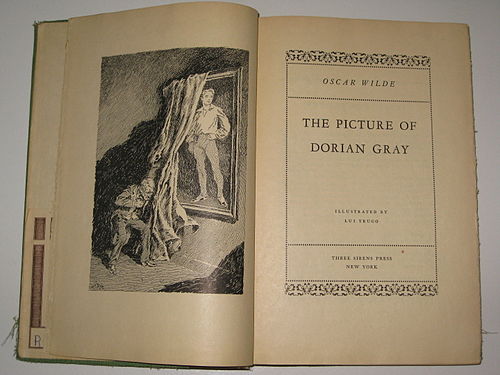
http://upload.wikimedia.org/wikipedia/commons/thumb/3/34/ThreeSirensPress_-_Dorian_Gray.jpg/500px-ThreeSirensPress_-_Dorian_Gray.jpg

Looking to Greek mythology, we see that the immortals (Zeus, Apollo, Aphrodite, and so forth) act a bit like children. They seem to have no need to work and instead spend their time drinking ambrosia and nursing petty jealousies, in a hyper-sexualized existence that intrudes disruptively on human life to the point of fathering human offspring with multiple mates and taking sides when mortals wage war.

More close to our time, the TV series Star Trek: The Next Generation, showed similarly self-involved and immature behavior in the eternal creatures of “The Q Continuum.” Of course, both the Greek gods and the “Q” are death-less and all-powerful. Perhaps then there is something in our mortal state that, when coupled with our limited power causes us to take seriously our time, our actions, and our responsibilities.

Would life lose its gravitas if it was endless, the sense that what we do with it is important? Leon Kass has suggested that, without death, there can be no courage; without death there can be nothing more important than life itself — nothing for which one would choose to sacrifice one’s life.

Or, to put it less philosophically, where would the thrill of a roller coaster ride come from if you sensed absolutely no physical danger to yourself or your companion?

What is it about the lives we live everyday that makes for growth, maturity, and wisdom?

What part of wisdom comes from observing your bodily transformation from the clumsy weakness of early youth to the deft mastery and strength of your 20s and 30s and then the road back again, remembering what you used to be able to do but can no longer accomplish as the days grow short.

Isn’t the source of wisdom, in part, the necessity of making decisions that can have almost irreversible consequences? We must pick a mate wisely because we expect to live the best of life with that person during the small window of time when a family is possible; the same is true for the choice of what to study in school and what career path to follow. We must act quickly and wisely, before life’s curtain comes down.

The ticking clock makes us take all these things seriously. With no clock, what then? An infinite number of relationship choices and do-overs, in love and in work. Nearly every choice loses significance in a world of immortals. And the consequence of fewer permanent consequences? Lives of more froth, less weight.

Literature and art would be transformed in a world without illness — without doctors, nurses, and hospitals; without the daily drama of death nearby. Perhaps science fiction would then imagine a world like ours, where we are all in transit, with the troubles (but also the seriousness) that grows out of the fragile bodies we inhabit.

Would you really want to live for eternity? It’s true, you wouldn’t be worried about dying and losing those you love, your hair, your looks, your flexibility, your chances. But then, you’d no longer really be human and what you’d be living wouldn’t be human life as we know it now.

In some things, too much can be as much a problem as too little.

It is a cliché, but death gives life meaning and makes our lives what they are. Does this mean we should all gratefully give up hoping for eternal youth? I doubt that we will. That wish, too, is what makes us human.

No matter the matter, the grass always looks greener on the other side of the fence. If eternity is too long and life is too short, what then?

Edna St. Vincent Millay put it this way in her 1920 poem First Fig:

My candle burns at both ends;

It will not last the night;

But ah, my foes, and oh, my friends —

It gives a lovely light!

—

The top image is the Animated Version of User Lucien Gray by Mushii. The following photo is called Vampire or Werewolf? by David de la Luz. Next comes Drinking Bacchus (The God of Wine) by Guido Reni. The last reproduction is the Inside Cover of Oscar Wilde’s “The Picture of Dorian Gray” as Published by Three Siren Press in 1931, picture by Ericpenner. Dorian Gray was a fictional character who did not age, although his portrait reflected his increasing moral corruption. All are sourced from Wikimedia Commons.

“You Should Always Have Enough ‘F**k You’ Money:” Relationship Power in Politics and Life

http://upload.wikimedia.org/wikipedia/commons/thumb/a/a5/David_Frost_Rumsfeld_interview.jpg/500px-David_Frost_Rumsfeld_interview.jpg

My apologies for the profane title. There is just no delicate way to get this idea across, as the musician Larry Adler knew when he first wrote it.

What he was trying to say was, unless you are able to do what you want despite the personal or financial cost, you really don’t have as much power as you might think.

More about Mr. Adler later.

But for now, take a look at the above 2005 photo of journalist David Frost (on the left) and Donald Rumsfeld, then U.S. Secretary of Defense, as an example of what Adler was talking about. I imagine you can guess who is in control of this interview — who has the power.

In order to be successful, a reporter must have access to the people who make the news. And, if politicians find you to be too aggressive in your questioning, they will go elsewhere. In this relationship, the politician usually has more power.

This tells us why so many TV political reporters seem incapable of pursuing answers to the tough questions that need to be put to politicians; indeed, why the tough questions often go unasked.

The truth is, they are not incapable, they are simply unwilling and hesitant. Afraid of being cut off from access.

Why? Because unlike the politician they wish to interview, they cannot go elsewhere to tell their story. That gives the politician more power.

Power also explains much else about relationships; that is, who is in charge, regardless of who might appear to have the upper hand.

I’ll get to your relationships later in this post.

But first let me address the connection between politicians and members of the news media in greater depth.

Understanding this might help you understand your own life.

—

Let’s start with a few premises. Most TV and radio interviewers are not well-known. Their ability to obtain interviews with the most prominent people in the world depends on the good will of those people. And, there are many, many more interviewers than there are people in positions of power.

So let’s say that you’re a low-level reporter, a man of small reputation, who wants to talk with a congressman on TV. You start by asking a question and get in response the politician’s well-rehearsed talking points on the subject, which are not likely to precisely address the query.

Perhaps the politician says, “The American people want X.” Do you challenge this? Do you say, “Well, Congressman, according to the last five polls we have on this subject, the American people actually don’t appear to want X. Not even close. Why do you persist in saying that they do in spite of the data?”

No, not likely, not usually.

Why not?

As I’ve implied above, the reporters need the public servants much more than the public servants need the reporters. Since there are many more interviewers (and news outlets) desiring the time of the elected official, the latter can avoid an unfriendly interrogator. He can go elsewhere with his talking points, to a place where he will receive a less challenging reception.

Put simply, we are dealing with supply and demand.

Because of a surplus of TV, radio, and internet news sources, the terms of engagement will usually be dictated by the man who is in demand, not the relatively anonymous reporter who can always be replaced by someone in the long line of other aspiring journalists. Only the best known, most popular or well-respected members of the press are in a position to do their jobs thoroughly and well: to ask the tough questions, get them answered, and forcefully challenge self-serving untruths.

If, however, you are the aforementioned anonymous reporter who actually tries to do his job, relentlessly challenging falsehoods and the efforts of elected officials to change the subject, you lose access to them.  Without “newsmakers” to be interviewed, your show’s sponsors abandon you and your boss fires you. And so, to avoid this outcome, you may surrender a bit of your integrity and permit answers that are unresponsive to your questions, while ignoring those comments that are disingenuous, preposterous, misleading, or frank lies.

The independence of the reporter and the politician is only apparent. It doesn’t reflect their real interdependence, with the “pol” most often holding the reins, able to direct the conversation as he wishes; answer what he wants in the way he wants and ignore the rest.

This sort of thing doesn’t stop with political reporting.

http://upload.wikimedia.org/wikipedia/commons/thumb/3/30/CNBC_Fast_Money_team.jpg/500px-CNBC_Fast_Money_team.jpg

If you watch CNBC for moment-by-moment financial news, expect drama over sobriety; expect red-faced intensity to match the gyrations of the changing numbers on the screen. So-called authorities are given a platform for economic analysis, typically without a serious challenge to the limited understanding anyone has of the financial markets.

The show specializes in overly simple economic opinions and predictions offered by “experts,” who provide only brief justification for their statements. Nearly all of the talking-heads who offer that advice seem equally certain about what they are saying, even if their positions are diametrically opposed. Unfortunately, the audience, made up of average investors, will find the underlying issues far too complex and insufficiently elucidated to do much more than pick one of the speakers who “sounds good” and hope that his judgment is right.

Why is this permitted to happen?

Although the reporters do appear to be bright, well-educated people, their first job is to make sure we watch them — nothing more noble or enlightening than that; certainly the goal of helping us understand what is important about financial events is lower on their list of priorities.

As a result, CNBC does what is necessary to make drama out of financial happenings, hoping that you will stay tuned in. It treats the ups and downs of the stock market as big news, even when that news is very temporary and of little or no lasting importance. Large moves up on the Dow Jones Industrial Average can be received as if “Happy Days are Here Again,” while down-days are made to seem as if the sky is falling.

If your investments appear to be tanking, I wouldn’t call on one of these people to talk you off the ledge (as in the case of the rather stiff creature just below, who looks as if she has been watching CNBC too much recently).

http://upload.wikimedia.org/wikipedia/commons/thumb/1/19/Heurich_Mausoleum_by_Louis_Amateis_%28ca._1895%29_Control_IAS_76004848_frontleft.jpg/500px-Heurich_Mausoleum_by_Louis_Amateis_%28ca._1895%29_Control_IAS_76004848_frontleft.jpg

Sensation-producing guest commentators are often featured over those who are inclined to say “this too shall pass” or “I don’t really think anyone can explain movements in the financial markets on a day-to-day basis.” The latter message is problematic for CNBC not only because it is boring, but because it defeats the show’s premise: that your stock portfolio will benefit if you regularly watch and learn from the program, despite the stomach acid created by its over-dramatized, hyperbolic presentation of financial commentary.

Rarely is anyone on CNBC permitted a really detailed and lengthy defense of his predictions about upcoming commercial trends. That would be too much like taking a course in economics, famously called “the dismal science.” But a thorough and complex look into the crystal ball at fiscal “Tomorrow Land” is surely required given the historic failure of financial analysts to create an accepted and accurate method of doing this.

Program hosts really don’t want to offend by pointing out the limits to economic future-casts, so statements by guests are rarely aggressively challenged, although some of the regular CNBC presenters are quite happy to argue with each other, since fights just might attract more viewers.

But even worse, a guest commentator is not required to provide a performance record of his accuracy in predicting the future of the financial markets, in the way that a baseball player’s hits, runs, and errors might point to a player’s value to the team.

I find the absence of that kind of score card quite remarkable. Financial analysis and advice is a business that focuses entirely on numbers. Yet the reporters infrequently track the predictions made by those same guest commentators. Such data might, after all, result in some pretty embarrassing questions like “Gee, four months ago you were certain of X, now you are saying you are certain of Y and over the past three years your predictions have been correct only 31% of the time, so why should we believe you now?”

As Burton Malkiel notes in his classic book on investment, A Random Walk Down Wall Street, the great majority of investment managers do not do as well in choosing profitable stocks for their clients as would a randomly chosen selection of similar equities. This fact, by the way, has stood the test of time and is part of known and accepted economic knowledge.

In other words, if the predictive failures of the experts were displayed on the TV screen, those consultants with a history of mediocre clairvoyance (which is most of them) wouldn’t come within a mile of CNBC or any similar media outlets. Given that the hosts don’t want their program to fail, they cannot easily say that “the emperor has no clothes.”

Don’t expect this to change any time soon.

They have given away that power in return for commercial success.

—

So what else are we talking about here, beyond the political and financial domains?

I believe that what I’ve written here about power in relationships applies just as well to the connections between leaders and followers, performers and their audience, the pastor and his flock. In all these relationships there are conditions in which the unseen power of one person or group will produce deference or capitulation from the other person or group, even when we’d think this shouldn’t be so.

Some of the most admired people sometimes fear that they will lose their audience. As a result, they become hostage to others’ opinions and betray their own better instincts by giving away their power to those same “others.”

I am reminded of a story told by Yehudi Menuhin regarding Pablo Casals in Menuhin’s book Unfinished Journey. Menuhin, a world-famous American violinist, was the first Jewish musician after World War II to play under the direction of Wilhelm Furtwängler, the most famous German conductor of his time. Furtwängler was a controversial figure because he had chosen to stay in Germany during the period of the Third Reich and was believed to have compromised himself by allowing his artistic talents to be used for propaganda purposes by the Nazi state. But he was never a member of the Nazi Party and helped save the lives of a number of Jewish musicians. In other words, a man with a complex history.

In 1947, already under heavy criticism for his musical contact with Furtwängler, Menuhin hoped to arrange a recording to be conducted by Furtwängler with the equally famous cellist Pablo Casals. Casals was then 71-years-old and revered for both musical and extra-musical reasons. He had refused to set foot in his Spanish homeland so long as Franco, the fascist dictator, remained in power there, and he publicly opposed Franco from his self-imposed exile in France.

http://upload.wikimedia.org/wikipedia/commons/thumb/8/85/Pau_Casals_centenary_statue.jpg/500px-Pau_Casals_centenary_statue.jpg

The stage was set: the musician Furtwängler, tainted (perhaps unfairly) by fascism and the musician Casals, hero to the anti-fascists. They had made music together of great beauty and refinement before Germany was ruled by Hitler and his gang. Could Menuhin bring these two men together now that the war was over?

http://upload.wikimedia.org/wikipedia/commons/thumb/f/f3/DBPB_1955_128_Wilhelm_Furtw%C3%A4ngler.jpg/500px-DBPB_1955_128_Wilhelm_Furtw%C3%A4ngler.jpg

Let Menuhin tell the story:

I asked Casals his opinion of Furtwängler… Furtwängler he admired, not only as a conductor but as a German: he had been right to stay in Germany and do what he could for music and musicians. Reassured, I suggested that I might try to arrange a recording of the Brahms Double Concerto to be made by Casals, Furtwängler and myself. He accepted in principle.

I made several attempts to pursue the matter (with the record company EMI; they) were interested.  For Furtwängler it would have been a most valuable accolade, given by the foremost antifascist musician; but all approaches were deflected by Casals — he would love to make the recording but couldn’t at the moment. Finally, some two summers later, after perhaps the third prodding, he sent me a letter which with disarming frankness betrayed the limits of his independence: he assured me that he personally had nothing against Furtwängler and could envisage few greater pleasures than playing with him, were it not for the fact that to do so might compromise his antifascist stance and dismay his followers. In other words, he was prepared to let me know he didn’t have the courage of his convictions; so long as those convictions were approved by his admirers, they were strong convictions indeed, but in other circumstances not strong enough to withstand guilt by association with a man wrongfully accused.

Now think back to those politicians I mentioned before — the ones who have their way with reporters who fail to strenuously cross-examine them; but by contrast, many of these “pols” go along with the “party line” of the people who are supposed to be on their side. I am talking about public officials who conform with servile adherence to tests of political purity maintained by some of their constituents, (for example, a pledge never to raise taxes on anyone regardless of circumstances, no matter how rich the person might be).

Such politicians can dictate interview terms with some of the journalists, but appear hostage (like Casals) to their “friends” and supporters, be they big business or labor unions or the people who fund their campaigns for reelection.

Look around you. Look at clergymen and their congregations, at wives and husbands, at parents and children, at employers and employees. And, look too, at you and your lover, if you happen to be unmarried. Figuring out who might have the upper hand (and why) is not always an easy thing. But if you cannot live without a certain person’s approval, you do not have as much leverage as it might otherwise appear. You are likely to give too much ground, too often.

Larry Adler, the twentieth century American harmonica virtuoso, very clearly saw the “power” element in human relationships at work in the period just after World War II. As a man who had been “blacklisted” for alleged Communist sympathies during the McCarthy era, he did not want to be anyone’s hostage, even at the cost of his livelihood. He spoke his mind publicly at a time when doing so was dangerous.

Although he was not a Communist, he believed that no one in a free country had a right to require him to take a loyalty oath or declare his political sympathies — in effect asking him how he would vote. In the midst of a political witch-hunt — at a time when many employers and concert-promoters demanded this kind of reassurance — his refusal resulted in the loss of his ability to get work, forcing a move to England simply to make a living.

The title quotation for this post comes from his autobiography, It Ain’t Necessarily So.

Just to reiterate:

You should always have enough ‘F**k you’ money.

You don’t have it unless you are willing to act on it; that is, unless you are prepared to refuse conditions imposed by someone else, even at great cost to yourself.

But it’s more than just about money, isn’t it?

If you love status, approval, applause, material things, the sexual attention of others (or money) more than who you are and what you stand for, you are in trouble, my friend.

And the person who figures this out will have power over you.

Powerful or powerless?

Most of us aren’t heroic.

Still, you must choose.

Indeed, you have already made the choice.

http://upload.wikimedia.org/wikipedia/commons/thumb/2/21/Larry_Adler%2C_City_center%2C_NYC%2C_January_1947_%28Gottlieb_00031%29.jpg/500px-Larry_Adler%2C_City_center%2C_NYC%2C_January_1947_%28Gottlieb_00031%29.jpg

—

The top image is David Frost (left) Interviewing Donald Rumsfeld on June 14, 2005, photo taken by Robert D. Ward. The second picture is of CNBC’s Fast Money Team until 2007 – 5 – 18. The statue on the ledge that follows comes from the Heurich Mausoleum by Louis Ameteis ca. 1895 and was photographed by Wikipedia Saves Public Art. The fourth image is a Centenary Statue of Pablo Casals at Montserrat, Spain taken by UserMdd4696. Just below it is a 1955 commemorative postage stamp of Wilhelm Furtwängler, scanned by NobbiP. Finally, a photo of Larry Adler taken at City Center in New York, ca. 1947 by William P. Gottlieb. All are sourced from Wikimedia Commons.

Confession and Psychotherapy

http://upload.wikimedia.org/wikipedia/commons/thumb/8/8b/The_confession.jpg/500px-The_confession.jpg

An old Woody Allen joke goes something like this. The comedian is talking about problems in deducting the cost of therapy on his income tax return. He wanted to make it a business expense, but the government insisted it was “entertainment.”

They compromised by making it a religious contribution.

Therapy is a little like that, no joke.

Carl Gustav Jung, one of Freud’s disciples, wrote about the likeness between therapy’s confessional function and Sacrament of Penance in the Catholic Church. For those who aren’t Catholic, the faithful individual is expected to enter a small partitioned booth, where a priest will hear his confession of sins without being able to see who is speaking to him. If the penitent is thought to have fully disclosed his wrong doing, shown sincere remorse for the transgression, and if he performs whatever acts of penance are required by the priest to make amends, he is absolved of his sins.

Although I am not Catholic, I’ve long thought the Catholic Church was on to something therapeutically important here. That is, the human need to admit to another human being, out loud, something of which one is ashamed, in order to cleanse the metaphorical stain this person carries inside. Other religions handle this differently, often permitting and encouraging confession in the form of prayer directly to a supreme being.

But for therapists, the human interaction is essential — the telling and the listening and the seeing eye to eye — even if your ultimate, otherworldly reward according to religious doctrine doesn’t require it.

Why?

In part because, while heaven can wait, the guilt-ridden mortal is troubled right now — here on earth — in his relationships with other people; troubled by the secret that stands between him and a need for acceptance by someone who knows, really knows him. An intimacy he does not think he can risk.

Even if he believes the gods will forgive him, his problem is lower on the food chain: he fears the disapproval of the creatures made of flesh and blood.

—

We learn the lesson “not to tell” early.

We make mistakes, lots of them. And especially when you are young, there is the potential for an enormous amount of painful judgment being rendered concerning those “mistakes,” some justified, some not.

Kids are prone to feeling guilty. When we are small, we are entirely dependent upon the good will of our parents. Without them, we are at the world’s mercy, unable to fend for ourselves. Equally important, they inform us of our value to them — by their words to us, physical expressions of affection or violence, the time they spend (or don’t spend) in play or attention to our needs, in angry outbursts or self-sacrifice; and in looks that display tenderness, disappointment, rage, understanding, or indifference.

Some amount of parental disapproval is inevitable and necessary. Indeed, it is required to civilize us. But since there is no competing panel of experts to counter any misplaced verdict rendered by the parent (who is the child’s judge, jury, and headsman) even enormous miscarriages of justice by a cruel and abusive elder tend to stand without refutation.

You are guilty!

You are bad!

Off with your head!

Case closed.

Most children do not have anywhere to go with this. There is not only no court of appeals, but since they have been made to feel ashamed, kids are unlikely to turn to anyone else to recount their alleged misdeeds and risk the possibility of further painful disapproval, not to mention the sense of having betrayed the parent by reporting out what has happened. Moreover, the child continues to need the parent’s good will. Carrying a grudge against the parent, expressing it directly to that parent (at least when one is very young) is dangerous — likely to produce more disapproval still.

Better to accept the parent’s condemnation. At least that way, the little one may still hold on to the hope that by changing for the better he can achieve the love and approval that has been wanting.

Even for rebellious youth, there tends to be a portion of the parent’s negative opinion that is indelible. Sort of like a tattoo, it is written on the personality, the sense of self. This metaphorical image of the tattoo overlays and alters the self-image. And like the tattoo, it is the product of a painful engraving; not easily removed, but still present long after the moment of imprint, reminding you of your iniquity.

http://upload.wikimedia.org/wikipedia/commons/thumb/5/50/Blinded_by_The_Lights.jpg/500px-Blinded_by_The_Lights.jpg

Whether the child does his best to “behave” or knowingly misbehaves, he will disappoint a parent who cannot be satisfied even by perfection, who undermines self-esteem; the kind of parent who tells you to “run fast, get ahead,” and then finds ways to trip you up or tie you in knots that make any forward movement difficult.

Almost certainly, the young one will do some things that are less than admirable: perhaps raging, stealing, lying to avoid more disapproval, or violating curfew; as well as forgetting something the parent wanted him to remember, day dreaming, performing poorly in school, withdrawing from contact with the family, and acts of alleged ingratitude; or visits to a sexual or drug-involved dark-side in a search for acceptance and love or a simple self-distracting escape from inner misery. There is no end to the list of things that can be considered offensive, real or imagined. Perhaps just as troubling, the youth will think contaminating, “bad” thoughts.

I wish he (she) were dead.

I wish I had a different father (mother).

I wish I were dead.

Some few will grow out of this desperate experience and achieve a gift of self-cleansing and self-soothing that requires neither confessor nor therapist; others will be able to rationalize their early life misbehavior into benign disappearance. But for too many, by hook or by crook, by word or by deed or by thought or by feeling, there will be guilt under the surface, however bright and shiny the surface may seem.

That is where psychotherapy and the psychotherapist’s role as a confessor comes in.

http://upload.wikimedia.org/wikipedia/commons/thumb/1/11/JASNAG%C3%93RA6.JPG/500px-JASNAG%C3%93RA6.JPG

The “confession” usually doesn’t happen at the beginning of therapy. Trust in the therapist must be earned by the counselor.

But come it does, often in the middle of a course of therapy, but sometimes very late.

It goes something like this:

There is something I haven’t told you. (Eyes now looking down). I haven’t told anyone. Ever.

No small amount of courage is required to tell the things that cannot be told. Until this point the patient has carried his secrets inside — these awful, disqualifying, contaminating things that make him unworthy — the history of thought and action he believes would cause everyone and anyone to reject him, “if only they knew.”

Unlike the priest in the confessional, it is important the patient knows the therapist and the therapist knows the patient’s identity. Otherwise, any absolution is too generic, too cheaply won, not specific enough in its application to the “sinner.”

The therapist must be non-judgmental. The counselor’s office is not a court of law. The purpose is healing, not retribution. There is no automatic amends to be made, although sometimes it will be therapeutic to do so. If needed, the patient may discover that writing a letter (even an apology that is never sent) can be helpful; sometimes the grave site of a deceased parent can be visited. Atonement can also be found in acts of future kindness or projects dedicated to improving the human condition.

But often, no atonement is required because the patient comes to realize he was the victim, not the victimizer. And that his failure…

  • was being born a boy when the parent wanted a girl
  • or an intellectual when dad wanted an athlete
  • or a tom boy when mom wanted a little lady
  • or an introvert when the parents hoped for an extrovert
  • or simply that one of the elders was threatened by the growing child for reasons defying explanation.

And that with enough poking and prodding, resentment and ridicule, the authority figures triggered and tripped the child into behavior that could be used as further cause, if any was needed, for affixing guilt; as if the guardians were unsatisfied until they could create flaws to justify their history of disapproval.

The therapist will help the patient look at the “guilty” acts or thoughts from many sides. The therapist is a witness of sorts, someone who has to hear you (however horrible your action might have been or seems to have been), meet your gaze and see the guilt in your eyes, and still accept you, even then.

One or more others might need to be told the same story now revealed to the healer, again face-to-face,  so that the patient (in telling it and observing the reaction of the person being told)  comes to know he is acceptable and forgivable, not only in the eyes of the counselor, but also by a select soul whose love and respect outside the consulting room are important. Great care must be taken if others are to be told, however, for some of the potential listeners will only add to the accumulation of negative judgments that already burden the patient, while a few people will be unnecessarily injured by the knowledge and should be spared.

What then might be the result of such therapeutic exposure for the patient who has chosen his therapist well, and made no unfortunate choices of disclosure to family or friends?

In the best cases, the light and air that are allowed into the room holding the dark secret can transform it, making it seem less terrible, less disqualifying. Internal repugnance diminishes. The weight or responsibility attached to the transgression is shifted and reduced. You feel purified.

There is freedom and grace in this, as in the confessional booth. An unburdening.

The simple act of another human being listening to you — still caring for you and about you. Believing in you and your value.

You are no longer alone — alone with a secret that makes you feel like a pariah; disqualifies you — only you, however irrational that thought is — from membership in the human community.

Now, at last, it is possible for you to reevaluate and affirm yourself.

And life — a better life — goes on.

—

The top image is The Confession by Pietro Longhi, thought to have been painted in the 1750s. The photo that follows is called Blinded by the Lights, authored by Suicide Girls from Los Angeles, CA, USA. The last image is the work of Reytan. It shows a number of confessional booths. All are sourced from Wikimedia Commons.

“Relationship Crime” or the Man Who Knew a Little Bit Too Much

http://upload.wikimedia.org/wikipedia/commons/thumb/1/15/Kirchner_-_Zwei_Frauen_mit_Waschbecken.jpg/500px-Kirchner_-_Zwei_Frauen_mit_Waschbecken.jpg

Knowledge can be a problem. You know the old saying, “A little knowledge is a dangerous thing.”

I once had a friend who was dating a lovely woman. She was charming, sweet, and fun to be with. And, this lady was very kind, a person who respected others and went out of her way not to do harm. My wife and I enjoyed her company and my friend seemed to appreciate her immensely, as well.

But, not really looking for someone else, he stumbled upon another woman who pursued him; a pursuit to which he succumbed. Rather quickly, it is true. He didn’t put up much of a fight.

She too was charming and perhaps a bit more energetic than his current lover, and I suspect a little bit sexier, too. She had a sleek sultriness that his girlfriend didn’t possess. But since he never told woman #2 that he was “involved” with someone else, he was “fair game” as far as she could see; and he certainly didn’t proclaim any abiding allegiance or committment to the lady he’d been dating.

From this point, my buddy enjoyed the company of both women — enjoyed sex with each of them — and he saw no reason to tell either one about the other.

But he did tell me what he was doing.

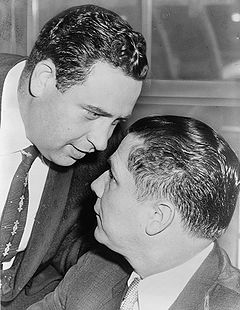
http://upload.wikimedia.org/wikipedia/commons/thumb/b/ba/Bernard_Spindel_%26_Jimmy_Hoffa_1957.jpg/240px-Bernard_Spindel_%26_Jimmy_Hoffa_1957.jpg

I asked if either one knew that he was sleeping with someone else; and he had to admit that each of them thought she was in an exclusive relationship with him — that she was the “one and only.”

I pointed out that there was implicit deceit involved, since he knew that his lovers were with him only because they did not know the truth.

“No one is being hurt,” was his reply. And he was sure, he said pre-emptively, that he did not have a sexually transmitted disease, which he’d checked out recently with his MD. No one was in harm’s way from physical disease, he assured me.

As far as this man was concerned, he had made no promise of eternal fidelity and believed that a “no strings attached” understanding existed all around.

My friend was not a young man, nor were the two women — the three of them hip-deep into their fifth decade on the planet. Everyone had been around the block several times. All parties had been hurt more than once. They knew the pain of heartbreak. They didn’t need any more of it, not that anyone of whatever age needs more. It was just that the resilience of youth was no longer as available to any of them as it had been a while back, and one would have hoped that the man had thought just a bit about this fact.

I asked him how he would feel if his youngest sister were sleeping with someone who was doing what he was doing: simultaneously having sex with another woman whose existence was a secret?

This sort of thing used to be called “two-timing,” but I didn’t remind him of that.

He pretended that he did not hear me. Better to keep the walls up, the compartments separated. It was the sort of response (or lack of response) you get from someone who doesn’t want to think any troublesome thoughts that might arouse his slumbering conscience. And so he kept the metaphorical blinders on himself, so that he could not see the collateral damage of his self-serving behavior.

http://upload.wikimedia.org/wikipedia/commons/thumb/1/19/Saddlebred_Stallion_in_Harness.jpg/500px-Saddlebred_Stallion_in_Harness.jpg

Although he wouldn’t have admitted it, he viewed these women “instrumentally” — in terms of what they were good for and how they could be used, while comforting himself that “no one is being hurt.”

Perhaps you are asking why all this troubled me. Several reasons. I cared about the first woman — my wife and I both cared about her — and were happy to have become her friends. We knew that she was being fooled, even if she was not presently in any pain. We knew that the “relationship” was based on deceit and her lack of knowledge. We expected her heart to be broken before long. And, I felt bad about the moral degradation of my friend, someone who I could no longer look at in the same way as before — could no longer respect as I once had.

My buddy told me all that I have now related to you on the condition of confidentiality. But that was going to be a problem. Not that I would break his trust, but that I now had what might be called “guilty knowledge.” I knew too much for my own good.

My wife and I had a double-date scheduled with our friend and girlfriend #1. At dinner I was uncomfortable. I knew something that his lady friend didn’t know and I realized that eventually she would be left spinning, which didn’t lighten my mood. It was as if I had just read her X-ray and discovered a spot on her lung about which she knew nothing — yet.

http://upload.wikimedia.org/wikipedia/commons/2/21/Spinning_Dancer.gif

Nor did I want to participate in the sham of their implicitly exclusive relationship, the references to future things that they planned on doing (some with us), or watch the way that this gracious and good woman-in-love looked at a man who, although he was my friend, was ( I now realized) not nearly so gracious and good; and not in love with her.

The day after this get-together, I phoned to tell him that so long as he was dating both of these women I could not go out with him in the company of either of them; I could not pretend that I didn’t know what I did know.

I knew a little bit too much.

It was not long before my friend ended the contact with the first woman. I suspect that his decision to end the relationship had more to do with his developing feelings for female #2, than any unhappiness with his first girlfriend or the flowering of his dormant conscience. And, I’m pretty sure he’d had difficulty coping with the logistical problems of juggling two relationships, each with a woman who wanted as much of his time as he could give. After all, there are only seven days in a week and the task of keeping both women happy (and unaware of the other) began to wear him down a bit.

And just to show how little influence I had on my friend, he repeated the two-timing when another woman came along who found him attractive. Now girlfriend #2 achieved the position of the previous girlfriend #1, and like here predecessor, she too was eventually taken to the relationship consignment shop. I guess practice makes perfect.

—

Many years before, when I was an intern in a psychiatric hospital, I recall a raving, out-of-control man being brought into the locked-unit to which I’d been assigned. He was suffering from Bi-Polar Disorder, which you might know by the label Manic Depressive Disorder. Clearly, he was in a manic phase — grandiose, impulsive, erratic, exploding with energy, and incapable of making good judgments.

He had been a high school teacher of mine. A wonderful teacher. Fortunately, he didn’t seem to remember me and I made no effort to remind him of who I was and thus risk embarrassing him.

There are things that we don’t want to see in life: the failings of our friends, the frailty of respected parents and teachers, the needless hurt that one person we care about is doing to another one we care about. We don’t usually want to be party to deception, an accessory to even the kind of commonplace “relationship crime” that my friend was committing against a woman he liked very much.

None of this is very earth-shaking, I know. Unless, of course, you are girlfriend #1. But watching people diminish themselves is no fun, even for therapists who see it every working day. Bad decisions, hurtful decisions, thoughtless and self-serving decisions — all of it part of routine human experience.

We’ve all done some of it, but the best among us learn that it is wrong while others just keep on doing it.

As I said at the start, “I once had a friend…” He might now more accurately be described as an acquaintance. Someone about whom I think wistfully, remembering the days when I thought he was better than he turned out to be. Was he? Had I simply missed some things about him, never seen him in the kind of situation that revealed his limitations?

Sometimes the only conclusion to the story is “I don’t know.”

—

The top image is Two Women with Sink by Ernst Ludwig Kirchner. The second photo is of Bernard Spindel Whispering in the Ear of James R. Hoffa in 1957, taken by Roger Higgins, a photographer for the New York World Telegram and the Sun newspapers. The following picture of a Saddlebred Stallion in Harness is the work of Steve Fortescue. Finally, the flash-animation Spinning Dancer was created by Nobuyuki Kayahura at the Procreo Flash Design Laboratory. All images are sourced from Wikimedia Commons.

Too Many Balls in the Air: The Frustrated and Frustrating Life of ADHD

http://upload.wikimedia.org/wikipedia/commons/c/c8/Carbon_Cycle-animated_forest.gif

He was dynamic, outgoing, and enormously entertaining.

He was creative, full of ideas, and energetic.

And he was one of the most frustrating people you would ever care to be around.

About whom do I speak? A bright, charming man with Attention Deficit Hyperactivity Disorder.

ADHD is more complicated than you might think. Although there is much written about it, I want to cover a few of the things that can be missed about the condition. But first, let me explain the name and define it.

There are three types of ADHD (Attention Deficit Hyperactivity Disorder):

  • 1. ADHD, Predominantly Inattentive Type. This used to be called ADD, but technically speaking, sufficient inattentiveness is considered a category of ADHD, even though little hyperactivity may be present. These are the folks who seem to be listening, but are lost in space; easily taken away by a tune, a sound, or an idea; the people who miss the details and forget the assignments.
  • 2. ADHD, Predominantly Hyperactive-impulsive Type. This is what most people think of when they hear or read the four letter acronym ADHD. People with this diagnosis are characteristically talkative, active, intrusive; a bundle of unmanaged, impulsive activity.
  • 3. ADHD, Combined Type (meaning it includes the symptoms typical of the first two categories); too many balls in the air, for sure.

What about the man I mentioned at the top; a person who had the “combined type” of ADHD?

He had lots of energy and ideas, so people found him engaging. But it wasn’t a very productive sort of energy. He would begin things, but not complete them. He was disorganized — losing keys and papers, and forgetting appointments. He promised to do things, but couldn’t be relied upon to do them as quickly or as well as expected, if at all.

This man (let’s call him A.T.) went nowhere fast; very fast. A.T. looked liked the “Energizer Bunny,” but mostly traveled in circles.

http://upload.wikimedia.org/wikipedia/commons/5/5f/Tux_Linux_crystal_award_nevit.gif

He tended to over commit himself, taking on more tasks than he could handle effectively, chronically underestimating what he could accomplish in the time available. A.T. was routinely late for appointments, and made decisions quickly, without fully considering the longer term consequences of his actions. Bored easily, distracted more easily, and prone to procrastination, he knew that he wasn’t what others hoped for and expected. Although he was full of promise, his reputation was that of someone who was a thoughtless, irresponsible underachiever — an individual who needed minding.

Employers were disappointed, co-workers were frustrated by A.T., and his spouse was driven just a little crazy, feeling that she couldn’t depend on her partner. She’d married someone who was exciting, only to find that the excitement he produced was more of the “Oh, no!” kind that made her sweat when she discovered he was late to pay a bill or pick up the kids. Not surprisingly, she started to see him as just another one of the kids, as their partnership turned into more of a “disapproving mother/resentful child” relationship than either of them wanted.

http://upload.wikimedia.org/wikipedia/commons/thumb/9/96/Europa-Park_-_getroffen_4_-_von_Mama_ausgeschimpft.jpg/240px-Europa-Park_-_getroffen_4_-_von_Mama_ausgeschimpft.jpg

Before I tell you about A.T.’s treatment, let me say a few things that might not automatically come to mind about the condition and its consequences:

1. Hyperactive/impulsive ADHD individuals can sometimes look like they are world beaters, but mostly beat themselves; indeed, they are often chronic underachievers. If you are planning on forming a working group or partnership with such a person, don’t be fooled by a positive first impression of excitement and energy. You will almost certainly be disappointed down the road.

2. ADHD, even today, is sometimes not detected in schools. There are several reasons:

  • The inattentive form of this condition may well produce school failure, but not misbehavior. Inattentive children are often quiet and relatively well-behaved, unlike their hyperactive-impulsive counterparts.
  • School personnel may incorrectly attribute ADHD-like behavior to laziness or oppositionality. Moreover, school systems, even when they do formal evaluations, are frequently reluctant to identify problems that require additional resources and personnel, which they are hard-pressed to provide given their limited funds.
  • An ADHD child who is bright can compensate (to some extent) for his attentional problems by relying on his excellent intellectual abilities, at least for a while. Eventually, however, many of these children (as they age and school begins to demand more of them) find out that advanced intelligence is no longer sufficient to permit success.
  • There is no single standard measure that reliably identifies ADHD. Evaluators commonly use some combination of paper and pencil tests, clinical judgment, and attentional measurements. Intelligence (IQ) and neuropsychological tests can easily miss some of the most clinically obvious cases of this condition.

3. The fact that ADHD children are able to become “hyperfocused” on things like computer games or other tasks that they find especially interesting, does not invalidate the diagnosis of ADHD. Indeed, this sort of selective attention is seen fairly often.

Some researchers believe that those games provide rewarding stimulation in the form of frequently changing images, sounds, and challenges; as well as the success of achieving points or increasing levels of success, thus “capturing” the attention and imagination of the ADHD youngster. By comparison, the real world school room seems boring. Recommendation? Limit your child’s screen time, even in front of regular TV shows.

http://upload.wikimedia.org/wikipedia/commons/thumb/a/a3/2_men_using_their_computers.jpg/500px-2_men_using_their_computers.jpg

4. Although many people are hesitant to take medication, ADHD is a diagnostic category that is especially responsive to psychotropic medication. Hundreds of studies support the effectiveness of such treatment for about 85% of children with this condition according to Russell Barkley’s authoritative 2006 book Attention-Deficit Hyperactivity Disorder. In a 2007 paper by Elliot and Kelly — “ADHD medications: an overview” published in the journal Attention — the authors state that “No medicine available to psychiatrists produces a more rapid and dramatic effect more safely than the proper dose of a stimulant to a patient with ADHD.”

5. If medication does work, it will likely be needed on a continuing basis, not as a temporary fix. The irony is that stimulant medication, which will cause internal agitation in those who are not suffering from ADHD, actually permits the person with the condition to focus more and become less prone to the hyperactivity/impulsivity that had been a problem.

6. ADHD is correlated with a greater risk of developing a Conduct Disorder, typically characterized by antisocial misbehavior and defiance of authority. Not surprisingly, such individuals often abuse alcohol or drugs (not only as an act of rebellion, but also as a self-medication designed to calm their hyperactive state). Adolescents and adults who have ADHD are thought to make up at least 25% of the population of prisons according to Barkley.

In all these examples, the impulsive, ill-considered behavior that is typical of ADHD takes a fearful toll. Such individuals are easily bored, requiring intense and novel reinforcement (rewards) to motivate them, and are prone to “sensation-seeking” — looking for extreme excitement that their condition seems to make them crave. Indeed, one patient of mine reported driving at speeds approaching 100 MPH on city streets simply for the feeling it produced in him. Nor did he think he was at much risk (or putting others at much risk) in doing so, thus demonstrating the poor judgment characteristic of those with the hyperactive-impulsive form of ADHD, as well as their tendency to disregard rules and authority figures.

7. While many general medical practitioners (GPs) can prescribe medication for ADHD quite well, some are hesitant to do so, sometimes due to lack of training or inexperience with this particular diagnosis. Cautious GPs will prescribe psychotropic medication, but are prone to giving doses that are too small. It is generally best to see a psychiatrist in such cases; that is, someone who specializes in the prescription of medication for psychiatric disorders.

8. The frustration that ADHD produces in school children can make them give up (and eventually drop out), believing that nothing they can do will make any difference in their performance. Some of them will become avoidant of academic or other work tasks because they believe that they will fail, thus producing a self-fulfilling prophecy. Many will get angry at the teachers, bosses, and parents who so often are reminding them of their inadequacies. Thus, ADHD fuels other behaviors that make a good life difficult.

What happened to our friend A.T?

You’d think it was simply a matter of telling him of the benefits of medication, wouldn’t you?

Not so fast.

He was one of those folks who was uncomfortable with the “idea” of having to be reliant on medicine. He told me that he didn’t “believe” in medication, as if it was a matter of religious faith.

A.T. was also quite narcissistic; in denial concerning his own responsibility for the things that went wrong in his life. Similarly, he had no trouble blaming others including bosses and wives. Not to mention that he drank too much and didn’t acknowledge that it was a problem. Indeed, he had only come into treatment at his spouse’s insistence.

One of the challenges of psychotherapy is the fact that few people fit “pure” diagnostic types. Instead, one must be aware of all the complicating factors that can make effective therapy difficult. This man’s narcissism, denial, and alcohol abuse certainly created just such complications.

Had A.T. been more motivated and self-aware, less prone to denying the misery he was creating around him, a cognitive-behavioral (CBT) approach to his ADHD could well have helped, even if he chose not to take medication.

CBT programs include formal guidance in planning and organizational skills, assistance in problem solving and decision-making, help in reducing the number of distractions in the environment, practice in new thinking skills, training in ways to reduce procrastination, and advice to help you cope with failure. Homework is required between sessions.

The program described by Steven Safren and his associates in the work book Mastering Your Adult ADHD, developed by psychologists at Massachusetts General Hospital and Harvard University, was able to produce significant improvement in about 50% of those patients who continued to have clear problems even after being treated with medication.

So, if you have ADHD, medication and CBT provide reasons for optimism that things can get better.

Just don’t drop the ball!

Thumbnail for version as of 15:40, 14 September 2005

—

The top image is the Carbon Cycle created by the U.S. Government Department of the Interior. The one that follows is the Tux Crystal Linus Award by Nevit Dilmen. The next photo was created by Thomas Pusch and is called Scolded By Mama. The fourth picture is of Two Men Playing a Computer Game by Love Krittaya. Finally, a picture of a Geode  by Whitsoft Development. All are sourced from Wikimedia Commons.
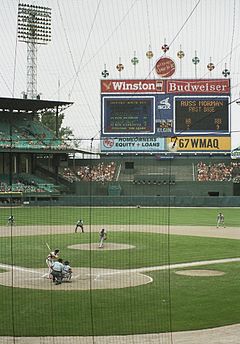
Of Teachers, Tests, and the Luck of the Draw(ing)

http://upload.wikimedia.org/wikipedia/commons/2/2e/Cisne-2g.jpg

As the old saying goes, “It’s better to be lucky than good.”

But sometimes, being good helps a little in determining whether you get lucky.

Now, you wouldn’t think that luck would be an important variable at M.I.T. But the human equation is almost always in play, even in that citadel of rationality and even on a physics test.

The year was 1965. The class was Physics 8.02, the second semester of freshman physics, a course required of all 900 new students at the Massachusetts Institute of Technology. Barely 40 of these young people were women.

As the only National Merit Scholar from Stephen Tyng Mather High School on Chicago’s North Side, you’d have thought that a first year college physics test wouldn’t have presented a problem for Rich Adelstein. But then, you probably haven’t been to M.I.T. As Rich remembers it, the school was a brutal place for those who were not succeeding.

He was succeeding, but barely. He hoped to be on the Dean’s List for the term, but needed at least a C as a final grade in physics to get there. Unfortunately, he’d also begun to get the feeling that he wasn’t quite the scientist that some of his classmates were, but maybe more interested in things like history.

Yet science was what mattered at M.I.T; anything else and people didn’t give you the time of day — didn’t really respect you. These were the sort of kids who, just by a look, let you know that “I can do something really hard and you can’t.”

The culture of excellence, in other words, could be crushing as well as inspiring. The accomplishments of faculty members intimidated you into jaw-dropping awe. And Rich had already heard of suicides occurring at the school. Had the pressure to achieve at the highest level gotten to these students?

http://upload.wikimedia.org/wikipedia/commons/thumb/a/ac/MIT_Dome_night1_Edit.jpg/500px-MIT_Dome_night1_Edit.jpg

An important test was coming up on Friday morning at 9 AM toward the end of the first year. Rich had done his best to study for it, but had the distinct impression that most everyone else was better prepared than he was. And, as he entered the large exam room, where 300 of his classmates would be tested, he felt a little like a man hanging on to a slippery ledge — just beginning to lose his grip.

Rich’s group was in a brightly lit armory, while the remaining 600 examinees were divided between two other locations, all enduring the same event at just the same moment. Sitting there nervously, he waited for the proctor to pass him the blue book on which he would write his answers, and then the test itself.

The first question had to do with “Coriolis forces,” named after the French scientist Gaspard-Gustave Coriolis. But it might as well have been in French, a language Rich didn’t know. He read it, he thought about it, and he knew that he had no idea how to get to the correct answer. “Oh, crap,” he thought to himself, while the anxiety thermometer inside of him started to climb from its already elevated state.

Second question. Again, no idea — just a feeling of being hopeless and helpless. Everyone else seemed to be working industriously, writing away. But Rich’s blue book was still blank and a state of panic-induced “brain-lock” was descending upon him. Rich had never — never ever — failed an exam. Would this be the first?

“I’ve got to get a grip on myself,” Rich thought. “I’m starting to come apart. I’ve got to calm down in order to have any chance of passing this.”

And then, an inspiration. “I’ll draw for a bit. That will calm me down.”

And so it was that our hero began to sketch a three-masted sailing ship, like the one at the top of the page.

—

Little by little, drawing was doing the job. Rich was “in the zone,” captured by the task he had set for himself, something he could do well and that began to soothe the whirlpool of feelings inside that made it hard to think.

Unfortunately, however, he had not accounted for everything.

“Times up! Hand in your blue books!” announced the proctor in charge. Rich had lost track of the clock. And all he had to show for an hour-long physics test was a picture of a ship.

Rich signed his name to the book and passed it on to the proctor. He didn’t want anyone to think that he’d simply blown-off the test and not even come to the exam room.

There was only one possible way to deal with this. In a state of disoriented numbness, like the survivor of a train wreck, he walked out of the armory in a fog of surreal devastation and went directly to his professor’s office, the man who taught his section of the course as his “recitation instructor.” One Nathaniel H. Frank.

IMG_1559

Dr. Frank was then a man of about 60, until recently the head of the physics department, a person particularly respected for his leadership in revising high school physics curricula throughout the country. During World War II, he had worked at the M.I.T Radiation Laboratory. Indeed, it was in that place that radar was developed.

Frank was not just a well-known scientist, but someone who cared deeply about education. Himself a graduate of M.I.T, he was short and stocky; had a full head of wavy, graying hair; and wore glasses.

The academician had been teaching just about 40 years when he first encountered Richard P. Adelstein.

Rich did the only thing he could think of doing. He told Dr. Frank that he had just come from the armory ordeal. Rich related his panic, his attempt to calm himself, and the fact that time had gotten away from him.

He did not want the scientist to think that he was trying to be disrespectful by drawing a boat; nor did he ask for or expect a second chance at the test. Rich simply hoped to make Dr. Frank understand that he took the course seriously, but, somehow what was left at the end of the hour was only a sketch.

“Well, don’t worry about it now,” the teacher said in reply. “Let’s just see what happens when we grade the exams.”

Then Frank gave the young man a grandfatherly smile. The kind of smile that an old man gives to a young man when he has seen many such students — earnest and terrified — all feeling as if the world is coming to an end; and, when he can tell which of them are sincere and which of them are just jerks.

“Let’s see what happens?” Rich thought to himself. “I know what is going to happen. I’m going to get a zero! This isn’t good. I took a physics test and I turned in a picture of a boat!”

But Rich kept all this to himself. Soon he was walking back to his Baker House dorm, and a room that now seemed like a cell on death row.

The weekend was miserable. Waiting is a terrible thing when you can see the ax that is soon to fall on your neck. Sleep was difficult, each daytime second gruesome. Monday and the end to the calamity, whatever it might be, couldn’t come soon enough.

Monday did arrive, finally. Perfect scores on tests were exceedingly uncommon at M.I.T. Indeed, exams were graded on a curve. As Rich sat in the classroom, he looked at the grade equivalents that the professor was putting on the black board. The highest scores fell short of perfect, but there were actually lots of poor scores that were still good enough to pass, with 30 being the lowest grade that permitted a D.

Below 30 and you failed.

In due time the blue books were handed out. Rich was beginning to be resigned to his fate. He would certainly fail with a zero, he thought to himself. But, at least, he’d be 30 points from a passing grade on the exam, not nearly as far from a D as he feared. If only he could have obtained a 30, however, the chance of getting a C as a final grade in the course might still have been within reach and allowed him to get on the Dean’s List.

He forced himself to look at his blue book.

Twenty-nine.

He rubbed his eyes.

It still said 29.

“There must be some error here,” he said to himself. And then, once again, the same recurring idea: “I just took a physics test and turned in a sail boat picture! This can’t possibly be right.”

When the class ended Rich made another death march to the office of Dr. Frank.

“Professor, I think there was some mistake on the grade I got. The blue book was marked with a 29.”

“Oh, no, young man, there was no mistake,” said Professor Frank while looking at Rich warmly.

“How can that be?” asked Rich.

“Well,” said the good doctor, “that was by far the best picture of a sail boat on any of the exams.”

And, in that moment, Rich felt the small breeze — the puff of air — that one feels when one of life’s little bullets whizzes past harmlessly, narrowly missing its mark.

One has “dodged a bullet,” as the saying goes.

—

Richard Adelstein, Faculty Mentor

Of course, it was not really “the best picture of a sail boat,” but the only such drawing that anyone turned in. This was simply the professor’s funny way of saying that there was no mistake here — of letting young Rich know that the world hadn’t ended, that the sun would rise tomorrow giving him another day to prove himself; that he understood that “things happen” even to the best of us.

He was a man, after all, who knew first hand what it was like to be a freshman at M.I.T.

And Rich did get a C for the course and did make the Dean’s List.

You should also know that this is a story that Rich, now himself a college professor at Wesleyan University, retells from time to time, when he sees a similarly lost student, terrified but earnest, worried that his whole future is about to go under water for the last time, and makes the same judgment that Dr. Frank did in 1965.

And in so doing, throws the young person a life buoy from the imaginary ship that almost sunk him, but ended up saving him 46 years ago; the ship commanded by Nathaniel H. Frank.

File:Galgal hatsala.jpg

—

If you’d like to read a rather different story about Rich Adelstein, please see: The Long Road to Becoming Rich.

The top photo is a Naval Ship of Brazil Taken by the Brazilian Navy, followed by an Image of the Dome at the M.I.T. Campus by Fcb981 (edited by Thermos); both sourced from Wikimedia Commons. The portrait of Dr. Nathaniel Frank comes from http://www.webmuseum.mit.edu/ The picture of Dr. Richard Adelstein that follows it is sourced from http://www.wesleyan.edu/ The final image is a Life Buoy, by Shirley, also from Wikimedia Commons.