The Stress of Everday Life Redux

http://upload.wikimedia.org/wikipedia/commons/thumb/b/b8/Tension_belt.jpg/500px-Tension_belt.jpg

Much ink and electronically generated language have been expended commenting on the oppressive and stressful nature of everyday life. We are expected to move too fast, produce instant answers to complex problems, and respond with a fax or an e-mail or a text on the spot.

Many of us travel long distances just to get to work. We hardly know our neighbors and, even if we do, don’t have the time to talk to them. Each of us has his own individualized shipping container (called a car), further separating us from each other.

We relate to gadgets more than to people — voice mail and snail mail need answering, internet sites demand surfing, our phones are always on and in our pockets — even vacations don’t place us out of reach of urgent demands and obligations.

Teacher conferences require our attendance. Our children plead for our time and a car ride to assist them in their own over-scheduled lives, already buckling under the demands of metropolitan living. The house needs minding, the lawn needs mowing — there is never any rest.

We have gone from a time 50 years ago when only doctors were “on call” to one where 12-year-olds can be electronically summoned at any moment. The machines we built to assist us have started to take us over, like the “Cylons” in the science fiction future of Battlestar Galactica.

http://upload.wikimedia.org/wikipedia/commons/a/a5/Cylon_Centurion_head.jpg

Witness this commentary:

I cannot help but regret that I did not live fifty or a hundred years sooner. Life is too full in these times to be comprehensible. We know too many cities to be able to grow into any of them, and our arrivals and departures are no longer matters for emotional debauches — they are too common. Similarly, we have too many friends to have any friendships, too many books to know any of them well; and the quality of our impressions gives way to the quantity, so that life begins to seem like a movie, with hundreds of kaleidoscopic scenes flashing on and off our field of perception — gone before we have time to consider them.

I should like to have lived in the days when a visit was a matter of months, when political and social problems were regarded from simple standpoints called “liberal” and “conservative,” when foreign countries were still foreign, when a vast part of the world always bore the glamour of the great unknown, when there were still wars worth fighting and gods worth worshipping.

These words were written by George Kennan, a Pulitzer Prize winning author, diplomat, and scholar.

Yesterday, you ask?

No.

They were written 85 years ago in his journal, on December 20, 1927 when he was 23. They can be found in his book, Sketches From a Life, published by Pantheon.

—

The top image is Tension Belt by LeonWeber. The lower photo is the head of a Cylon Centurion by ckroberts61. Both are sourced from Wikimedia Commons. This essay is a slightly revised version of one I posted a couple of years ago.

Why Women Say “You’re Too Nice” or Why Nice Guys Often Finish Last

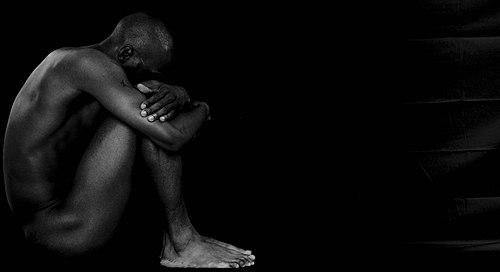
http://upload.wikimedia.org/wikipedia/commons/thumb/7/79/Day_255_%2Apublic_version%2A_-Some_days_I_just_want_to_curl_up_in_a_ball...jpg/500px-Day_255_%2Apublic_version%2A_-Some_days_I_just_want_to_curl_up_in_a_ball...jpg

It’s not nice to be told that you are “too nice,” especially if you are a man — a young man — trying to win a woman’s favor. Most of those who have heard this wonder why something “good” — being “nice” — is held against them. Often they observe the very same women with other males who are much less considerate, generous, and kind.

Do you have the sort of kindness that is disqualifying? Kinda’ seems unfair, doesn’t it?

Some of these women, it’s true, have poor judgment. They are drawn to men who are exciting but irresponsible or cruel. Perhaps they are unconsciously trying to find someone who reminds them of a parent who was not sufficiently devoted to them. The new prospective boyfriend now gives them a second chance at getting the type of love they couldn’t achieve from mom or dad; who were rejecting, disinterested, or preoccupied with other people and other things.

Even so, the “too nice” indictment doesn’t always really mean you are too nice. That phrase can be just a stand-in for a lack of “chemistry,” an absence of sheer physical attraction, or a feeling of being bored.

http://upload.wikimedia.org/wikipedia/commons/thumb/5/5e/Cobalt_chloride_equilibrium.JPG/256px-Cobalt_chloride_equilibrium.JPG

Chemistry Anyone?

Boredom doesn’t sound good, I know, but if you are a Cubs fan and the female of your dreams doesn’t like baseball, or if you are into country music and she can’t bear it, boredom or disinterest can be the result.

Kind and decent young men need to recognize that there just might be something useful in the dreaded “too nice” communication. Something in the blunt trauma of the words “you are too nice” may need to be learned — the hidden meaning behind the statement.

From an evolutionary and prehistoric perspective, consider what qualities a woman needed in a mate: physical strength, power, and courage would have been useful in protecting the female (and the couple’s kiddies) from danger. Forcefulness, self-assertion, and wiliness might also have helped her potential mate to fulfill that function. Additionally, those characteristics signaled that the man was “fit,” both physically and mentally, and therefore able to produce healthy offspring.

The woman who instead chose the “weak” suitor, the one who was passive or hesitant, perhaps found that he could not “make” a living for them or defend the home. Their children’s survival became more doubtful because of the man’s limitations. If so, evolution would not have favored his characteristics, nor those in the female that caused her to make a poor choice of mate. The genes carrying such tendencies would not have been passed on through the generations, having fallen to the law of the jungle.

To the extent that females paired with strong men increased their children’s odds of reaching adulthood, the tendency for women to choose a bold male would have increased over time. And, it is likely that the most physically attractive females (in effect, the ones who looked most “fit”) would have tended to be selected by the most assertive and forceful men, thus linking beauty and a preference for powerful males in our genetic future.

Women, like men, look for signs of vigor and health, even if they do so unconsciously in the mating game. Without these qualities, the chance of passing on your genes by producing children who live long enough to reproduce themselves isn’t that good.

Moreover, a female today may also want a husband who is an admirable role model for her children, someone to share the burden of decisions and making a life together — in other words, an assertive, capable man who can take on the world. However unfair it can be, these same women just might interpret a worshipful, uncertain, passive, overly considerate man to be a potential liability.

“Niceness” isn’t necessarily the equivalent of weakness, but it can look that way. Doubtful young men, afraid of losing favor, often make themselves less attractive by their hesitation. Meanwhile, those top-dog alpha males who act boldly, are frequently admired in spite of having an edge that gives offense.

I recently read a study with a most intriguing title that is related to this topic: Do Nice Guys — and Gals — Really Finish Last? The Joint Effects of Sex and Agreeableness on Income by Timothy Judge, Beth Livingston, and Charlice Hurst. It was published in 2011 in The Journal of Personality and Social Psychology.

Briefly, they found that men who are too agreeable make significantly less money than men who more closely meet a somewhat contentious male stereotype. For the purpose of this type of research, “agreeableness” is consistent with characteristics like being trusting, straightforward, altruistic, compliant, modest, and tender-minded. Those men were also less likely to obtain recommendations for professional advancement.

In contrast, the customary male is prone to “aggressively advocate for (his) position during conflicts.” These more traditional males are also inclined to push their own personal agendas relative to other people and to challenge the status quo. Such individuals tend to be seen as more competent than those who are too agreeable, as well. Moreover, agreeableness impacted “earnings more negatively for men than for women,” meaning that being agreeable hurt female income less. Based on these results, it would seem that women are on to something of practical value when they sense that a man is too nice.

What can you do, then, if you are the aforementioned nice young man?

Find ways to boost your confidence. Learn to face challenges rather than avoiding them. Build your body. Compete. Don’t be too deferential.

Lead. Make decisions. Have opinions. Take a stand. And, whatever you do, do not become worshipful of the woman you are with by the second week of your acquaintance with her.

None of this means you should be callous, hurtful, or cruel. Indeed, courtesy, romance, and thoughtfulness have their place, too, if you want to win the fair maiden’s heart.

Just don’t lapse into a fetal position.

Unless, of course, you are looking to be treated like a fetus.

—

Fetus (12 weeks old)

—

The top image is called Some days I just want to curl up in a ball… by Michael Dunn. It is followed by three test tubes of Cobalt Chloride in various stages of equilibration with hydrochloric acid, downloaded by Chemicalinterest. These two photos are sourced from Wikimedia Commons. Finally, a 12 week old Fetus sourced from MedlinePlus.

Leo Durocher, Hall of Fame baseball manager and former player, was quoted saying that “nice guys finish last” in 1948. He was then the manager of the Brooklyn Dodgers and was referring to the New York Giants. Ironically, he would soon find himself managing those “nice guys.”

Signs of Self-Consciousness: When the Mirror isn’t Your Friend

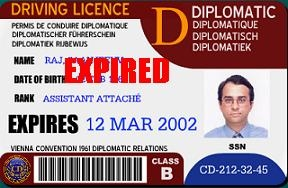
http://upload.wikimedia.org/wikipedia/commons/7/74/Diplomatic-drivers-license.PNG

“That is the worst picture of me I’ve ever seen.”

You are looking at your new driver’s license photo, just after it has been handed to you.

It will remain the worst picture of yourself imaginable until you renew your license and get one that is even worse.

At some point, if you are inclined to look at old photos, you will realize that you were once actually better looking than you thought. Even though, back then, you spent enormous amounts of time considering all your visible shortcomings.

And, if you can bear it, the idea creeps up, that you look — right now at this very moment — the best you will ever look again. However low it is, you are at the top of your own personal ski-ramp of pulchritude. Gravity will have its way. The grave is at the end of the downhill run, the place where you will certainly not look splendid, although a few might comment on how life-like and peaceful you appear to be as a corpse.

The mirror is irresistible. Although a frequent carrier of bad news, it is like a siren calling you to it — beckoning, luring you.

“Look at me,” it says. “Look at me, so that you can look at yourself. See what others see before they see it.”

Even your reflection in a department store window can’t be ignored.

http://upload.wikimedia.org/wikipedia/commons/thumb/7/7a/C_W_Eckersberg_1841_-_Kvinde_foran_et_spejl.jpg/256px-C_W_Eckersberg_1841_-_Kvinde_foran_et_spejl.jpg

The scrutiny of skin texture, hair style, and unevenness of any kind can be a full-time job. How large are my pores? Were they always this large? Are my eyebrows even, my lips symmetrical? Is that a pimple? Did I miss a spot shaving? Is my hair losing its color?

To comb-over or not to comb-over. That is the question.

Unfortunately, omnipresent advertising reminds us of the importance of appearance and suggests that we are falling down on the job if we don’t look right, sound right, and smell right; if we aren’t clothed right and adorned right to the point of rewriting ourselves.

http://upload.wikimedia.org/wikipedia/commons/thumb/a/aa/Venus_in_Mirrors.jpg/256px-Venus_in_Mirrors.jpg

Would that one were more like Narcissus, who saw his reflection in a pool of water and fell in love. Instead, the self-conscious are the opposite of Narcissus according to John Updike, seeing the disqualifying things that others don’t see or care to look for.

Why?

Because they are too preoccupied with their own mirror-image.

Each of us may be our own main-attraction, but to almost all others, we are but footnotes; either not viewed as important enough to look at or quickly forgotten.

Despite this truth, the insecure man sees the outer world as an anticipated audience for his one-man-show, having paid dearly for tickets and expecting a star-turn. “How will I look?” the performer says to himself. Implicit in the question is, “How will I look to them?” And, more to the point, “How will I rank?”

The mirror is like a ruler, telling us whether we measure up to both friends and strangers; and rules over us, sucking away our time as we stand before it. But then, many carry mirrors in their pockets or handbags, all the better to do some compulsive checking.

I have often wondered how it is that every man loves himself more than all the rest of men, but yet sets less value on his own opinion of himself than on the opinion of others…

Marcus Aurelius, the author of those words, like other Stoic philosophers, thought it important to remind oneself of what is valuable (like good deeds) and what is not (like the opinion of others). But we seem to be automatically drawn to “making an impression;” and we hope that it is not one of the wrong kind.

Take my mother, a surpassingly beautiful young woman, but confident of little more than her appearance. When age robbed her of that singular quality, she sometimes joked about looking at herself in the silvered-glass and asking, “When did this happen?” The loss left her all the more vulnerable to and preoccupied with what others might be thinking about her.


Although self-consciousness is commonplace, I have actually met people who seem to be totally un-self conscious and unaware of who they are, how they come across, and the impact they have on others.

We incorrectly assume that people universally understand the impression they make.

To illustrate the point, think back to the very first time you heard your own voice on a recording device. It was probably shocking. You didn’t sound the way you heard yourself inside your head.

The act of looking in the mirror is not a whole lot more reliable. And the mirror changes how we behave while doing the looking: the expressions we see as we examine ourselves are not necessarily identical to those observed by passers-by in our unstudied moments.

People with Asperger’s Disorder are among those who are unconcerned with and unaware of the effect of their self-presentation. Their social interaction is significantly impaired, in part, because the social cues that we commonly get from others — and that are instructive about how we are coming across to them — don’t seem to register. They miss signals that the person with whom they are conversing might be bored, impatient, indifferent, upset, or angry. Nor will they seem to care about shaping themselves to fit the prevailing social conditions.

Adults categorized as Narcissistic Personality Disorder are equally unaware of and unconcerned with the negative implications of the way in which they are seen by the world, except to complain about the unfairness of how they are treated. Their grandiosity and exaggerated sense of self-importance leads to arrogance rather than self-reflection or self-doubt. It is as if they have a Teflon-coated exterior that prevents criticism from penetrating to the heart.

File:C-band Radar-dish Antenna.jpg

If we set aside those people who are diagnosably paranoid, the personality trait of self-awareness causes problems at both of its extremes. Too little self-consciousness and you have Asperger’s and Narcissistic Personality Disorder. On the opposite wall are those hyper-focused souls whose radar is going full-force at all times.

Members of the latter group are so preoccupied with the need to detect rejection and disapproval that they mistake casual and meaningless comments for devastating critical opprobrium. Were their personal scanners instead used for national defense, like a giant radar antenna in the photo above, they would mistake birds flying overhead for incoming thermonuclear warheads.

At the same time that their own monitoring devices are being ratcheted up, these self-conscious individuals wish to fly under the radar of others, hoping that their imperfections will go unnoticed.

And they are drained trying to simultaneously make themselves invisible while watching for all possible personal incoming data.

For them, life becomes a performance and everyone else in life becomes a potential journalist reviewing that performance, imagined to be preparing a devastating and slashing critique for the next day’s blog post or NBC news broadcast.

The over-sensitive and insecure individuals of this world have lots of company, but don’t always think that they do. They are too busy comparing their “insides” to other people’s “outsides,” a game that is played on an uneven playing field designed to cause the person making the comparisons to feel like crap.

A 2011 study led by Dr. Alexander Jordan in the journal Personality and Social Psychology Bulletin, supports the notion that people tend to underestimate the negative emotional experiences of others. In part, this is thought to be due to the fact that we see friends and neighbors (by definition) only in social situations, where research shows that people generally feel relatively good and therefore appear to be doing well. Since individuals are also somewhat hesitant to express suffering in social situations, the tendency is reinforced to see those folks as more satisfied with their lives than they actually are.

Thus, all of us (but particularly the self-conscious among us) can only observe the appearance (rather than the reality) of others’ lives, but have complete access to our own internal turmoil, especially during the time when we are alone and more prone to negative feelings than during periods of social activity. Almost inevitably, the contrast between the outward sunny appearance of our peers and our own private darkness (even if it is simply the commonplace trouble to be found in any life) contributes to a sense that we are not doing very well at all.

Life for the self-conscious person is a little like wearing glasses that look exactly like regular glasses, but have a silver coating on the inside. The glasses cause an automatic inward look — a claustrophobic view of a dark and suffocating place. Life satisfaction is to be found in an outward gaze, not an eternally internal one.

http://upload.wikimedia.org/wikipedia/commons/thumb/6/6d/Self-portrait-Rothe.jpg/256px-Self-portrait-Rothe.jpg

The excruciating inward focus makes it very difficult for “(Self)-Doubting Thomas” to realize that he is not as uniquely deficient as he is prone to believe. And since self-protective efforts inhibit sharing one’s personal insecurities even with friends, the holding-back robs him of their commiseration and understanding; not to mention the sense of identity that he might receive from others, fellow-suffers in particular.

Still, at least the self-conscious will sometimes go to therapy, while neither the Asperger’s clan nor the narcissists see much of problem requiring professional consultation. Each, in his own way, is content with himself. If there are troubles, others are blamed, not the person’s own inadequacies.

Unfortunately, there is no “cure” for self-consciousness, per se. But therapy can help to uncover the reasons for self-doubting and quiet the self-disparaging voices inside, shroud the mirrors, still the racing pulse, and eventually come to a point of self-acceptance. Treatment can make you feel better about yourself. Equally significant, therapy prepares you for the fact that there will, indeed, be no way to impress everyone, but worry less over the failure.

After all, even a wildly successful presidential candidate must confront over 40,000,000 votes for the other guy.

No, therapy won’t change your driver’s license photo into a professional “head-shot,” making you look like a movie star, but it just might do something even better.

You will see that card-carried image in all its horrific awfulness, and care about it much, much less.

—

You may find the following related post of interest: Signs of Insecurity: Behavior That Reveals a Lack of Confidence.

Also, you might want to look at The Upside of Insecurity.

—

The first photo is a Scan of An Expired Diplomatic Driver’s License by Foreignaffairsinfo. Next, a Woman Standing In Front of a Mirror by Christoffer Wilhelm Eckersberg. The third image is a Statue of Venus in Mirrors by Nevit Dilmen. It is followed by Jeanette Stein (with the author, who was apparently sceptical of the camera even then) and A 50-Foot Radar Antenna at the Kennedy Space Center in Florida. Finally, a Self-Portrait by w.helwig. All of these with the exception of the family photo are sourced from Wikimedia Commons.

Beware of Therapy Past Mid-life: Reflections on Reading “The Sense of an Ending”

http://upload.wikimedia.org/wikipedia/commons/thumb/e/e3/Hamo_Thornycroft-Lot%27s_Wife.jpg/240px-Hamo_Thornycroft-Lot%27s_Wife.jpg

“Don’t look back, something might be gaining on you.” Satchel Paige’s words suggest that life should be lived “full steam ahead,” not weighed down by regular retrospection. Most people take the advice to heart, at least to some extent, even if having never read it or heard it.

And, past age 60, my experience as a therapist suggests that such reconsideration of one’s own history becomes less and less likely. Unless tragedy strikes, a senior citizen who is a therapy virgin is not likely to seek the counselor’s services. No, the story that we tell ourselves about our life usually becomes fixed and — one must say it — self-serving, so that one does not become overwhelmed by remorse and the things that “should have” (or should not have) been done: the failed persistence, poor choices, and chances not taken; the damage done to others, including our children, our lovers, and our friends.

It is as if our old brain knows what our young brain couldn’t imagine: that there will come a time when there is not enough of a future to redeem the past.

We are, most of us, pretty well rationalized.

Yet this is what Julian Barnes’s prize-winning book The Sense of an Ending is about: the reflection upon and reevaluation of a life of 60-some years, by the author of that life, Barnes’s fictional narrator Tony Webster. And, if you are inclined to such self-analysis or even the common speculation about why people in your life do what they do, you might just find it the best work of fiction that you’ve read in a long time.

On the face of it, the story appears to be a simple one: a tale about pre-college friends including Tony, and his relationship with his first serious girlfriend; then losing touch with all those people, one of whom suffers tragedy. Finally, a jump of 40 years and the reinterpretation of that tragedy and those relationships, as well as his second-thoughts about himself. All of this occurs because of an apparently inexplicable event that disrupts Webster’s “peaceable” way of being.

Until that new monkey-wrench is thrown into the works, Tony thought he’d “wanted life not to bother me too much, and had succeeded.” Somehow he’d trod a course that set aside youthful ambitions and hope for excitement, settling for things (and women) that were predictable and straight-lined. Eventually, he will realize that “We thought we were being mature when we were only being safe. We imagined we were being responsible but were only being cowardly. What we called realism turned out to be a way of avoiding things rather than facing them.”

What he must now face — the way in which long-ago actions have continued to have consequences — is the mystery that Tony (and the reader along with him) will soon come to know.

The book raises a number of issues:

  • How much can you trust your own memory?
  • How much of your memory is selective and comforting?
  • How much are you responsible for what happens to you in your life?
  • How much are your actions responsible for what happens to others?
  • Past what point is self-reflection destructive or, to paraphrase a Jack Nicholson character, “Can you handle the truth?” assuming that it is knowable?
  • How much damage to others do even the most careful of us cause?
  • Is it possible to be completely honest with oneself?

Most of the time one does want to — need to — think that “I am the master of my fate: I am the captain of my soul.” The world would be too scary otherwise.

A simple example illustrates the complexity here:

In graduate school a friend requested me to help his girlfriend move some things from one apartment to another. Although I owned a car, I took the rapid transit and got off at the wrong subway stop, one station away from where I should have been. I didn’t realize until I walked a bit that it was in a terrible neighborhood. In the event, I arrived at my destination safely on foot.

But instead, you could have read this story on the next day’s front page:

Northwestern Graduate Student Murdered Near Cabrini-Green Housing Project

That no one did has always seemed to me a matter of pure luck.

What if I hadn’t been so lucky? Others would ask themselves, how did this happen? Doubtless, my friend would have found out; his girlfriend, too. Would they have felt guilty? Neither intended to set the chain of events in motion, yet both were a part of that chain.

As Tony Webster would say, “There is accumulation.” One thing leads to another.

Why didn’t I drive? Even I can no longer answer this question; I simply have no recollection of how I came to the decision to take the subway. Was it to save money? Was it because I thought it would be difficult to find parking? Was my car in the repair shop?

And why didn’t I walk back to the subway stop soon after I got off the train, the better to go to the next station? Shouldn’t I have been more aware of my surroundings and a little more terrified? Was I too cheap to pay another fare? And if I was, to what extent was that based on how I’d been raised, lessons learned at home about the dearness of the dollar? And if that is so, do my parents have some responsibility in the chain of events?

The example I’ve just given you might seem a bit silly, but I assure you that Barnes’s protagonist confronts a set of events that are much more compelling, involving real events and relationship complications, not things that didn’t happen, as in my illustration. But in both instances, one can ask oneself many questions: Why did I do that? What if I’d not done that? What if I’d done something different?

On the answers to these questions — really, on the actions themselves — lives can depend; at least the quality of a life.

http://upload.wikimedia.org/wikipedia/commons/thumb/c/ce/Flickr_-_don_macauley_-_Hamo_Thornycroft-Lots_Wife.jpg/500px-Flickr_-_don_macauley_-_Hamo_Thornycroft-Lots_Wife.jpg

The Sense of an Ending reminded me a bit of John Irving’s A Prayer for Owen Meany. In each novel the author gives you enough information to put you in the position of an important character in the book, forcing you to live with the same incomplete knowledge that the character has of how things will end up. In Barnes’s work, this will likely cause you to want to reread the book, just as Tony Webster attempts to reread his life through letters and photos, the incomplete testimony of others, and his own imperfect and self-justifying memory. But at 163 pages, the rereading is just as engrossing as the first read-through (for me, just one day earlier).

If you believe that, in Kafka’s words, “a book should be an ax to break the frozen sea within us,” then know that this is such a book.

All of us are, or could be, like Tony or Lot’s wife, from the tale of Sodom and Gomorrah. Lot is the nephew of Abraham in the biblical Book of Genesis. Lot and his wife are permitted to leave before God’s destruction of the two famously iniquitous cities, but there is a catch. They are instructed by angels not to look back. When Lot’s wife does, she is turned into a pillar of salt.

Yet we must look back, mustn’t we? At least some of the time? Isn’t that how we learn? As a therapist, I would certainly say so.

But the biblical rejoinder comes to mind from Ecclesiastes 1:18:

For in much wisdom is much vexation, and he who increases knowledge increases sorrow.

Or in the words of Tony at the book’s end:

There is accumulation. There is responsibility. And beyond these, there is unrest. There is great unrest.

————————————————————————————————————————————————————————————————————————————————————————————————

The positive aspect of looking back can be found here: The Handwriting on the Wall.

The two images are photos of Hamo Thornycroft’s sculpture Lot’s Wife. The first is the work of Yair Haklai. The second is the uploaded photo of Donald Macauley by Amada 44. Both are sourced from Wikimedia Commons.

To Your Good (Mental) Health: One Hundred Resolutions for the New Year

http://upload.wikimedia.org/wikipedia/commons/c/c3/New_year_streamer.jpg

Just a few random thoughts on what you might choose to resolve (begin, stop, or continue) in 2012:

I

  • raise your hand
  • take a chance
  • diversify both your economic and emotional life: resist putting all your eggs in one basket, financial or human
  • learn to say “no”
  • there will always be someone better, someone smarter, and someone better looking; get used to it
  • exercise
  • don’t text or tweet the day away
  • give up on TV news soundbites and actually read something in-depth on the state of the world from a relatively unbiased source
  • look in the mirror at what is underneath the surface
  • make friends

II

  • when upset, imagine how you will feel in a week, a month, or a year; in other words, know that most turmoil is passing
  • don’t be a doormat
  • deal with your childhood
  • be honest, not just when it is convenient
  • work hard (don’t learn the tricks of the trade before you learn the trade)
  • sometimes the rain won’t stop, so discover how to dance in the rain
  • be grateful and express it
  • learn to apologize without excuses
  • pay it forward
  • pay it back

III

  • before sending an angry email, write down 40 ways your missive can be misunderstood or ruin your life; then wait some more before sending
  • find some hobbies
  • eat right
  • beware of hopelessness, but do not became a slave to hope’s capacity for illusion
  • avoid too much self distraction
  • remind yourself that there is no such thing as “must-see TV”
  • don’t abuse substances
  • laugh
  • you have a shadow; best that you get to know it since you most certainly can’t outrun it
  • stand for yourself, but also for something bigger

IV

  • have humility
  • be careful about judging
  • have new experiences and learn from them
  • don’t wait until your feelings change to act (act and your feelings are likely to change)
  • recognize that luck plays a part in life
  • be flexible — don’t inflexibly resist change
  • grieve when necessary, lest things build up
  • make eye contact
  • if you are anxious, learn to be less concerned about others’ opinions
  • realize that money isn’t everything and that the American Dream is a fraud

V

  • know that your kids aren’t all the same and that each one needs something different from you
  • sample things — try them before you say you have no interest in them
  • don’t wait for your savior, save yourself
  • choose your battles, but don’t permanently lay down your arms
  • treat your body as if you might just need it for a while
  • recognize that you are not as important as you think (unless you are the President, a brain surgeon, or the second coming of  Shakespeare)
  • spend less time worrying and accept that most bad things are survivable
  • be an informed citizen, learn about history and vote
  • make haste slowly
  • don’t accept easy answers

VI

  • embrace the opportunity to perform
  • every committee has work horses and show horses; choose the first role lest you look like an ass
  • stay out-of-the-way of people who are bulldozers; it’s only a matter of time before they run you over
  • get out of the city into nature and be dazzled
  • spend time with a few members of a different faith, color, religious group, or political party and get a new perspective
  • As Eleanor Roosevelt said, “You must do the thing you think you cannot do”
  • do your best to ignore Ashton, Britney, “The Donald,” Kim, Lindsay, Snooki, and “The Real Housewives;” emptier lives are not to be found unless it is among their fans
  • keep your cell phone off the dinner table and make public cell phone conversations as private and rare as possible
  • don’t text while driving — ever
  • remind yourself every day that (with luck) you are going to get old, wrinkled, and die

VII

  • practice, practice, practice
  • remember that this is not the rehearsal, this is the performance
  • don’t be self-righteous
  • get some rest
  • consider whether those guys carrying signs that say “Repent, the end is near!” might be on to something
  • ask yourself “What would Jesus do?” before you foreclose on someone’s house or stiff your waiter
  • realize that being confused might be an opportunity to learn
  • ask questions
  • when you say you are going to do something, do it
  • keep secrets when asked to do so

VIII

  • don’t be a gossip
  • recognize that a life of logic (without a counterbalance of feeling) is the equivalent of becoming a mathematical formula or a computer
  • learn to be direct
  • don’t have sex while chewing gum; and, for sure, don’t make it as unremarkable as chewing gum
  • do one thing at a time, with all your attention
  • don’t talk over others; listen when spoken to; be polite
  • get over yourself
  • trust, but verify
  • find the poetry in the prosaic and the cool in the quotidian
  • earn your life

IX

  • have a good time
  • meditate
  • live with intensity
  • be kind
  • surrender to intimacy
  • make your life matter
  • live by the “golden rule”
  • study all your life
  • be an enemy of routine
  • love someone or something

X

  • make new mistakes
  • test yourself
  • swing for the fences; shoot for something big
  • try to figure out where you are headed; it’s harder to get there unless you know
  • learn to tell a joke
  • take time to smell the roses
  • keep a lid on the number of complaints you utter and the number of excuses you make
  • get off the cross, we need the wood
  • whether you are a big fish in a small pond or a small fish in a big pond, be sure you learn to swim
  • and, to quote Studs Terkel: “Take it easy, but take it”

—

The above photo of a New Year Streamer is sourced from Wikimedia Commons.

The Difficulty of Facing Reality: When Hope is the Problem and Not the Solution

http://upload.wikimedia.org/wikipedia/commons/thumb/9/9c/Oberndorf_St._Nikolaus_Hoffnung_264.JPG/240px-Oberndorf_St._Nikolaus_Hoffnung_264.JPG

We are in the season of hope, but in the midst of despair.

“Lions and tigers and bears! Oh my!”

The holidays tend to make one almost embarrassed to be hopeless; and hopelessness is described as something to be avoided in any season.

But sometimes, having hope is a problem — the problem — and giving up hope, facing reality, leads to possibilities.

All of us have had the experience of hoping for a positive outcome or event that wasn’t realized. We hoped to win the game, the job, or the romantic partner only to come up short. “Wait until next year” is the rallying cry of Cubs fans and human beings everywhere in the face of disappointment.

As the saying goes, “hope springs eternal.”

But sometimes hope is destructive. If you are in a terrible job with a sadistic boss, hoping for him to change is likely to keep you paralyzed, rather than triggering action to find a new place of employment or a new career.

If you are married to an alcoholic, abusive spouse, believing his apologies and promises to do better will keep you in the center of his bulls-eye, a target within easy reach.

Has your parent spent your whole life ignoring what you do well and trashing you over what you do not? Trying to win his praise might be a waste of your time, as hopeless as booking a trip to Mars for your next vacation.

In a rocky relationship? Some people hold on to the fantasy that if they can find just the right words and behave in just the right way, they will succeed in pleasing their spouse into being more loving. Others think having a child will make the marriage better, and live in that hope.

And then there are those who have been rejected by a lover, but continue to carry the torch of love into the dark night of the soul long after the loved-one has moved on.

I cannot say that hope is futile in each and every example I’ve given.

But it is often something of a fool’s paradise; nothing more than a castle in the air.

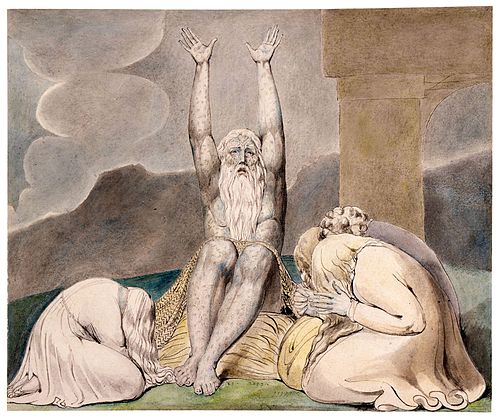
http://upload.wikimedia.org/wikipedia/commons/thumb/a/ad/Job%27s_Despair_Butts_set.jpg/500px-Job%27s_Despair_Butts_set.jpg

What I’m talking about here is a passive, inactive, timid hope that waits too long by the phone for the suitor to call. Not an active but reasonable hope that searches and schemes; defiantly claws its way forward and claims what it wants.

Beyond a certain point, passive hope anesthetizes you when you need the pain to motivate action; and need it to force yourself into the risks required to get what you want. As such, hope in these situations serves as an excuse for inaction.

All the while, life passes you by.

Thus, hope can keep you in a dead-end spot — the pipe-dream of an imagined future, while enduring a terrible present. I wouldn’t say that an imagined future would be a bad place to be if there were no ways to change the present. But, if you are ignoring things you can do to make your life better, than a servile hope is little more than a fairy tale.

Are you hostage to hope or perhaps, do you hope for the wrong things?

Such as?

A short list:

  • A life without problems.
  • Winning the lottery.
  • A new luxury car or great wealth.

Why not hope for these and similar things? Because there are no lives without some problems, lottery winners often report a less wonderful life than they expected; and treasurable objects beyond the basic necessities don’t seem to generate much lasting satisfaction. They are like the rapidly dissipating “new car smell” that most find so attractive and so temporary.

The overriding point here is that hope not only battles with despair, but also with acceptance of reality — acceptance of the terms life allows, followed by a commitment to change what it is in your power to control, instead of simply “hoping for the best.”

Such acceptance does not come easily. Admitting defeat is almost always difficult and painful. Grieving is thought by some to be unmanly and by others unnecessary or a hindrance to progress. But it has a cleansing function, one that allows most wounds to heal.

http://upload.wikimedia.org/wikipedia/commons/thumb/5/5e/Yoshitoshi_-_100_Aspects_of_the_Moon_-_38.jpg/240px-Yoshitoshi_-_100_Aspects_of_the_Moon_-_38.jpg

How do you know whether you are holding on to too much hope? One way is to look at how you deal with defeat and whether you can bounce back and embrace change. If too many situations find you stuck, waiting and wishing for something outside of yourself to intervene — a kind of deus ex machina — then you are vulnerable to the immobilizing influence that hope can have. If you’ve been at that dead-end job for years or in an equally dead relationship for an equally long time, it might be worth considering what you are waiting for and why you have not acted.

Do you fear that change could bring something worse?

Sometimes it can, but not all gambles are foolhardy.

Do you live in a future your friends think to be unimaginable while the present slips away?

In Dante’s Divine Comedy, we are told that the entrance to hell is inscribed with these words:

“ABANDON HOPE ALL YE WHO ENTER HERE“

Ironically, it is just that directive that might be the way to a new and better life.

Heaven can wait.

Stop hoping for its quick arrival unless you have explored everything else that is possible.

Try — try hard — to create a heaven on earth.

In that possibility there just might be something worth hoping for.

—

The sculpture at the top is called Allegory of Hope, a 1776 work housed in the Catholic parish church St. Nikolaus in Oberndorf am Lech in Bavaria, Germany, photograph by GFreihalter. The second image is Job’s Despair by William Blake, from 1805. Finally, a 19th century painting by Taiso Yoshitoshi after the poem One Hundred Aspects of the Moon by Lady Ariko-no-Naishi. All are sourced from Wikimedia Commons.

If You Could Have Dinner with Anyone in the World …

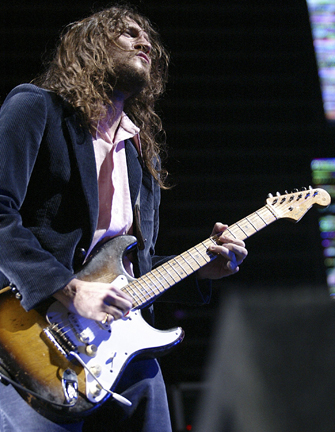
http://upload.wikimedia.org/wikipedia/commons/8/83/JohnFruscianteAugust2006.jpg

It is a question that I ask of people from time to time:

“With whom would you have dinner if you could choose from anyone in the world, living or dead?”

Although I’ve heard more than a few answers face-to-face, for the sake of this survey I asked for an email response to the question.

My respondents were permitted to list as many as three people and I encouraged them to give brief explanations for their choices.

The survey was not scientific and should be not thought to represent anything more than the answers of a mostly well-educated and not terribly diverse group of people I know. Many of them are close (including a few relatives), others more distant, and some can only be called acquaintances, friends of friends, or electronic correspondents.

The chosen dinner dates fall into the following categories:

  • creators and performers
  • religious and spiritual figures
  • parents and relatives
  • historical figures — mostly world leaders
  • sports: players and coaches

There were also a few surprising answers that I will get to in due course.

Lucille Ball

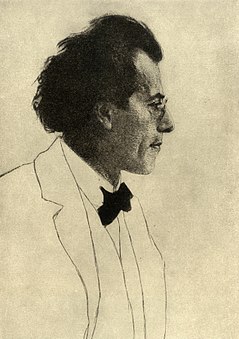
Among those named in the Creative category were John Frusciante (former lead guitarist of the Red Hot Chili Peppers), Lucille Ball, Oscar Wilde, Jane Austen, Jim Carey, Patti Lupone, Anton Bruckner (19th century Austrian composer), Gustav Mahler (described as “the composer who fused sound and philosophy into the most soul-affecting music ever written”), Dave Matthews, Stephen King, Dr. Dennis Slamon (who helped develop the breast cancer drug Herceptin), and Barbara Walters.

Respondents frequently expressed the desire to get inside the creative mind of their dinner companion and probe for practical guidance for their own career.

One writer cleverly realized that a master chef would make the ideal dinner date, naming Auguste Escoffier, who is considered the father of modern French cuisine.

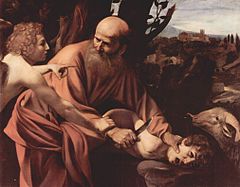
Religious or Spiritual Figures included Jesus, the Buddha, Martin Luther, Eckhart Tolle, and Abraham’s son Isaac; the last “to find out how he felt about his dad in light of his father’s God-directed preparation to slay him (only to be saved by an angel also sent by God, once Abraham had proven that he would actually follow-through on the requested action).”

http://upload.wikimedia.org/wikipedia/commons/thumb/4/45/Michelangelo_Caravaggio_022.jpg/240px-Michelangelo_Caravaggio_022.jpg

Caravaggio’s “The Sacrifice of Isaac”

http://upload.wikimedia.org/wikipedia/commons/thumb/6/6c/Michelangelo_Caravaggio_023.jpg/240px-Michelangelo_Caravaggio_023.jpg

One person simply named “God,” and said that “if he exists, I’ll have enough questions to last long past dinner.”

For another, sharing a meal with Mary Magdalene had appeal: “I wonder if she has been recognized for the woman she actually was. The men who wrote the Bible may have diminished her role; and exactly what was her role?”

I must also mention one brave soul (apparently unconcerned with losing his) who related that Satan would be first on his list of dinner invitations, so that he might ask the Prince of Darkness, “What happened between you and God?” When I told this to someone else, she thought that she’d probably already dined with and dated the devil more than once!

Many people named Parents and Other Relatives as those with whom they would like to break bread. The reasons were often touching, as in the case of  the woman who lost her father to an early death and her mother to the living-death of Alzheimer’s Disease.

For another, there was interest not in just a person, but a place and time:

I’d love to have dinner with my paternal grandmother in her reportedly humble home in the rural Midwest. She, along with my grandfather and aunt, died in an accident before I was born. She was of a different ethnicity and is said to have been a beauty and a gentle woman. Her faded and torn, black and white, 16″ x 19″ wedding photo, dated 1901 (not wanted by any other descendants) sits under my desk waiting to be refurbished. I look into her dark innocent eyes and wonder about who she might have become, what her dreams were for her children and grandchildren, how she might have influenced my life, and why, as a ‘dishwater’ blond, I could not have inherited her black hair.

The simple joy of eating alone with grandchildren was mentioned in one email, while another couldn’t have been more heartbreaking:

If it were possible, I’d like to have dinner with my (miscarried) children. I’d apologize for never having the opportunity to meet them. Would they forgive me for not knowing my own body? For trusting my body to care for them… Would they understand that I wanted each of them more than anything? Would they see my anger at my own body? Would they be upset with how hard I blame myself? Would they see me struggling to find the answers? I’d want to know if I have their forgiveness and want them to know that I never stop wondering what they look like and who they could have grown up to be. … Would they have accepted us as parents? Would we have even be any good (as parents)?

Some people wanted the chance to question mothers and fathers about the cruelty they experienced at their hands. A dinner with a deceased parent might also give the adult offspring a chance to inform mom or dad about that part of his life that they did not get to see.

A friend of mine considered the possibility of contact with the 15-year-old version of her mom, wondering “what was she like as a teen?” And I’ve thought about what it would have been like to go to school with my folks. Would we have become friends?

Taking the same idea one step further, how about having dinner with the 15-year-old version of yourself? I know one thing I’d say to my young alter ego: “Trust me, things will get better.”

http://upload.wikimedia.org/wikipedia/commons/thumb/1/1c/Adlai_Stevenson_1952_campaign_poster.JPG/240px-Adlai_Stevenson_1952_campaign_poster.JPG

My survey respondents named quite a few Historical Figures with whom they might wish to spend time over a sumptuous repast. People like Winston Churchill, Hitler, Presidents Clinton (still a part of living history) and Reagan, defeated candidate Adlai Stevenson II, Albert Einstein (not for his scientific expertise, but for his wisdom), economist John Maynard Keynes, Supreme Court Justice Louis Brandeis; and Julius Caesar, called “the greatest man who ever lived” by Alexander Hamilton, as a friend informed me. Not surprisingly, Richard Nixon’s name also turned up:

I find him a very interesting figure. I think many of us struggle from time-to-time in our lives with feelings of inferiority — that we don’t stack up well enough against those blessed with good looks or fantastic education or smooth speaking ability. Few people have struggled so publicly with these feelings (as Nixon) and I would want to know — in honesty — if he finally found a way through them and, if so, what that way was.

That would hardly be the only thing we would discuss. I would want to talk (and have a nasty laugh) about his 1950 Senate campaign against Helen Gahagan Douglass, who he called ‘pink right down to her underwear’ (thereby alleging Communist or ‘Red’ sympathies).

Were I to meet with Nixon myself, I’d also like to know how a man seemingly both introverted and cynical about people was able to take on the extroverted job of running for public office.

On the subject of historical figures, there was the suggestion of a group get-together as…

part of the WPA’S Federal Narrative Project in which unemployed white-collar workers interviewed former slaves between 1936-1938. I would like to have had dinner with the female interviewees, to feel their experience — their many sorrows and few joys — first hand. I stumbled upon a book from this Slave Narrative Collection at Martin Luther King’s Atlanta home last summer and was stricken by what I didn’t know. Fortunately, the Library of Congress has made the whole collection available online at http://memory.loc.gov:8081/ammem/snhtml/snhome.html

Going from the anonymity of these women to the celebrity of a famous black baseball player, we come to the wish of an old buddy to spend time with Ernie Banks.

Why (choose Ernie)?  He’s been my hero my entire life.  A superb athlete, quite obviously.  However, here is a man from humble origins who, through the way he carried himself, made people forget that he was black.  White or black he made people love him (but not White Sox fans), without the political baggage. Truly a credit to the human race.

Which makes me think of how neat it might be to have dinner with Jackie Robinson, the man who broke baseball’s color line; or, indeed, any of the black major leaguers of the late 1940s and early 1950s.

To be able to concentrate on the job of hitting or pitching a baseball while simultaneously being abused and threatened by your opponents, some of the fans, and even a few of your own teammates must take a special kind of courage and capacity for concentration.

Finally, in the category of Sports personalities, is Vince Lombardi, legendary coach of the Green Bay Packers football team. Lombardi was much quoted as saying that “Winning isn’t everything, it’s the only thing,” but went on to claim that he meant to say “Winning isn’t everything. The will to win is the only thing.” He was named by a person who wondered:

Is raw, unvarnished will a force that can be felt? I’d ask (Lombardi) about the nature of competitiveness — whether there are healthy and unhealthy varieties, for instance — and why it’s so important to win.

But, perhaps having dinner with any of the famous people mentioned wouldn’t be nearly what you or I would expect or hope for. So said another respondent, who has met more than a few celebrated people:

The cheery assumption regarding dinners with revered persons is that the guests will publicly fulfill our projections of them. But having met nearly all the artists and musicians I admired, I can testify that almost none achieved that miracle. They were, after all, their own persons, ignorant of how I envisioned them and, in any case, under no responsibility to maintain an image consistent with what might be assumed from their achievements. Revealed more often, in varying degrees, was generalized courtesy, protective formality, shyness or inarticulateness. And in no instance did it seem that being thrown together with more strangers, however great or small, would suddenly cause the person to blossom, sharing previously withheld thoughts of a deep or scintillating nature. Some temperaments, of course, welcome opportunities to perform, drawing strength from situations that exhaust others. Presumably they would make better guests, though they tend to monologize rather than interact, dominating as if those around them were an audience instead of dinner companions.

http://upload.wikimedia.org/wikipedia/commons/thumb/8/81/Gustav_Mahler_Emil_Orlik_1902.jpg/240px-Gustav_Mahler_Emil_Orlik_1902.jpg

Gustav Mahler

What to do in the face of such unappealing possibilities? Olga Samaroff, a pianist of note, found herself invited to dinner at the home of the famous piano maker Charles Steinway in 1910. Mrs.  Steinway greeted her with the following words:

‘I am seating you beside (the famous composer/conductor Gustav) Mahler at table tonight, but do not expect him to speak. He cannot be made to talk at dinner parties.’

Mr. Steinway gallantly murmured something to the effect that ‘Olga ought to be able to draw him out,’ but Mrs. Steinway was not disposed to flattery. She reaffirmed her conviction that Mahler would remain silent, and she added mischievously, ‘If my husband is right and you do make him talk, I will give you five dollars (worth approximately $117 today).’

I responded to the challenge, but when Mahler arrived my courage sank. There was something so remote about him at first glance that I could scarcely imagine his taking part in any ordinary conversation. When we sat down to dinner he never even glanced at me. Oysters on the half-shell received his undivided attention. He did not seem quite so interested in the soup, however, so during that course I ventured a timid introductory remark. Without looking up he said ‘Ja,’ and then relapsed into silence.

I racked my brains for a provocative subject of conversation, but nothing I could find in the animal, vegetable, or mineral kingdom elicited any response. Mrs. Steinway began to look distinctively triumphant.

Finally, I remembered that before dinner, when Mahler appeared to be utterly oblivious of everybody present, he had taken The Brothers Karamazoff off the bookshelf and turned over the pages as though searching for a special passage. I decided that the Dostoyevsky masterpiece was this drowning woman’s last straw. But I also knew that if I did not succeed in establishing a controversial basis of conversation, I would merely get another ‘Ja.’ So I boldly asked him if he did not consider The Brothers Karamazoff a much-overrated book.

‘Not at all,’ said Mahler fiercely, putting down his knife and fork. ‘You ask that because you do not understand it.’ He thereupon launched into a long discourse on the subject of Russian psychology and Dostoyevsky’s supreme understanding of it, while I settled down to the enjoyment of my dinner (and my triumph!), only throwing in an occasional provocative question when Mahler paused to eat a mouthful.

The signals exchanged between me and the Steinways must have mystified anybody who saw them. Mr. Steinway kept looking at his watch and lifting his glass to me. He teased his wife unmercifully when Mahler followed me out into the drawing-room and spent the rest of the evening looking for passages in The Brothers Karamazoff with which to illustrate his points and complete my conversion. I have often wondered what would have happened if he had known we were discussing one of my favorite books.

Before I left, my crestfallen hostess presented me with six crisp new dollar bills. She felt that five would not be enough in view of the length of the conversation!*

The counterpoint to dinner with a great man or woman is doubtless something simple. And, in the end, perhaps the question of choosing among the great personages of all time was the wrong question.

It may be that another friend provided the best possible answer in his brief comment:

Rather than some famous person from the past or present, who in all likelihood would have little interest in my company, I would like to have dinner with the ones who made me and are no longer with us, my mother and father, just to see them once again.

Among the living, the one I would most like to have dinner with is the one I have dinner with every night, my wife.

—

* Olga Samaroff-Stokowski, An American Musician’s Story (Norton, New York, 1939), 159 ff.

The top photo is of John Frusciante from a 2006 concert. The second picture is a photo of Lucille Ball downloaded by Flickr and Doctor Marco. From there comes Caravaggio’s The Sacrifice of Isaac (including a detail from that painting) dating from 1594-96. The next image is a 1952 presidential campaign poster on behalf of Adlai Stevenson II. Emil Orlik’s 1903 etching of Gustav Mahler follows. All are sourced from Wikimedia Commons.

The Most Remarkable Person I Ever Met

http://upload.wikimedia.org/wikipedia/commons/thumb/5/57/Caring_Hands.JPG/500px-Caring_Hands.JPG

You probably wouldn’t notice her if you passed her on the street.

It’s not that she isn’t attractive, but it is an attractive middle-age — no competition for her younger, “knock-out” self.

But if you did happen to look closely, the thing that you’d see would be the kindness in her face: a most uncommon capacity for affection, forgiveness, and grace.

She is perhaps the most extraordinary person I’ve ever met; someone with terrible luck, especially early on, but an emotional generosity that would cause even a sceptic to believe that humanity just might come out on the side of the angels, after all.

Her mother was, of all things, a social worker. But whatever mom knew about social work, she forgot as soon as she came home. Her youngest — my patient (let’s call her Maggie) — was an active, pretty little girl.

Could mom have been jealous?

Mother favored Maggie’s older brother, (let’s call him Tom) a beefy, muscular giant of a young man who was his high school’s resident athlete and hero early, turned bully and trouble maker late. By 14 he was a drug addict, which only fueled an already unbridled, violent streak. That quality initially made him a boxing and wrestling powerhouse, before it made him an ungovernable monster.

But he was clever, only beating on his sister when his folks were at work or away, usually careful not to leave marks that couldn’t be passed off as his sister’s clumsiness. When Maggie complained to mom, mom sided with her male child. And when teachers saw this young girl looking distracted and downcast, unable to concentrate and lost in daydreams, they just thought about how unruly her older brother was, and assumed that his sister practiced a less overt form of disobedience and disrespect.

What about dad? He was a decent, but weak man. While he sympathized with his daughter and believed her stories about Tom (in part because he once — just barely — prevented Maggie’s death by strangulation), dad’s own alcoholism made him an inadequate advocate and defender. Moreover, his job took him out-of-town for days at a time. And when he wasn’t there, Maggie was an easier target for her mother’s verbal abuse, mom’s claims that she lied about Tom, and brother’s use of Maggie as a punching bag.

http://upload.wikimedia.org/wikipedia/commons/thumb/e/e0/A_caring_mom.jpg/500px-A_caring_mom.jpg

The family was divided into opposing camps. Mother held the metaphorical whip-hand, angry at her husband for his weakness and addiction, angry at her daughter for her beauty and closeness to dad. Tom became almost a substitute marital partner for Maggie’s mom, without the sex. He was the one she admired and did things for. He was the one she protected. He was the one she believed, no matter how preposterous his stories were.

Maggie lived in fear of her own death at the hands of a drug-crazed brother, terrified of standing up to people and voicing opinions that might be criticized, and desperate for affection and safety. She learned to follow orders.

Not surprisingly, as she got older she drifted into her own alcohol abuse and escape from reality; and into relationships with men who initially looked to be protective, but inevitably turned out to be unkind at best, abusive and selfish at worst.

Her therapy process was a long one. She needed to grieve the events of her childhood: the weakness and death of her father, rage and weep over the abuse she suffered, grapple with a mother who was no mother, and a brother who was a criminal and her tormentor. Maggie had to learn how to value herself more highly and stand-up for herself more routinely.

Meanwhile, Tom’s life of antisocial behavior eventually became impossible for even Maggie’s mother to deny. He spent time in prison when he wasn’t ripping-off friends and associates, selling drugs, and abusing his own wife and children. The children came to hate him. And in middle-age, the combination of 40 years of drug abuse and diabetes began to show. Increasingly isolated and alone, he reached out to the sister who had finally gotten him out of her life.

By now Maggie and her mother were closer, the same mother who all but trained her son to go after Maggie like an attack dog. To some extent mom apologized. And when the mother became infirm, Maggie cared for her.

Now Maggie confronted Tom. No longer the bully, he had become a man in a more dependent position. Tom had almost no friends, lived alone in poverty, and received subsidies from the state to pay for his medical needs, groceries, and rent.

His diet ignored the encroaching diabetes and its increasing claim of his lower extremities, to the point of becoming wheel chair-bound. Much of his money still went to drugs. Every day meant another chance — a requirement, a necessity — to score. His government check came at the beginning of the month so that by month’s end, having purchased drugs to remain high for as much time as possible as soon as possible, he had little to pay for food.

Maggie confronted her brother with his physical abuse. He told her that he had no recollection of it, but didn’t say that he disbelieved her. Indeed, Tom said that he knew she wasn’t lying, but blamed the drugs for his lack of memory. Was he lying? Was Tom in denial himself? Or had the drug-induced haze of his teens given way to a drug-generated brain damage that genuinely robbed him of his ability to recall those events that she remembered so painfully?

With the mother’s death, Maggie’s brother was the only surviving close family member. And, in his distress, the most extraordinary thing happened. Maggie was kind to him, affectionate, and tried her best to help him make his life less miserable, a life that represented the just deserts for his misanthropy and criminality.

For the most part, Maggie no longer put-up with her brother’s crap. She challenged his lies, sometimes going as much as a year without talking to him because of his persistent abuse of his own body and reluctance to put himself in treatment for his addiction.

But, when they did have contact, she was able to laugh with him and worry about him and feel sorry for him. Not because he had earned any of this, but simply because her basic human decency and loving nature could not do otherwise. When he had surgeries, she always came to his bedside, even though she lived in another state.

Inexplicably, whatever lingering anger Maggie had for her sibling vanished. She had come to see him as someone who was in the grip of an addiction that was costing him his life, but no longer capable of doing anything to free himself.

At the end, when Tom’s organs started to fail, he called her and let her know that the doctors said he would be dead in a matter of days. She traveled again to the in-hospital death vigil. Even Tom’s children wanted no part of him by this time. And, for two weeks, Maggie (nearly bankrupt herself) lived in a motel near the medical facility and spent each day and evening at Tom’s bedside, ministering to the brother who had tormented her and crushed her; holding his hand and soothing him in whatever way she could.

Near the time of his death, nurses and staff came up to Maggie individually and made a simple request: “May I hug you?” Maggie embraced each of them as they told her that they had never before seen the kind of devotion and cheerful tenderness that they’d witnessed in those two weeks of Maggie’s shining presence at Tom’s mattress-grave.

“We see so many families that can’t seem to be bothered, that call and ask whether the relative is still alive, that just can’t bear it or don’t take the time.”

The hospital staff saw Maggie as extraordinary. And they didn’t even know her history of abuse or that the man who lay dying was Maggie’s abuser.

And when her brother died, Maggie wept for him.

You may be asking, how can all this be explained?

I know that I would not have behaved as admirably as Maggie did.

In trying to understand it for myself, here is the best I’ve been able to do.

First, I must eliminate two explanations. Maggie’s behavior was not a function of some deep-seated and thoroughly-considered study of moral philosophy. She was not an abstract thinker, steeped in the world of ancient wisdom and people like Socrates, Epictetus, and Kant; but lived instead in the real world of practicality and daily challenges.

Nor was this woman very religious. Thus, her actions didn’t spring from reliance on holy text, a profoundly held belief in God, or even something as simple as church attendance, which she had long since given up.

No, the best I can do is to say that some few people like Maggie are just “good.” Not the kind of good that is relatively convenient. Not the kind that gives money to charity or volunteers at the soup kitchen, as “good” as those actions are. They are good at a level that confounds understanding — so good “by nature” and by choice that they don’t seem bound by man-made rules, expectations, or necessities.

They are the kind of people who put their lives at risk to save strangers and then think nothing of it and never say a word about it. It is as if their brains and their hearts don’t work as they do for all the rest of us.

In a funny way, they are alien — as if from another world.

Certainly a better world, if such a place exists.

When I tell you that being a therapist is privilege, in part, it is because it has allowed me to know just a few people like this.

————————————————————————————————————————————————————————————————————————————————————————————————

—

The top photo, Caring Hands, is described as follows: “An Iraqi girl from the Janabi Village waits in line with her dad to be examined by an Iraqi doctor, Yusufiyah, Iraq, March 02, 2008. The Medical Operation was conducted by U.S. Soldiers from Charlie Company, 3rd Battalion, 187th Infantry Regiment, 101st Airborne Division and the Sons of Iraq (Abna al-Iraq).” The U.S. Army photo was taken by Spc. Luke Thornberry.

The next photo, also from 2008, is called A Caring Mom, taken by  A Frank Wouters.

The final image is Helping the Homeless by Ed Yourdan. The author writes:

This was taken about halfway up the block on the east side of Broadway, between 79th and 80th Street (in New York City). It’s at the north end of the “Filene’s Basement” store on the corner, and it’s a place where I’ve often seen homeless people holding up a sign that asks for assistance…

With very rare exceptions, I haven’t photographed these homeless people; it seems to me that they’re in a very defensive situation, and I don’t want to take advantage of their situation. But something unusual was happening here: the two women (who were actually cooperating, and acting in tandem, despite the rather negative demeanor of the woman on the left) were giving several parcels of food to the young homeless man on the right.

I don’t know if the women were bringing food from their own kitchen, or whether they had brought it from a nearby restaurant. But it was obviously a conscious, deliberate activity, and one they had thought about for some time…

What was particularly interesting was that they didn’t dwell, didn’t try to have a conversation with the young man; they gave him the food they had brought, and promptly walked away. As they left, I noticed the young man peering into his bag (the one you see on the ground beside him in this picture) to get a better sense of the delicious meal these two kind women had brought him…

All three images are sourced from Wikimedia Commons.

Retirement

http://upload.wikimedia.org/wikipedia/commons/thumb/9/93/Sunset_Zebulun.jpg/500px-Sunset_Zebulun.jpg

Long story short, I’m retiring from the practice of psychotherapy at the end of 2011.

The full story is why.

Where do I start?

It is difficult to write this without giving the wrong impression. It would be easy to sound entitled, for example. But, truth is, I’m no more entitled than anyone else who worked for a living and reached a certain age. Nothing special about me in that way.

It would also be easy to sound as though I don’t enjoy my work when, in fact, I usually do. Indeed, while I’m doing it — in session, listening to my patients, thinking about what they are saying and what they are not; what they are feeling and what they are not — I am doing something that gives me satisfaction as it is happening. I listen, I joke or laugh, I witness their pain, I try to make sense of things for myself and for them, I try to support their growth and healing. I call on all I have learned in life and in books, all my training and experience tell me might be helpful.

I am stimulated and challenged, immensely lucky to have had the chance to do this.

It can be (and often is) terrifically interesting and rewarding. Everyone has a story and I am a lover of stories; the listening and the telling.

Most of the people who I have seen are, if you look hard enough, captivating and decent people trying to make their way through the thicket of life without a map. Some had wise and sensitive parents who gave them some clues about where the ground would give way and how to make it out of the canopied forest and into the light. But, for them, as it is for me and you, any guidance can only be partial. We all feel, fairly often, that we’ve lost our way on the path, if indeed there is one.

Other people have taught me — some of you who were my patients and are reading this have taught me — everything I know. OK, not everything, but more than I can ever say. It has been a privilege to work for you, with you, and on you; to help you and to give meaning to my own life by doing so.

http://upload.wikimedia.org/wikipedia/commons/thumb/9/9c/Mark_Messier_retirement.jpg/500px-Mark_Messier_retirement.jpg

Mark Messier

I have been in the full-time private practice of clinical psychology since 1982 — almost 30 years. Before that, I was the Chief Psychologist and head of the psychology internship program at Forest Hospital. And before that, an Assistant Professor of Psychology at Douglass College, Rutgers University and a Visiting Lecturer at Princeton.

I have to go back to the summer of my sophomore year in high school in order to find a time when I was last “free.” All the years following found me working or going to school full-time, sometimes both; almost 50 years. Even when you are a junior grade college professor, which all assistant professors are, you are working on your research during the summer, so there isn’t much time off.

And if you are like me, from time to time you wonder what it would be like to take what is now called “a gap year.” Essentially a year off the treadmill any job can feel like at times. Twelve months to do something different. A year without having to manage my practice and be responsible for the lives of others.

Professionally responsible, that is. Which means being available by phone and in person. And a year not having to oversee the business end of the practice, that, when you are a solo practitioner, is something you must do. Not to mention dealing with insurance issues (don’t get me started on that one). Although, I have a wonderful office manager who is astonishingly good at taking this on, it is a part of private practice most health care professionals just hate.

So the idea of a “gap year” has appealed for a long time, as a period of refreshment to recharge and give perspective. But, virtually no one in my profession does this. It isn’t practical and the engine of an ongoing business takes on a life and momentum of its own, easier to maintain than to restart, if you can restart it.

And then there is the fact that as a therapist you are always in the middle of things with the people you serve, never at an end-point with everyone all at once. You don’t go into a career as a therapist unless you have the sense of responsibility I mentioned earlier. You don’t want to let anyone down. You want to help them get to the finish line or at least to the point it can be seen in the distance.

For some therapists including myself, it is a routine that has an established and comforting rhythm. Some can’t imagine another life. For them and for me, it has been a career enhanced by the status and monetary compensation attached to it. They start in practice, as I did, wondering if it will all work out and discover it all does. In the beginning they wonder if the phone will ring with calls from people who want their services. In the end, as it has been for me, the bigger concern is saying “no” because there is simply not enough time to see everyone.

How then did I finally reason this out, you might ask. How did I decide this was the time?

While I don’t deserve retirement more than anyone else, I am able to do it. That was consideration #1: assuming a normal life expectancy, could I live without running out of money? You never know for sure, but it seems a reasonably safe prediction.

I know some people keep working in my profession out of the fear of future financial distress. But at this point in my life, fear tells me more what I should be trying to do than what I should avoid. So, having done my homework on the subject of my fiscal future, I’m willing to take the risk.

Then there was the question some of us ask ourselves, “How would I change my life if I knew that I had only ____ years to live” (fill in the blank with whatever number would cause you to change your life). This is usually an abstract question and it remains this for me, since I don’t have any life threatening diseases I know of.

But still, we aren’t promised a life that goes on forever, and there are some other things I’d like to do in my indeterminate future. I have books and moviesI’d like to read and watch. There are places I’d like to visit, things I’d like to learn about that don’t have to do with my profession.

I’d like to be able to sleep late, exercise more, commute less, socialize a bit more. I no longer wish to “mind my own business” (literally), but rather to be free of the cares that are particular to any kind of corporate enterprise, especially when many others depend on me. Time for a bit more self-indulgence then.

I will spend more time out-of-doors, in the natural light (literally), rather than working “inside,” trying to help people find the light (figuratively).

This might sound like a complaint, I know. That others have depended upon me professionally has been gratifying and has compensated me well beyond the dollars and cents of it. But it is time to try something else.

One of the things I have done and hope to continue to do is oral history interviewing. I’ve done this with a fair number of Chicago Symphony musicians who are retired or are retiring, so I get to hear about how they made the decision to quit and how it is going once the job is set aside. These men and women don’t typically give up music, but it no longer takes on the dominating position in their lives. Mostly, they seem pretty happy after they are done. They have given their all for a world-class team and their pride in that helps to sustain them once it is finished.

I can imagine a similar feeling about my work as a therapist.
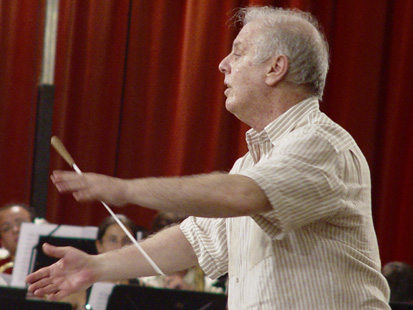
http://upload.wikimedia.org/wikipedia/commons/5/53/Daniel_Barenboim.jpg

Daniel Barenboim

But I’ve heard a few cautionary tales too. One that has gone the rounds is about the CSO’s former Music Director Daniel Barenboim and a string player of long-standing. This man had been a wonderful musician, but he had aged to the point of needing to step aside for the good of the ensemble. The problem was that the CSO had been his life, with little in the way of hobbies or other interests to fill that life, so he just kept going and denied what his ears and fingers were telling him.

One day at a CSO rehearsal, the Music Director made the matter public and uncomfortable for him and his cohorts. Addressing the musician, Barenboim said something to him like, “Wouldn’t you rather be at home than to have to be here doing this strenuous job?”

“I will die in this chair!” came the indignant response.

“Well, you know, we can have it moved to your home!”

Barenboim, of course, was enormously clever to say this, but terribly tactless as well. The poignancy of the player’s dilemma, if the conductor grasped it, was set aside for the momentary pleasure of one-upping the man.

In the end, the musician did leave the orchestra. But, someone who knew him quite well told me his retirement was empty, because playing in the orchestra was the only thing that had given meaning to his later life.

All of which is a long way of saying I don’t think I’m that guy. Most people I know who have retired, including CSO musicians, eventually seem to figure out how to organize their time usefully, even if there is a period of adjustment along the way.

Ultimately, though, clinching the decision has not been a matter of thought or reflection, but simply listening to my body.

A childhood anecdote might help make my point.

Like most kids, I enjoyed amusement parks; especially the high rides, the roller coasters. When I was small, my dad would take me to Chicago’s legendary Riverview Park, a place that had several of those attractions. The highest and fastest and scariest was called “The Bobs.”

File:The Bobs at Riverview (JJH).jpg

My dad was probably in his middle-40s at the time. He didn’t seem to be nearly as excited about going as I was, but took some pleasure in the fact that I enjoyed it immensely. “The Bobs,” however, was definitely a problem for him. It didn’t scare him, it didn’t thrill him, it just knocked him around in an uncomfortable way, and he said so. If you’ve ever ridden a contraption like that, you know you get jostled pretty seriously, thrown from one side of the car to another, bumping into your companion and the hard restraining surfaces.

I always wondered what he was talking about when he referred to the roughness of the ride. All the movement seemed great fun for me and was in no way troublesome. But, when I came to be his age and in his seat with one of my own children, then I knew exactly what he meant. Funny how we meet our parents again as we age, meet them in the mirror — meet them in ourselves, feeling what they felt when we were little, at a time that they were the age we have now become; the age where the experience of living in a more mature body finally creates the understanding.

While doing therapy is nothing like the physical experience of riding a roller-coaster, doing it in your 60s (at least for me) has not been the physical experience of doing it earlier in my career. If someone had told me 20 years ago, it would fatigue me in the way it does today, I’m sure I would not have had any more understanding of what they were saying than I did when I was 10 and my dad told me he didn’t like the physical experience of being thrown about on the hurtling high-ride.

I find the fatigue puzzling. After all, I just sit there and listen to you and talk to you. I have never felt more consistently able to concentrate on what you are saying, or better (more therapeutic) at doing my job. But then comes the end of the day, and I am both exhausted and sometimes a bit “wired,” even though I work shorter days than ever.

I’ve been playing with ways to make it less physically demanding: taking lots of vacation, doing regular aerobic exercise and weight lifting, reducing my case load, and working only four days a week for quite some time. None of that has done the trick.

Go figure.

As I said, it is time.

To all of you with whom I’ve had personal contact, thank you. Even to those of you where that contact didn’t help, I sometimes was able to learn some things that deepened my understanding and eventually benefited others. Best of all, of course, to those of you who did profit from our time together, thanks for trusting in me and allowing me to know the vulnerable, hurt places inside that were needful of something good.

I plan on remaining involved with the Zeolite Scholarship Fund, a philanthropic enterprise of which I am president.

And I do intend to keep writing this blog. I have not closed the door to professional opportunities involving psychology, and expect to keep my license in case something interesting turns up.

I cannot say with certainty I will never do therapy again, just not for a while.

And from time to time I’ll tell you how retirement looks from the other side in these web log updates.

Stay tuned.

http://upload.wikimedia.org/wikipedia/commons/thumb/9/94/Turner%2C_J._M._W._-_The_Fighting_T%C3%A9m%C3%A9raire_tugged_to_her_last_Berth_to_be_broken.jpg/500px-Turner%2C_J._M._W._-_The_Fighting_T%C3%A9m%C3%A9raire_tugged_to_her_last_Berth_to_be_broken.jpg

—

Images from the top: Sunset from Zebulun Beach at Herzliya, Israel, 11/20/06, by RonAlmog; Retirement of Mark Messier on January 12, 2006, taken by dtnyc383; Daniel Barenboim rehearsing the West-Eastern Divan Orchestra in Pilas, Sevilla, Spain on July 25, 2005, uploaded by Fernando Delgado Béjar from the Enciclopedia Libre; a picture of “The Bobs” from a postcard sold at Riverview Park, uploaded by JohnJHenderson. Finally, J.M.W. Turner’s 1838 painting of The Fighting Temeraire, being tugged to her last birth. All are sourced from Wikimedia Commons.

Looking at Old People or “Is Fifty the New Forty?”

http://upload.wikimedia.org/wikipedia/commons/thumb/8/8b/Happy_Old_Man.jpg/500px-Happy_Old_Man.jpg

You might not want to read this.

It’s gonna get scary.

I recently went to a funeral attended by a number of people who were middle-aged and beyond. The crisscrossed lines in their faces resembled an electric grid.

Still, one noted a few exceptions. Some, always female, had facial features that appeared to be immobilized by a Botox overdose. No forehead lines, no wrinkles, no movement; for the price of frozen time they had also obtained, at no extra charge, a visage as smooth as stone and as hard to animate. When trying to smile, a few of these folks looked like their faces were about to crack, while necks and hands told a different story.

Then there were the face-lifts that didn’t recapture youth so much as they made one look like someone else. Not better, but different. A few others sported eye and jowl lifts that had lost their hydraulics. I guess the old saying applies: what goes up must come down.

The men didn’t have this problem, but made an equally pathetic effort to disguise ancient origins. One guy had a comb-over that started behind his left ear and ended just over his right ear. Didn’t his wife notice this? Whose idea was this anyway? What was the man thinking?

Bad toupees suggested a recent visit to an Oriental rug bazaar in order to buy a discarded carpet remnant.

I am bald myself, but make no effort to disguise it. I do remember, however, hearing about something called scalp reduction surgery designed to get more coverage out of the hair you have by reducing the territory on top of your head.

I can imagine the following conversation:

Surgeon: ‘Well, Dr. Stein, we’ve studied your head, your hair-line and scalp and we have some good news and some bad news.”

Me: “Tell me more, Doctor.”

Surgeon: “The good news is that we can give you a full head of hair!”

Me: “And the bad news?”

Surgeon: ‘Your head will be the size of a pea.”

Back to the distaff side, a few of the women seemed to be hoping that you wouldn’t look at them closely because you’d be distracted by the dazzle of their jewelry. One seventy-ish lady had so many bracelets that she wasn’t able to lift her arm to shake hands. Her metallic bands created an orchestra-like percussion effect that drowned out the clergyman’s eulogy whenever she moved a millimeter.

Then there were the older men and women who dressed in styles more suitable to young people. One muscular guy wore a shirt revealing just enough to suggest that a lot of iron had been successfully pumped, but that all recreative work had stopped above the shoulders, sort of like an unfinished home rehab that never got to the top floor. “I don’t think that is his real head,” my wife whispered to me. We both wondered who his surgeon might be.

Ginger Rogers in Her Youth

A few of the older ladies wore skirts or dresses that befitted teens and twenty-somethings. The attire was usually combined with a long-haired coiffure that reminded me of how Ginger Rogers looked in the dreadful old age of a once gorgeous creature, still thinking that her beautiful blond hair should be worn just as it had been 50 years before.

If desperation had a fragrance, the room would have been ripe with it. But then, as Billy Crystal’s old SNL character “Fernando” used to say, “I’d rather look good than to feel good.”

The problem was, no one really looked good, even with all the obvious effort.

Is 70 then the new 60, as some like to say? Is 50 the new forty?

Is dead the new alive?

My advice? Accept the unacceptable. Hold on to your dignity.

Try hard not to look like an idiot.

As wise men have said for centuries: “There’s no fool like an old fool.”

—

The top image is called Happiness by Marg, sourced from Wikimedia Commons.