Can a Therapist Know How You Feel? Must He Have Courage? Thinking About Essential Qualities in a Counselor

512px-Misty_morning02-1

Does a therapist “know how you feel?” No. How could he?

But he may still be able to help you even without such knowledge.

Why don’t I know how you feel? I am not you. I am not your age or perhaps your gender. We may not share the same faith. I wasn’t born in the same place under the same circumstances. My parents made more money or less than yours, lived with extravagance or pinched pennies. They survived the Great Depression well or badly or not at all; and so forth.

A counselor is not in your skin, so can’t know the sensations which comprise your life. Yet he can have some idea, perhaps even a good one. What might that idea be based on?

First of all, you are both human and have a certain set of shared, although not identical experiences. Speaking for myself, as a seasoned counselor I talked to thousands of people who told me what they thought, revealed how they reasoned, and explained how events influenced their mood. I therefore became familiar with the range of what is possible in reaction to an enormous number of circumstances. I also read text books, received instruction from teachers, and shared in the richness of emotion, perception, joy, and adversity found in stirring memoirs, novels, plays, and movies.

Despite all of this, I am open to surprise. An example: my father died abruptly in the year 2000 at the age of 88. I’d known he was mortal at least since the time of his heart attack when I was a boy. Prior to his death I counseled many people who were suffering from loss. Still, despite dad’s advanced age, his demise was shocking. Like the flick of a switch — the “here today, gone tomorrow” unreality was too true. Unexpected fatigue lasted for months, as though the life force taken from him had been emptied from me as well. Even now, years after this loss, I can’t say for sure “I know how you feel” if you tell me about the death of your father. Your relationship with him and the circumstances of each of your lives might cause me to rely more on imagination than something closer to your lived experience.

I would argue we cannot even recall how our own pain felt once the distress recedes into the moderate or distant past. Big events do not remain unaltered in the museum of the brain. Rather, they are like a photo faded by the sun. We need painful memories to diminish, which would otherwise leave us in a perpetual state of agony. Even splendid, heavenly recollections, if remembered with their original impact, would compromise our ability to attend to the most crucial elements of each new day. To some degree we must unconsciously forget or transform our life history.

512px-Cirrus_clouds_with_3D_look

You might ask me: “How then can you help me grieve my loss if you can neither ‘know how I feel’ nor retain an unaltered remembrance of your own loss?” In several ways. I can listen to you and bear witness to your pain. I can be sympathetic. I can accept the emotions and stories you share: the varied combination of sadness, anger, exhaustion, and sense of separation from the world accompanying the death of a loved one. I can abide with you, acknowledge your suffering, and “be there” until it passes. If you will accept the comfort, our relationship will help to reattach you to life, even while you are grieving something that rends the same cord of attachment.

You will never be what you were before your loss, of course. But, you are more likely to heal if you share your grief. Holding it in or trying to “move on” too quickly — or shedding your tears only in private — can cause your sadness to pass by inches or not at all. Human contact in the aftermath of loss is crucial. A supportive spouse, friend or therapist can help. Time does the rest.

My sympathy for you doesn’t require I first possess knowledge of your internal life any more than enjoying milk requires a prior existence as a cow. Best not to say you know how another experiences his suffering. It is enough to tell him you care. Indeed, were you to fathom every detail of the emotions passing through another without caring, absolute understanding of his pain would count for nothing. Genuine concern — not some magical power to read another’s heart — is what counts. A patient will often forgive a therapist’s momentary failure to grasp his upset, but ought not to accept his indifference even if his knowledge of the patient’s emotional state is exact in every aspect.

The counselor carries an imperfect bag of tricks. Like the wounded soul who comes to treatment, he risks failing at the task he shares with his client, even if the courage demanded of the patient is greater. The therapist also assumes the frightful responsibility of caring for another with no certainty his effort will avoid tragedy, even if his burden and terror are less than the patient’s own.

The practitioner is always practicing. He must work to learn more and attempt to heal you no matter how much knowledge and experience he has. His therapeutic arsenal is never complete. Psychotherapy research is forever making new discoveries. Fortunately, if the therapist has the knowledge, dedication, and experience along with the courage to allow your heart to touch his, what he has tends to be enough.

In accepting you as a client, he risks injury to both you and himself. Why? In short, because you do matter to him. In treatment with the best healers, that is the one thing of which you can be certain, however much your relationship history causes doubt.

The top photo is Misty Morning by flagstaffotos.com.au/ The second image is Cirrus Clouds with 3-D Look by Simon A. Eugster. Both are sourced from Wikimedia Commons.

Whatever Became of Julius Rosenwald and William Schuman?

Have you ever opened the old photo album of a parent or grandparent and wondered, “Who are these people?” So many smiling faces lost to the passage of time.

We spend lots of effort at the job of being remembered. No one wants to be forgotten, unless, like the old-time actress Greta Garbo, you “want to be alone.”

Indeed, one of the chief reasons people skip high school reunions is the fear of not being recalled.

Look around you at the buildings. Once gone, the person whose name appears on the edifice loses control. Buildings get torn down, names get changed.

Take Dyche Stadium, Northwestern University’s football field in Evanston, Illinois. The edifice opened in 1926, named after William Dyche, an NU grad in the Class of 1882, who later became the Mayor of Evanston and oversaw the venue’s creation. To the dismay of the Dyche family, NU sold the rights to the name in 1997 to Pat Ryan, then the Chairman of Northwestern’s Board of Trustees. For eight-million dollars, Dyche Stadium became Ryan Field.

256px-Ryan_Field

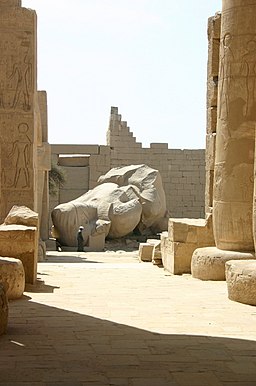
Percy Bysshe Shelley would have understood. His poem Ozymandias tells a similar story about the collapse and destruction of an ancient monument to a once formidable and arrogant ruler. An inscribed pedestal is the only thing left:

“My name is Ozymandias, king of kings:
Look on my works, ye Mighty, and despair!”
Nothing beside remains. Round the decay
Of that colossal wreck, boundless and bare
The lone and level sands stretch far away.

http://upload.wikimedia.org/wikipedia/commons/thumb/a/af/S_F-E-CAMERON_EGYPT_2005_RAMASEUM_01319.JPG/256px-S_F-E-CAMERON_EGYPT_2005_RAMASEUM_01319.JPG

If the exception proves the rule, then we should talk about Julius Rosenwald. You probably don’t know his name and Rosenwald wouldn’t have cared.

Julius Rosenwald (pictured at the top) was President of Sears, Roebuck, and Company from 1908 to 1924, and the Chairman of its Board until his death in 1932. In 1917 he established the Rosenwald Fund, a charitable enterprise designed to have no endowment, i.e. an untouchable bankroll to be invested for the purpose of the charity’s survival. Rather, Rosenwald intended the Fund to disperse grants “for the well-being of mankind” until there was nothing left. The money was gone by 1948; and with it, any chance we might hear about it in our time. Only a 2015 documentary on the philanthropist’s life has (for the moment) reintroduced his name to the public.

During its existence Rosenwald’s fund distributed about $70 million, with much money going to the establishment of over 5000 schools in the South, aimed at educating black youth. Rosenwald was also a principal founder of Chicago’s Museum of Science and Industry, seeding it with five-million dollars and serving as its president from 1927 to 1932. At the time, people in Chicago were as likely to refer to the structure as the “Rosenwald Museum” as they were the Museum of Science and Industry.

http://upload.wikimedia.org/wikipedia/commons/thumb/4/4e/Museum_of_Science_and_Industry.jpg/512px-Museum_of_Science_and_Industry.jpg

William Schuman’s name, on the other hand, was never a household word. But in his day (1910-1992), only Aaron Copland was a more prominent living American composer in the classical world. Moreover, as president of the Juilliard School and then of the emerging Lincoln Center, no one had a greater influence on serious music in the middle portion of the last century. Schuman also wrote 10 symphonies among other works, and won the first Pulitzer Prize ever given for musical composition. His Symphony #3 is arguably the greatest such piece written by an American.

William Schuman: Symphony No. 3

Yet, the centenary of his birth in 2010 was hardly noticed by performing groups and the major US orchestras pay him little attention. I asked an orchestral executive why, with few exceptions, deceased 20th century Americans like Schuman are not performed. His wry answer: once dead “it is easier to say ‘no’ to them.” All the friends in high places who programmed Schuman’s music are now gone, along with his music, except for occasional performances and recordings. The musicians and executives of our own time don’t know his work and don’t care, or so it seems.

Schuman would have agreed, I suspect, with the notion that a composer’s life is like trying to create art on a block of ice on a hot day in July, to paraphrase Arthur Miller. In other words, you hope those notes will last and be played, but the odds are against you.

Shakespeare treated the fleeting memory of our existence more gently in the words he gave to Prospero, the sorcerer, in The Tempest. Prospero’s comment comes as he ends a brief staged performance — a play within a play. What he says refers not only to the matter of creating illusions in the theater, but also to the insubstantial and temporary nature of life itself, not just our names:

Our revels now are ended. These our actors,
As I foretold you, were all spirits, and

Are melted into air, into thin air…

We are such stuff
As dreams are made on; and our little life
Is rounded with a sleep.

The irony implicit in Shelley’s and Shakespeare’s words is that while they talk of the transience of things, their names and works live on. Though it’s not called Dyche Stadium any more, the place Dyche built still stands along with the “Rosenwald Museum.”

Got to run. A recording of Schuman’s Symphony #3 is coming on the radio. Perhaps his music, like that of Gustav Mahler, will be revived 50-years after his death.

The future is full of surprises.

Who knows. Somebody at the reunion might remember you after all.

The top video is the trailer for the 2015 documentary, Rosenwald. The 1970 photo of Ryan Field (formerly Dyche Stadium) comes from Greenstrat. Steve F-E-Cameron is the author of the Temple of Ramses II, Luxor, Egypt. The photo of the Museum of Science and Industry is courtesy of Knarfol. All of these are sourced from Wikimedia Commons. The final image is the Columbia LP (long playing record) cover of William Schuman’s Symphony #3 with the smiling Schuman facing the photographer.

“The Lonely”

maxresdefault

Loneliness is such a common experience we discuss it little. Are you lonely only without a significant other? Can you be lonely even with many good friends? And what if there is no one — absolutely no one — in your life, like Robinson Crusoe before he met Friday? What if you are the last person on earth?

The depth and slow, mind-twisting anguish of loneliness is captured in a 1959 episode of Rod Serling’s old Twilight Zone series, appropriately titled The Lonely. Serling, who also wrote and narrated this particular half-hour drama, transports us to a stage of the future:

Witness if you will, a dungeon, made out of mountains, salt flats, and sand that stretch to infinity. The dungeon has an inmate: James A. Corry. And this is his residence: a metal shack. An old touring car that squats in the sun and goes nowhere – for there is nowhere to go. For the record, let it be known that James A. Corry is a convicted criminal placed in solitary confinement. Confinement in this case stretches as far as the eye can see, because this particular dungeon is on an asteroid nine-million miles from the Earth. Now witness, if you will, a man’s mind and body shriveling in the sun, a man dying of loneliness.

vlcsnap-2010-07-27-14h02m05s209

In Serling’s conception, isolation affords no capacity to communicate with anyone on Earth or elsewhere. The protagonist’s punishment is a seclusion as total as society can create. There is no internet to divert him, no newspaper to read, no TV, not even a prison guard. Though a convicted murderer, he claims self-defense. Corry’s only human contact comes every three months when a supply-carrying space ship might stay for a few hours or a few minutes to unload the prisoner’s necessities.

James does his best to pass the endless time. The prisoner reads, journals, repairs the broken-down car mentioned by the narrator, and builds a chess board. Corry also owns a deck of cards, with which he can presumably play solitaire. An old-style record player creates background music. Beyond this there is only the heat. Not even vegetation colors the vista. He yells in order to hear a living human voice. Would your echo be a life partner worth living for? James is finding it hard to come up with reasons to say yes.

This intelligent but pitiable creature believes he is slowly losing his mind. One possibility keeps him alive: there is a political movement back on Earth protesting the inhumanity of punishments such as his. Perhaps, just perhaps, there will be a pardon.

The quarterly supply ship returns with something extra for him. What might it be? (Spoiler alert). He opens the large, vacuum-sealed container to discover a machine that activates itself by exposure to the air.

A robot. A woman, if you can call a robot by a human signifier. “Alicia” claims she can feel things. Not just the pain of things physical, but emotional pain — loneliness. Does the title, The Lonely, speak of the man alone or both of them? Surely, Rod Serling wished us to ask whether a robot might be so constituted as to become “human.”

James feels mocked by the likeness of a female who is actually a machine. He rejects her. Does Alicia experience hurt, as would a woman made of blood and flesh? The relationship develops nonetheless. How much of what James comes to see in Alicia is what he wishes to see in her and how much by what she is? How much do any of us try to sustain relationships, imperfect as they are, because of the need to love and be loved? Corry — still nine-million miles from humanity — is no longer lonely.

Twilight Zone was famous for surprise endings, unforeseeable twists. I am not so cruel as to spoil the tale for you, but I will say the conclusion further informs our understanding of loneliness. Consider this story of exquisite pain and artificial redemption a small masterpiece on the human condition. I imagine you will identify moments of your life in James A. Corry’s predicament, as he is portrayed by Jack Warden. You may even see yourself in Jane Marsh as Alicia.

After all, we have all been The Lonely. Click on the link and watch.

Jack Warden and Jean Marsh are pictured above in a still photo from The Lonely. The second image is James Corry’s “dungeon,” as seen from a distance.

Anticipation and Realization: Can Expecting Disappointment Reduce Your Pain?

409px-In-Erwartung_Keller

My mother used to say, “Anticipation is greater than realization.” She uttered the phrase more than once, always unprompted. It was as if she were giving me a warning about the disappointments of life, the hoped-for moments that wouldn’t fulfill my expectation of them. Certainly, she was speaking of her own pain-filled history. Her strategy was not to predict too much good from events and especially from people, for fear of adding to the list of letdowns. In doing therapy I heard many others tell me they adopted a similar defense, the better to buttress themselves against the world’s assaults. Simply put, don’t get your hopes up, they would say. Otherwise you will be ripe for dismay.

I am no blind optimist, but I think mom was wrong. First, I’m not sure you can effectively steel yourself against all the blows of life. If Death is an opponent with an undefeated record, Life is sometimes your best friend and at others your worst enemy. He will lift you up and tear you down. Even in a lucky life like mine “there will be blood.” But since I like the heady experience of those times life lifts you off your feet, I must pay the cost of admission to the airport. These are the terms of the contract we accept by taking our first breath. We do well, if we can, to bounce back when defeated, since the future may hold more glorious and unexpected flights.

Secondly, many of the injuries we suffer are impossible to anticipate except in an abstract way: we know people will leave, we expect occasional betrayal, we recognize nobody wins every game, on and on. Only a fortune-teller knows exactly how and when. Thus, in a moment of pain, we are taken by surprise despite our preparation. Moreover, we risk wasting our days in a state of general worry or dullness, bypassing every chance for love, kindness, and accomplishment. Expecting disappointment rarely reduces the hurt, but the strategy guarantees little possibility of joy.

My most memorable experiences were impossible to fully forecast. A trivial example: as a kid I looked forward to attending a NY Yankees baseball night game against the Chicago White Sox on May 18, 1956. I couldn’t wait until my Uncle Sam took me. The thrill I imagined weeks in advance was amplified a thousand fold when the mighty Mickey Mantle hit one home run batting right-handed and another left-handed, a feat rarer than pitching a no-hit game. I can still picture the port side clout, as if carried by a rising tide, the ball aglow in the arc lights until the spheroid struck the right field upper deck of old Comiskey Park. But for the impediment of the rafters I thought it would reach the moon.

I have been moved to tears by music, by the birth of my children, and amazed that I could move many of my high school classmates to tears by a speech given at one of our class reunions. A crackling physical electricity of athletic performance passed through my body on one occasion — a sensation I never knew possible. I’ve enjoyed luck in love and friendship as well as heartbreak and betrayal. A business partner and friend stole tens of thousands of dollars from our enterprise. My parents are both long dead. A lifetime of movies, books, conversations and observations did not prepare me for these sensations and emotions when the moment arrived. Life is about taking action and being surprised and being grateful despite the fact there is no free lunch.

Some hunker down in their shelter of straw thinking the big bad wolves will thereby be held off. I’m here to tell you I know of no fool-proof defense against injury and no Teflon-infused clothing to deflect the “slings and arrows of outrageous fortune.” What we are offered is a life of imagination and fear and effortfully summoned courage and friendship and tears and laughter and loss and taking chances: in other words, of winning and losing. If you think otherwise, well, you haven’t been paying attention.

Sample the menu of life. Not all the dishes are tasty, but even some of those you don’t like are informative, and knowledge is usually desirable. Don’t make the highlights of your life the things you buy for yourself. Do make some of those highlights the gifts (of all kinds) you give to others.

The best events cannot be anticipated. And don’t glut yourself: a gourmet meal should be a special treat, not a routine pattern of diminishing novelty. The greatest art, music, and literature become old if revisited daily. I wouldn’t want to attend a performance of Beethoven’s 9th Symphony even once in three years. Celebrate the rare occasion. Become an enemy of routine. Do look forward to some things, be they goals worth working for, a date with your sweetie, a trip, or a once a year get-together with old friends. Anticipation has magic, as we note in the lives of children every Christmas. Don’t become like the worker in a candy factory who grows tired of chocolate by eating too much.

The world is not your oyster, but there are some good bites. No one gets out alive, yet brave souls seize the day. On a fine afternoon your bite will feel like more than enough. You might even uncover a pearl.

The top image is called In Anticipation by Albert von Keller. It was sourced from Wikimedia Commons.