Thomas Jefferson and the Loss of Someone You Love

Thomas jefferson

I was not prepared for the shock of it. It was an event I’d feared since my father’s heart attack when I was 12 and had thought about frequently as he aged. But the notion of the stroke-out death of my 88-year-old father in the year 2000 would be a surprise — would catch me up-short — was not anticipated, despite all the people I counseled in their grieving. It was the difference between knowing about a thing and living it.

Nor could I have imagined the almost animal-like pain, the inarticulate state of being words can’t describe, and the feeling of emptiness following; something like an ache at the cellular level, a kind of psychic moan.

And then fatigue, for months, as if, in his death my father had taken my life’s energy with him. My children eventually asked my wife, “When will dad be himself again?”

And even when you do recover you are never quite the same person you were before. One’s life becomes “before and after:” before you went to school and after, before you learned to drive and after, before you married and after, before you had children and after.

And yet, the event itself, the death of a parent before the death of his child, is a commonplace. It is the way things are supposed to work. Beyond a certain age, we all know it will almost certainly happen. We see it happen to others. But this observational experience does not bring it home, make it real.

I can still tell you the name of the first person I knew to lose a parent. My classmate Marilyn Levin, some time around sixth grade. The event made an impression, a scary impression. And then, in high school, Michael Karsen’s mother died. You note these things with a shudder and don’t know what to say to your classmate. Perhaps you say you’re sorry or say nothing or ignore the person — avoid eye contact. All because it is so terrible and, you think, “It could have happened to me. It still could.”

And finally, if you’re lucky, it happens only much later. By which time, again “if you are lucky,” you have gotten old enough that your children recognize you are aging; that at some point you too will die. And now you have another reason to stay alive: to spare your children the pain of your demise.

No, spare is not the right word. Postpone is.

Life is like a relay race, batons passing from parent to child, to their children, and on and on. It has been going on since the beginning. It is the least remarkable thing about life, that it ends. And yet, it is the most serious and dreaded thing, as well.

If you live long enough, then you realize life eventually becomes a series of goodbyes, departures. Not the life of your childhood, which was a constant flow of hellos, arrivals.

But what if you lose your spouse at a very early age? That is not “supposed” to happen. The third President of the United States knew about this. When he was 39, Thomas Jefferson’s 33-year-old wife Martha died. The couple had been married just 10 years.

thomas Jefferson paper

Both of the Jeffersons enjoyed reading aloud to each other. One of their favorite books was The Life and Opinions of Tristram Shandy, Gentleman by Laurence Sterne. Martha was trying to read a portion to her husband as she lay dying, trying to convey her feelings about the separation soon coming. When she became too weak to speak the words, she began to write them:

Time wastes too fast: every letter
I trace tells me with what rapidity
life follows my pen. The days and hours
of it are flying over our heads like
clouds of windy day never to return–
more. Every thing presses on —

When even this became too difficult, her husband picked up the pen and completed the passage from memory (see the image just above):

and every time I kiss thy hand to bid adieu, every absence which follows it, are preludes to that eternal separation which we are shortly to make!

Jefferson is reported to have fainted when his spouse died. He was carried from her bed. For three weeks he didn’t speak or leave his room. Only his daughter Patsy was finally able to bring him out of himself. She later wrote:

He walked almost incessantly night and day, lying down only when nature was completely exhausted on a palette that had been brought in during his long fainting fit. When at last he left his room, he rode out, and from that time he was incessantly on horseback, rambling about on the least frequented roads and just as often through the woods, and those melancholy rambles. I was his constant companion, a solitary witness to many a violent burst of grief.

For the rest of his life, Jefferson kept the small piece of paper on which he and his wife had their last literary dialogue. The paper and a lock of his wife’s hair, captured in an engraved locket he had made for the purpose, remained in a secret drawer next to his bed. Jefferson never remarried, although there is evidence that he did have a sexual relationship with one of his slaves, Sally Hemings.

Thomas Jefferson Locket

Thomas Jefferson became President 19-years after Martha’s death. He would die on July 4, 1826, the same day as his friend John Adams, the nation’s second President. It was precisely 50 years after these men signed the Declaration of Independence, a document drafted by Jefferson.

Thus, the nation lost two of its founding fathers in 24 hours. But that is a different kind of loss and a different kind of story.

Avoiding Life’s Pain: Drugs, Deadening, and the Defeat of Therapy

anesthesia

Having been raised in a secular home, I remember being shocked the first time I saw a religious carving in someone’s abode. It happened in my next-door-neighbor’s house. There he was, Jesus Christ, impaled right on the kitchen wall. Lunch was an ordeal given that Jesus was suffering just over my shoulder. For me I mean. My buddy and his mom didn’t seem bothered.

Since they were raised with crucifixion images all around, some indifference to the human sacrifice might have been expected of my hosts. The effect was similar to that produced by watching the first story on the TV news day-after-day, chosen by TV producers who use the mantra “If it bleeds, it leads.” We have all been desensitized by images of dead bodies, burnt flesh, undernourished children, and violence. Words like inured, deadened, habituated, and coarsened also come to mind; as well as accustomed, toughened, and hardened.

Drugs, alcohol, and antidepressant medication can play a part on the road to both callousness and self-protection. And, as I shall try to show, the question of how much of life to let in — how much to “feel” — is a big one for those in therapy and for all of those outside of it, as well.

Take one example. How are we expected to react to the TV news story of a murder? Should it be a matter of curiosity, the same kind that causes us to slow down on the highway to check-out an accident? Should we empathize with the pain of the afflicted? Should it provoke our action to prevent future calamities of the same kind; or reach out to the victims featured in the news story? Should we immediately feel a sense of gratitude that it didn’t happen to someone we love?

How is one of the faithful expected to react to the image of Christ on the cross? Is it supposed to just blend into the kitchen wallpaper? Or, should one react as if seeing it for the first time, aware of the horror of it, and the measure of sacrifice proclaimed to be done for all of humanity?

A Wood Carved Baroque Crucifix in St. Oswald's Church, Kastleruth, Germany by Wolfgang Moroder

A Wood Carved Baroque Crucifix in St. Oswald’s Church, Kastleruth, Germany by Wolfgang Moroder

Therapy confronts this dilemma. Simply put, it faces the problem of how to live in a world where emotional injury is inevitable. Most people come to treatment feeling too much. Part of the counselor’s job will turn on the question of openness to both pain and pleasure. The intimacy that we all want requires some amount of that openness, otherwise the closeness cannot happen. But, by permitting vulnerability, we suffer more when we have loved and lost; or lost anything or anyone we value. Consciously or not, man comes to a crossroads where one path leads to a deadened life and the other to one alive with pain and pleasure. You choose.

People vary in their sensitivity to even the vicarious experience of life’s emotional afflictions. Those variations are at least partially determined by the individual’s nature. I recall evaluating a teenager who appeared to have had an unremarkable childhood: no abuse, good parents, only the garden-variety of growing-up challenges. Yet, she wanted to keep a distance from others, in part because she felt their pain too acutely. Indeed, she was unable even to watch the TV news because the kinds of stories I mentioned earlier brought tears.

There are a great many ways to deaden oneself to depression and lesser states of sadness. Therapists are well-advised to find out whether their clients are using significant amounts of alcohol or drugs while they attempt therapy. Since counseling deals with emotion, those substances can keep the soft and sensitive parts inaccessible to even an expert therapist. If past losses need to be confronted, the grieving-project can be stalled by the artificial numbness or buoyancy of chemically induced mood alteration. Even antidepressants sometimes create the same challenge to reaching the wound so that one can treat it.

Therapy is difficult. Courage is required to deal with the pain, along with a therapist who can provide the most easeful way forward. Counseling can be a tightrope walk for both the sufferer and the healer: too much pain and the treatment will be as bad as or worse than the illness, too much anesthetic and there will be no cure at all; instead, a dependency on the joint or wine or antidepressant, perhaps in perpetuity.

At this point you might ask why a chemical solution to pain would be so bad. Indeed, for those who have a biologically-based mood disorder, psychosis, or Attention Deficit Hyperactivity Disorder (ADHD), medication may be essential. But what of those for whom drugs or alcohol or medication represent an avoidance of “real life,” an escape from the job of confronting their own internal discomfort? Let me give you an example.

The woman in question had an admirable life in objective terms. Nice family, nice career, large nest egg. She was haunted, however, by her long deceased, disapproving father. Though he’d been dead for 20 years, not a day went by without thinking about him. She tried therapy because she was depressed, but her therapist never inquired about possible drug use and the patient didn’t report it. Yet, nearly every evening for those same decades she’d lived in a cannabis-induced haze and continued to do so during her treatment.

Therapy tried to focus much of its attention on her relationship with her dad, his lack of affection, and his failure to praise her considerable accomplishments. The therapist hoped that this woman could break through to a depth of feeling (both sadness and anger at the father) that would free her from the sense of inadequacy she struggled with every day. The psychologist believed that by getting her to re-experience the intensity of her injury, she would recognize its unfairness and her father’s indefensible cruelty, not just intellectually but with her whole being. Perhaps then she would no longer blame herself.

It didn’t happen. One suspects that the treatment failure — the defeat of this woman’s therapeutic project — was due to her marijuana use, a kind of self-medication that took the edge off the worst of her pain. It kept the patient just above water, but didn’t allow her (or the therapist) to go below sea level to the grip that her father had on her — a dead hand that metaphorically threatened to drown her. Had she not been smoking pot, it is possible that further exploration below the surface and into the depth of her pain would have released the dreadful downward pull of a ghost’s grip, permitting the grieving needed to free her from his verdict that she was worthless.

There is yet another reason to be concerned about an anesthetized life and reliance upon those substances that can be bottled, injected, and smoked; quite apart from the potential for addiction and bodily destruction. Yes, the blitzkrieg of life is a challenge to an undistracted, full-frontal awareness of your suffering at every moment. But if life is indeed sometimes simply “too much,” we must still choose carefully how to cope with that difficult reality so that the remedy isn’t also “too much” in a different way.

The death of pain means the death of life itself. Our defenses against feeling the bad also can prevent us from feeling the good. The question of anesthesia’s uses and misuses must be faced: whether to use it, how much to use it, and when to use it; reminding ourselves that the more anesthetic, the more we become inured to everything, the good and beautiful and poignant, as well as the painful. And the more we simply watch, sit back, and let the best of life pass us by.

—

The Crucifix is sourced from Wikimedia Commons.

How To Be Happy: Information You Can Use

smiling baby

Psychologists have historically been trained with an emphasis on all that can go wrong in life. We studied the diagnostic categories of mental illness and the treatments that might put Humpty Dumpty back together after his great fall. But we missed out on something very important: how to help people be happy.

Part of the reason is that clinical psychology grew out of a medical model, one that emphasized sickness. Although it wasn’t much discussed, it seemed as though there was a basic assumption that if you weren’t “mentally ill,” then you must be well, as in “well-being.” Not so fast.

More recently, clinicians have had the benefit of a growing body of research on “Positive Psychology;” a field of study intended “to make normal life more fulfilling,” according to William Compton. And they have been aided in this by people who do research in “Behavioral Economics,” such as psychologist Daniel Kahneman, who won the Nobel Prize for his efforts.

A number of interesting questions have been addressed. Here are a few, after which I will give you a link to a place where you can learn more:

  • Can smiling help you be happier and live longer?
  • Are we better off with more (or fewer) choices of what to do with our time and money?
  • A year after the event, will you be happier if you win the lottery or become wheel-chair bound?
  • Do most of us have a good idea of what will make us happy?
  • Is there a difference between happiness as defined by our moment-to-moment experience and happiness as defined by a retrospective evaluation of our life satisfaction?
  • How important are material things in producing a happy life?
  • Are you happier if you buy something for yourself or buy something for someone else?
  • Do we make ourselves unhappy by having expectations that are too high?
  • Can we be happy even if things aren’t going our way?

Matthieu Ricard

As you might know, “Ted Talks” offers brief lectures on a variety of very interesting subjects, including happiness. You can find nine of those talks, addressing some of the questions I just listed, here: What Makes Us Happy? Links to the individual talks are also found below. They are given by leading experts in the field, all of whom are entertaining speakers. The longest of the talks is about 20 minutes, the shortest less than six. You will hear a number of psychologists and one Buddhist monk, Matthieu Ricard, who is pictured above.

It might be useful, after watching each one, to ask yourself how the information presented could be applied to the way you live. There is no proper order in which to watch them and, of course, no requirement that you watch them all. But they might just change your life:

Dan Gilbert: The surprising science of happiness

Malcolm Gladwell: Choice, happiness and spaghetti sauce

Mihaly Csikszentmihalyi: Flow, the secret to happiness

Michael Norton: How to buy happiness

Barry Schwartz: The paradox of choice

Graham Hill: Less stuff, more happiness

Matthieu Ricard: The habits of happiness

Daniel Kahneman: The riddle of experience vs. memory

Ron Gutman: The hidden power of smiling

—

Thanks to Phil Zawa for recommending these talks.

When You Don’t Know What to Say

Speaking too soon

Some people talk too soon, some too late, some too much, and some too little. Others pile up the sentences so fast you’d think they have to catch a train. Some talk too loud, soft, or close (in your face).

One of the most common regrets I heard in my clinical practice was from patients who believed they lacked the right word at the right time. Something had happened. Perhaps an offensive comment had been made, and they didn’t know how to respond.

The right words arrived by United Parcel Service (UPS) about three hours later. Others couldn’t imagine a good repost even after three weeks.

There are too many ways to go wrong in everyday conversation and even more in a public presentation if you don’t have much to contribute. Adlai Stevenson II told the following story.

It seems that a young and none-too-impressive new member of the British House of Commons approached his party leader and Prime Minister, Benjamin Disraeli:

“Now, Mr. Prime Minister, I’ve just come to the House; do you think it would be well if I participated in debate?” And the Prime Minister looked at him appraisingly for a moment and said, “No, I think it would be better if you did not. I think it would be better if the House wondered why you didn’t speak rather than why you did!”

Even though we don’t have the benefit of Disraeli’s advice, many of us have thought of ourselves as Disraeli did of the young member of Parliament: that we’d cause embarrassment by opening our mouths.

Well, sometimes we will, and indeed, all of us have done it before. Few will remember our blunders, however, and there is no chance of making an impression that is clever, thoughtful, kind, or enlightened without moving our lips.

No amount of potential eloquence does us any good if we forever have the mute button on.

Discussão.png

I’ve made some unfortunate comments myself.

In my teens, I visited a cousin whose mother had died after a long and grueling struggle with cancer. I extended my condolences, and, as often happens during such visits, we discussed other things.

Indeed, I forgot the sad occasion for a moment and mentioned a recent minor mishap, characterizing it as a “fate worse than death.”

Oops.

Too late to suck it back in. No way to un-ring the bell.

I apologized, of course, and my kind relative forgave my mistake. She was dealing with the real thing, death itself, not something trivial and stupid such as my comment. Years later, she couldn’t recall it.

Tactless remarks arise, as uncomfortable as they are. As I said earlier, we often wonder why we didn’t know what to say.

For a lucky few, their command of language comes as a genetic gift. They also have the confidence to deliver a line that others might keep to themselves.

While I can’t give you natural eloquence, I have a few suggestions to increase the possibility of saying the right thing and avoiding the wrong one:

  1. Make a recording of yourself as if you were chatting. There is nothing like hearing how you sound to discover what might be imperfect about how you converse. Yes, it could fuel your self-consciousness temporarily. But the project of self-improvement rarely comes without courage and pain.
  2. Have at l least one joke in hand that isn’t dirty or politically incorrect.
  3. Cut out “stance adverbs” and participles when beginning to talk or as interjections. I’m speaking of “uh,” “um,” “like,” “so,” and “you know.” Limit how often you say “awesome.” And never put these words altogether: “So, uh, you know, like, um, it was awesome!” Don’t say “fail” when you mean “failure” and “reveal” when you should use “revelation.” You will sound 20% more intelligent once all this is accomplished.
  4. Wait a bit before answering, at least sometimes, to create the opportunity to formulate what you have to say. The conversation isn’t a race to hit the buzzer on a TV game show.
  5. Part of the reason for waiting is to grasp what your partner means, display respect, and understand his point of view. Repeating what has been said to you can be helpful. Identifying and acknowledging his ideas is essential if you wish to have friends and loving companions. Fewer disagreements will be one of the benefits.
  6. If you expect a wise guy to put you down (because of your history or his), prepare some comebacks in advance. There are books on this sort of thing, so you don’t have to be original. Don’t forget, however, that sometimes the best put down is to ignore it, and ending the relationship occasionally is necessary.
  7. Try to sound au courant (a French expression meaning “up to date” or “fully informed”). A good start would be to read something other than an internet story on the life of the Kardashians.
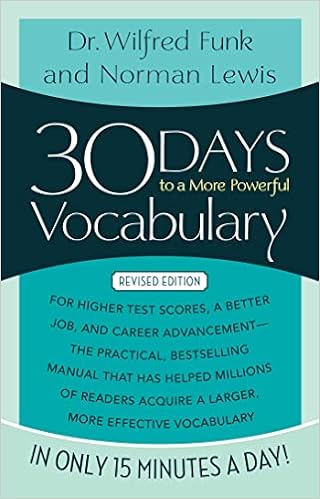
  8. Discover some new words. Thirty Days to a More Powerful Vocabulary has been around since 1942 and is a worthy place to begin:
  9. Don’t circumambulate (circle the idea you are trying to express). Get to the point so as not to lose your listeners.
  10. If you are in the habit of using lots of pronouns, be sure the pronoun comes right after the formal name of whoever the “he” or “she” you are referring to is. The listener might think you are talking about someone else if you don’t.
  11. In general, especially in public utterances, wait until you have the attention of others. Trying to talk over people is frustrating, and those who specialize in preventing you from completing your thought are rude.
  12. Asking dinner partners to stop texting should happen much more often than it does. It is not impolite to tell them you will wait until they are finished.
  13. Most people who are nervous tend to rush what they have to say. Instead, think of your oral communication as a landscape painting, where the words become the foreground, and the silence becomes the background. It will help if you allow seconds of quiet to put your words into relief.
  14. Consider going to Toastmasters. It is an organization whose meetings are “learn-by-doing” workshops “in which participants hone their speaking and leadership skills in a no-pressure atmosphere.” And they’ve been doing it since 1924.
  15. Unless you are gifted in delivering an unrehearsed speech in front of an audience, try to memorize your address or at least bring an outline.
  16. One last piece of advice comes from an anonymous author:

Be careful of the words you say,

Keep them short and sweet.

You never know, from day to day,

Which ones you’ll have to eat.

=================

The cartoon is called Conversation by Richard Melo da Silva, sourced from Wikimedia Commons.

The revised edition of Thirty Days to a More Powerful Vocabulary was published in 2022.

Are You Too Defensive?

Offensive_Defense_by_Flex_Flex

Has anyone ever said that “You’re too defensive!” I’m here to tell you that it wasn’t a compliment. Worse still, it probably is causing you problems.

What might it mean to be this “too defensive” thing?

1. Your goal is to allow no one in. Safety is valued above everything else, even more than love. Perhaps not as you imagine it, but as you live it. Your behavior trumps your desire for close relationships. You may not even realize it is so.

2. Almost no one is permitted to know you very well. To achieve this you’ve developed a certain way of being: too distant, unfriendly, stern; or superficially cheerful and bright.

3. Or perhaps you are always backing away, inclined to refuse invitations, forever changing the subject when things begin to feel “too personal.” You take a “wait and see attitude” until the bus leaves the station and you are all alone. “No” is your default position toward intimacy.

4. Your first instinct is to look for signs of danger. You assume the worst and distrust others until they prove their worth, which few do; in part, because you don’t give them much of a chance.

5. When someone questions you or expresses a different opinion than your own, your tendency is to attack that person’s position. The idea of listening, learning, compromising, and creating a dialogue gives way to a full frontal assault.

6. You might be prone to interrogate people, look down on them, judge severely, and in so doing, make yourself into an island. You are marooned on your own tiny piece of land, safe but isolated.

7. Perhaps you hit the other before you get hit and get hurt. Guess what? You’ve become the very thing you hate, the person who is dangerous to be around, the one who rejects first and asks questions later. Congratulations! You have succeeded in saving yourself from injury by others, while inflicting the injury of isolation on yourself. Your fortress is a cave. It permits no light to enter, no laughter, no life.

8. In your tendency to defensively retreat or pre-emptively attack, you are likely to create a self-fulfilling prophecy of rejection by others. If you back away from their overtures of friendship they may think of you as stuck-up or uninterested in them. On the other hand, if you are snide or snippy in your attempt to push them away, they might conclude that you are surly and difficult — not the kind of person whose society is desirable.

9. Whether you know it or not, you’ve made the relationship tests too hard, the passage to your hiding place too narrow, the mountain too high to climb, the fortress impregnable.

10. You are unsurpassed at making excuses and rationalizing your behavior. No one else is good enough, they don’t meet your standards, their interests are too different, they’d never understand you. No. The truth is, you don’t understand yourself. Step back and take a look in the mirror:

Conrad_Gessner_-_Porcupine_33

11. Worst of all, you have made a fundamental mistake in understanding the world. Your defenses block your vision. It is as if you were born in the winter and do not recognize that the weather has changed.

12. The bottom line? New learning is required. You must risk the lowering of your guard, a re-entry into the game of life. However bad it was yesterday, however much others have rejected us, we must all recognize that today is a new day and we must be open to all its possibilities, not only the ones that might pierce the heart.

—

The top image is called Offense_Defense by Flex-Flex. The Porcupine comes from the first volume of Historiae Animalium by Conrad Gessner, Zurich, 1551. It was uploaded by en:User:Belgrade18 for En_Wikipedia and, in turn, uploaded for Wikimedia Commons by Roland zh.

Opportunism and Its Consequences: “Sunset Boulevard”

Swanson-Holden

Being a has-been can’t be much fun. They are like ghosts of their former selves; and worst of all when they do not know that their day is already done, that the time has come when the shade will not (once again) see the sun.

Those people who are identified by the adjective “former” risk the dissatisfaction that comes with knowing you are no longer who you once were. It is easy to sympathize if someone is out of a job necessary to make a living. But what of the CEO, musician, ballplayer, or actor with tons of money but nowhere to go when the new work week comes, no crowd of fawning acolytes to sing his praises?

The world usually has a short memory for such people, as can be seen in the classic 1950 movie Sunset Boulevard, 16th on the American Film Institute’s list of the Greatest American Movies. It was directed (and co-written) by Billy Wilder, and stars William Holden as Joe Gillis and Gloria Swanson as Norma Desmond. Upon meeting Desmond, Joe, a failing screenwriter says “You’re Norma Desmond. You used to be in silent pictures. You used to be big!” She answers back, “I am big. It’s the pictures that got small.” And, indeed, fifty-year-old Gloria Swanson was a very real relic of the silent screen, here portraying a rich, overdressed, out-of-date, ex-femme fatale who lives in a Beverly Hills mansion as faded as her movie career.

The world has mostly forgotten Norma, but she has not forgotten the world. She is one of those people we read about on the Internet, in features like “Whatever happened to…?” And then we see that so-and-so is now well-worn and largely out of the public eye and we say to ourselves, “Gee, I thought she was dead.”

The movie provides an answer to the question, “What would you do to get your dream.” Maybe your dream is an estate with a swimming pool, maybe it is becoming a star again, maybe it is directing a movie.

The movie gives us some answers. Joe Gillis is willing to become the sexual plaything of a sad, deranged, controlling woman (Desmond) who is 20 years his senior; and prostitute his writing skills as a ghost-writer for her irredeemable script, one that she expects to be the vehicle for her return to the movie screen. Of all things, it is based on Salome, the biblical tale of a sex-crazed girl in her early teens who becomes obsessed with John the Baptist, to the point of kissing his decapitated head. It seems never to occur to Norma that, at age 50, she is at least 30 years too old for the role; or that she has found her obsession in the writer Joe Gillis and, even more, in her comeback.

Gloria Swanson in a frame from the movie. Not the exaggerated quality of her face and body, suggesting both a silent film style, but also her unhinged mental state.

Gloria Swanson in a frame from the movie. Note the exaggerated quality of her facial expression and gesture, suggesting both a silent film acting style and her unhinged mental state.

For his part, Joe Gillis is also desperate, but unlike Norma he is out of money and on the way out of Hollywood when he accidentally meets her. The movie community’s dismissal of the former star is similar to its indifference to Gillis’s own modest accomplishments. We meet other silent film greats now on the movie world’s discard pile, not coincidentally playing cards with Norma. And they are portrayed by real, but forgotten leading men (Buster Keaton and H.B. Warner) and an ex-leading lady (Anna Q. Nillson). Nor should I overlook Erich von Stroheim, once a famous director in real life, who is cast as Norma’s butler.

None of this is coincidental, as Billy Wilder apparently wished to make a movie about the cruelty of the flesh-market that is the motion picture industry, a place where the question “What have you done for me lately?” is the only one of importance regardless of what you might have accomplished in the past. Narcissism and opportunism are the watchwords for nearly every significant Hollywood character in the movie: self-involved people using people, just as Norma and Joe use each other.

There is much irony in this film, as when Joe Gillis says, “Funny how gentle people are with you when you’re dead,” by way of comparing that kindness to their treatment of you in Hollywood when you are alive. And then there is the movie’s title, Sunset Boulevard, referring to the street on which the mansion is located and the sunset of the careers of Norma and Joe.

Joe Gillis knows what he has become, but can’t free himself from his attachment to the fine things that Norma’s money will buy him, even if it requires the surrender of his independence and self-respect. He has become the consort of a ghost and her ghost-writer, both; a woman who dresses like Miss Havisham of Great Expectations, in a theatrical style as antiquated as the mansion she lives in and the overly dramatic way that she performs. As an actress she is a throw-back to something that literally went out when talking pictures came in and spoken words replaced, in part, facial expression and bodily movements that previously had been the only means of communicating. She remains stylized and “over the top,” despite the movie industry’s long-completed transition to a more natural way of acting.

This great picture is almost horror movie-like in its portrayal of Norma Desmond’s ultimate descent into madness — from trying to recapture the past to actually living in it — all in a house haunted by memories and photos of her former fame. It is also a film noir in the bleakness (however entertaining it is) of its vision of this segment of the human race. It is a morality tale too, a social commentary that extends beyond the movie industry to the mirror we might hold to our faces and ask, “What have I done to get what I’ve got; and what am I willing to do to get more and to keep it?” Dog-eat-dog behavior is not the exclusive property of a film studio.

The ultimate irony of this video production can be found in its stunning last scene, which I won’t give away here. I will only say that each of the main characters obtains some version of what he has been seeking, even though none of them can be thought of as fortunate in having obtained it.

Two famous quotes come to mind, one from the New Testament: “For what does it profit a man to gain the whole world and forfeit his soul?”

The second is one of my favorite all-around quotes, by the Irish writer and wit Oscar Wilde: “There are only two tragedies in life: one is not getting what one wants, the other is getting it.” As I said, they all get something (Norma, Joe, and the butler), but not quite in the form that they expected it.

A Frame or Production Still Photo of Gloria Swanson in the 1919 Movie "Don’t Change Your Husbanda frame or production still of Gloria Swanson in the 1919 movie "Don’t Change Your Husband"

A frame or production still photo of Gloria Swanson from the 1919 movie “Don’t Change Your Husband.”

—

The top image is a studio publicity still from Sunset Boulevard, Gloria Swanson and William Holden are featured in this photo, downloaded by Dr. Macro. The second picture comes from the movie itself; again Gloria Swanson is shown, as downloaded by hd-trailers.net/ All three images are sourced from Wikimedia Commons.

Vampires and Buried Feelings: The Therapy of Getting Over Your Hurt

Vampir,_1899

Virtually all of us have spent time as emotional grave diggers, working hard to bury our feelings. “Those feelings need to be got rid of,” we say to ourselves. “They do me no good. They’re old and unattractive. No one else wants to hear about them.” And so we push them down, as far under the surface as we can manage.

If only it were that easy. Too often, the feelings are like vampires: they don’t stay buried because, like the vampires, they are “undead.” After dark the earth moves and soon enough the coffin is empty and the hurt feelings are once again at liberty to suck the life out of us.

Why do we do this? We want to end the pain, of course, and this burial seems the most direct way.

The burial tends to start with some sort of rationalization. Most of us compare things. People inclined to ignoring uncomfortable feelings often see the misfortune of strangers as reason to delegitimize their own pain. If you had a difficult childhood, you might tell yourself that “Everyone had something like that” or “My life wasn’t any different from most of the other kids I grew up with” or “How can I complain when I didn’t get physically abused and there was always enough food to eat?” And it is almost always true that there is or has been someone worse off.

Therapists call the attempt to normalize one’s experience — the mental gymnastics that some people do to minimize their suffering — a kind of invalidation. By that they mean that the person is discounting his pain; negating his own feelings, usually by the intellectual exercise of comparing. And since he might well have been told at some point, in words or actions, that his feelings weren’t important, he now has the additional problem of saying it to himself. It is one thing to be alienated from the world, but self-invalidation adds a level of estrangement from yourself on top of that.

Our instinctive withdrawal from pain seems the only right answer when we ask, “What good would it do to think about this? It is over and done.” We hope that time alone will heal whatever small wound is there, even if it isn’t too small. Meantime, we get on with the funeral rites and the premature burial.

But, think about it for a moment. Is the pain of a surgical procedure any more or less acute because someone else has more pain than we do? And does it really make the fact of your unhappy childhood or lost marriage any more pleasant because others have had it worse? Perhaps if you are suffering in a group of compatriots who share your tough times, as in wartime, does shared misery provide some solace. But when you try to make yourself feel better by reference to an abstract group of strangers who have had it bad, there is little comfort.

Ultimately it doesn’t change the way you feel to know that, as I was frequently reminded over the childhood dinner table, “You’d better eat your food — people are starving in India.” The good but unlucky folks in Asia were simply too far away to influence the way I was thinking about the food right in front of me. Suffering and unhappiness are very personal and immediate. The comparisons are usually not of great value, in part because we can’t get out of our own skin. Even distant memories of our own earlier and greater suffering usually don’t salve the pain of the moment.

"Emotions" by Franz Xaver Messerschmidt

“Emotions” by Franz Xaver Messerschmidt

Of course, it is true that everyone has misfortune; some more, some less. But if your own history of pain haunts you despite your attempt to plant that undead feeling in an emotional cemetery, then perhaps something else might be required. The therapy of grieving usually involves the following:

  • Admit that something in you is unsettled. The vampire who feeds on your pain won’t die until you face him and put a stake in his heart. You must therefore recognize that your efforts to minimize your misfortune have failed and that the wound in your psyche won’t go away by itself. One way to bring yourself to this point is to ask whether you know of others who have gone into therapy for issues like those you are trying to ignore. Do you still get upset when you think about or interact with certain people? Then you probably aren’t finished with them, even if the person you are thinking about is dead. It doesn’t matter whether the damage is ancient because the heart has no calendar with which to register the passage of time. The feelings remain, undead.
  • You might encounter a sense of guilt as you begin to take on the grieving process. Are you betraying your parents or an ex-love by even thinking negative thoughts about them? But thinking about them, writing about them, and talking about them in a confidential setting will hurt no one and might help you.
  • Beware the forgiveness trap. Some among us, usually for religious reasons, suggest that one should quickly forgive past injuries. Maybe, but first allow yourself to face what that hurt is, how it was inflicted, and take the time to recover from it. Ignore those who tell you to “just get over it.” A rapid push to forgive doesn’t allow the psyche to heal, especially if the person who hurt you is still saying and doing things that inflict more injury. Once your emotions have been respected and cared for, then you can determine if forgiveness is something you want to do. Not before.
The Official Logo of World Compassion Day

The Official Logo of World Compassion Day

  • Let your feelings take you where they want to go. Make friends with them. Turn your brain off for a bit of time. When you are reminded of the unhappiness, the mistreatment, or the grudge, don’t try to distract yourself, reach for food or alcohol to kill the pain, or turn on the TV. Sit with it. Yes, it is likely to begin to feel worse, but that probably is because it really is worse and you’ve been fleeing the internal reminders until now.
  • Talk about your feelings with someone you trust. It needn’t always be a therapist, but must be a person who will listen patiently and validate you; not a person who will try to talk you out of your hurt or give you quick solutions about “what to do,” what action to take to make it better. The “solutions” don’t generally solve the emotional side of things, even if they represent good advice. Instead, they make you feel like your confidant really doesn’t get it.
  • Grieving by oneself makes recovery harder (and sometimes impossible), fueling our sense of being like roadkill on the highway of life, hardly ever given a second look. Opening up in a kind of self-imposed solitary confinement tends to be excruciating. It distances you further from the rest of humanity. Part of the advantage of having someone with you in the grieving process is not only their validation, but the presence of a caring person who reconnects you to the value of human contact. It is a bridge back to humanity when everything in you says you don’t belong.
  • Be prepared that the problem won’t disappear as quickly as you want. Healing long-standing wounds takes a while; you will discover that you cover the same ground multiple times. Unlike fictional vampires, the emotional ones sometimes have to be “staked” more than once.
  • Stop hoping for a magical resolution to your loss. If you are still trying to win back your lost love; or receive the approval that your parents never gave, you won’t be able to successfully get over your loss. If you are still trying to achieve “the great accomplishment” that you believe will make you satisfied with your life, you may not recognize that your emptiness might have little to do with your accomplishments, but perhaps has everything to do with an absence of love in childhood. Sometimes giving up hope of such things is healthier and more realistic than holding on to it.
  • Open up. If you are a “man’s man,” the idea of expressing your feelings, especially to the point of tears, is probably abhorrent. The tears may or may not come, but regardless, it is more courageous to face the injury you’ve suffered than to keep it bottled up. There is no profit in trying to be a Spartan unless you are getting ready for the Peloponnesian War. You can only discharge your pain by expressing it, like squeezing an orange. And once you are less defended against vulnerability, the internal walls against “feeling” will no longer prevent others from achieving intimacy with you.

Validating your sadness doesn’t mean giving in to it. Indeed, if you grieve the injury you will eventually find that your feelings will have been “defanged” — carry little bite. They will hunt and haunt you less. You will feel stronger and less dogged by the undead emotions you have long been running from.

Stop running. It is the running that has given your vampiric emotions the opportunity to repeatedly torment you.

If you give your wounds attention in the daylight, eventually the vampire who feeds on them will not come for you at night.

—

You may find the following post of related interest: Are You Too Emotional?

—

The Vampire is an ink drawing by Ernst Stöhr, first in Ver Sacrum, 1899, issue 12, page 8, sourced from anno.onb.ac.at. The second image, Emotions, was downloaded by Access. Finally, the poster shows the official logo of World Compassion Day, founded by Pritish Nandy Communications. The logo is the work of PriyankaShah69. All three images are sourced from Wikimedia Commons.

Making a Living in NY: Three Stories

Opportunity Makes a Thief

Thursday, January 31, 2013. Walking along Seventh Avenue at midday in Midtown Manhattan with my wife. In the next 45 minutes, I will learn a little more about how people earn a living; one way or another.

It is cold and blustery. The wind is at its nastiest, drying your skin to the point of irritation and cracking. We need to find a Starbucks to get out of the cold.

The street is busy and a young man appears on my left, offering me a CD. I take it, curious. He begins to walk with me. “This is our band. Say, where are you from?”

“Chicago.”

“Hey, let your friends know about us back in the Windy City. By the way, anything you can do to help the cause would be appreciated.”

Only after he says that do I realize that he is perhaps not even a musician, but even if he is, he is doing some version of what young men in Chicago did a few years ago when your car was stopped at a traffic light in the summertime. They carried squeegees, the kind that you use to get the dirt off your car windshield, and then they proceeded to do just that, quite uninvited, expecting that you would pay them something after they imposed this service.

I give the CD back. “Aw, hey man, I thought you were my brother by another mother!”

I laugh at the pitchman’s good-natured joke. I laugh because he is a few decades younger than I, which makes our literal “brotherhood” unlikely. Then, there is the fact that he is black and I’m white. In an instant he is gone, looking for another customer.

We find a Starbucks, get warm drinks, and grab a table. It is a small establishment, one manned by young baristas and filled with a youthful crowd. My back is to the counter. The door is only a few steps away on my left. Not a big place.

A slim, dishwater blonde young woman, early 30s, sits to my right, looking bored. She raises her voice and speaks toward the counter. “He’s taking your tip jar.” There is no reaction from anyone. She repeats it to the baristas: “He’s taking you tip jar.”

My wife saw only a little of what happened, but I ask her to tell me what she can: “A twenty-something man, tall and slender, walked in about a minute ago. He was standing off to the side of the counter, close to the transparent jar that held gratuities from the customers.”

Apparently, the thief wore a long, flowing coat and proceeded to do a few dance-like moves, including a pirouette. Just when people determined he was odd and started to ignore him — at the instant that the cashier moved away from her station, he grabbed the jar and bolted toward the door, which was only perhaps 15 feet away. By the time that the dishwater blonde female alerted the staff, the miscreant was through the exit.

The small number of employees are heard talking behind me. “What happened?” says one. “A guy took our tips,” responds another. “How much was there?” “I think I saw about $18 in bills plus some change.” More muttering. Business is back to usual almost immediately. The customers drink and the baristas serve.

Freeze the tape. Stop reading for a moment and think about what I’ve just told you. Imagine that you are a customer in the coffee shop.

MurderToGoLOGO

I just wanted you to envision the scene as if you were there and discover whether any thoughts or feelings came to mind. They did to at least one person in the establishment. Back to the story.

—

On my left is a middle-aged couple. Social status is impossible to determine with everyone so bundled-up. The couple is talking quietly for a few minutes after the crime. The male has anonymous facial features, the kind of person who, when you see him in a crowd, the crowd stands out. The kind of person whose visage would be impossible to recall even if you spent 20 minutes in his presence. The kind of person who is known only by what he does and says, not by appearances.

The gentleman stands, goes to the cash register, and gets the attention of the woman who seems to be in charge.

“How much did you lose?

“I don’t know.”

“Well, here’s $20. Be sure you put it in a safe place.”

I turn to see the moon-faced manager smiling as she takes the bill and says, “Thank you. You didn’t have to do that.”

The man sits back down and resumes his conversation, intent on finishing his drink.

I lean over and turn toward him: “That was nice of you. Why did you do it?”

“Hey, they don’t make that much money here and I can spare it. They probably can’t afford the drinks they serve without a discount. No big deal. When I’m dying, I won’t be kicking myself and thinking, ‘Boy, I wish I had that $20 back.'”

My wife and I leave to resume our walk.

Within a couple of blocks we spy a dark-haired man in his early 20s. He seems oblivious to the cold or perhaps is so numb he no longer cares. I’m thinking that he is used to being in the street, perhaps homeless. Wrong He sports a cardboard sign: “Need money for weed.”

In another block we pass someone who is a good deal older, a white-bearded, scruffy looking guy whose sign reads a bit differently: “Need money for pot, pizza, or beer.”

“Well, at least he is giving us a choice of which cause to support,” I say to my wife. “I guess he has more experience in this sort of thing than the younger guy.”

What does it cost to live in NYC? According to the Living Wage Project, in 2012 you needed to make at least $11.86 per hour in order to survive in Manhattan, though the minimum wage is $7.25. My guess is you didn’t live very well (or alone) on your $11.86, because the Center for an Urban Future reported in 2009 that a person who made $60,000 per year in the Big Apple was living the equivalent level of prosperity that attached to a wage of $26,092 in Atlanta. An annual salary of $123,322 got you the standard of living of someone earning $50,000 in Houston.

Baristas, street people, a pitchman and a thief, all trying to make a buck or take a buck. And one man who had a buck and tried to help. A man of forgettable appearance who you will remember.

—

The top painting is the 1896 painting Opportunity Makes a Thief by Paul-Charles Chocarne-Moreau. The second image is the work of Murdertogo. Both are sourced from Wikimedia Commons.

The Trouble with Comparisons

fernand-leger-le-petit-dejeuner-1921-european-art-art-prints-paintings

But patient! All will yet be well; for I assure you, my dear friend, you were right: since I have been obliged to associate continually with other people, and observe what they do, and how they employ themselves, I have become far better satisfied with myself. For we are so constituted by nature, that we are ever prone to compare ourselves with others; and our happiness or misery depends very much on the objects and persons around us. On this account, nothing is more dangerous than solitude: there our imagination, always disposed to rise, taking a new flight on the wings of fancy, pictures to us a chain of beings of whom we seem the most inferior. All things appear greater than they really are, and all seem superior to us. This operation of the mind is quite natural: we so continually feel our own imperfections, and fancy we perceive in others the qualities we do not possess, attributing to them also all (those talents) that we enjoy ourselves, that by this process we form the idea of a perfect, happy man, — a man, however, who only exists in our own imagination.

If you can get past the somewhat formalized language, you might recognize the sentiments of the 24-year-old writer’s fictional character Werther. The quotation comes from The Sorrows of Young Werther by the German writer, poet, philosopher, and scientist Johann Wolfgang von Goethe; first published in 1774.

Almost 240 years later, we still make the very human mistake the sensitive and high-strung Werther described: overestimating others’ abilities and happiness, while underestimating our own. We compare our insides to their outsides — the way they look and sound — and feel the worse for it. And now that those others can photoshop their lives, our self-image really doesn’t stand much of a chance. But, Werther (and Goethe) have a solution: not isolation, which tends to make things feel worse, but getting back into the game of life and achieving satisfaction by expending our best efforts in some productive direction; thus demonstrating to ourselves that we are usually wrong in thinking everyone else is actually better than we are.

For all the technological differences between 1774 and 2013, what is important in life is pretty much the same: love, work, and friendship. Good luck, good health, and a few dollars don’t hurt either. Surrounded as we are by things Werther couldn’t have imagined — cars and iPhones, air conditioning and indoor plumbing — we risk thinking that all of that makes our lives fundamentally different from the predecessors we compare ourselves to; that somehow, Werther and Goethe wouldn’t understand our superior way of living.

But, just maybe, the truth is otherwise. The quotation suggests that human nature really hasn’t changed and that we easily get caught up in the flash and dash of contemporary life, while the pursuit of happiness is just the same as ever. The Ancient Greeks and Romans knew just as much about heartbreak and success as we do. All the new fashions and new gadgets are like trees in front of us, blocking us from seeing that the forest has not changed a bit.

As the French like to say, plus ça change, plus c’est la même chose: “the more things change, the more they remain the same.”

—

The top image is Fernand Leger’s 1921 Le Petit Dejeuner. The italics in the above quote are mine.

“I’m Not Going to See This Again:” A Nonpolitical Life Lesson From the Inauguration

Barack_Obama_in_front_of_portrait_of_Abraham_Lincoln_2-12-09

“I want to take a look one more time. I’m not going to see this again.” President Barrack Obama had just finished his second Inaugural Address and was about to enter the West Front of the Capitol when he uttered those words, turning to look back at the National Mall. The several hundred thousand people there had just witnessed the renewal of an old tradition and cheered him throughout. But in that fleeting moment, whether we voted for him or not, the President offered us a model of how to live with a full awareness of the preciousness and passing of time.

Others have offered a different example. The great Negro Major League pitcher, Satchell Paige, advised “Don’t look back, something might be gaining on you,” only half in jest. Reaching further into our history we find the cautionary biblical tale of Sodom and Gomorrah. Lot is the nephew of Abraham, one of the few good men in that iniquitous place. He and his wife are permitted to leave before God’s destruction of the two cities, but there is a catch. They are instructed by angels not to look back. When Lot’s wife does she is turned into a pillar of salt, apparently because her action signaled a feeling of regret.

"The Avenue in the Rain" by Frederick Child Hassam, 1917

“The Avenue in the Rain” by Frederick Childe Hassam, 1917

The President survived his look back, seeking to live in that moment just a little bit longer. Perhaps it was to absorb the history that he was participating in and appreciate all the people who traveled far to be there, mostly for him. Perhaps because it simply felt good, the kind of headiness a few of us feel in a moment of glory, but almost never on that scale. Perhaps because he knew that nothing lasts forever.

Savor the moment — that is one message we can take from what Obama did. But it needn’t be a grand historical event and we needn’t be President. It could be our daughter’s wedding or just mowing the grass. All the moments, every moment of life is here and then gone. Look, listen, breathe, smell, touch, compete, immerse, live to the fullest. Take nothing for granted, neither the commonplace nor the unexpected; neither the pain nor the pleasure.

We are participating in history, too. Our own. The President’s words apply equally well to all of us:

“I want to take a look one more time. I’m not going to see this again.”

—

You can see the moment I’ve described and hear the Presidents words by clicking on the link: Obama 2013 Inauguration Departure.

—

The image at the top is President Barrack Obama in front of a Portrait of Abraham Lincoln on February 12, 2009 by Peter Souza, sourced from Wikimedia Commons.