New Year’s Thoughts

Babynew

Conventional New Year’s resolutions don’t interest me much. At least not before careful consideration. Here, then, are suggestions to help reconfigure your 2015 list. They fit with the notion of the road not taken; or the direction not discovered. They are ideas to apply to your resolution-making, not a set of 2015 goals themselves:

  • Slash the resolutions you’ve already made! The more things on the list, the less likely you will attend to any of them. Achieving one or two life changes is remarkable enough. By reducing the number, you must decide what is important to you. The exercise has value by itself. When you consider the rest of the items below, keep this in mind.
  • Challenge your intuitions. Research by psychologists Daniel Kahneman and Jonathan Haidt suggests we quickly and intuitively come to our positions on matters as serious as politics and religion. According to Haidt, our brain acts as a kind of post hoc lawyer to defend instinct-driven moral beliefs and to fool us into thinking the “defense” — the reasons we give for our stance — preceded our convictions. Opening your mind to rejected ideas isn’t easy, but it might enlighten you.
  • Don’t borrow trouble. Most of the things about which we worry never happen. Beyond taking proper precautions over what you control, worry is an anxiety-inducing waste. Yes, look both ways before you cross the street, plan your financial future, eat well and exercise, but don’t obsess. Consternation offers you nothing. Need help? Check Craske and Barlow’s cognitive-behavioral program with your therapist or consider ACT (Acceptance & Commitment Therapy).
  • Realize the road is bumpy on occasion. A good life depends, in part, on knowing rocky and smooth stretches are unpredictable, inevitable, and temporary; all part of the highway we travel. Years ago I asked a wise financial advisor, Rick Taft, “How do you think stocks will do in the New Year?” His answer? “The market will fluctuate.” We could just as easily describe the inconstant fate awaiting us as an unavoidable fluctuation. No matter how smart you are, Fortuna (the Roman goddess of luck) spins her wheel. Good emotional shock absorbers are essential. Failures and tears add to the richness of our existence, however much you and I wish they could be avoided. You can learn from them, but only if you reflect on your life and keep a mirror handy for an occasional self-inspection.
  • Whose life are you living? The one you want or the one designed to make people love you and accept you? Evolution led our ancestors to concern themselves with reputation. Those who did increased their chances of survival and mating success. Like a number of the qualities evolution “selected for,” a preoccupation with the opinion of others can drive us crazy. Happiness is not the aim of evolution, only passing on your genes to a new generation. Once again, you might need to fight instinctive tendencies if you wish more than an average measure of satisfaction. Anticipation of the world’s disapproval leads one to display a false self and worry about being unmasked. Remember, this is your life (not theirs), and tuning out some of the voices who criticize is part of creating a strong and resilient personality.
  • Research suggests generosity to others is more fulfilling than spending your nickles on yourself. Similarly, experiences will offer more pleasure and satisfying memories (say, of a vacation) than things like an attention-getting sweater or a hot car. Think back. Do you feel warm inside as you remember the set of wheels you had 10 years ago? I don’t need to think hard: I am still driving the car I bought in 2000! More on how to get from here to happiness from Daniel Gilbert:

It is said that “Comedy is tragedy plus time.” Just so, maturity is achieved by surviving life challenges plus the passage of time, with some learning thrown in, of course. I’m not suggesting disappointment and mistreatment are equally distributed among us, but each of us knows suffering and, fair or not, it is in our interest to learn from the bad breaks.

All the above considered, here are ideas to push your sail boat off the dock and into the fresh waters of the New Year:

    • It is not that you have done wrong (you have), but whether you do more and more good.
    • It is not that you fall, but whether you get up.
    • It is not that you are a victim, but whether you are a survivor.
    • It is not that you make mistakes (you will), but whether you learn from them.
    • It is not that you get angry, but whether you get over it.
    • It is not that friends and lovers disappoint you, but whether you still believe in friendship and love.
    • It is not that you erred, but whether you took responsibility.
    • It is not that you take life seriously, but whether you also recognize its laughable absurdity.
    • It is not that you’ve forgotten what’s been lost, but whether you are grateful for what you have.
    • It is not that you see life’s ugliness, but whether you seek its beauty.

To close, the following old words from the nineteenth-century Scottish writer, Robert Louis Stevenson, seem just right for 2015:

“Give us grace and strength to forbear and to persevere. Give us courage and gaiety and the quiet mind. Spare us to our friends and soften us to our enemies. Give us strength to encounter that which is to come, that we may be brave in peril, constant in tribulation, temperate in wrath and in all changes of fortune, and down to the gates of death loyal and loving to one another.”

A Simple Guide to Making Fewer Mistakes in Life

mistakes-were-made

Everyone asks the question, “How did this happen to me?” Pondering the past is a crucial step in finessing the future. That is, unless the explanation of a mistake is mistaken. Too often the way we understand the past sets us up for unending repetitions of the same poor judgment and ill-advised behavior.

The problem is not making the errors. You are human, so you will make plenty. The difficulty is how we interpret them to ourselves. Better to make “new” mistakes than repeat the old ones.

I’m going to list six ways we explain minor and major blunders. I’ve tried several of these myself, so consider them “test-driven!” Perhaps you will recognize yourself and retrain your brain for the better.

  1. No explanation. Fooled you, didn’t I! Sometimes we find a problem too painful to think about. We then use methods of self-distraction: drugs, drinking, food, entertainment, sex, work; even self-mutilation can take one’s mind off one dilemma by substituting a new one. Others find no value in “crying over spilled milk.” They fear the fate of Lot’s wife in Genesis. Told not to look back at God’s destruction of Sodom, she took a backward glance and turned to a pillar of salt. You will learn more that is new if you sometimes reflect on the old. Trust me, you won’t be transformed into a salt shaker for doing so. A box of saltines? That’s another story.
  2. Someone else did this to me, dammit! Anything is possible and when disaster descends there might be a bad guy. He dumped you, he cut you off in traffic, he fired you, he said something mean, he stole, he cheated, he lied, etc. You rage or seek retribution. Usually, however, identifying the malefactor and trying to punish him won’t enlighten you. A cycle of self-consuming anger is more likely. The old Italian expression tells us, “If you want revenge you should dig two graves.”
  3. I am worthless and deserve what happened. Self-flagellation is not self-reflection. Rage turned inward leads to depression. Such explanations might be accompanied by a statement like, “Bad things are always happening to me, so I must be doing something bad.” Moreover, since most of us blunder, it is pretty easy to feel the proper target of divine retribution.
  4. Post hoc ergo propter hoc. This is a Latin phrase and Latin is a dead language, but the logical error lives. Wikipedia defines it as believing, “Since event Y followed event X, event Y must have been caused by event X.” If you think the crowing of a rooster makes the sun rise you are making this mistake. Listen to the daily stock market report and you will hear a pundit describe the “cause” of the market’s movement by pointing to a reason in the day’s news cycle. A real expert would bet every nickle on the movements of stocks in advance and retire in a week. In your case, you might think you just got dumped because you came on too strong, didn’t come on strong enough, called too often, didn’t call often enough, texted too much or too little, responded to texts too fast or too slow, etc. Perhaps you are right, but the explanation might not be as directly tied to an immediately prior cause as you imagine.
  5. There are lots of reasons and I can’t know them all for certain. Here is the problem: we tend to think of events in a discrete fashion. Similarly, we think of our actions as having a particular beginning and a specific end. Life is not lived that way. Our time on the planet is not a matter of jumping from rock to rock, but rather of swimming in a river along with everyone else. If you were leaping from one stone to another, it might be easy to figure out where you fell off. Instead, your history is impacted by the actions of everyone you have met, who influenced you in ways you comprehend and ways you don’t. Indeed, we might extend this to generations who preceded you and the decisions they made — say, to leave their home country, marry a particular person, take one vocation over another, or even things as seemingly trivial as turning right instead of left. Turn right and this ancestor meets the love of his life, turn left and he is run down by a truck. Understood this way, your existence has been fashioned by waves beyond measurement, not just your personal choices, but all the histories of all the people in your life story. This includes your ancestors since time began, and the social, environmental, and political events of world history.
  6. The search for patterns. OK, one could spend the rest of a lifetime trying to figure out all the influences described in #5. What is more, little good would spring from the effort. However, if #5 gets you to look at repeated difficulties in your life, you might learn something: identifiable behavioral patterns describing your time on the planet. Maybe problems with authority, perhaps choosing partners who are self-involved, possibly being a “people-pleaser,” or persistently tending toward confrontation or avoiding it. Looking back, you might realize how long you’ve traced the same figure on the existential ice and some of the reasons why. This is one of the things therapists help with as outside observers who can sometimes recognize the forest as well as the trees.

In the end, it is not always necessary to understand exactly how repeated mistakes developed, so long as you:

  • Face the extent to which the mistakes are harming you and the amount of control you can exert over them.
  • Make better choices and behave differently. That is, change your patterns.

The first three ways of explaining errors usually won’t help much because they don’t lead to responsibility-taking. The fourth is an error in logic, while the fifth overwhelms people with more data than needed. Number six, however, might allow you to recognize a set of missteps you can productively address. That said, the process is not an easy one and self-recognition is humbling.

Don’t rely on me. Rather, consider the words of Isaac Asimov in I, Robot:

“It is the obvious which is so difficult to see most of the time. People say ‘It’s as plain as the nose on your face.’ But how much of the nose on your face can you see, unless someone holds a mirror up to you?”

—

How do Therapists Become Empathic? Another Question You were Afraid to Ask Your Therapist

Compassion-Logo

Several weeks back, Spacefreedomlove sparked my interest by posting questions she’d been afraid to ask her therapist. Though not her counselor, I answered those queries here. I also requested her readers to offer their own. I’ll respond to one such today and more in the future. I don’t promise any other retired therapist would answer as I do.

This question comes from Possibly Penny, with my thanks:

“What is your story? What helps you to appear empathetic toward what can seem like trivial external triggers?”

Several things. I was a sensitive little boy, both sensitive in the way most children are (to their own injuries) and sensitive to the many moods I encountered in my home. As the first born and first grandchild of my mother’s parents, I received lots of attention, especially for the four-plus years before my brother Eddie (and later Jack) arrived. So, I knew love and loving at the start.

I think my family was happier in my first few years than at any other time. No, it wasn’t due to being wonderful, but because a first child who fits the household’s expectations creates parental bliss. A progeny of three active boys (my brothers only one year apart) demands more than a solo flyer. Moreover, Milton Stein and Jeanette Fabian married in 1940 and, not long after, the future-dad found himself in a European war zone. I was conceived in the joyous heat of his return from the defeat of the Nazis. The intensity of their desire to be together is reflected in his Love Letters. Their world was new with promise. The hardship of the time apart got repaid in a metaphorical second honeymoon upon dad’s return. I doubtless benefited.

I think my identification with the underdog derives from several roots. While the extended family held mild prejudices in private, they gave everyone respect in the world of lived public experience. I listened to many stories from my folks about their lives prior to marriage (during the Great Depression). Mom was malnourished and humiliated by her family’s poverty and her father’s alcoholism. I identified with her pain because I loved her.

Both sets of grandparents were secular Jews. Outside I received the occasional anti-Semitic slur, but nothing more. Nonetheless, I intuitively understood discrimination, not only against Jews, could lead to horrors beyond imagining. From dad’s mother came eye-witness stories of Russian pogroms. By high school I’d made friends whose parents had numbered tattoos on their arms, casting indelible shadows on all of their lives.

Uncle Sam, mom’s brother, owned a business in which he employed both black men and women. This was prior to civil rights legislation, a period when lynchings still occurred in the South. During high school — in summers and after class — I worked with them side-by-side.  Experience confirmed my expectations having to do with their basic decency, intelligence, and kindness — neither inferior nor superior to whites. They deserved better than to be “other.” One of my two best friends in first year college was a bright, funny black young man named Lou Sterling. We did things out of school (including at my house) at a time when blacks and whites socializing in public still was uncommon.

I grew from an uninhibited small boy to a smart, but introverted teen with interests I thought few others cared for (like classical music). The sweet child who worshiped my mom was replaced by a stranger (still me) who saw enough of her flaws and unresolved anger to judge her and struggle with her. In other words, I knew the role of the outsider even within the family. Time passed before I understood what was required to work through the psychological after effects. Fortunately, I found a terrific group of high school buddies who reconnected many years after graduation to give college scholarships to disadvantaged teens of varied races and religions. We still maintain contact.

My wife, the finest person ever, is a model of kindness and consideration. I’ve had the boundless good fortune of having two female children of whom I am immensely proud. More pertinent to Possibly Penny’s question, I learned from them, experiencing by osmosis the big and little hurts each suffered when they were small. These three women showed me a side of life I didn’t experience growing up in a home of one female and four males.

512px-Compassionate_hands

I’ve had a lucky life, but one (from an early time) that permitted me to peer into what it could have been had I been a young man in the Great Depression or a malnourished, ashamed teenaged girl or a Jew caught in the Holocaust or a black person before civil rights reforms. My empathy, to the extent it exists, is due to this and all the lives I’ve been permitted to enter. Whatever compassion I have works to counteract my judgmental tendencies, with less or more success, depending…

One other element of Possibly Penny’s question: she wonders how empathy is possible in response to “what can seem like trivial external triggers.” She is, I believe, referring to a patient’s overreaction to an event that appears small to an outsider, but reminds the client of something associated with trauma.

My answer is simple. It consists in knowing a triggering stimulus, however trivial, can be psychologically powerful. The capacity to be empathic follows from understanding how you (the therapist) overreact in your own life, even if you never were as traumatized as the patient. You must look through your client’s eyes back at yourself to understand his viewpoint.

Therapists are people. Patients often put them on a pedestal and sometimes underneath one! In both spots are flawed human beings. We mental health professionals strive to rise above our limitations, for ourselves and our clients. And we do care about our patients, although not in the same way we relate to spouses, children, siblings, parents, and friends. We endeavor to find whatever is best in them all. We don’t always succeed.

Every one of us in a clinic office is swimming upstream, some with more success. My job in therapy was occasionally to give my patients just a little push against the current. Looking back, I think I got the better of the deal. As I said, call me lucky.

—

The first image is the Compassion Logo of Projekts der Schulstiftung der Erdiözere by Schulstiftung. The photo is called Taking Care of the Heart by Enver Rahmanov.


Confidence and Ignorance: Not as Far Apart as You Think

madmag

Every woman should meet Anatole Kuragin. Indeed, you probably have, but don’t know it. He is dashing, carefree, devil-may-care, self-assured, and self-deluded. As one character in Tolstoy’s War and Peace says of its two ladies’ men, “Dolokhov and Anatole Kuragin have driven all our ladies out of their minds.”

Prince Kuragin is a prince of a fellow literally, but not figuratively. He’d be described as a “player” today:

He walked with a restrained swagger than would have been ridiculous if he had not been so good-looking and if his handsome face had not borne an expression of such benevolent satisfaction and good cheer. … With women Kuragin was much more intelligent and simple than in the company of men. He spoke boldly and simply, and … had a most naively cheerful and good-natured smile.

On one particular woman, his effect is to “make her feel constrained, hot, and oppressed.” Hot seems the right word even as we now interpret it, almost 150 years since Tolstoy’s work was published.

But looking into his eyes, she felt with fear that between him and her that barrier of modesty which she had always felt between herself and other men was not there at all. Without knowing how herself, after five minutes she felt terribly close to this man.

Part of Prince Kuragin’s impact is doubtless due to his purely physical qualities. But Tolstoy makes the point elsewhere that Kuragin is, in fact, not intellectually talented or hard-working. His confidence comes, in part, from his lack of self-awareness and the gift of not reflecting on who he is, what he does, the errors he makes, and the wounds he inflicts.

Anatole was not resourceful, not quick and eloquent in conversation, but he had instead a capacity, precious in society, for composure and unalterable assurance. … Besides that, in Anatole’s behavior with women there was a manner which more than any other awakens women’s curiosity, fear, and even love — a manner of contemptuous awareness of his own superiority.

Keep Prince Kuragin in mind as you read this excerpt from an essay by Cornell University’s David Dunning, We Are All Confident Idiots:

In 1999, in the Journal of Personality and Social Psychology, my then graduate student Justin Kruger and I published a paper that documented how, in many areas of life, incompetent people do not recognize — scratch that, cannot recognize — just how incompetent they are, a phenomenon that has come to be known as the Dunning-Kruger effect. Logic itself almost demands this lack of self-insight: For poor performers to recognize their ineptitude would require them to possess the very expertise they lack. To know how skilled or unskilled you are at using the rules of grammar, for instance, you must have a good working knowledge of those rules, an impossibility among the incompetent. Poor performers — and we are all poor performers at some things — fail to see the flaws in their thinking or the answers they lack.

What’s curious is that, in many cases, incompetence does not leave people disoriented, perplexed, or cautious. Instead, the incompetent are often blessed with an inappropriate confidence, buoyed by something that feels to them like knowledge.

This isn’t just an armchair theory. A whole battery of studies conducted by myself and others have confirmed that people who don’t know much about a given set of cognitive, technical, or social skills tend to grossly overestimate their prowess and performance, whether it’s grammar, emotional intelligence, logical reasoning, firearm care and safety, debating, or financial knowledge. College students who hand in exams that will earn them Ds and Fs tend to think their efforts will be worthy of far higher grades; low-performing chess players, bridge players, and medical students, and elderly people applying for a renewed driver’s license, similarly overestimate their competence by a long shot.

Such individuals are confident because they look at themselves through the distorted lens of their own self-delusion. In the case of a cad like Kuragin — one who has his way with people and then discards them — his self-image is that of a person who is noble and intelligent, despite the obvious characteristics of foolishness, impulsivity, and unreliability Tolstoy impresses on us. Since he is “irreproachable” in his eyes, each of his acts must be good. Men and women of this type reason from an abstract belief about their own value, which automatically confers propriety on all of their behavior. If you suggested he had done something bad, he would reject your opinion and find a justification for his action. You would be told you are too critical or ignored or rebuked for your own shortcomings.

We are dealing with someone who is narcissistic, so in love with himself he doesn’t have room to love others. He is not trying to be hurtful and would be astonished to see himself as he is. Just as unfortunate, he is ignorant of much else in life, including his own level of competence.

Now consider this comment, also from Professor Dunning, who is talking about competence alone:

Because it’s so easy to judge the idiocy of others, it may be sorely tempting to think this doesn’t apply to you. But the problem of unrecognized ignorance is one that visits us all.

OK. My point here is not to make you feel bad about yourself, so I’ll change perspective again and leave you with this thought.

We just had an election. Some of the candidates — now our elected representatives — were enormously confident. Indeed, among us there are those who were impressed by their confidence. These officials will now be leading our city, our state, our nation.

Uh-oh!

Getting a Grip in a Difficult Time: Reasons for Optimism

Malala-Yousafzai

As I listen to the news and read the newspaper, it seems we are in the worst moment in history or something pretty close. Think of the following list:

  • Ebola
  • Ebola panic (a rather different thing than the disease itself)
  • Antibiotics losing their effectiveness
  • More armed conflicts and genocides than you can count on two hands
  • Political stalemate
  • Few if any great men or women to lead us
  • Climate change threatening planetary survival
  • Science-denial leading people to prevent the inoculation of their children against disease
  • Intolerance of opposing views even if they are well-reasoned
  • A fracturing of the sense of community (as, for example, was present during World War II or immediately after 9/11)
  • Political and corporate corruption
  • Unemployment
  • Homelessness
  • Racial/religious discrimination
  • Growing economic inequality
  • Inequality of opportunity
  • Educational failure
  • Enraged voices on all sides
  • Killer air-bags
  • The common cold. I threw a sneeze in just to lighten the mood!

Before you take a suicidal walk straight into and under the sea, inhale and step back. Here are a few ways to deal with all the bad stuff. I’ll describe five, the last two of which might actually be helpful:

  1. The Ostrich Impersonation.
    Take a tip from the myth about an ungainly, flightless bird. Stick your head under the covers or close your eyes. Perhaps the world’s troubles will disappear. Don’t read or watch anything having to do with problems. Stay focused only on personal issues or (even better) distract yourself from everything important, including your life’s direction. Don’t vote, but do drink, drug, jump on every sexual opportunity, surf the net, tweet every five minutes, buy a new sweater and post loads of selfies so we can rate your new look. YOLO! (You only live once)!
  2. “Rage, Rage, Against the Dying of the Light!”
    Attempt to be first in something. Lead the world in rage! That’s the spirit! Hone your expertise in criticism. Pick fights, complain, point fingers, and shake fists. Argue about politics and religion. Give family members a hard time, too. Despite having no experience or education in science and politics, shout “Follow me!” as you lead the crowd over the cliff. Should anyone survive, accept no responsibility.
  3. Pray, and If All Prayer Fails, Pray Harder!
    Ignore the real world. Spend the largest part of every day in prayer, if possible in a place of worship. Believe the gods will help you if only you pray hard enough. Take the attitude of the man who ignored flood warnings even when the police came to evacuate him. “No thank you, I’ll be fine,” he said. “The lord will protect me.” A few hours later, after the ground floor of his home was under water, a rescue boat made the same offer. Again, he repeated his confidence in the almighty from the window of his upstairs bedroom. The tide rose and the hours clicked by. He was now on the roof and a hovering helicopter dropped a rope ladder, his final chance to escape. “No thank you, I’ll be fine,” he replied once more. “The lord will protect me.” He drowned, of course, but was quite incredulous and a bit irritated. Upon arriving at heaven’s gate, this devotee of the creator delivered a Job-like complaint to St. Peter: “I was a devout man. I prayed every day. I never harmed anyone. I counted on God, but I died! Explain this!” he demanded. St. Peter looked down at the little fellow and said unto him, “Who do you think sent those people, you fool!”
  4. Look Back at History.
    Think about your own life, all the calamitous moments you thought unsurvivable. You’re breathing, aren’t you? You survived! Maybe you even learned something. Perhaps the world works the same way. Pick a year, say, 1962. The Cuban Missile Crisis. I remember listening to President Kennedy’s TV speech on the evening of October 22nd, announcing a military blockade of Cuba to prevent Soviet missiles from being delivered. I wondered if I would be alive the next morning as those warships faced off. Mankind has endured two World Wars, the Great Depression between them, the Influenza Pandemic of 1918/19, the Bubonic Plague, the Inquisition, the Crusades, and more. Anyone who longs for the “good old days” has a challenge. Your grandparents lived when blacks were lynched and summers brought fear of polio. Bright women were largely limited to work at home, secretarial jobs, and teaching. Despite everything, including ourselves, the giant daisy chain of Homo sapien life that began with the first man and woman remains unbroken. Shakespeare knew the trouble we’ve seen: “‘Tis the time’s plague when madmen lead the blind.” Making the world better has never been easy. Still, humanity lives, laughs, and every so often creates a technological miracle.
  5. Take Action.
    As in #4, reflect upon your own life, but think anew, think what you alone can do. It might be grand or something small. Take heart in 2014 Nobel Peace Prize co-winner, Malala Yousafzai. Her 2013 speech to the United Nations came after she recovered from a bullet wound to her head by the Taliban. She had done the unconscionable: the teen wanted an education for herself and all young women. This is a portion of  her UN oration, given when she was just 16:

    I do not even hate the Talib who shot me. Even if there is a gun in my hand and he stands in front of me. I would not shoot him. This is the compassion that I have learnt from Muhammad-the prophet of mercy, Jesus Christ and Lord Buddha. This is the legacy of change that I have inherited from Martin Luther King, Nelson Mandela and Muhammad Ali Jinnah. This is the philosophy of non-violence that I have learnt from Gandhi Jee, Bacha Khan and Mother Teresa. And this is the forgiveness that I have learnt from my mother and father. This is what my soul is telling me, be peaceful and love everyone.

    If we have reason for optimism about this crazy world, it is in the realization the human species endures, but we live as surely in the shadow of death as did our short-lived ancient ancestors. All of us owe ourselves and each other the responsibility to make life better. We alone can ensure all life, not only human life, goes on. You and I are not Malala Yousafzai, but surely, to “be peaceful and love” is in your power and mine.

—

The top image lists an incorrect birth year for Malala Yousafzai. She was born in 1997.

The Worry of Waiting and the Pain of Procrastination

Animated-Tourbillon

We wait. When we were small and Christmas was ahead, the calendar was stationary and the clock immobile. Kids “can’t wait” until the day comes, but they do. No choice.

We watch the watch too much for our health, whether the second hand moves fast or slow. The Algebra exam is tomorrow and you aren’t ready. An evening first-date comes on a “bad hair day” that makes you want to enroll your mane in obedience school, better to follow your comb’s commands.

I had my own battles with waiting and managed to create personal solutions, effective at least a portion of the time. In so doing, I realized some of our problems of waiting and procrastination are self-imposed. Time itself creates the others. I’ll begin with the former, but I hope you have the time to stick around for the latter.

I remember calling a high school beauty for a date. This wasn’t my first date, but among the earliest. I sat near the telephone. I looked at it. The phone peered back at me. The event became a staring contest. Who would break first? Would the phone disintegrate and vanish or could I muster courage and call. Minutes seemed like hours in agony. The longer I waited, the longer the suffering continued. I finally called. The bright and pretty blond said, “Yes.”

The solution to reduce my anxiety was already clear, but inexperience blinded me. The more I put off action, the more time I spent in a state of nervousness. I eventually recognized that, for myself at least, procrastination held no benefit. By taking challenges on with minimal postponement, I gained confidence and so reduced the disquiet associated with hesitation. The pool of cold water doesn’t get any warmer by looking at it and so it’s best to jump in.

The dread of waiting usually involves some catastrophization. At 16, getting rejected is an epic calamity. In my example, the urge to have a girlfriend was greater than willingness to accept a life without female contact. Unfortunately, for some, loneliness is the preferred choice. Put differently, anxiety is paralyzing and action seems impossible. Therapy can help with this, but watching the telephone will not.

A bit of courage is also required to take on the world’s #1 personal terror, giving a public speech. Not only is steadfastness needed to show-up for the presentation, but in managing the passage of time as you deliver the talk. Let me explain.

Imagine having been introduced. Restlessness among the listeners is apparent, perhaps even a few people are talking. Do you begin to speak over them or do you wait?

Experienced speakers allow time to look at the audience and to let the throng settle down. The inexperienced or fearful among us are prone to talk before everyone focuses on the podium. By waiting for them, they will understand the unsaid request for quiet, even in an auditorium filled with teenagers.

Moiré_Uhr_klein

Anxious orators often rush their words, believing they must fill the air with the alphabet lest people get bored. I take a different approach.

First, I memorize the speech. This takes a while, but allows for a security in knowing exactly what I want to say. I practice giving the presentation out loud. This is a performance, not a recitation of words dryly read from a text. The keynotes are drama and eye contact.

Some words should be louder, some softer. Portions of the speech are best when fast, others slow. Nervous orators are like long-distance runners who race as if competing in a sprint. They have nothing left for the final lap. Begin at an up-tempo and you can’t get faster. If, however, you start at a moderate pace, you can speed up or slow down as needed. Moreover, you won’t become breathless.

The speaker is wise to allow a few moments to pass without any words. Think of a landscape painting, one with foreground and background. Public presentation is like that, only the background is silence, so that the foreground (your words) stand out. This effect is created by a second or two of stillness, but takes some guts. The quiet might seem (to you alone) like eternity.

All of the above — whether waiting for Christmas or scared to make a phone call — have to do with time. While we can’t control time, we can control ourselves in relating to time.

Time can use us and mistreat us, or so we think. When we wish the hand on the clock to hurry up or slow down, time has the upper hand. For example, he punishes us when we want to be younger or older, when we are waiting in a long line, or when some important news is expected to arrive, whether not fast enough or too soon.

The alternative is to learn how to manage time, as I’ve tried to illustrate. We live “within” the passage of time. Each of us is a time traveler, like commuters on a train whose schedule we did not create.

Lacking control of this relentless force, we must come to accept him in the way of the Zen masters or the ancient Stoic philosophers. Fighting with time is like battling the whirlwind: he is an invisible enemy who evades the sting of our puny weapons. Life is, in part, a never-ending attempt to negotiate a truce in the war with time. The more we struggle by being impatient or terrorized, the more we waste him, or, he wastes us.

As an Indian friend once said to me, “Those of you in the West believe time is your enemy. In India, we think of time as our friend.”

What do you believe?

—

You might also find the following post interesting: The Frustration of Waiting in Line.

The top image is an Animated Flying Tourbillion by Freewilly. The second picture is Moiré Uhr by Benedikt.Seidl. Both are sourced from Wikimedia Commons.

Eleven Steps to Becoming the Most Interesting Person in the World

most-interesting-man-240

“He is the most interesting man in the world.” We see him in the Dos Equis beer commercials, surrounded by manly men and beautiful women. He arm wrestles brawny brutes, sits at an easel painting an uncaged rhinoceros, and weathers rough seas. Each ad ends with the tag line, “Stay thirsty, my friends.” The closing maxim has a double meaning: be thirsty for beer and for life. The connection between his adventurous history and his beer allows us to live vicariously by drinking the same brew, thereby borrowing some of his charisma, good looks, and self-confidence; or so the Dos Equis marketing department must believe.

Jonathan Goldsmith is the actor who convincingly inhabits this “interesting” role. Lots of people want the character’s magnetism, but lack an idea of how get it. Yet, in one commercial he tells us what is required: “It’s never too early to start beefing up your obituary.”

How can you make yourself a more interesting person? The two lines I mentioned are key: stay thirsty for life and beef up your résumé (a more optimistic word than obituary), not by work alone but by living full-out.

What might you become? Start with being interesting to yourself. Here are the 11 suggestions promised in the title:

1. Find something about which you want to learn more:

  • If your subject is Beyoncé, become an expert on her life and art.
  • If your concern is yourself, do a genealogy, enter psychoanalysis, visit your old neighborhood, and learn the history of your parents and grandparents, if possible by talking with them, their friends, and relatives.
  • If your focus is  life, justice, beauty, or truth, read philosophy and enroll in a course taught be an excellent professor who uses the Socratic method.

Beyonce_Knowles_with_necklaces

2. Take on challenges about which you are hesitant. Risk. Strive for something worthwhile. Even if you fail, you will acquire some good stories (and you will have some failure). Learn how to present the tales to others by watching those who do or by joining a story telling group.

3. Strike cliches from your vocabulary. Never say the word “awesome” again. You don’t need big words, but learn to use the simple ones as needed. Very few people express themselves with precision. You will automatically become interesting if you do. Conversation is not a race to be clever, but the art of clarity in oral communication.

4. Read newspapers, whether online or the print variety. Learn what is going on in the political and social world and be capable of forming well-reasoned opinions without imitating a fulminating pundit. Think critically about the information you gather or what passes for information and is actually biased, incomplete, incorrect, or all three.

5. Come alive to the world around you. The trees are not only beautiful, but named. So are the flowers and the clouds. Gaze at the buildings. Friedrich von Schelling wrote, “Architecture is music in space, as (if) it were a frozen music.” Such soaring beauties await your appreciation. Don’t be afraid to proclaim them.

6. Notice people. We are not all the same. From dress to attitude to movement to language — observe and listen. Test your intuitions, as Dan Ariely emphasizes in this TED talk; don’t assume your worldview is correct. By understanding why humans (including yourself) think and act as they do, you will have much worthwhile to say. First, however, recognize that emotion often leads thought, not the other way around. Attempts to persuade people with ideas and reasons frequently fail because the audience is emotionally tied to the views that preceded their rationalizations.

7. You must eat, so sample and learn about different cuisines. Better still if you cook them.

8. Hang around with exciting, wise, and soulful personalities. There is much you can learn from them.

9. Reduce time watching TV, tweeting, surfing social media sites, and sending the world your image. All of this is routine and risks overexposure. The public attempt to prove your uniqueness makes you one of the crowd. Moreover, you’re not likely to do some of the things I’ve mentioned if your virtual existence takes over your free time.

10. In conversation, learn to ask questions and to find what is engaging about the lives of others. Get under the surface gradually, if permitted. Everyone has a story to tell. They will be grateful for your attention. Be prepared, however, for some to rebuff you.

11. Travel if you can, but don’t return from, say, Germany, thinking the most interesting part was drinking beer. (I was once given exactly this answer to my question,  “What made the biggest impression on your visit to Deutschland?”).

Having talked with thousands of people in my clinical psychology practice, and many outside the office, most of them were interesting to me if I bothered to make the effort to get to know them. A psychologist is permitted (at least in session) to open the dark closets, step downstairs into the psyche and examine the foundation. Men and women want to be understood, but are afraid to be known. James Baldwin said, we trap ourselves by wearing

…the masks we fear that we cannot live without and know we cannot live within.

brassai_

You will find other online guides to making yourself sparkle, but few if any such as the one above. Yes, some of these steps demand work, others only an opening of your eyes, listening with intensity, touching things and people, tasting life, and breathing in aromas both foul and fair. Thought and courage will also be required. Goethe wrote:

Talent develops in quiet,
Character in the torrent of the world.

Insecurity might prevent you from becoming more interesting. These steps can also make you more secure. The irony is that once you become more secure, you will care little, if at all, whether others think you are interesting. In the self-knowledge of your own value, whether others agree or not, you will achieve an amazing freedom — one setting you apart from timid souls and making you even more admirable and captivating.

Now back to the title. I promised you eleven steps to becoming the most interesting person on the planet. Ah, dear reader, it is not possible, for men at least. Jonathan Goldsmith’s Dos Equis persona* is beyond our reach. As for the ladies, the position is open. Go for it!

*If you’d like to find out more about what Jonathan Goldsmith is really like, take a look at this. He is actually quite interesting:

—

The second image is Beyonce Knowles, taken by Tony Duran, Parkwood Pictures Entertainment, LLC. The final photo is Le Escalier de Montmartre, 1936, by George Brassai.

On Reading and Writing: Motives Behind the Words

sc0171ffe4

My books are patient. The wait for me to read them. They can’t be aware I take them seriously, but I do.  They are “the chosen,” whether purchased or on loan. I imagine you might hold the same attitude toward reading. You are reading at this moment. Finer things to read exist, but since I tend to write about serious matters, I’m guessing you must be a person of substance who, at least some of the time, reads books worthy of being read.

What I said is presumptuous. By “worthy of being read,” I mean they offer value ranging from amusement to knowledge to a different slant on life to a profound emotional experience. A book not worthy of reading, from my perspective, would teach you to fashion a homemade nuke or corrode your soul or quickly be forgotten.

The book obviously doesn’t care how fast you read. The author is grateful regardless of how much time you take. Nor must you absorb many books to be a “serious” reader. Rather, you approach the task of reading with a sense of responsibility to the author and yourself. He or she took time and you give yours. You suspend uncertainty whether the work will reward your effort. Indeed, many serious readers turn the pages more slowly than those who are less attentive to the words, their subtleties of expression and meaning; the way the syllables lead from one to the next, how they sound spoken aloud, their cleverness and beauty or blunt force.

I have read a few books more than once, both close in time and decades apart. The truth of the saying, “Too many books, too little time,” begs the question, why might I repeat myself? Sometimes I’ve done so to master a difficult text or to remind myself of important ideas, often to learn more deeply. The latter statement refers to non-fiction and fiction, prose and poetry. I was on my third time through The Iliad and The Odyssey when these poems opened themselves to me (and me to them) thanks to wonderful teachers leading discussions with intelligent classmates.

Books are dangerous. People ban them or burn them. German poet Heinrich Heine wrote in 1821, “That was but a prelude; where they burn books, they will ultimately burn people,” as they did in his homeland over a century later. Ray Bradbury’s 1953 novel, Fahrenheit 451, takes place in a society in which books have been forbidden and “firemen” search them out and set them aflame. The title refers to the approximate auto-ignition point of paper. Until the mid-twentieth century the Catholic Church discouraged independent Bible reading by congregants. The Scripture was interpreted for them by clerics. Free thinking (and reading) is not encouraged by any group authorizing only a single understanding of a text, whether religious or secular. In parts of today’s USA, some look at you askance if you peruse the The New York Times.

Books can change the past, quite a neat trick. By saying so, I mean our personal past or the historical past can be reinterpreted because of a book. Psychotherapy is often about reframing the past and then changing oneself in the present due to a new perspective. Indeed, your interpretation of your personal history ought to shift in any life, partly because of a changing vantage point as you age and life experiences that alter you. You are no longer the same individual. A book alone can be enough. As Kafka wrote, “A book must be the ax for the frozen sea within us.”

Writing and reading are friendly enemies. To write well you must read good writing. But you must also do the writing. The two activities compete for your time.

Conventional wisdom tells us we write out of inner necessity. This is not always true. University professors are expected to write to win tenure and spread their work within the community of scholars. They, in turn, are expected to immerse themselves in the important contributions to the field. Thus, in the domain of scholarship, any worthy writing also creates an external necessity for other scholars, who are soon required to read the essential thought of colleagues.

Numerous serious wordsmiths try to prove something, to draw attention and approbation for their point of view. This can be simple grandiosity, but not when the author is motivated by the search for truth or a wish to improve the world. Most write for today, a few for an imagined posterity.

640px-Fotothek_df_ps_0000370_002_Kinder_^_Kinderbeschäftigungen_^_lesend

Reading has multiple motivations, as well. The classics must be read if you wish to be an “educated person,” at least in the classical sense. Thus, Plato, for example, can’t be ignored. We were all required to read in school, often things we found distasteful or difficult. All of us read as part of making our living, even if it is a book of instructions on how to run a machine. And there are readers who read out of inner necessity, as was the case of a friend whose father died early, and promised himself to become a physician so that he might prevent deaths in others.

Writing and reading can be both compelling and compelled, driven — as if time is running out — which, of course, is always true. Paging our way through a volume can also be a distraction, a way to get lost or sheltered from the outside world. Reading is a simple pleasure, too, or a method of transporting yourself to another place and time without moving from your chair. In this sense it is akin to travel and can open new worlds to inspection.

Essays and short stories, but more often books, can feel quite personal. The author seems to have written for you in particular, not you as a random, unknown bookworm. Of course, rarely is a title inscribed with you as an identified target. Readers are usually wanted, but, unless you are a scholar or, say, a music critic, you don’t always aim at a particular audience. You are grateful for any audience at all.

Once you put ink to paper, however, things can change. If a line of followers forms, even a short one, a fractional part will communicate with you. You acquire a bit of knowledge of a few such people by virtue of their comments as well as the way they turn a phrase. If you give public readings or friends read your words, you also get to hear some of their reactions. Inevitably, your writing becomes more personal (assuming it is not scholarly work) and you begin to scribble with a particular, less anonymous group in mind. So, in a sense, dear readers, I am writing for some of you, not just a generalized you.

One exception to this is the diarist, who writes things designed never to be read by anyone other than himself or herself. The page becomes not only the surface upon which an individual places the words, but the only external “audience” for the words (if one can say that about paper).

In any writing worth doing, you are going to read and reread so many times in the process of composing and editing that you are a more attentive audience than almost anyone else who encounters your creation.

380px-Gandhi_writing_1942

I am always a little mystified when people finish books about truth and beauty, find them engaging, and go forth living their lives as if unaware of either one. Put differently, books can be transformative and enlightening, but come with no guarantee. The old joke about therapy applies here:

How many therapists does it take to change a light bulb?

One. But the light bulb has to want to be changed.

The creation of a book takes a lot of work, something of an understatement. By comparison, generating these blog posts is easy. People can spend a decade or more writing a single book. Their dedication, obligation, or compulsivity is quite extraordinary. I wrote a novel (unpublished) 34 years ago. I finished the same night my first child was born. Two births within 24 hours, the human one by far the more rewarding and wonderful. That said, the novel proved a therapeutic task, working out some remaining issues from my childhood, so it was not in vain. I can tell you, however, that sending chapters around (ultimately) to be rejected by all who took a look was a punishing task. After a year of this I rendered my own verdict on the process and the product and decided I wasn’t the author of the “Great American Novel.”

I once thought of compiling the dozens of oral histories I’ve completed of Chicago Symphony members into a book. The then-President of the CSO was on board with the project. I found, however, I took more joy in doing the interviews than in the idea of transcribing and editing them. Nor did I want the obligation of having to create the work, which I would have acquired if a publisher gave advanced approval. Once you must do a thing, it can turn an action done for pleasure into an oppressive weight on part of your body. For myself at least, weight-lifting is exercise I do twice a week in my basement with barbells and dumbbells, not the heavy effort of fashioning a scripted tome. Thus, the recorded oral histories live in the CSO Archives, and on occasion are excerpted in the books of others. You can find a few quotes from them in my essays.

I began writing these posts for two reasons. The foremost was to offer something of myself to my children, something they could choose to consult either while I was around or at some future time when I wouldn’t be around. And, as you probably guessed, I wrote out of inner necessity, as I did in other formats at earlier times in my life (especially for publication, about music and baseball). Ironically, I did more composing of psychological reports than any other type, but while this was satisfying it was also part of my vocation as a psychologist. Therefore, much was done out of external necessity, as well as the gratification obtained in the act of understand and communicating the results of my psychological examinations. Now, however, I write for a larger audience, some of whom I’ve come to know a little or a lot. I am happy to hear, from time to time, that the blog does good for people who read my words and spread my scribbles.

Finally, a couple of good quotes about books:

“The books that the world calls immoral are books that show the world its own shame.” (Oscar Wilde)

“Outside of a dog, a book is man’s best friend. Inside of a dog it’s too dark to read.” (Groucho Marx)

—

The first photo is my wife, Aleta, taken in college by an anonymous admirer. It arrived in her mail box without identification. A Child Reading by Candlelight is the work of Richard Peter for Deutsche Fotothek. Ghandi Writing (1942) comes from Ghandiserv.org/ The last two images are sourced from Wikimedia Commons.


Feeling Too Much or Too Little: The Emotional Tightrope in Life and Performance

Korean_mask-Hahoe_mask-02

The charming 16-year-old could not watch the news. She was depressed, but not the victim of misfortune. Her parents had not mistreated her, life had not singled her out for unfairness. Rather, she was exquisitely sensitive to the pain of the human condition, to its terror — to the thousand little and big hurts, even those suffered by strangers. The news, with its roll-call of daily disaster, was unbearable.

All of this seemed in her nature, not her nurture.

For those of us not so fragile, there is a choice: how much of life do we let in (with its possibility of pleasure and risk of pain) and how much do we screen out to protect ourselves. Therapy patients, performers, and fictional characters display a range of answers. They are the subject of this essay.

The teen I mentioned was moved by art more than most, particularly those works that captured passing beauty and inevitable loss. The music of Mahler and late Schubert were on her list, along with the authors Virginia Woolf, Audrey Niffenegger, John Irving, and Julian Barnes.

Should this sound too sad, then I will tell you something else: the young woman was truly alive, not so numbed and deadened as the adamant stones that some of our fellow humans become. She perceived drama in commonplace events, while for most of the rest of us, those happenings pass unremarkably.

If we are lucky, our lives might be described as “balanced.” Our psychic doors are open enough to experience at least a partial glimpse of the dazzle and wonder of life, even if pain still finds entry points we hope to have limited to a degree. Indeed, in the music of Mahler and Schubert, my patient found both pleasure and pain.

Are most of us too defended against life and its inevitable disappointment and injury? By comparison to this troubled girl, do we risk a muted and gray existence? Does self-protection come at the cost of becoming unsympathetic to the misfortune around us and insensitive to the overwhelming sensuality of life, as well?

Princeton University psychologist Susan Fiske and her colleagues have evaluated something akin to these questions. Research participants reacted to a variety of photos. She and Lasana Harris predicted their experimental subjects would respond by dehumanizing extreme outgroups like the homeless. Pictures of those individuals produced a type of brain activation typical of disgust — the same kind of cerebral response characteristic of viewing objects, not people. Perhaps, unlike the sixteen-year-old mentioned before, some of us protect our emotions by responding to fellow humans as things. The evidence of history indicates disgust with such “Untermenschen” can lead to casual mistreatment and much worse.

A performance given by the storied English singer Kathleen Ferrier (seen in the newsreel above) and the conductor Bruno Walter illustrates part of our human dilemma: the tension between feeling too much or too little.

A 1947 Edinburgh Festival rendition of Gustav Mahler’s Das Lied von der Erde (The Song of the Earth) was the occasion. This hour-long song-symphony portrays the transient beauties of life and concludes in a 30 minute Abschied (Farewell), to a friend and to life itself, based on ancient Chinese poetry.

The work’s last moments are a whisper of exquisite, heart-rending beauty as the singer reflects on the fact that while human life passes away, the world itself will bloom anew in spring forever. The last word — “forever” or “eternally” (“ewig” in German) — recurs several times, more and more muted against the fading consolation of the orchestra.

According to Neville Cardus, a critic for the Manchester Guardian, Ferrier was “unable to enunciate (at least some of) the closing words.” Moved by the music, she broke down.

Ferrier would soon became a celebrated singer in a life shortened by cancer, but she was then new to this music and in awe of Bruno Walter, the 70-year-old conductor who had been the composer’s disciple and given the work its world première in 1911. Cardus tells the story of his arrival backstage after the curtain calls:

I took courage and forced my way into the artists’ room, where I introduced myself to this beauteous (unself-consciously beauteous) creature. As though she had known me all her life she said: ‘I have made a fool of myself, breaking down like that.’

When Walter came into the room she went to him, apologizing. He took her hands, saying: ‘My child, if we had all been artists like you, we should every one of us have broken down.’

For Cardus, it was one of the greatest, most life-changing performances he heard in a long career as a music critic.

Ferrier achieved this without every last word — the rare occasion when an artist triumphs over an important rule: to have emotional expression and emotional control, thus enabling the audience to experience the feelings without restraint.

It is ironic that to recreate emotions one must, to some degree, constrain them; never forgetting she is a singing actress playing a part and not her offstage self or a member of the audience. Ferrier’s failure to observe the rule caused her embarrassment, no matter the generosity of Bruno Walter’s consoling words.

Those of us who are not artists confront our own version of the same dilemma Ferrier faced: emotional control threatening to mute life’s music and dull its pleasures versus emotions undermining the ability to live, and leaving one unprotected from “The Heart-ache and the thousand Natural shocks that Flesh is heir to,” as Hamlet said.

In the theater, the dilemma is depicted in Peter Schaffer’s play Equus, where the audience exits the performance wondering whether the destructive, super-heated intensity of a teenager’s uncontrolled feelings are, perhaps, less a problem than the bound-up, dryly analytic, over-controlled existence of the psychiatrist who treats him.

The Original Poster for the German Film,

The Original Poster for the German Film, “The Lives of Others”

The 2006 Academy Award winning film, The Lives of Others, offers still another example. Gerd Wiesler, a Stasi (East German Secret Police) officer, begins the movie as a friendless man, deadened to everything except his duty. His superior gives him the task of monitoring a playwright. Closely observing the rich intellectual, social, and romantic life of this artist both enlightens the officer and opens up his emotions.

While Wiesler acquires this vulnerability at great cost, he also becomes capable of enlivened human contact and empathy.

What, then, are we left with in this consideration of human emotion?

Dyscontrol, routine. Intensity, flatness. Sentiment versus stoicism.

Over sensitive, insensitive. Excitability versus indifference. Empathy versus disgust.

Dazzled, dulled. Passionate, sterile. Open, closed. Vulnerable, safe.

Or walking the knife’s edge in between.

Your choice.

—

The first image includes Korean Hahoe Masks. The author is Julie and the photo was sourced from Wikimedia Commons.

Mick Jagger is Right: On the Elusiveness of Satisfaction

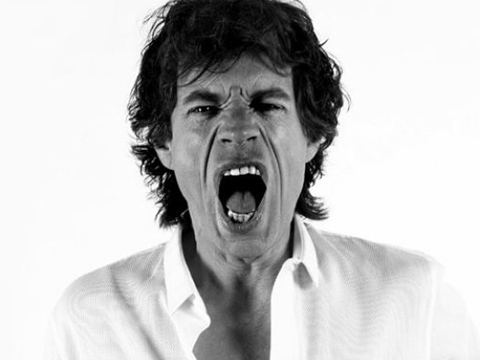
Mick Jagger

Early in my life, as I lay in bed in the brief dreamy but not dreaming moments before sleep, I’d think up a short list of things I wanted. These were experiences or objects or abilities I believed might make me happier — improve my life in some significant and permanent way. The list included learning to drive a car, having a girlfriend, being as good in science as my friend Steve — those sorts of things.

While I never became the world-famous scientist Steve Henikoff is, I achieved much of value both on and off the lists I imagined when I was 10 or 15. Later the practice of making nighttime aims fell away. No, I didn’t get A’s in all my school work or win every girl I fancied, but few people do.

I discovered goals on a list are a bit like the candy in a PEZ dispenser. The candy is spring-loaded into its container. As soon as you remove the piece at the top, another piece is pushed up to take its place. So long as the dispenser holds more candy, one morsel is replaced by the next. Just so, as soon as you check-off an item on your goal list, another pops to the top.

Hello_Kitty_PEZ_dispenser_open_II

We don’t seem to remain satisfied. You eat a meal, but before long, you get hungry again. You have sex, but, however wonderful, you won’t remain ecstatic forever. You eat a piece of chocolate, but it’s not so fulfilling as to satiate you. More is usually required. Robert Wright, the Princeton psychologist, talks about this in his lectures on the subject of Buddhist psychology. Moreover, he says, this is part of the reason people are so often dissatisfied with the way things are.

The Buddhists call the experience (and much worse catastrophes) dukkha or suffering. To them dukkha is the central part of life. In their view, emotional pain is caused by grasping for things we don’t possess, the endless wish for fame or money or acclaim we don’t have, or holding tightly to those same things for fear of losing them. The Buddhists contend our misconception of how to live contributes to dissatisfaction and anxiety. They point to a path away from unhappiness and toward acceptance instead of grasping, contentment with our lot in life, and living in the moment. In effect, they tell us we are trying to fill up a pail with a large hole in it and can never make our lives whole in this way.

There should be no surprise people make poor choices of how to live. We see it all the time in acquaintances, but perhaps less often in ourselves. Research concludes we are not good at knowing in advance what things or activities will offer happiness — give some lasting satisfaction. In fact, psychologists Daniel Gilbert and Charles Wilson coined a phrase for this: “miswanting” or desiring things that won’t provide the emotional benefit we expect. Dukkha here we come.

256px-Flickr_-_ronsaunders47_-_MORE_OF_A_PHILOSOPHY_THAN_A_RELIGION._BUDDHISM.SRI_LANKA._1

Perhaps even worse, because the mind drifts so easily to what is wrong in life, we try to keep busy and distract ourselves. We fail to take time to focus on the problem of “miswanting” or any other self-inflicted emotional wound. We stay on the treadmill of misguidedness, heading in a direction that hasn’t worked in the past and probably won’t work in the future. Kate Murphy describes our discomfort with quiet thought in a New York Times article of July 25, 2014. Rather than the painful job of self-reflection, we choose to stay too busy to think, ignore how we are hurting ourselves, and don’t consider a big change of direction.

Look around you. Just about everyone wants more money, a more satisfying intimate relationship, a better residence in a new place, a fancier phone, different clothes, a better job, a nicer office; but soon after an item on the list is achieved dissatisfaction returns.

Robert Wright says this is no accident. Indeed, he points to the work of evolutionary psychologists who believe evolution is the culprit behind our discontent, broadly speaking. He is not trying to make light of the genuine wrongs in the world, but rather to look at why human existence is generally so difficult — even for those who are not suffering from stretches of terrible luck or misfortune.

Wright uses food and sex as examples in the set of lectures he produced for Coursera, the free online source of university level education from some of the best instructors in the world. Wright says evolution (or Mother Nature) has set us up to be unsatisfied much of the time.

Remember the chocolate? Wright states if you are a chocolate lover, at the end of having a bite you are going to want more. Your satisfaction is temporary. Why is this? Evolutionary psychologists like Wright believe our distant ancestors (early men and women) discovered fruit was sweet and tasty. Those who enjoyed and ate it regularly were more likely to survive than those who either couldn’t find any fruit, didn’t care for it, or didn’t seek more. The survivors produced children who had the same genetic makeup and also enjoyed sweet things. In other words, evolution favored those who ate (and eventually learned to grow) fruit.

256px-ChocolateThe twist in the story came when candy was created in India, over two centuries ago. Later on, man would find all sorts of ways to add sugar to his diet and the products sold in groceries. The irony of this survival story is that the same affinity for sweetness, once widely helpful to our distant progenitors’ survival, now contributes to a USA obesity epidemic.

Now think about sex. Ancient humans who had sex one time only and were so overwhelmed and permanently fulfilled by the experience aren’t our ancestors. Had everyone been like them our species would be extinct. Indeed, we can assume the genetic line of those who had little interest in sex vanished. We are the progeny of a group of humans who enjoyed sex, weren’t perpetually fulfilled by it, and kept looking for more sexual opportunities, as most of us do. For the same evolutionary reasons, we are alive because those primitive humans also had feelings of affection toward mates and children, wanted to protect them, and thus increased the chance the kids would live to reproduce themselves.

In our twenty-first century world we continue to pair with others to survive, mutually protect each other, and teach our children how to manage the same life project. You might think you are making money just to get a nicer car or a bigger apartment, but the evolutionary scientists would say you are preoccupied with such things because signs of status and power made our ancestors more appealing as mates. Those who were more desirable, more able to protect their mates, and thought more physically fit had an increased chance of passing forward their genetic “stuff” to another generation.

If you believe men preoccupied with “hot” women are shallow, remember that appearance drew our ancient ancestors to one another. Those who chose lovers who looked healthy — capable of bearing and nursing children in the case of females — were more likely to reproduce and raise kids who grew to do the same thing. Thus, it became automatic for people to consider surface qualities. We come by our shallowness honestly! Mother Nature is the real culprit.

256px-Klimt_-_Der_Kuss

Wright makes the point that the evolutionary process aims at only one thing: getting your genetic material into the world of the future. Evolution is not inclined to make us happy.

Indeed, Mother Nature sometimes fools us into doing things that aren’t going to make us anything but miserable. Consider how desperate we can become thinking the next job, promotion, or mate will generate everlasting bliss. Alas, once achieved, the satisfaction and happiness are only temporary. Another piece of PEZ pops to the top of the PEZ dispenser and we expect the next target will be the key to joy.

Sometimes the characteristics fostered by evolution are terrific. They have, after all, kept our species alive. Curiosity, competitiveness, and intelligence are great (leading to medical progress, higher living standards, and the Internet), but too often our evolutionary residue contributes to weapons of mass destruction and the self-protective jealousies or ethnic/racial hatreds we find all over our troubled world. Again, individual men and women are making some very bad decisions, but Mother Nature (aka evolution) is complicit.

If you put the Buddhist and evolutionary perspectives together, you get something like this. I’ve oversimplified what follows, but I think you will get the idea. The Buddhist view will be in bold print, followed by the evolutionary explanation:

We get too attached to things. Our ancestors needed things (tools, food, shelter, etc.) to survive.

We are afraid of losing things. Same as above.

We grasp for what we don’t already possess. Appearance, status, and power increase our chances in the mating game.

We fret about the future. Early humans who anticipated difficulties had a better chance of ensuring survival.

Just as we work hard to acquire things, we try to get and keep the most desirable mate. We are programmed to look for healthy partners to increase our chances of creating, nurturing and protecting a new generation.

We get attached to people and it pains us when we lose them. Our ancestors formed groups for self-protection and survival. Evolution contributed to our desire for human contact, affection, and reliance upon others.

Most of us never figure out the “PEZ dispenser” nature of life: that the things we want won’t make much permanent difference (unless they are healthy food, protective shelter, and other essentials), whatever temporary good feeling they generate. We’d be better off accepting the mantra-laden Rolling Stones song, (I Can’t Get No) Satisfaction, as the matrix of living. Once realizing this, Wright and the Buddhists say, you can begin to change your personal path in the direction of more acceptance, less grasping, and reduced concern with either gaining what you want or losing what you control. You will be less worried and dissatisfied, more able to take joy from things as they are or at least accept whatever happens. No one suggests this path is easy, but the alternative will make your life worse.

Should you believe that is a negative message, here is some news. Those Buddhist monks who are expert meditators are among the happiest people on the planet — so brain research tells us. Meanwhile, the USA, a land of wealth, is only tied for 14th in overall “thriving,” with just 57% of us describing ourselves in that way.* Nor do you need a religious conversion to Buddhism to improve your sense of well-being from moment to moment. But most of us benefit by becoming less grasping and attached — reaching for a permanent solution to existence when the problem is the reaching itself and the expectation that such a solution is possible.

So what do you do with all the above to make your life better? Here is a start. Make a list of the things you pursued in your life: material objects, status, money, romance, children, and so forth. Then ask yourself how much lasting happiness each one gave you once it was achieved. If you have been “miswanting,” maybe it is time to stop the treadmill, get off, and reconsider the path you are on.

Think about it.

—

*Click to see the complete 2010 Gallup Global Wellbeing Ratings. One-hundred-fifty-five countries are included.

The top photo is Mick Jagger. The second image is a Hello Kitty PEZ dispenser, taken by Deborah Austin. The Chocolate photo is the work of André Karwath. It is followed by a picture of Buddhist Art taken in Sri lanka. Finally, Gustav Klimt’s Der Kuss (The Kiss). All but the first of these are sourced from Wikimedia Commons.