What Happens in Psychotherapy?

What does psychotherapy do and how does it do that? Good questions, and even some therapists might have a hard time answering them. Of course, some of the goals are obvious: reduce depression, have better relationships, eliminate anxiety, enjoy your life more, and stop worrying. But what are the elements that get you there? I’ll give you a sense of some of the factors that permit those goals to be achieved.

1. Trust. Many people entering treatment have trust issues: they trust too easily or not at all, usually the latter. Trust will start with the relationship between you and the therapist. Simple things: does he listen? Does he understand? Does he seem interested and dedicated? Is he dependable? Does he care? If the answers to these questions are “yes,” then it will be a bit easier to begin to trust others. The experience of a benign relationship with one person can open you to the possibility that this experience can be achieved elsewhere in your life.

2. Validation. Many people coming into psychotherapy having been told that they should “get over it,” that they “shouldn’t feel that way,” that they shouldn’t complain or “whine;” or having been ignored, dismissed, or criticized too often when trying to express themselves. Some folks believe feelings are unimportant; others might state that it is not “masculine” to feel too much, and so forth. As a result, many new patients have so buried their feelings that they are alienated from themselves and don’t know whether it is appropriate to think or feel as they do. A good therapist creates a safe place for talking about such things (trust again), and gives the person a sense that there is value in what they feel and think. Over time, this action, by itself, can help improve self esteem and reduce sadness and alienation.

3. Grieving. If one has not had supportive relationships (with people who are both trustworthy and validating), the sense of loss or absence contributes to sadness, and sometimes to depression. The relationship with the therapist allows you to express the emotions related to loss (both sadness and anger) to someone who listens patiently and shows concern. As you process those feelings of loss, your sadness should gradually diminish. The therapist serves as a witness and again, as someone who validates your pain. Grieving in isolation too often contributes to the feeling of disconnection and alienation from the world. Grieving with someone who cares reconnects you to one of the things that can be good in life: human contact.

4. Learning new things. Any good therapist needs to provide some guidance and tools that enable change. This might come in the form of helping you learn and practice new social skills (including acting these skills out with the therapist), assisting you in changing how you think (cognitive restructuring) that helps you reduce self-defeating thoughts, training in how to be assertive (again with role playing in the therapy session), or meditation.

5. A change in perspective. A good therapist will provide you with new ways of thinking about the world and about your life. Since he can see you from the outside, he is more likely to see you in a way that you cannot see yourself.

6. Facing things, not avoiding things. We all practice avoidance some of the time, and some of the time it is a useful thing. Unfortunately, many of us practice it all too much. We distract ourselves from pain and avoid challenging situations. We can use food, TV, shopping, sex, drugs, alcohol, the internet, and computer games to get us away from whatever it is we can’t handle. We worry about problems rather than coming up with a plan of action and taking them on. We don’t ask out the pretty girl for fear of rejection, or say “no” to people who want to befriend us for the same reason. We stay at a “dead-end” job because of our insecurities. And, of course, unhappiness is the result.

A therapist can assist you in identifying the patterns of avoidance, help you to gradually become able to tolerate anxiety (by use of such things as cognitive restructuring, role playing or meditation) and give you tasks that gradually increase in difficulty so that you reduce avoidance and begin to take action that works.

7. Acceptance. By acceptance I am referring to acceptance of the nature of life and the discomfort that comes with living; acceptance of the fact that being open to life allows you to experience satisfaction and joy, but also opens you to pain; and awareness of the temporary nature of most of that discomfort. The more that you take life on its terms, the less you will be trapped by it.

Remember playing with the Chinese Finger Puzzle as a kid, the cylindrical woven structure made of bamboo, open at both ends? You put your two index fingers into it, but when you pulled hard to get your fingers out, you became more stuck. Only by releasing the tension and moving your fingers toward the center of the device, did it collapse and no longer held you tight. Life is a lot like that to the extent that we must stop engaging in behaviors that only make us more “stuck.”Acceptance allows you to free yourself, at least somewhat, from what is distressing about life.

8. Valued Action. If you are caught in the struggle with your emotions, or focused on avoidance of pain, what is good in life will be hard to achieve. Therapy can help you to think about the life you would like to lead, the life that is consistent with your values, and help to relieve you of the habits that keep you so wound-up that you don’t have time to think about what it is you would really like to do, and what it is that would lead you to a sense of satisfaction and accomplishment. What is your true self? Therapy can help you find out and encourage that person to exist in the world.

The description I’ve given you is based, in part, on my experience in life and training, especially training in such therapeutic approaches as cognitive behavior therapy (CBT), mindfulness-based behavior therapy, Acceptance and Commitment Therapy (ACT), and psychodynamic psychotherapy. Other therapists may have a different view of what is important and how to help you get to the point that your life is more satisfying and less fraught with depression, anxiety, or chronic relationship problems. But here, at least, I hope that I have given you some sense of direction and some reason to be hopeful about the possibility of change in your life.

Therapy, Responsibility, and the Nuremberg Defense

http://mburgan.files.wordpress.com/2008/12/nuremberg_defendants.jpg

Therapy, like life, requires taking responsibility for what becomes of you. But, as the comedy team Cheech & Chong famously noted, “Taking responsibility is a lot of responsibility.” What does that have to do with “the Nuremberg Defense?” Read on.

If you are old enough (or a good student of history) the word Nuremberg has a certain resonance for you. It is a German town that was a center of the Holy Roman Empire and the Renaissance; later becoming the host of Nazi Party rallies between 1927 and 1938, the site of the passage of the Nuremberg Laws stripping German Jews of their citizenship, and equally well-known for the war crimes trials that were held after WWII, in an attempt to hold Nazi villains to account. Such Nazi higher-ups as Hans Frank, Rudolph Hess, Joachim von Ribbentrop, Alfred Rosenberg, Albert Speer, and Julius Streicher were brought to justice there (see above photo); Hermann Goering escaped hanging only by committing suicide.

A common refrain during the testimony of the accused was the statement “I was only following orders.” This line of explanation was used so often that it became known as “the Nuremberg Defense.” It was found insufficient by the judges, who reasoned that the accused had the moral responsibility to refuse orders to commit “crimes against humanity,” even assuming that it could be demonstrated that such orders were given.

Since I don’t treat war criminals, you might be asking yourself how the failure of some of these long-dead Nazis to take responsibility applies to treating people with less dramatic problems of depression or anxiety or relationship disappointment? In the course of talking with my patients, I often discover that they have suffered from some sort of misfortune; be it inadequate, negligent, or abusive parents; accident or injury; or unfair treatment at school, at work, or in love. Sometimes the stories are heartbreaking. It is perfectly proper for patients to blame at least part of their unhappiness on these events and these people. Moreover, it is often essential that they grieve those losses, give voice to their anger and sadness, and rail against the unfairness of life. And it is important for a therapist to help them as they process their grief.

But therapy cannot end there.

The patient, if he is to improve his life, cannot simply assign responsibility to some other person as a release from the need to take charge of what becomes of himself in the future, any more than a Nuremberg defendant might hope that assignment of responsibility to the commanding officer would take him off the hook for the unspeakable acts he committed.

Put more simply, neither the war crimes defendant nor the common therapy patient can point to someone else, say “He is the one who caused this,” and leave things at that. Just as the SS criminals were asked, “And then what did you do?” so must we all, regardless of what misfortune has happened to us, ask ourselves, “Now what? Do I simply accept the injustice, forever blame others, and stay defeated and aggrieved in-perpetuity, or do I grieve my loss, take responsibility for my life, and try to get beyond the injuries I’ve suffered?”

We all know people who, however small or large the disappointment that they have experienced, never get beyond criticizing, blaming, whining, and feeling sorry for themselves. While some of this is often necessary to get past the hurt, a lifetime of it is simply a waste, a personal failure to take control and to admit and accept that if life is to have meaning and value, we all have to do something positive with that life, regardless of bad breaks. Even if fairness demands that others compensate us for our losses, if such compensation cannot be obtained, life still calls us to repair ourselves. As a therapist colleague of mine, at the risk of sacrilege, used to tell those patients who seemed to forever bemoan their fate, “Get off the cross, we need the wood.”

Shakespeare commented on responsibility-taking in Julius Caesar when he gave Cassius the words:

“Men at some time are masters of their fates:

The fault, dear Brutus, is not in our stars,

But in ourselves, that we are underlings.”

This is not always literally true. But there is no better way to live than to try to make our circumstances the best we can, however unlucky our lot. A good therapist will help you get there.

The Problems with On-Line Therapy

It is tempting to think that therapy might be done on-line with the same effect that it can be done face to face. Unfortunately, most of the time, this probably isn’t true.

Some people are certainly more comfortable with the computer and that can be part of the problem. The face-to-face contact, in a supportive environment, is something that is beneficial. By pursuing therapy without direct human contact they may be avoiding something about which they are afraid. If that is the case, the therapy will, by definition, miss dealing with the very thing that the patient needs to tackle and confront.

Then, too, part of the therapy process involves having the courage to be with the therapist, alone in the same room with one other person and the words and feelings that are the substance of your life; to make the effort to come to his or her office; to be on time and value the human contact together in a setting where one learns that it is safe to discuss the most intimate, personal things in one’s life.

If you have been to an extremely moving or exciting concert you probably known what direct contact with the event means. Music that can overwhelm in the concert hall is likely to be less powerful when heard in a recording of that concert in your living room. Something inexplicable but precious and unreproducible can happen in the few moments of connection between the human beings who are musicians and the human beings who are the audience. Just so, between the therapist and the patient, something remarkable and fragile is too often missed when the medium that carries the message is electronic.

Even with the aid of video communication between the therapist and client, it is too easy for the counselor to miss the subtle signs of discomfort or sadness, the body language, the perspiration, the incompletely formed tears in your eyes, the ever so slight furrow of your brow; the subtle vibrations, tremors, and eye movements; the nervous bouncing of a leg, or sometimes the disinterest or boredom that it is crucial for the therapist to observe. Equally, the patient cannot see the intensity and concern and dedication of the therapist, or, more appropriately, cannot so easily “feel” them as when he is seated only a few feet away looking directly into his eyes.

A famous musician once described the difference between a “live” performance and a recording as like the difference between “sleeping with Bridget Bardot (a famously beautiful movie star of 1950s and 1960s) or sleeping with her picture.” A crude comparison, perhaps, but it does get to the human contact that happens between two people when they are face-to-face, versus the more artificial quality of that interaction when they might be separated by thousands of miles and living in different time zones.

Of course, one might add that medical insurance may not pay for such an electronically mediated encounter as on-line therapy, but that is not the essential point. The essential point is that the best of life and healing occur in the context of a caring professional who you get to know in a personal way and who gets to know you in the same way. However advanced technology becomes, at least until it allows a convincing hologram of you to be in the same room as the therapist, something will be missing and lost in media-mediated encounters.

That said, if you live at a significant distance from a good therapist, therapy over the phone or on-line might be your only alternative. Still, it is important to recognize that there will almost certainly be something lost. And, depending upon what you need, what is lost may well be the crucial element in your healing.

A Few Relationship and Dating Tips

http://upload.wikimedia.org/wikipedia/commons/d/d1/Fu%C3%9Fg%C3%A4ngerzone.png

What can one add to the guidance that people are always looking for in finding a mate? Here are a few things you might not have considered:

1. Don’t ignore all the little things. People often betray important disqualifying characteristics early in a relationship. In the heat of the sexual attraction moment, we might want to ignore those things that appear to be small problems. Does your new friend call when he says he will call? Does he show up on time? Is he really listening when you are talking? You might be able to forgive such failures now, but they can signal problems that will appear larger later on.

2. Are you attracted only to “bad boys;” or to women more concerned about how every inch of them looks in the mirror than to take the time to look at you? If so, you’d better ask yourself “why?” If you keep having bad relationships, perhaps it’s because of some of the people you are choosing to partner with. In that case, reflection on your decision-making process is in order.

3. Get past the small talk. Do you want to know someone well? You will have to ask them about more than their opinion of Michael Jackson’s death and the Cubs’ chance of getting to the World Series.

What things might you ask? If your date represents a good opportunity for a lasting and satisfying relationship, eventually you will need to know about his politics and religion, how he handles money and debt, whether he has made good decisions in life, and his capacity for emotional intimacy and openness; does he hold onto old friends and how does he treat them? How does this person deal with frustration, disappointment, and anger? Is he charitable and forgiving?

How does your companion explain past relationship failures? Can he be appropriately assertive? Is he too dependent on you and others? What are his relationships with parents and siblings like? How was he raised? Is his humor too often at your expense or the expense of someone else, perhaps including himself? You don’t have to know about these things right away, but you do need to know about them before your heart starts running the show and leaves your head behind.

4. Don’t expect your date to make you happy. You are looking for a partner and not a caretaker or parent (I hope). Don’t look for someone to make up for past injustices and misfortunes. Don’t expect him to shoulder most of the burden of bringing home the bacon (or rearing the children) alone. Don’t encourage him to make most of the important decisions for you or to expect you to make those decisions on your own.

5. Since most of you reading this are probably relatively young, its important to realize that people change. The person you are with today is not going to be the same in 10 or 20 years or longer. (It would be troubling if he is unchanged by the passage of time. Surely, in 10 years or more one should learn something new from the experiences of life).

There is an old saying that men expect their wives never to change, while women expect that they will change their husbands. If you subscribe to this theory, you are in for trouble. People change physically, and should grow in experience, knowledge, self-awareness, and compassion, but don’t always transform for the better or in a way that is compatible with the alterations that you will make yourself. Does the hot young person sitting across the table from you right now have the ability to grow and to adapt to your own growth? While you can’t know for sure, it would behoove you to have some opinion on the subject.

6. How much self-awareness does your date have? Does he understand what he does and why he does it? Does he know (or care) about how others perceive him and when (and why) he injures someone else? Can he look into the mirror and see himself for who he really is, not for who he might want to believe that he is?

7. Recognize that you are not going to change your new partner. People don’t change because others want them to, they change because they have come to recognize that their behavior isn’t working for them and the cost of continuing in the same way is too high. If you think the relationship will only work if your new love can be altered, think again.

8. How much of a role, if any, do alcohol and drugs have in your life and that of your romantic partner? People tend to minimize or deny the extent to which substance abuse is present. This is especially likely to be true if you come from a family where this kind of behavior was routine. Alcohol, for example, tends to fuel arguments as well as depression.

9. Recognize that the honeymoon always ends. The nature of new love is to see the other in an idealized state. Your friend’s self presentation, attentiveness, and kindness are not likely to increase over time. The flame of sexual intensity will not always burn so bright. Something more will need to be present for the relationship to continue to be satisfying.

10. What do your friends really think about your current romance? Sometimes they can see things that you can’t.

11. Are you looking for someone stronger than you are? Or are you looking for someone docile who won’t challenge you, but simply be devoted and doting? In either case you are almost certain to be in for trouble. Relationships based on this sort of inequity typically become fractious and unsatisfying for both partners. They can transform into hostile dependencies, where the strong, dominating partner feels unappreciated, and the yielding, self-effacing individual morphs into someone who is aggrieved and simmering, or shuts down.

12. Are you insecure? Can you bear to be without a girlfriend or boyfriend for very long? Do you need regular reassurance that you are “the one and only?” This gets old quickly. While that reassurance will temporarily calm your fears, your friend will almost surely tire of it, leaving you less secure if you don’t ask again for a sign of his devotion, and him feeling put-upon if you do.

As with a number of the concerns mentioned above, therapy is suggested if your self-worth requires the presence of an escort; along with constant bolstering and a tendency to lose yourself, forget about your friends, and give-in to your new love for fear that he will otherwise leave you.

13. Are you still in love with someone else? Is your new date on the rebound himself? The presence of strong feelings which are still attached to someone else can complicate your new relationship. You are discouraged from entering into a “rebound romance” for good reasons.

14. Do your values match up well with the your potential love? Do you share the same vision of life, the same goals; the same stance toward integrity, devotion, loyalty, work, and children? Not just in what you say, but in what you do.

15. Do you tend to be drawn to partners who are much younger or much older than you are? In the former case, this can suggest the need to dominate the less experienced partner or simply to be looking for good looks rather than something more lasting. In the latter instance, its possible that you might be unconsciously trying to find a parent figure or someone to rely on and take care of you. In either case, some honest self-reflection regarding this pattern is worth your attention.

16. If commitment is what you want, beware of the man or woman who says that he or she is not ready for a serious or long-term relationship . To date someone like this is rather like buying a shiny, dashing new car that will start to fall apart after six months.

17. Watch out when you hear yourself thinking that, although you can see that there are problems in your burgeoning twosome, you will stay a while to see if things get better since you aren’t (yet) risking a broken heart. Often your heart leaps ahead in situations like this and you discover that you are in love with the wrong person only too late.

18. Take your time! You might hear the clock ticking on the days of your life (or your life since your last relationship), not to mention the time left on your fertility, but rushing things out of desperation will prevent you from making the best possible choice. Remember, the point of this is not only to win the affection of the other individual, but to determine whether he is worth the winning!

The top photo is an Austrian Road Sign photographed by Pirosko. The second image is described as a “short animated gif with 2D-boy.” Both are sourced from Wikimedia Commons.

How to Choose a Therapist

Most of us are not at our best under pressure. Similarly, when depressed, anxious, or otherwise stressed and in crisis, the patience and clarity of thinking needed to choose a therapist might well be in short supply. So here are a few pointers, things to consider, when you decide to consult someone for psychological assistance:

1. Ask a friend if he or she can recommend a therapist with enthusiasm. Also, be sure to request that your acquaintance explain “how” the therapist was helpful. Not all counselors are equally adept at treating every problem, so your friend’s recommendation should be carefully considered in light of whether your issues are different from your friend’s. You might also ask your physician for a recommendation. A good way to phrase the question is, “If you needed to get a therapist for someone you loved, who would you choose?”

2. Internet searches of various kinds can help find a good person. Various organizations list therapists who perform a certain type of therapy or work with certain types of problems. An example would be the Association For Behavioral and Cognitive Therapies: www. abct.org/ The National Register of Health Care Providers in Psychology is another such group: http://www.nationalregister.org

3. Some information about the therapist is usually available on web sites such as those mentioned above. If the therapist has a web site of his own, you will usually find out a good deal more.

4. What kind of therapist are you looking for? There are many choices. Clinical Psychologists are doctoral-level professionals (Ph.D. or Psy.D) who typically have completed four years of training beyond their college Bachelors degree and had additional instruction and supervision in the form of a year-long internship, often within hospitals or clinics. In most states psychologists cannot prescribe medication, but have received more graduate training in psychological evaluation (testing) and therapy than is typical of any of the other disciplines who perform therapy.  Psychiatrists are physicians trained in medicine, who also receive specialized training during a psychiatric residency. They can and do prescribe medication and a number of them also do therapy. Clinical Social Workers generally have a Masters Degree obtained in the course of two years of post-college study, in addition to practical experience and a history of supervision. Marriage and Family Therapists usually also have a Masters Degree and may have a similar amount of training as do the social workers, although their education is not identical to that group. All of these disciplines encourage and sometimes require therapists to continue their study via post graduate course work, supervision, and reading.

4. What kind of therapy do you want? In part, that might depend on what kind of problem or problems you have. Psychodynamic psychotherapists will tend to pay much attention to early life issues including unresolved feelings toward one’s parents, and the potential impact of additional events that occur during the growing-up years in an attempt to free you from repetitive patterns of behavior that might have started at that time. Cognitive behavioral therapists use CBT to focus more on present day concerns, attempting to help you take steps to alter the automatic and self-defeating thoughts that influence your mood and fuel your depression and anxiety, as well as assisting you in changing your behavior. They spend much less time on early life events as a rule, and do not usually consider “insight” into the causes of your troubles to be crucial to assuaging your emotional pain. Marriage and family therapy aims to treat couples and family systems, usually meeting with the marital pair or family group rather than with one person at a time.

5. Try to determine how much experience your potential therapist has with a given kind of problem. Some therapists specialize, for example, in treating alcohol and drug abuse and are certified in this field (CADC or certified alcohol and drug counselor). If you have anxiety issues, on the other hand, ask your therapist how many people he has treated with this condition. Similar questions might be asked of someone who you wish to consult for the treatment of depression or schizophrenia. Don’t be afraid to ask. Any reasonable professional in the health care field will welcome your making an informed decision.

6. Other factors might be considered. How active do you want the therapist to be? Some tend to direct the therapy, while others are more comfortable listening to you and responding to just those issues that you believe are important. Some people choose therapists based on gender, believing that they will feel more comfortable with one or the other sex. Age of the therapist is important, since it tends to be correlated both with professional experience and life experience. If you believe that not everything in life is learned in a classroom, you will probably want to see someone who has a few gray hairs and who has been married with children.

7. Financial considerations often enter into the choice of a therapist. MDs are usually the most expensive people to see and Masters level professionals are the most economical. Ask your therapist about what he charges for his services and what portion, if any, of his fee is covered by insurance. Some communities have public mental health agencies that offer therapy at a heavily discounted price, although they often have long waiting-lists. A portion of therapists will discount their fees if you can make a good case for such a discount.

If you go through your insurance company, it is likely that they will steer you toward a practitioner who has a contract with them and has agreed to discount his fee to you. Understand, however, that the discount also typically benefits the insurance company, since they will have to pay less money in benefits if you choose a provider who is in their network. Therefore, their recommendation comes with a degree of self-interest.

Be aware that (as the old saying goes), sometimes “you get what you pay for.”

8. Some people choose not to use their medical insurance to pay for counseling. They make this decision because they have concerns about the impact of a mental health diagnosis on their future ability to get life or disability insurance, and the possibility that having a “pre-existing (mental health) condition” will complicate their medical coverage should they ever change jobs or go for a period without insurance and then attempt to obtain it again.

9. Remember that the most important element in obtaining a therapist is getting a person who is accomplished, talented, experienced, and a good fit for your therapeutic needs. You should also have a sense that he really cares and wants to help. While some of the other considerations mentioned previously might be important, if the therapist can’t help you, nothing else really matters. When you meet the therapist (see my blog post “What to Expect in Your First Therapy Session“) he should be able to convey expertise, compassion, and competence, as well as giving you a sense of hope. Don’t settle for less.

Infidelity and Its Treatment

http://upload.wikimedia.org/wikipedia/commons/1/11/Lana_Turner_in_The_Postman_Always_Rings_Twice_trailer_2.jpg

The names don’t really matter. Today they are Tiger Woods; Mark Sanford, Governor of South Carolina; and John Ensign, U.S. Senator from Nevada. Tomorrow they will be someone else. Every day, there are other names, little known, but causing no less pain.

How does it happen? How does it happen that people who claim to live by well established moral norms, who have taken a public oath to remain faithful to their spouse, violate that promise? There are several reasons:

1. Power and celebrity = opportunity. People in positions of power and celebrity have more opportunity than most to be unfaithful. They are surrounded, sometimes literally, with admiring and attractive younger people. As Oscar Wilde said, “I can resist anything, except temptation!” The famous and powerful have plenty of that.

2. Contiguity. You might think that the separation of sexes in some religious fundamentalist societies is unfortunate or wrong, but it does keep opportunity at a minimum. In modern Western secular civilization, men and women work together, eat together, and travel together on business. Repeated contact with a sympathetic business associate, pulling together with that person as a team on a business project, creates not just the opportunity for sexual contact, but the chance to get to know and like one another. Perfectly moral and decent folk can find themselves stirred by the presence of a person to whom they are not married, even though they weren’t looking for anything outside of the marriage.

3. Disinhibition. Alcohol and drugs. If you are around sexually attractive people in a party atmosphere or when you are “under the influence,” your judgment and hesitation are more likely to be set aside.

4. The “Great Man” rationale. More than once, I’ve heard men justifying the concept of infidelity in the case of those who are accomplished and powerful. Often, the rationale includes reference to the role that “the great man” plays in benefiting society. According to this line of reasoning, the “heroic” figure is thought to have earned the right to live by a different set of rules than the common man, and should be given the chance to be compensated for his contribution to society by being allowed multiple sexual partners.

5. The “It won’t hurt anyone” rationale. The faithless sometimes persuade themselves that there is nothing wrong with their behavior so long as anyone who might be injured (spouse/children) never knows about it. This is akin to the old philosophical question, “If a tree falls in the forest, but no one is present to hear it, does it really make a sound?” What the argument ignores is that the transgressor is changed by his act of betrayal, that he must tell a continuing set of lies in order to maintain the fiction of his character, that he risks his partner’s physical health in the event that he has become a carrier of a sexually transmitted disease, and that it is impossible to guarantee that the secret will never be revealed.

6. Mid-life crisis. Poor humanity. Poor man. We age, we lose our youthful good looks, sometimes our hair, our virility, our energy, our strength, our stamina. The antidote? A youthful or new sexual partner who, for a time, can help us shut out the dreaded and self diminishing passage of time.

7. Solace. The ups and downs of life are inevitable, even in the luckiest of lives. The best marriages are not immune to the daily stress that  takes a toll on a spouse’s ability to be compassionate, encouraging, and supportive. Financial worries, business reverses, family illness, house keeping, and child rearing soon diminish the “date night” and honeymoon atmosphere of the early days of the relationship. A fresh and sympathetic set of ears, all understanding and acceptance, often develops into something more, and something sexual.

8. “It’s not natural.” Some people, mostly men, justify infidelity with the notion that man was not meant to be a monogamous creature and the flowers of the field (i.e. the opposite sex) were meant to be enjoyed.

9. Longevity. At the turn of the last century in America, that is, about 1900, the average life expectancy was about 50 years. By that standard it was usual for marriages to be relatively short, 25 to 35 years at the most, many much shorter. No longer. Many now last 50 years and more. What happens in that time? People get older, their bodies change, and their personalities alter as well. When I do marital therapy, I usually ask couples what initially drew them together. The most frequent answer I get is something like, “He was hot and we had a lot of fun.” Thirty years on, it goes without saying, he isn’t so “hot” and they sure aren’t having fun.

In order for marriages to thrive into mid-life and beyond, the couple has to work very hard at the relationship, to keep the sexual spark alive despite physical changes and familiarity, and to see to it that personality alterations are compatible or synchronous. Too often one partner wants the marriage to be exactly as it was at the beginning and believes that both the personality and physical changes in the other person amount to a breach of contract. Meanwhile, the other might feel held to a contract that is no longer appropriate to the current state of the couple’s life together and to their age, personality, and experience. One or the other very well may see infidelity as tempting under such circumstances.

10. The scoundrel factor. Although an injured spouse sometimes believes that “evil”  is the most likely explanation for her spouse’s betrayal, in most cases it really isn’t. Most people don’t set out to behave badly and many feel guilty when they do. That said, there are certainly more than a few cads among us, and they do with impunity what others only do with hesitation, a troubled conscience, or not at all.

11. Boredom. Boredom doesn’t cause anyone to stray, but it does set the stage for the temptation. Routine can kill even the things that we love. The pattern is well-known: wake up, go to work, come home, play with the kids, do the bills, and collapse from exhaustion. Or, the stay-at-home parent’s version: wake up, make food, shop, make food, take care of the kids, do the housekeeping, make food, clean, and collapse from exhaustion. Either way, the routine is deadening and there is little room for excitement.

12. A lack of sex. Again, this doesn’t cause infidelity, but can set the stage for it. A warning here: cease sexual contact at your own risk and at the risk of your marriage. But, this is not to suggest that you should have sex only because your partner wants to.

13. Cruelty, sarcasm, and a lack of appreciation. If the marriage has turned into a battle ground, with gratitude replaced by indifference or hostility, infidelity is more likely on either side.

When the infidelity is exposed, the result is devastating to the victimized spouse. Rage, sadness, a loss of self-regard, and feelings of inadequacy are common. What did I do? What didn’t I do? Why did he do that? If he felt that way, why didn’t he leave first before he took on another partner? The devastation occurs whether the infidelity is fresh, or the betrayed person discovers it years after it occurred. The emotional clock of devastation only begins to run from the point that one becomes aware of what happened.

If a couple comes to therapy in the wake of such news, several factors go into the therapist’s evaluation of the situation. First, is the infidelity over or is it still going on? If the marriage is to have any chance, the “other” relationship has to end. Moreover, it has to end because the spouse having the affair wants it to end and believes that the marriage is worth saving, not because his marital partner is threatening to leave or because of the fear of financial devastation in the course of a divorce.

The therapist will try to gauge what still binds the marital couple together, if anything. Do they still have positive memories of their courtship? Do they have children and are they concerned about the effects of a divorce on their offspring? Are they still in love? If there is no love on the part of even one partner, therapy is almost certain to fail to recreate it.

If the both parties want to save the marriage, have positive memories of the start of their relationship, and if loving feelings still exist between them, treatment often can help to repair things. One of the first items in need of attention will be allowing the injured spouse to grieve. This will require both tears and anger, but will need to be time limited. That is, however great the injury, the victimized spouse must understand that he cannot forever bring up the infidelity to be used as a weapon when he feels unhappy or aggrieved in the future. As the old farm expression goes, “Don’t burn down the barn to kill the rats.”

Of course, apology by the roving partner will be necessary and it will take time to rebuild trust. Once the immediate crisis is over, the couple needs to look at what contributed to their estrangement and what changes need to be made in their relationship. They have to reaffirm a set of values by which to live and goals for their relationship and for the family. Changes in patterns of communication will likely be necessary, as will time and attention to each other. Serious self-reflection and responsibility-taking will be particularly important for the unfaithful member of the relationship, but the partner too must be willing to look at the possibility that he contributed to his spouse’s feelings of disaffection.

Such situations aren’t easy, but they can come out well. Good will, sincere contrition on the part of the person who strayed, and emotional generosity on the part of the victim are all key. The betrayal is never forgotten, of course. But time does its work on the scar of infidelity, just as bodily scars tend to soften and fade over time, even if they never fully disappear. Happiness and love may yet flourish.

The image above is a cropped screenshot of Lana Turner from the film The Postman Always Rings Twice, sourced from Wikimedia Commons.

What to Expect in Your First Therapy Session

http://upload.wikimedia.org/wikipedia/commons/thumb/6/6c/Freuds_House.jpg/256px-Freuds_House.jpg

Going to therapy for the first time takes some courage. You are about to talk about some very personal things to someone who is a complete stranger. What can you expect?

1. First of all, expect to be at least a little bit nervous at the beginning. But even before you get inside the therapist’s office, you will have to fill out some paper work. You will also receive a written description of the therapist’s practice, including such details as whether the therapist accepts your medical insurance and how he handles that. Additionally, he will give you information about how your medical records are safe-guarded and the extent to which those records are confidential.

2. The therapist should greet you, bring you into his consulting room, and sit face-to-face with you. Therapists generally want to convey “openness.” It is therefore rare for a therapist sit behind a desk, with you on the other side.

3. After a few “ice breaking” words, the counselor will ask you why you have sought treatment. If you already told him some of this on the telephone, he will want you to fill in the details.

4. Don’t feel that there is a particular “correct” order in which to tell your story. Simply tell it. Initial sessions should generally allow enough time for you not to be rushed. The therapist has probably scheduled at least 75 to 90 minutes to spend with you.

5. If it makes you feel better, it is entirely appropriate to bring an outline of the topics about which you wish to talk, and to consult this outline or read directly from it whenever you need to.

6. The counselor is likely to have some questions for you. He should want to know about your background, not only about the concerns that exist in your life at the moment. Unless he knows that history, he won’t be able to fully understand how you came to have the current difficulties and whether they represent a repetitive pattern in your life.

7. Among the topics you might be asked about are such things as a description of your parents and their approach to rearing you, relationships with siblings, the educational and social history of your school years, whether you changed residences with any frequency as a child, past and current health concerns for you and your family, the presence of any traumatic events in your life, your dating experience, the type of friendships you have or have lost, work background, alcohol or drug use, current medications, present family relationships (spouse/children), financial concerns, and past or current depression or anxiety issues.

Additionally, expect to be questioned regarding any evidence of mood fluctuations, sleep, digestive problems, headaches, caffeine use, suicidal or homicidal thoughts or actions, difficulties in maintaining attention, hyperactivity, hallucinations, delusions, hobbies, religion, how you feel about yourself, whether you can be assertive in your life (say “no” or ask for things), diet and eating/weight problems, obsessive thoughts, compulsive actions, and what you hope to get out of therapy.

Of course, the first session won’t have time to touch on all these areas in the initial session. A counselor will proceed gently.

8. You should not feel that you must discuss topics that are too uncomfortable for you. A sensitive therapist will give you permission to cover only the ground you wish to and a sense of control over the session’s progress so that you don’t become overwhelmed.

9. The therapist might well ask you what challenges you’ve had in life and how you have managed to overcome them. This kind of question helps you to know what strengths you have and to help you remember that you have surmounted past difficulties and therefore can rely on those strengths to help you surmount the current problems.

10. By the end of the session, the therapist should provide feedback about what you have said. This is, in part, to help you and the therapist know if he has heard and understood you and whether his initial impression of you seems appropriate.

11. The counselor, to the extent that he offers interpretations of the material you have presented, should let you know that this is a first impression and therefore not necessarily perfectly accurate. An expert therapist needs to hear your concerns about him personally, his ideas, the therapy approach he is recommending, and his effect on you. Such a person will not be offended by your concerns and wants to hear from you what feels right and what doesn’t feel right about the therapy process.

12. The counselor will normally allow a good deal of time to answer any questions that you have about him and his approach. Although most people usually do, it is not essential that you make another appointment at that time. If you already believe that this therapist is not the right one for you, it is perfectly appropriate to say so and ask him for a referral to another professional.

13. By the end of the session you ought to have a sense of direction and at least an initial treatment plan as articulated by the counselor. The therapist is likely to remind you of the importance of regular attendance and that your dedication to your own healing is essential to obtaining the results you want. Therapy, unlike medical intervention such as brain surgery, requires effort and activity on your part. It is also essential that you have the courage to look at yourself honestly, recognizing that in order for your life to be better you will have to be willing to change some things about yourself.

14. At the end of the first session you might feel exhausted, in part because talking about big emotions is hard work! You are likely to be less anxious than you were when you came into the session. You may feel some amount of relief at having talked about things that you have rarely if ever discussed before. If the therapist has done his job, you should have a sense of hope.

15. In the days following the first psychotherapy encounter, you might well find yourself still processing the material you discussed. This can be unsettling, but it is quite normal. Additionally, a person new to therapy can feel that he has said too much and made himself too vulnerable to the therapist, especially if he (the patient) is a private person. Some people will therefore not return to therapy after the first session. If you have this hesitation, however, remember that it is in your interest to persist despite your discomfort if you sincerely wish to change your life. Good luck!

The above image is the entry to Sigmund Freud’s office at Berggasse 19 in Vienna, Austria. It originally was posted to Flickr by James Grimmelmann and was sourced through Wikimedia Commons.

What “Fidelio” Tells Us About Life

http://upload.wikimedia.org/wikipedia/commons/f/f7/Fidelio_12._April_1904_Aktien-Theater%2C_Heilbronn.jpg

I’m not much of an opera lover. The stories are mostly preposterous, and I prefer instrumental music to vocal music most of the time. But, every so often opera puts words to music in a way that is immensely touching and wise. For me, the best example of this comes in the vocal quartet “Mir ist so wunderbar,” from Beethoven’s only opera “Fidelio.

Beethoven sets the drama up quickly. Florestan, housed in a dungeon, is the political prisoner of an evil and corrupt Governor named Pizarro. Florestan’s wife, Leonore, doesn’t know whether Florestan is living or dead. But, ever faithful, she disguises herself as a man using the name “Fidelio” (so much for the preposterous part) and gets a job at the prison. Her boss, the jailer Rocco, has a beautiful adult daughter named Marzelline, who is being pursued by a prison guard called Jacquino. But as soon as Marzelline gets a look at her dad’s new assistant, she pushes Jaquino away and has eyes only for Fidelio. Fidelio can’t exactly reject his boss’s daughter, and he lets her and her father assume that a marriage will be near at hand.

At this point, Fidelio (“faithful one”), Marzelline, Rocco, and Jaquino sing a vocal quartet that is touching because of its gorgeous music, but even more, because it describes the poignancy of the human dilemma in which these four decent people find themselves.

As the musical lines of the four voices weave in and out, Fidelio expresses her worries over her husband, the possibility that she will not find him,  and the anguish she feels at Marzelline’s affection for her;  Jaquino articulates his heartbreak at having been jilted by Marzelline for Fidelio; Marzelline sings as a young woman in love; and her father, Rocco, looks forward to the happiness of these two good young people — his daughter and Fidelio — and their domestic life together.

The music touches us because of what we know that they do not. Marzelline will have her heart broken, as she must very soon, when she discovers that her future husband is a woman. Rocco, too, will have his future hopes for this daughter dashed. Fidelio faces danger if Florestan lives and she attempts to rescue him, and her own unhappiness if she has arrived too late to save him. And there is no certainty that Jaquino will ever win over Marzelline, even as a “rebound romance,” once Fidelio’s identity and true gender as Leonore are revealed.

But there is more, and it is what Beethoven’s opera tells us about life by way of this music. It is that even decent and good people such as these four will sometimes be at cross purposes that frustrate them and hurt them. The disappointment will not happen because any one of them wanted to harm any other one of them. It will occur simply because that is the nature of human existence. And Beethoven made art of this fact of life. We feel for the characters, however absurd the opera’s premise, because we’ve been there too, been in difficult relationships where pain was inevitable despite our best efforts to avoid it for ourselves and avoid inflicting it on others.

The disappointments that are bound up with living, the tragedy that touches virtually every life before its end (and, often, because of its end), is the stuff of opera, life, and of psychotherapy, too. Fidelio moves us because it is a story of self sacrificing love and courage. And the irony of great art that comments on human suffering, such is this vocal quartet, is that just as Beethoven moves us to tears, he touches our heart in a way that enlivens us, and makes life worth living in the moment that we share the beauty and wisdom of his vision.

The above image is a poster for an April 12, 1904 performance of Fidelio, sourced from Wikimedia Commons.

Father’s Day

Father’s Day can be complicated.

Like any day of honor, some tributes are deserved more than others, or not at all.

Some obligations are carried out with joy, while others are a matter of dutiful routine.

And sometimes there is pain, where once there was (or should have been) pleasure.

But, for myself, Father’s Day is pretty simple.

While I miss my dad (who died 11 years ago), the sense of loss is no longer great. He was 88 when he stroked-out in July 2000, soon to be followed by my mother in February 2001, and our family dog in November 2001: a tough 16 months.

The experience taught me what Hamlet’s uncle Claudius knew when he said to his wife (Hamlet’s mother), “O Gertrude, Gertrude, when sorrows come, they come not single spies, but in battalions.”

“When will dad be OK again?” my children asked my own wife. It took a little while, but eventually time and the loving support of family and friends did the job of healing.

But being healed isn’t the same as being indifferent and, as I said earlier, I still miss my father.

If you saw the movie “Peggy Sue Got Married” with Kathleen Turner and Nicholas Cage, think back to the scene of her time-travel from middle age to age 16; specifically, to the moment when she talked to her deceased grandmother on the phone, now suddenly back to life.

I’d give a lot to have a moment like that with my dad.


My father was a good story-teller. One of his favorites was about his time as a star Chicago Cubs pitcher.

He wasn’t, of course.

Somehow, all the records of his “career” in the major leagues had been “lost,” or so he told us. He also informed me and my brothers that he’d been able to pitch nearly every day, and was so reliable and dependable that his teammates called him “Rain or Shine” Milt Stein (able to pitch, “rain or shine”). We all came to value this funny tale and, in fact, had my wife and I had a male child, the boy’s middle name would have been “Rainer,” as in “rain or shine,” in honor of the newborn’s grandfather.

Another story he told frequently was based in fact rather than imagination.

Twenty year old Milt Stein had a tough time in 1932, the depth of the Great Depression. He could find little steady work, though he had enough to eat thanks to living with his parents. Finally, he landed a full-time job at the opening of the 1933 Chicago World’s Fair. His boss told him that he could work every day if he wished (although he didn’t have to), but work and money were so dear that he did — 170 consecutive days from May 27th into November.

http://upload.wikimedia.org/wikipedia/commons/thumb/a/ab/Chicago_world%27s_fair%2C_a_century_of_progress%2C_expo_poster%2C_1933.jpg/240px-Chicago_world%27s_fair%2C_a_century_of_progress%2C_expo_poster%2C_1933.jpg

It was a few years after my dad died when I first realized that these two stories were actually different ways of telling the same morality tale: my dad was “Rain or Shine” Milt Stein, reliable and hard-working, both on the imaginary playing field of his “major league” career and at the World’s Fair performing a real job.

I don’t even know if my father was aware of the connection between these stories.

Dad was an intelligent, but uncomplicated man. If he had lived in a more prosperous time he’d certainly have graduated college. But, as things turned out he worked as a postal supervisor, raised three boys, and was married to the same woman for almost 60 years.

When I was very little, my father played a game of make-believe with me. In those days before everyone had some sort of recording device, he used our floor model vacuum cleaner extension as a pretend microphone for a radio show he fashioned out of his imagination. We would take turns speaking into the nozzle as he interviewed me.

I guess my career in interviewing people goes pretty far back.

http://upload.wikimedia.org/wikipedia/commons/thumb/2/2f/Blue_vacuum_cleaner.svg/200px-Blue_vacuum_cleaner.svg.png

I owe my love of baseball, a sense of fair play, and a strong work ethic to my father; and the fact that years later, each night at bedtime, I would reach into my own imagination as he did with me during our “radio show,” to tell my young daughters a story; a different one nearly every night, especially with my first-born.

Dad was not a perfect man or a perfect father. His three sons all saw too little of him because of his dedication to work and the shadow of the Great Depression on his view of matters financial. He deferred to my mother too much for our well-being.

But it is Father’s Day, not the day to get into his shortcomings.

In 1985 Milton Stein’s youngest brother, my Uncle Harry, died suddenly. I’d not been very close to my uncle, so that loss didn’t much affect me except for the fact that it made my dad’s mortality palpable to me: if Harry, my father’s youngest brother could die, then surely my father would, possibly soon. The family history of heart disease had killed Harry, and my dad had narrowly escaped alive from his own heart attack at age 47, over 25 years before.

In the wake of Harry’s death, I asked my “old man” (now genuinely old) if he’d be open to doing a videotaped history of his life, with me as the interviewer — the “radio show” with the roles reversed. He complied readily.

I still have the four hours of video that my father and I created together. Much of it is filled with the detail of his life, but at a few points my normally controlled dad let down his guard.

Most moving of all was his recollection of returning to the USA from WWII service in Europe. He hadn’t seen my mom for about two years. He called her as soon as he was situated on American soil.

As I’ve detailed elsewhere (Love Letters), the catch in Milton Stein’s voice and the tears in his eyes as he recalled hearing the woman he ached for — the love of his life — would have been unforgettable even without the video evidence.

I’m sure that you can tell I have a soft spot for my dad.

And, lucky me, I have two wonderful daughters who will make me feel like the most important person in the world on Father’s Day.

But, I’m even luckier than that.

They make me feel like it is Father’s Day every day.

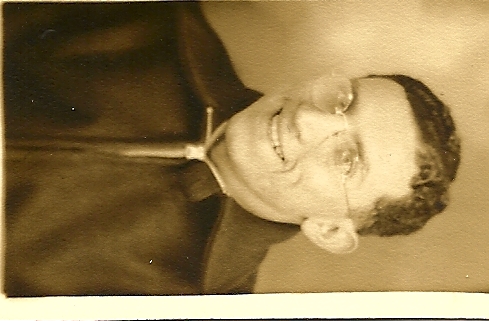
The photos above are all of my father, with the obvious exception of the vacuum cleaner, made available from the Open Clip Art Library; and the poster from the 1933 Chicago World’s Fair, created by Weimer Pursell, silkscreen print by Neely Printing Co., Chicago; both sourced from Wikimedia Commons.

The first picture of my dad is probably from some time in the early to mid-1930s. The second photo looks as though he was a teenager when it was taken.

The night time snap-shot probably took my dad by surprise while he was on a date, before he met his wife-to-be (my mother). It was likely shot by a street photographer, who would have handed my father a numbered envelope that identified the negative. Dad would have had to mail the envelope to the company with payment in order to get developed copies of the picture.

I recall seeing such photographers in downtown Chicago at least as late as the 1960s. Now, of course, just about everyone carries his own camera/phone.

The final image is of the young Stein family in late 1959: my mom and dad and, left to right, Jack, myself, and Eddie.

“I Know How You Feel”

Correct answer? I don’t. How could I?

But I may still be able to be helpful to you without absolutely knowing “how you feel.”

Why don’t I know exactly how you feel? I am not you. I am not your age or perhaps your gender. Maybe I’m not your religion. I wasn’t born in the same place under the same circumstances. My parents made more money or maybe less. They survived the Great Depression well, or badly, or not at all. And so on.

The point is, I’m not in your skin, so I can’t know precisely what it feels like to be there. It’s true, I might well have some idea, perhaps even a very good one. What might that idea be based on?

First of all, we are both human and have a certain set of broadly shared, although not identical life experiences. Secondly, as a therapist, I’ve talked to thousands of people who have told me what they think about certain things and how some events effected them. So I know the range of what is possible in reaction to an enormous number of events. I’ve also read much in the way of text books, been told much by my teachers, and have shared in the richness of emotion, perception, and experience found in great memoirs and novels.

And yet, despite all of this, I am open to surprise. My father died in the year 2000 at the age of 88. Rather suddenly. I’d known he was mortal at least since the time of his heart attack when I was 11. Prior to his death I’d counseled numerous people who were suffering from losses. I listened to their stories. Still, despite dad’s advanced age, I was shocked at the abruptness of his death, the “here today, gone tomorrow” reality of it. And surprised, too, by how tired I was for months afterward. As if some of the life force taken from him had been taken from me too. And even with this experience now well under my belt, even with having “lived” a loss like this (rather than just read about it or heard about it), I can’t say for sure that “I know how you feel” if you tell me about the death of your father. Your relationship with your dad might have been different enough, and his life circumstance different enough to explain some of this lack of identity.

You might ask me: “How then can you help me in grieving my own loss?” In several ways. I can listen to you and bear witness to your pain. I can be sympathetic. I can accept the emotions and stories you share: the varied combination of sadness, anger, exhaustion, and sense of separation from the world that comes with the death of a loved one. I can abide with you, acknowledge your pain, and let you knowI will “be there” until it passes. And, if you will accept the comfort, our relationship will help to reattach you to life, even while you are grieving something that tends to detached you from it.

You will never be exactly the same as you were before your loss, of course. But, you will very likely heal if you share your grief. If you hold it in or try to “move on” too quickly or shed your tears only privately — then your sadness might well pass more slowly or not at all. Human contact in the aftermath of a loss is crucial. A supportive spouse, friend or therapist can help. Time usually does the rest.