Ambition and the Seduction of Crowds

Crowds are like alcoholic beverages. They can make you a little tipsy. Or, one might say, they go to your head.

A story is told about Hale Boggs, the 17th Majority Leader of the United States House of Representatives. It seems that the congressman had just given a speech — a smashing triumph, at least in his mind.

He and his wife were leaving the auditorium, driven away in a limo. Feeling pretty puffed-up, he referred to himself as he uttered:

You know Lindy, there just aren’t that many great men anymore.

At that moment, Lindy Boggs, herself no wallflower, couldn’t bear her husband’s overblown ego. Her response punctured his balloon:

You are certainly right, dear. And what’s more, there is one less than you think!

Our audiences matter to most of us. Do the listeners and watchers “cheer, boo, or raise a hullabaloo,” as an old song suggests?

Perhaps because the majority find the stage intimidating, we admire those who command it. Moreover, more than a few of us search for a godlike or fatherly figure to “make it all better” and lead the way.

We remember gifted teachers, public speakers, and musicians who touched our hearts while walking the concert hall’s high wire.

Unless one turns away from political rancor, our hopes are invested in those who dominate the political version of the podium. They sometimes appear young, energetic, witty, and handsome, like John Fitzgerald Kennedy, or patriarchal, wise, and comforting, like Ronald Reagan.

Most who take the stage begin their training for a reason other than future admiration. However, once the cheering starts, the seduction of their soul becomes challenging to prevent.

Perhaps one should say a mutual seduction occurs. The spellbinding oratory of the speaker sweeps the audience away, while the former is lured by the crowd’s roar and the body of people who surround him.

He is wanted. Think Elvis or the Beatles.

Ambition is complicated. At its best, ambitious scientists, builders, writers, and leaders have, like Moses, helped us find the way to the promised land of enlightenment, health, beauty, and victory.

At its worst, they use whatever advantage celebrity provides to further their desires.

Some towering figures fall into both categories. The enthusiasm of an adoring public produces rule-breaking opportunities that are hard to resist.

—

People have been killed because of their ambition by those who wished to defeat it. Think of political assassinations.

After he and his Senate cohorts murdered Julius Caesar, Shakespeare’s Brutus spoke these words to justify his actions, claiming affection for Caesar but fear of his ambition:

Had you rather Caesar were living and

die all slaves, than that Caesar were dead, to live

all free men? As Caesar loved me, I weep for him;

as he was fortunate, I rejoice at it; as he was

valiant, I honour him: but, as he was ambitious, I

slew him.

Too often, athletes, performers, and politicians stay on the stage well past their use-by date. If they are prominent and admired enough, not even their diminishing talents cause them to suffer involuntary removal from a position of glorified status or power.

Some do know when to leave, however. I asked a retired Chicago Symphony woodwind player how he decided to resign from his decades-long tenure with the CSO.

Well, I thought it better to hear people tell me I still played well and should have stayed than for them to say, ‘Yeah, I guess it was time to go.’

Famous baseball players like Joe DiMaggio and Sandy Koufax displayed the same wisdom, departing the field of play on their own terms.

And yet it is easy to simplify the question of ambition by suggesting that continuing one’s work is fueled only by its intoxicating benefits. There is the love of the job, joy in performance, desire to repair the world, and all the factors that motivate people to create and better the condition of humanity.

On the subject of creativity, I heard Herbert von Karajan perform two concerts at Carnegie Hall with the Vienna Philharmonic Orchestra in the last year of his life. The conductor’s chronic back issues prevented him from walking to the podium without assistance.

Once on the platform, he mounted a modified bicycle seat that gave the illusion of him standing, but he must have been in excruciating pain.

Karajan offered a lesson in willpower. For the aged maestro, making beautiful music was worth everything. During each performance, time’s passage, and Karajan’s infirmity disappeared. He and his life became the music, and the fusion sustained him.

I will close this essay with evidence that ambition can be set aside even in politics.

Governor Adlai Stevenson of Illinois once said, “The hardest thing in any political campaign is how to win without proving you are unworthy of winning.”

Stevenson was the Democratic Party nominee for President in 1952 and 1956. He also was beaten twice at the ballot box, both times by Dwight Eisenhower.

Early in his first run for the nation’s highest office, the candidate met with Texas Governor Shivers to discuss ownership of the offshore oil adjacent to states like Texas, Louisiana, and California.

The states hoped that Stevenson would, at least, stay noncommital on the contentious question of rights the Federal Government also wanted.

As the conference proceeded, however, Stevenson made clear his stance in favor of the Federal Government: he would not remain neutral on the issue but publically indicate his opposition to the states’ position.

One person in attendance pointed out the political disadvantage to the office seeker if he did so:

“But Governor Stevenson, if you insist on doing that, you can’t win.”

“I don’t have to win.”

Ambition needn’t be everything.

==========

The first of three photos is Henry Grossman’s album cover photo for The Beatles — All You Need is Love and Baby, You’re a Rich Man, 1967.

Next comes the cover of Modern Screen Magazine featuring Elvis Presley when he was leaving to join the army in June 1958.

Finally, a shot that came to be called Adlai Bares His Sole or Adlai’s Worn Sole from a Stevenson campaign appearance in 1952 in Flint, Michigan. It won the 1953 Pulitzer Prize for Photography and was captured by William M. Gallagher.

All of these were sourced from Wikimedia Commons.

What to Do When You Don’t Know What to Say

Some people talk too soon, some too late, some too much, and some too little. Others pile up the sentences so fast you’d think they have to catch a train. Some talk too loud, soft, or close (in your face).

One of the most common regrets I heard in my clinical practice was from patients who believed they lacked the right word at the right time. Something had happened. Perhaps an offensive comment had been made, and they didn’t know how to respond.

The right words arrived by United Parcel Service (UPS) about three hours later. Others couldn’t imagine a good repost even after three weeks.

There are too many ways to go wrong in everyday conversation and even more in a public presentation if you don’t have much to contribute. Adlai Stevenson II told the following story.

It seems that a young and none-too-impressive new member of the British House of Commons approached his party leader and Prime Minister, Benjamin Disraeli:

“Now, Mr. Prime Minister, I’ve just come to the House; do you think it would be well if I participated in debate?” And the Prime Minister looked at him appraisingly for a moment and said, “No, I think it would be better if you did not. I think it would be better if the House wondered why you didn’t speak rather than why you did!”

Even though we don’t have the benefit of Disraeli’s advice, many of us have thought of ourselves as Disraeli did of the young member of Parliament: that we’d cause embarrassment by opening our mouths.

Well, sometimes we will, and indeed, all of us have done it before. Few will remember our blunders, however, and there is no chance of making an impression that is clever, thoughtful, kind, or enlightened without moving our lips.

No amount of potential eloquence does us any good if we forever have the mute button on.

Discussão.png

I’ve made some unfortunate comments myself.

In my teens, I visited a cousin whose mother had died after a long and grueling struggle with cancer. I extended my condolences, and, as often happens during such visits, we discussed other things.

Indeed, I forgot the sad occasion for a moment and mentioned a recent minor mishap, characterizing it as a “fate worse than death.”

Oops.

Too late to suck it back in. No way to un-ring the bell.

I apologized, of course, and my kind relative forgave my mistake. She was dealing with the real thing, death itself, not something trivial and stupid such as my comment. Years later, she couldn’t recall it.

Tactless remarks arise, as uncomfortable as they are. As I said earlier, we often wonder why we didn’t know what to say.

For a lucky few, their command of language comes as a genetic gift. They also have the confidence to deliver a line that others might keep to themselves.

While I can’t give you natural eloquence, I have a few suggestions to increase the possibility of saying the right thing and avoiding the wrong one:

  1. Make a recording of yourself as if you were chatting. There is nothing like hearing how you sound to discover what might be imperfect about how you converse. Yes, it could fuel your self-consciousness temporarily. But the project of self-improvement rarely comes without courage and pain.
  2. Have at l least one joke in hand that isn’t dirty or politically incorrect.
  3. Cut out “stance adverbs” and participles when beginning to talk or as interjections. I’m speaking of “uh,” “um,” “like,” “so,” and “you know.” Limit how often you say “awesome.” And never put these words altogether: “So, uh, you know, like, um, it was awesome!” Don’t say “fail” when you mean “failure” and “reveal” when you should use “revelation.” You will sound 20% more intelligent once all this is accomplished.
  4. Wait a bit before answering, at least sometimes, to create the opportunity to formulate what you have to say. The conversation isn’t a race to hit the buzzer on a TV game show.
  5. Part of the reason for waiting is to grasp what your partner means, display respect, and understand his point of view. Repeating what has been said to you can be helpful. Identifying and acknowledging his ideas is essential if you wish to have friends and loving companions. Fewer disagreements will be one of the benefits.
  6. If you expect a wise guy to put you down (because of your history or his), prepare some comebacks in advance. There are books on this sort of thing, so you don’t have to be original. Don’t forget, however, that sometimes the best put down is to ignore the barb, and ending the relationship occasionally is necessary.
  7. Try to sound au courant (a French expression meaning “up to date” or “fully informed”). A good start would be to read something other than an internet story on the life of the Kardashians.
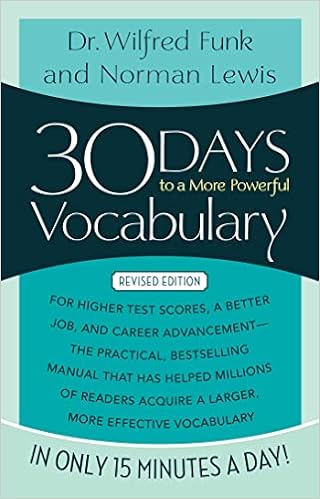
  8. Discover some new words. Thirty Days to a More Powerful Vocabulary has been around since 1942 and is a worthy place to begin.
  9. Don’t circumambulate (circle the idea you are trying to express). Get to the point so as not to lose your listeners.
  10. If you are in the habit of employing lots of pronouns, be sure the pronoun comes right after the formal name of whoever the “he” or “she” you are referring to is. If you don’t, the listener might think you are talking about someone else.
  11. In general, especially in public utterances, wait until you have the attention of others. Trying to talk over people is frustrating, and those who specialize in preventing you from completing your thought are rude.
  12. Asking dinner partners to stop texting should happen much more often than it does. It is not impolite to tell them you will wait until they are finished.
  13. Most people who are nervous tend to rush what they have to say. Instead, think of your oral communication as a landscape painting, where the words become the foreground, and the silence becomes the background. It will help if you allow seconds of quiet to put your words into relief.
  14. Consider going to Toastmasters. It is an organization whose meetings (also online) are “learn-by-doing” workshops “in which participants hone their speaking and leadership skills in a no-pressure atmosphere.” And they’ve been doing it since 1924.
  15. Unless you are gifted in delivering an unrehearsed speech in front of an audience, try to memorize your address or at least bring an outline.
  16. One last piece of advice comes from an anonymous author:

Be careful of the words you say,

Keep them short and sweet.

You never know, from day to day,

Which ones you’ll have to eat.

========

The revised edition of Thirty Days to a More Powerful Vocabulary was published in 2022.

The second image is a 1630 self-portrait of Rembrandt, sourced from the National Gallery of Art. The cartoon is called Conversation by Richard Melo da Silva, sourced from Wikimedia Commons.