Unloading Your Therapist: Breaking Up is Hard to Do

Ending a relationship is difficult. Most of us have been on the receiving end of a relationship “break up” of some kind. We know that it doesn’t feel good. Indeed, we know that it can be taken as a rejection (and often that is exactly what it is). Nonetheless, that doesn’t stop some of the same people who decry the insensitivity of those who unceremoniously “dumped them” from doing the very same thing, in the very same way, when they wish to be free of seeing someone else ever again.

With that in mind, here are a few guidelines for thought and action, and some examples of what people do, when and if it comes time to end a relationship with a therapist. Today, I won’t be talking about the sense of loss or sadness that sometimes accompanies therapy’s end. I’ll leave that weighty topic to another time.

1. The “I’ll call you” strategy. Usually, this is delivered by phone message. The patient probably has an appointment with the therapist and cancels it, adding that he will call to reschedule. Experienced therapists know that many people will attempt to end the therapeutic relationship in this way. It avoids a face-to-face conversation which the patient might imagine as uncomfortable, and it avoids actually giving any reason for terminating therapy. It leaves the therapist a bit in the dark, not knowing whether the predicted call will ever come, and probably not knowing what the reason is for the decision to end treatment.

2. The “end of session” termination. Patients often wait until the end of the therapy session to say something of importance, in part because it is uncomfortable or they don’t want to discuss it in any detail, at least not yet. This method of termination has the advantage of being done face-to-face; what it doesn’t do is to allow the two parties to process the reasons for that decision and discuss any concerns. Without some time to talk, the therapist cannot be helpful to the soon-to-be-departed patient, or find out much about the client’s reasons for his decision. Without knowing what those reasons are, its hard for the therapist to learn from any mistakes he might have made, anything he did (or didn’t do) that made the patient uncomfortable, etc.

3. The “no-show” departure. Some individuals who are receiving counseling decide to end therapy by simply being absent from their next scheduled appointment. This is rude, of course, and also risks that the therapist will charge you for the time even though you didn’t come to his office (most therapists expect 24-48 hours notice of cancellation in order to relieve you of the obligation of payment).

4. The “nasty phone call” ending. While this is a rare event, sometimes people want to hurt the therapist because they believe that they have been hurt or neglected by him. They leave an angry phone message and avoid any chance for the therapist to find out why they are hurting, just as they make it impossible to come to a more amicable resolution of the issues at hand.

5. The “I need a break” message. It is, indeed, sometimes appropriate for patients to take a break from treatment. It can get too intense for some, who realize that taking a breather might be helpful. On other occasions, the complications of life outside of the counselor’s office make continued therapy difficult for the moment. However, when giving the message that you “need a break” is simply a way of leaving therapy, with no intention of return, it doesn’t allow for any closure to the relationship, or any of the benefits that such closure provides (which are described below).

6. The “best” way. Whether you have been seeing the therapist for a long time or a short one, the issue of termination is an important one. It is appropriate for you, even from the start of treatment, to ask how long it is expected to last. If you are finding counseling unsettling or unproductive at any point, it is best if you discuss your concerns with the therapist as they happen. Since many people who enter therapy have a hard time with being assertive and direct, it might well be tempting not to talk much about anything that you believe the therapist doesn’t want to hear, and simply to end the relationship unilaterally. Unfortunately, you and the therapist are short-changed if you do this.

Ideally, your concerns should be expressed early in a session, when there is sufficient time to talk about them. Be prepared for your therapist to ask you why you are thinking of ending treatment. You might be surprised that the therapist agrees with you. Alternatively, you might be persuaded if he makes a good case to continue for a while. But if you are certain that it is time to end things, be sure to hold your ground. A good counselor should accept this without trying to make you feel bad about your decision.

Once an understanding is reached about ending treatment, that doesn’t necessarily mean that it must end at precisely that moment. You and the therapist might decide to taper-off sessions or to have at least one additional session to sum up the history of your work together and to say “goodbye.”

There are several reasons for having just such a final session. First, it should allow the two of you to review what you have accomplished, how your life has changed, and what you have learned. Equally, if nothing or little of value has occurred, it can give you the chance to inform the therapist where treatment went wrong. Therapists should be grateful for this information since it allows them to learn, adapt, and improve so that they can help those patients who will follow you into their offices. And, a last session gives the therapist time to point out treatment alternatives or refer you to other available therapists who you might wish to consult.

Finally, a good therapist who has known you for a bit of time usually has some very nice things to say about you, about your courage, wit, grace, intelligence, and the guts it took to look your problems in the face and try to change your life. The last session also gives you a chance to say “thank you,” if that is something that you believe appropriate. The counselor will usually let you know that he would be grateful to hear from you again, just to know how you are doing. And, the door is almost always open if a return to therapy is required.

So, therapy, even when it wasn’t as helpful as you had hoped, can and should end with an expression of respect and good wishes for your future well-being. You will usually feel good about being direct in doing what you believe is in your interest, and having the self-confidence and respect to tell it to the therapist face-to-face. Your therapist will be grateful too, in almost all cases.

No losers here. Only winners.

Are You Too Emotional?

http://upload.wikimedia.org/wikipedia/commons/thumb/7/7d/Frenchmanweeps1940.jpg/512px-Frenchmanweeps1940.jpg

You’ve heard it before — “You are too emotional!” Surely you heard it as a child, at least once. But, what does it mean? How do you know if it is true? What is the proper place of emotions in any life? And, if you are “too emotional,” what should you do about it?

First let us establish some ground rules. Emotion is necessary. Imagine a life without it. No  love, no families based on that love, no compassion, no empathy, no righteous anger. What would be left? A life of relating to others as objects, like chairs or tables, their only value in utility — the function that they perform; only reason would be left — cold computation of what to do and how to do it. No laughter, no tears, no gratitude, no passion.

If you agree with what I’ve just said, then it is clear that emotion has a place. It binds us to others, plays a part in letting us know when we have been injured, allows for the possibility of good relationships and a joy in living. It also creates an energy that is necessary for self-defense and for the pursuit of causes. Emotion motivates us and permits the creation of communities.

But, when you are called “too emotional,” the accuser usually isn’t referring to love or happiness or even anger. No, usually he means that you are too easily hurt. And, when you are young, especially if you are male, you are encouraged to “be a man” and live by the “athlete’s creed;” if you are hurt, in other words, rub some dirt on the injury and get back into the game. Don’t complain; that is for whiners and wimps and little kids.

Well, if you are an athlete, that is what you have to do. Think too much about the injury and you won’t be able  to perform. Moreover, if you even think too much about your past failure in the game, you won’t have the confidence and focus to be able to succeed in the remainder of the contest. So, under those circumstances, being “emotional” does, indeed, get in the way. Similarly, emotion interferes with necessary behavior in war-time or in other crises that require focus, indifference to pain, and steadfast action.

But how about situations that are less demanding and fraught with danger or competition?

For me at least, emotion has become, for the most part, a friend. I can be moved by the sadness of my patients and those in my life who I love. I do not consider it a weakness. It is simply a part of being the responsive, sensitive person I aspire to be. And I can be moved by music or drama, again to the point of a tear. Life seems richer, warmer, more eventful and worthwhile that way. I don’t feel the need to keep up a brave front, an appearance of having tamed my emotions.

No, I’m not often whipsawed by my feelings, but, in part, that is because I give them their place in things and don’t keep them all bottled-up, looking for a way to burst out of the container that I would otherwise have put them in. And, when it is required, I am prepared to seek solace from a few of those closest to me, just as I give solace to my patients and those I love.

True, being emotionally vulnerable means that you can be injured. But, don’t fool yourself, life will have its way with you whether you are deadened to feelings or not. By killing your emotions, you are probably only succeeding in limiting the fullness of your life while attempting to create an illusion of strength.

Put another way, it is only human to have emotions and best if you are comfortable with that fact almost all the time.

But, beware when the emotions have you!

At the extreme is a condition called Borderline Personality Disorder (BPD).

The Diagnostic and Statistical Manual of Mental Disorders, Fourth Edition, states that “the essential feature of BPD is a pervasive pattern of instability of interpersonal relationships, self-image, and affects (emotions), and marked impulsivity that begins by early adulthood and is present in a variety of contexts.” These folks are, unfortunately prone to “frantic efforts to avoid real or imagined abandonment,” instability, recklessness, suicidal behavior, rapid and intense mood changes, emptiness, and anger. They are the flesh-and-blood definition of what it means to be “too emotional.” And, not surprisingly, they are difficult to treat, although Dialectical Behavior Therapy is a treatment specifically designed to do so, and has demonstrated great promise with this patient group.

For those who are not categorized with this diagnostic label, how do you know if you are too emotional? Here are a few questions you might ask yourself:

1. Do people, not only family members, often tell you that you are too emotional?

2. In an over-heated moment do you tend to make impulsive decisions that you later regret?

3. Do you have many arguments and blow up easily?

4. Do friends and relatives have to handle you with kid gloves?

5. Do your emotions suck the life out of you, change easily and quickly, and generally whip you around?

6. Do you weep easily and often in the absence of major set-backs or great losses (I’m not talking about having a tear come to your eye here, but something more gut-wrenching)?

7. If you are in mid-life, are you no less emotional than you were in your teens? (Most of us become less volatile, more in-balance, over time).

If you’ve answered too many of these in the affirmative, you may want to seek counseling.

A last word or two. Life is challenging. We need to permit ourselves feelings and we need to express them, within limits, and to have a sympathetic soul there to bear witness and listen to us. Balance is the key most of the time. It may help to remember a portion of the “serenity prayer:”

God grant me the serenity

to accept things I cannot change;

courage to change the things I can;

and wisdom to know the difference.

If you do not “know the difference,” often enough and go to emotional extremes over the routine ups and downs of life, if even the small things seem too big, then it might be time to seek professional help. Not to kill your feelings, but to make sure that they don’t destroy your ability to have a good life.

—

You may find the following post of related interest: Vampires and Buried Feelings: The Therapy of Getting Over Your Hurt.

—

The above scene, Frenchman Weeps 1940, was used in the 1943 US Army propaganda film Divide and Conquer (Why We Fight #3) directed by Frank Capra. The photo shows “French people staring and waving at remaining troops of the French Army leaving metropolitan France at Toulon Harbour, 1940, to reach the French colonies in Africa where they will be organized as Free French Forces fighting on the Allied side, while France is taken over by the Nazis and the Petain regime collaborating with them.”

Wikimedia Source: Records of the Office of War Information, NARA. *Date: June 14, 1940 *L.

Surely, under the circumstances, this man’s emotions were quite appropriate.

He Who Hesitates is (Sometimes) Lost

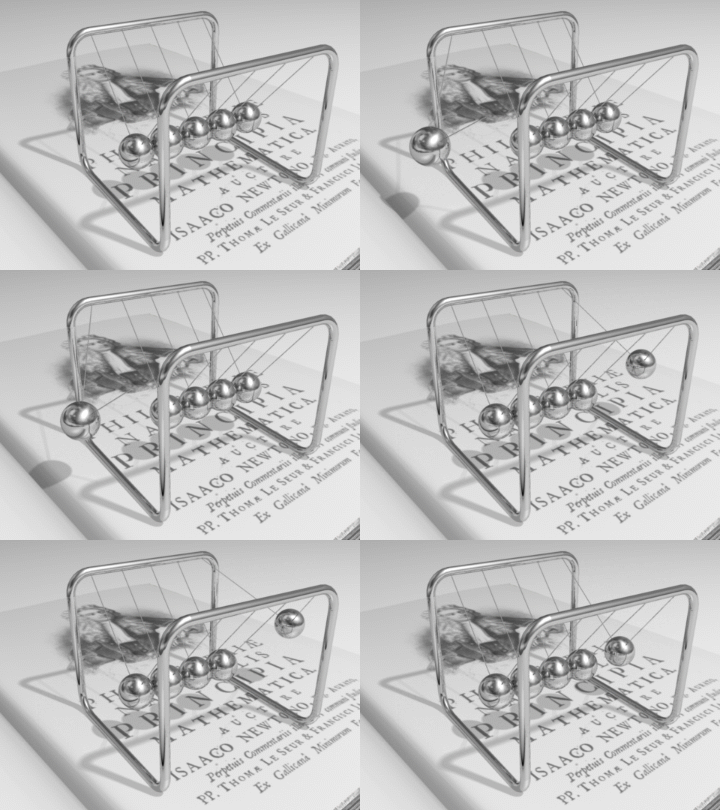
http://upload.wikimedia.org/wikipedia/commons/0/02/Newtons_cradle_animation_smooth.gif

Fear and hesitation go hand in hand. They hold you back, creating a slow motion to your progress (see above) and sometimes no progress at all. The trick is to separate the two, to recognize that you needn’t wait until you are free of fear in order to act. Indeed, if that were the case, most of the people whom we consider brave would still be waiting for the moment of bold action that earned them the appellation “hero.”

Years ago I heard a panel discussion on the subject of Wagner’s opera cycle The Ring of the Nibelung that actually touched on the issue of courage and decisive action. The experts focused on the character Siegfried, who is described as someone who has never known an instant of fear in his life. Should we therefore consider Siegfried’s fearless behavior to be indicative of heroism and bravery? The panel in question concluded it did not. After all, they reasoned, how can one be a hero without fear to overcome? Only a fool would rush to action without being aware of the attendant dangers. But a brave and courageous man would know the perils facing him and choose to act in any case.

Most of us won’t face dragons or fire, of course, but we still will all have numerous chances to act decisively or to hold back. Here is a trivial, but instructive example from my own life. In college, I was fulfilling a PE requirement by taking fencing. Now, I wasn’t a very good fencer, despite being a reasonably good athlete. And, my heavy academic course load didn’t permit me the luxury of spending time outside of class to practice fencing. Thus, in the first seven matches I had against my classmates, I won only three, a pretty mediocre showing.

Nonetheless, I was competitive enough to want to win more often, so I reasoned that there just might be a way that wouldn’t take time away from my other studies. I realized that I was a relatively tentative fencer, and so I decided to become more aggressive. I set myself the task of getting in the first “touch” as soon as each new match began. The strategy worked. Of the next 17 matches, I won 14. I was almost always able to get a 1 to 0 lead within a few seconds of the start of the competition by catching my adversaries off-guard. Yet, despite my new found success, I was really no better at fencing than I’d been when my record was three wins and four losses. I was simply less hesitant, more aggressive.

I once had a biology professor named Hudson who conducted the “Quiz” portion of his classes in a way to encourage behavior similar to my fencing experience. You were graded on the number of questions you answered correctly and lost points if you answered the interrogatories wrong. Hudson asked the questions aloud and it was a race to get your hand up first and have him call on you to answer. Naturally, you had to make a quick decision as to whether you had the right answer. Very fast indeed. Those who hesitated were, as the saying goes, “lost.”

But how does this all apply to daily life, the life outside of the university. You might say that “normal” life is less competitive than my examples suggest, but is it? To answer that question, ask yourself how often you hesitate to do things, take chances, give public voice to concerns that might engender disapproval, avoid tasks that are difficult or challenging? Do you ask out the beautiful woman, or do you wait until you feel “ready,” only to watch someone else beat your time in getting her attention? Do you, at least sometimes, see a crisis as an opportunity? Or do you hold back, put things off, wait and hope that another or better time for action will come? Sometimes it will, but sometimes it won’t.

If your “default” strategy, your habitual tendency, is to wait, you have a similar problem to those whose standard operating procedure is to act impulsively, without thinking. It may be the case that “fools rush in where angels fear to tread,” but it is also true that you are an equal fool if you forever hold back, hesitate, and watch the moment pass or see someone else “seize the day (carpe diem).”

What I am talking about is fear and the uncertainty that fuels it. When we are fearful and decide not to take action, most of us feel an immediate sense of relief. That relief reinforces our hesitation, while simultaneously depriving us of the opportunity to succeed in the endeavor. Soon enough the relief will pass, but not the self-doubt and lack of personal esteem and confidence that might have been won by an effective action.

The danger in allowing too many chances to pass by is a life of “quiet desperation,” a life on the sidelines, watching others play the game, but not playing it ourselves. And, at the end of life, regret for the opportunities passed and the chances not taken is more likely to be troubling than the failed efforts made. Beware the heartache of the words “what if?” True, acting boldly often fails; but, it also sometimes succeeds.

No wonder, then, that musicians spend relatively little time passively listening to music. They are too busy making it.

Make music of your life, then. Let the trumpet announce (or remind) the world of your presence. Sing your song. And if you cannot, find a therapist who will give you the tools to beat back your fear and help encourage you.

—

The above image is an Animation of Newton’s Cradle created on August 8, 2006 by Demon Deluxe and sourced from Wikimedia Commons.

The Things We All Need to Learn

The things we need to learn wait for us. They are very patient.

I think you know what I mean. At least, you have seen it in others: the angry person who never learns how to control his anger or perhaps isn’t even aware of the need to control it.

Then there is the passive person, who cannot stand up for himself easily, defers to others, and gets taken advantage of pretty routinely. And, despite this, it hasn’t changed over the years.

Some of us choose the wrong friends, lovers, or business associates, making the same mistakes repeatedly. Others continue to use failed methods in raising children. Some of us never face our fears fully (see Albert Brook’s film Defending Your Life for a funny take on this problem). And then there are the people who are impulsive and act without thinking, over and over; or the ones who are sloppy at tasks, not careful enough; or those who are too compulsive, too detail-oriented, trapped by their obsessive attention to small things.

I could go on, but instead, it’s time to ask you a question. What challenges in your life have you yet to master, the ways of thinking or behaving that don’t work for you but which you repeat? Most of us have a pretty easy time spotting the errors in others, but how about your own?

There is an old joke about how we learn:

A man walks down a road and falls into a hole. He doesn’t see it, and it takes some time to get out because it is deep.

The next day, the man walks down the same road and falls into the same hole. He still doesn’t see it, but he might just get out of it more rapidly this time.

The day after, the man walks down the same road, sees the hole, and falls into it anyway.

The following morning, the man walks down the same road, sees the hole, and this time walks around it.

And what does our hero do after the next sunrise? He walks down a different road.

Holes, like unsolved problems, have all the time in the world. They wait for us to recognize them, see the danger they pose, and change our behavior to avoid the danger. As the saying goes, “If you do what you’ve done, you’ll get what you’ve got.” Others have said that one definition of insanity is continuing to use the same failed strategy, all the while expecting different and better results.

How long will you wait to change? Your problems can last a lifetime. They have no train to catch or meetings to attend; they take their time, not troubled by waiting. Or, should I say, they take your time. All of your time.

Do you really want to wait that long?

Making the Same Mistakes Over and Over: How to Learn From Childhood

There are few perfect childhoods out there. Indeed, it’s the nature of childhood to have some tough times. You are small, you don’t know anything, everything has to be learned for the first time. No wonder its a challenge! The adults tower over you and the big kids can belittle you, push you around, and trip you up. Literally.

So what do we do to survive childhood? Well, we figure out some strategies to deal with the problems that we face. For example, if you have an angry parent, you might learn to be sensitive to signs of upset in someone else, know when to keep your head down, try not to ruffle feathers. On the other hand, if you had a parent who only gave you attention when you were helpful and solicitous, doing things like looking after your younger siblings, you could have learned how to take care of others and seen that quality as, perhaps, one of your only virtues.

Often, the solutions that were necessary early in your life don’t work very well in the “older” (which is to say “current”) version of you. Being sensitive to possible anger in friends, lovers, and coworkers could well find you cowering unnecessarily, accepting half-a-loaf because your are afraid that if you speak up, you will get none. Being a care-taker as an adult might get you some initial approval, but it can prove unsatisfying when the person you are with expects that you will do all the caring and give all the help in the relationship, but doesn’t think to give much back to you.

It’s a little bit like this: Imagine that you were born in Alaska, learned to wear heavy clothes and multiple layers. It was a solution that was necessary and one that worked. If you continue to live in Alaska, you will find success if you use the same solution forever. But, should you move to South Florida and operate by the same set of internalized rules, now you will have quite a problem!

Childhood solutions only are useful to adults if you continue to live in circumstances similar to your childhood. But, by definition, most of us live in different circumstances. We are not any longer so small and defenseless, so unworldly and innocent. We now have much more capability to change the world around us. Unfortunately, some of us don’t know it.

Are you doing the same things that you did as a kid, using solutions that haven’t solved anything for a while? Are you suppressing emotions because that  was a good strategy in an uncaring childhood home? Are you still afraid of situations that resemble your early life challenges? Do you still avoid difficulties, never having figured out how to face them?

It’s worth taking an inventory of your early life and, even more importantly, your current life.  Look frankly at what did or didn’t work as a kid (and what does or doesn’t work now), asking yourself whether youthful difficulties produced a way of being that isn’t helpful. If you keep using failed solutions, you will likely continue to experience failure. Most of our problems are patient. They wait for us to recognize them and then to solve them. They can wait a lifetime.

Is that how you want to spend the rest of your life, making the same mistakes, accepting less than what might be possible and good for you? If you are willing to wait in that way, don’t call a therapist; you are too patient and not sufficiently motivated to change. But if you are beginning to be aware of how unsatisfying your way of living is and have the courage to face that fact, do call. That’s what therapists are there for.

How Watching the Cubs can Kill You–Literally

“Chicago Cubs fans are ninety percent scar tissue.” So said George Will. But could it be even worse than that? Could it be that the Cubs can kill you?

Case in point. Let me take you back to the year 1984, now 25 years in the past. It was the Cubs first appearance in the post-season since 1945. And maybe, just maybe, we thought, the long-awaited World Championship was at hand, the laurel we’d last won in 1908.

If your name was Theresa Boucek, 1908 wasn’t just something you’d read about. Indeed, Boucek, who had been born on October 7, 1882, could even recall the 1906 World Series between the Cubs and the White Sox. She’d been a famously attractive young woman back then, and was still comely enough to win a beauty contest at age 99! Of course, I’m not sure that she had much competition, but still, being the Arkansas Tri-County Nursing Home Queen must count for something.

That aside, lovely Theresa’s life was unremarkable. Daughter of a tailor, Boucek lived on Chicago’s West Side, and worked as a department store clerk and later, as a store detective. After marrying in 1906, she continued to work outside the home. Before moving to Arkansas in 1972 with her son Fred, she’d resided in Berwyn and Glenview. And all the while, Theresa Boucek was a life-long Cubs fan, suffering the “slings and arrows of outrageous (Cubs) fortune” known to many of us.

Fast forward to the 1984 playoffs: the Cubs vs. the San Diego Padres. Our boys won the first two games at Wrigley Field and needed only one victory in three possible tries in Southern California. But we lost the first two games in San Diego and were left with one final chance to make it to the World Series. And Theresa Boucek watched it all on her TV, watched in hope and watched in frustration, watched with her grandson Michael by her side, watched and prayed, as all Cubs fans do, for a final trip to the promised land and World Series glory.

Those of you with long memories will recall that the Cubs were actually leading in Game #5, and had their ace, Rick Sutcliffe on the mound. But Rick started to fade late in the game, and, as Michael Boucek recalled for the Chicago Sun Times, “as a matter of fact, (my grandmother) died during the game when Sutcliffe started to go downhill.”

It was her 102nd birthday. A fitting payoff for a lifetime of devotion to her favorite team.

Is there a moral to this story? I guess my thoughts go to the legendary Steve Bartman, the man who (some think) cost the Cubs a trip to the World Series in 2003 by allegedly interfering with Moises Alou’s attempt to catch a foul ball. I’ve always thought that this young man got a raw deal, that it was not Bartman but the men on the field who failed themselves and us.

But then, I guess the punishment suffered by Cubs fans is relative. The lifetime of shame suffered by Bartman might not be so bad after all.

Bartman, at least, unlike Therese Boucek, wasn’t killed by the Cubs.

What Children Need From Parents: Part I

A 15-year-old treated by me many years ago is a good example of one of the things that parents need to provide their children.

I’ll call him Ike (not his real name), a slender, silly kid with sandy hair. His family was middle class, hard working, and honest. Unfortunately, Ike lacked the latter two qualities. He was a minor league juvenile delinquent, prone to shop lifting, cutting classes, curfew violations, and occasional drug use. Ike was a poor student thanks to a lack of effort,  an Attention Deficit Hyperactivity Disorder condition that featured notable impulsivity, and the unfortunate fact that he wasn’t very bright. This teenager treated school as  diversion from his major life tasks of having fun and causing trouble. He rarely thought of the long term consequences of his behavior, instead choosing to do whatever felt right in the moment and whatever action seemed likely to produce some immediate payoff, the future be damned. Outpatient therapy had failed to make a dent in any of this, so his parents ultimately brought him in for whatever a psychiatric hospital could do to redirect Ike’s life and get some control over things.

Years ago it was often possible to keep a teenager in the hospital for several weeks or months if he needed it. Insurance policies were different and more generous then. And so, given the total control over someone’s life that a psychiatric adolescent treatment unit provided, you could produce changes in some very rebellious, out of control kids. Ike was like that. Eventually he figured out that the only way to get out of the hospital was to conform his behavior to the required standard.

While his parents participated in family therapy during his hospital stay, they remained uncomfortable with the job of setting limits on Ike. Neither one was very secure or self-confident and Ike fueled that insecurity by his behavior. Both parents were prone to feeling guilty when they punished him because of their own unresolved childhood issues, and Ike knew how to “play” them and get them to back off of threats and attempted punishments. These adults needed their son’s approval and good will too much for his, and their, good. Ike was running the show before his hospitalization. He knew it, they knew it, and his “will” was stronger than their wills were. If he complained and pleaded long enough, one or the other parent would typically break down and give him what he wanted. Despite the fact that family therapy hadn’t succeeded with the parents, Ike ultimately behaved himself in the hospital and had to be discharged even if his parents didn’t seem to have a better handle on how to deal with him in the real world. So, I crossed my fingers and hoped for the best.

As often happens after an adolescent is discharged from a psychiatric hospital, Ike and his folks went through a honeymoon period. But after a couple of months, he resumed his misbehavior and things weren’t much different from the way they had been the moment that Ike had first stepped into the hospital. So it was on the first day of his second stint in confinement (yes, his parents took him back and readmitted him), that I recall having the following conversation with Ike:

GS: “So, Ike, how does it feel to know that you can pretty much do anything you want when you are at home? How does it feel to know that your parents really can’t control you?”

Ike: “Terrific!” (Said with a big smile).

Silence ensued. I was quiet and just sat there with Ike for perhaps 30 seconds. Then, Ike spoke again and surprised me.

Ike: “And scary.”

This was the truth of it. Even Ike, who was one of the least thoughtful and least self aware patients I’ve ever treated, realized that if he could get away with anything he wanted, that wasn’t a good thing. Even Ike knew that if he was driving the bus, the bus was in trouble. Even Ike knew that he needed someone to rein him in, to set a good example, to steer him in the right direction, and to prevent him from doing some of the things he would do impulsively, recklessly, and thoughtlessly.

What then do children need? Parents with the will power, strength, consistency, motivation, intelligence, resilience, and the self confidence to set and stick to limits, take charge, and make sure that the combination of a child’s poor judgment and impulsive or rebellious behavior doesn’t rule the day. Ike was the problem, but without his parents getting a grip on their own lives and finding the strength and confidence to assume the proper role in the home, Ike wasn’t going to get better any time soon. And even though Ike would have and did resist a more assertive, consistent, and confident approach from his parents, he knew that he needed it.

Some children are easy, some more challenging for parents. It is our job in the latter role to figure out what each of our children need and provide it. Not all children are the same and not all of our children need an identical approach from us. Ike would continue to misbehave until his parents figured this out.

The strength that I’m talking about isn’t the only thing that children need from parents, and from time to time I’ll write about some of the other requirements. The good news is that if Ike, at age 15, was able to figure out what he needed, nearly all adults can too. From that point on, good things are possible.

“To Save One Life Is As If You Have Saved The World”

It was an easy story to miss: the 100th birthday of someone you’ve never heard of. Not even someone from the USA. But to some people, the most important man in their lives. Indeed, the man without whom they would have no life.

Sir Nicholas Winton was born on September 4, 1909, but his 100th birthday party was unexpected. In late 1938 he set out to create an organization designed to find a place for Jewish children in Czechoslovakia imperiled by the Nazis. Only a short time before, England passed a law allowing children to take refuge there within limits: they needed a sponsoring home in England and 50 pounds sterling as an advance toward a return trip back to Eastern Europe at such time as political events would permit.

In all, 669 children no older than 16 made the train trip, thanks to the efforts of Winton and others to find sponsors for these young people (in effect, adoptive parents), the money to support their travel, and the necessary 50 pounds for the hoped-for return that was not to come.

One can only imagine the feelings of the parents and the children as the latter boarded the transport; parents promising their children, as many did, that they would all be reunited. Of course, death in the Holocaust would dash such expectations. The project ended when the Nazis invaded Poland on September 1, 1939, World War II broke out, and safe passage across the continent became impossible.

Typical of many rescuers, Winton made little fanfare of his altruism. Indeed, until 1988, when he was nearly 80, not even his wife knew what he had done. Only her accidental discovery of a scrapbook documenting his activities led to the wider acknowledgment of Winton’s good works, including a Knighthood and a nomination for the Noble Peace Prize by the Czech government.

On September 1, 2009, several of the children Winton saved, now elderly themselves, took the original train used in the Kindertransport in a replication of the journey they had made 70 years before. And when they reached London, Sir Nicholas was there to greet them.

Many brought along their children, grandchildren, and great-grandchildren. In all, there are approximately 7000 descendants of the original group saved by this man. Children were among those most vulnerable to the Nazis. Thus, it is unlikely the 669, not to mention their descendants, would have lived but for the generosity and effort of Sir Nicholas.

The Jewish Talmud states that “to save one life is as if you have saved the world.”

Indeed.

—

The 1939 photo is of Nicholas Winton with a child he saved, sourced from Wikimedia Commons.

What To Do When Therapy Doesn’t Help

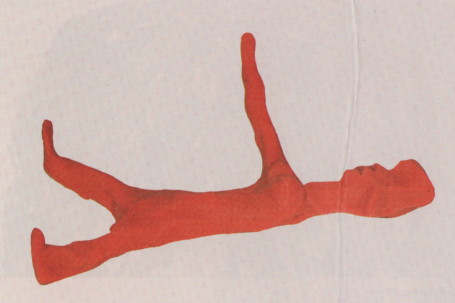
http://upload.wikimedia.org/wikipedia/commons/0/06/Rote_Frau.jpg

Therapy doesn’t always help. That doesn’t mean that it can’t help and that a second chance isn’t indicated. But, it does mean that you will need to ask yourself a few questions about what is going wrong.

There are several possibilities:

1. Misdiagnosis. If, for example, you have an alcohol or drug problem, but the therapist wasn’t told about it or didn’t realize its significance, treatment is almost certain to fail. Similarly, if you have a Bipolar (manic-depressive) Disorder that goes untreated (these can be difficult to diagnose), it will be hard to profit from therapy. I have seen many adults, for example, who have the inattentive form of ADHD and have never been diagnosed and treated for the condition, even though they have seen more than one therapist.

2. Insufficient motivation. Have you been giving therapy your best effort? Do you go to sessions religiously? Do you follow through on any “homework” assignments that you and the therapist discuss? If you are not adequately open and dedicated to getting better, then treatment is likely to fail. Defensiveness in the treatment process and inconsistent attendance are major problems. With respect to lack of effort, the old joke goes: “How many therapists does it take to change a light bulb?” Answer: “One, but the light bulb has to want to be changed.”

3. The therapist/patient match. Do you feel comfortable with the counselor? That doesn’t mean that therapy will never make you uncomfortable (change isn’t easy and it is often painful), but it does mean that the therapist is someone you can trust, who is sincere, and who is competent. Does the therapist have sufficient understanding of your life circumstances? This doesn’t necessarily mean that he has lived through a similar situation or has an identical background, gender, age, or religion; but he will need to understand where you are coming from.

4. The tempo of therapy. Does the therapist push too hard? Do you find yourself too often overwhelmed by the issues and feelings being stirred up in your sessions? Or perhaps, do things seem to go too slow? Are the sessions becoming boring and unproductive?

5. Activity level of the therapist. Is the counselor too active and probing for you? Does he seem to have a plan and a direction for your treatment (he should)? Is he too controlling, seeming to follow an agenda that is inflexible and ignores what you need? Or, alternatively, is he too passive, simply waiting for you to talk about whatever you want, regardless of how far afield this might lead the treatment?

6. Is the therapist too friendly? Does he want (or is he open to) a friendship or anything other than a therapeutic relationship (he shouldn’t be). Or, is he too distant and uninvolved?

7. Type of therapy. Therapists are not all equally comfortable and competent at the multiple types of treatment available. Some problems have been subjected to well-documented and researched treatments (Obsessive Compulsive Disorder, for example). If your therapist is using the wrong treatment approach, you are not likely to benefit as much as you could.

8. Medication. Would you do better if you were on medication? If you are on medication, might you improve more with a different medication?

9. The therapist’s problems. Does the therapist seem stable? Does he act in an inappropriate way in the sessions? Does he become angry and critical? Is he judgmental rather than supportive? Does he talk about his own current problems?

If you are still in therapy and you have concerns about its effectiveness or any of the issues mentioned above, it is usually best to voice those issues to your counselor. He should not only be open to hearing what you have to say, but want to be responsive.

Therapists are not mind readers and won’t always figure out what you are thinking or worried about unless you say it. Do your homework and try to find out what therapeutic approaches might be more appropriate for you (your therapist should be able to describe at least some alternatives).

If he cannot provide you with the kind of treatment you are asking for, he should be able to come up with some very good reasons for what he is doing. Should those reasons be unconvincing, perhaps a second opinion is indicated and he should be open to this idea, as well. If you remain sure that this therapist is not the right one for you, getting a referral from him to someone else is entirely appropriate.

If, on the other hand, you have had unsatisfying experiences in therapy before and are not now in treatment, but are thinking of trying again, make sure that you have attempted to investigate your potential new therapist’s background and experience. Also, when you talk to him on the phone, ask about his therapeutic approach. If you do decide to see him, talk about the things that didn’t work in previous therapy attempts, as well as those that did.

Be as informed as you can be. Unlike brain surgery, you aren’t going to be passive and unconscious during treatment. You are going to participate and interact with someone who, you hope, is well-trained and dedicated and compassionate. Evaluate what is going on in treatment in an open and thoughtful way; collaborate with the therapist.

You will be glad you did.

—

The Red Woman by Neuthaler is the name of the above image, sourced from Wikimedia Commons.

The Problems with On-Line Therapy

It is tempting to think that therapy might be done on-line with the same effect that it can be done face to face. Unfortunately, most of the time, this probably isn’t true.

Some people are certainly more comfortable with the computer and that can be part of the problem. The face-to-face contact, in a supportive environment, is something that is beneficial. By pursuing therapy without direct human contact they may be avoiding something about which they are afraid. If that is the case, the therapy will, by definition, miss dealing with the very thing that the patient needs to tackle and confront.

Then, too, part of the therapy process involves having the courage to be with the therapist, alone in the same room with one other person and the words and feelings that are the substance of your life; to make the effort to come to his or her office; to be on time and value the human contact together in a setting where one learns that it is safe to discuss the most intimate, personal things in one’s life.

If you have been to an extremely moving or exciting concert you probably known what direct contact with the event means. Music that can overwhelm in the concert hall is likely to be less powerful when heard in a recording of that concert in your living room. Something inexplicable but precious and unreproducible can happen in the few moments of connection between the human beings who are musicians and the human beings who are the audience. Just so, between the therapist and the patient, something remarkable and fragile is too often missed when the medium that carries the message is electronic.

Even with the aid of video communication between the therapist and client, it is too easy for the counselor to miss the subtle signs of discomfort or sadness, the body language, the perspiration, the incompletely formed tears in your eyes, the ever so slight furrow of your brow; the subtle vibrations, tremors, and eye movements; the nervous bouncing of a leg, or sometimes the disinterest or boredom that it is crucial for the therapist to observe. Equally, the patient cannot see the intensity and concern and dedication of the therapist, or, more appropriately, cannot so easily “feel” them as when he is seated only a few feet away looking directly into his eyes.

A famous musician once described the difference between a “live” performance and a recording as like the difference between “sleeping with Bridget Bardot (a famously beautiful movie star of 1950s and 1960s) or sleeping with her picture.” A crude comparison, perhaps, but it does get to the human contact that happens between two people when they are face-to-face, versus the more artificial quality of that interaction when they might be separated by thousands of miles and living in different time zones.

Of course, one might add that medical insurance may not pay for such an electronically mediated encounter as on-line therapy, but that is not the essential point. The essential point is that the best of life and healing occur in the context of a caring professional who you get to know in a personal way and who gets to know you in the same way. However advanced technology becomes, at least until it allows a convincing hologram of you to be in the same room as the therapist, something will be missing and lost in media-mediated encounters.

That said, if you live at a significant distance from a good therapist, therapy over the phone or on-line might be your only alternative. Still, it is important to recognize that there will almost certainly be something lost. And, depending upon what you need, what is lost may well be the crucial element in your healing.