The Upside of Depression and the Downside of Medication

http://upload.wikimedia.org/wikipedia/commons/thumb/d/dc/Depression.jpg/500px-Depression.jpg

Are there advantages to being depressed? Something good about something we think of as so bad? A recent New York Times Magazine article by Jonah Lehrer makes just that case: Depression’s Upside.

The essence of the argument is that some episodes of depression allow for and encourage a kind of analytic rumination that is productive. Put another way, the tendency in depression to focus on a problem, mulling it over to the exclusion of other thoughts, permits the sad person to find a solution to his difficulty and change his life in a positive way.

The counter-argument, however, is that the ruminative process is both painful and unproductive — that it often creates a kind of self-flagellating preoccupation with one’s trouble rather than a process that leads to something good; that unhappiness and focusing on pain and its concomitants simply feed on themselves to no helpful end.

In my clinical experience, therapy with people who are depressed over loss or injury often breaks down into two phases. The first of these is a grieving process, where the person expresses and processes (or sometimes purges) the feelings of anger, sadness, emptiness, desolation, and hopelessness that come with the loss of something of value — a love, a job, high social status, a capability, a fortune, etc.

The second phase involves learning from one’s painful experience about how to live differently, make different decisions, associate with different people, become more assertive, overcome fear; value things differently in life such as money, material things, status, accomplishment, friendship, and love.

Naturally, neither of these two phases is absolutely discrete — they blend into each other and overlap each other. As a practical example, someone who has had a series of bad relationships will typically need to grieve the unhappy end of the most recent one and, in the process, learn how he happened to choose a person or persons who made him so miserable; then changing whatever needs to be changed internally and externally so that different and more satisfying choices occur in the future.

People who are like the hypothetical individual just cited usually come into therapy in emotional pain and seek relief of that pain as promptly as possible. This desire is entirely reasonable — who wouldn’t want this? Some of them request medication, which is often the fastest way to “feel better.”

But many are leery of psychotropic drugs and see them as artificial, hoping that therapy will produce a more lasting fix without dependency upon a foreign substance. Indeed, while a good therapist will strongly encourage the use of medication for someone who is seriously depressed, i.e. suicidal, unable to work, sleeping away the day away (or almost unable to sleep); that same therapist will also know that medication sometimes serves to “de-motivate” the patient, giving him or her a relatively quick solution that allows that person to tolerate an intolerable situation. In the New York Times Magazine article mentioned above, Dr. Andy Thomson describes this problem eloquently:

I remember one patient who came in and said she needed to reduce her dosage. I asked her if the antidepressants were working, and she said something I’ll never forget. ‘Yes, they’re working great. I feel so much better. But I’m still married to the same alcoholic son of a bitch. It’s just now he’s tolerable.’

Clearly, this woman was aware that she needed to be in some amount of discomfort in her relationship with her husband in order to be motivated to get out of it. The drug made her feel better, but, it also reduced her incentive to change herself and her life. It was, in effect, a kind of band-aid, rather than a real cure. It anesthetized her and, in so doing, robbed her of something that was essential for new learning and behavior change to occur.

Unfortunately, most people who come to therapy are neither as courageous or insightful as the woman just described. Once they feel significantly better, whether due to therapy or medication, it is common for them to be less interested in continuing treatment. They have recovered from the event that precipitated their entry into therapy, but they might not yet have learned enough to avoid making the same mistakes that contributed to the problem in the first place.

Such a person can reason that the cost of therapy (both financially and in terms of time, effort, and the difficulty that comes with changing one self) is now greater than emotional pain from which they might still be suffering. Put another way, at this point, doing therapy “causes” more difficulty and pain than not doing therapy, just the reverse of what seemed true when they started the treatment process.

At this stage, those who continue in therapy have something that an old mentor of mine, Truman Esau, used to call “therapeutic integrity.” What he saw in some of his patients was an almost heroic desire to make themselves better regardless of how much the actual process of doing so was difficult, uncomfortable, or painful.

These patients didn’t shy away from problematic truths about themselves or others. They worked hard to stretch and challenge themselves, knowing that it was crucial to improve. They didn’t simply want a quick fix. Like the woman in Dr. Thomson’s example, they recognized that some pain was essential to being motivated. They knew that there was no such thing as “a free lunch,” and were willing to do whatever it took to repair and better their lives.

If you are in therapy now, it will be important for you to be sensitive to this shift from the often intense distress that brought you into therapy, to the point when the therapy itself might seem distressful. This can mean that the therapist is not skillful or that he is pushing you too much, but it just might also signal that some of the most difficult life changes you need to make are still ahead of you, even if the cost of making those changes seems greater than when you started treatment.

If you leave therapy because it is hard and unpleasant work, the problems you have won’t care. They will simply continue to reside in you, work on you, and trip you up. It is not enough to get over your last disappointment or unhappiness, but to change yourself enough to avoid future problems.

Few things that are worthwhile come to us for free.

—

The above image titled Depression is the work of Hendrike, sourced from Wikimedia Commons.

How to Grieve, How to Live

grieving-parents-side-view

You might think that grieving is not an uplifting topic. But there are ways in which that is precisely what it is.

We start with the pain of loss, specifically a loss of something of value. If you lose a penny, you won’t much care. But if the loss is of something of great importance to you, you will care greatly. The pain of loss points to the value of the thing that you have lost; and the value you place on a thing points, at least potentially, to the pain to which you are vulnerable.

What are the things we value? A job, a relationship, friends and family, a promotion; our physical-self, which can be defaced or damaged… many things: money, status, a good name, a pet, and power, too. Take your pick. You decide what is important and whatever is inside the basket in which you put your emotional pain or your vulnerability to such pain — that item has value.

Grieving involves opening yourself to the pain. Now, you might think, “It must be only a recent loss that causes the hurt.” But the heart has no clock attached to it, no timer reading off the digits of distance between you and the loss; so, if you had a difficult childhood, you might still be holding the pain inside even though it is decades old.

Not only must you open yourself to the pain, but you must do it with a witness, a listener, someone who cares and who is present, who is “there for you.” This is necessary to reattach you to human contact — to life, to intimacy — rather than closing off and pulling away from people. And in this sharing — this openness, this talk and tears and gnashing of teeth — the pain eventually subsides. It’s a little bit like kneading dough — you continue to work it until it changes. The story of your feelings will be repeated by you, if necessary, dozens of times in different ways, until the emotions are changed and the excruciating intensity of the loss passes.

How long does this process take? Six months to a year would not be unusual, although it can be longer. The first anniversary of the loss is often especially hard; so are birthdays and holidays in the first year and sometimes beyond. But if you do not do the grieving “work,” the process can be extended and a sense of melancholy or a lack of vitality can follow you relentlessly.

To grieve doesn’t mean you will forget what you have lost. And, indeed, if it is a loved one, certainly you will never forget and you will never be untouched by the memory. There is a dignity in this. We honor the loved ones who are lost in this way and perhaps they live, metaphorically speaking, inside of us. As the Danes say, “to live in the hearts that you leave behind is not to die.”

But “how” to do this grieving — that is the problem. If you have lived your life trying to be tough, you will find that the toughness might prevent you from doing the emotional work that will allow the grief to end. If you maintain that “toughness,” you might find yourself living as if you are numb, or displaying a sunny disposition totally at odds with what is felt deep inside, in the place where you have buried your hurt. And if you have deadened yourself enough, you will have a hard time “living,” since you will be closed-off to feelings. Joy, abandon, and spontaneity will be harder to achieve. Instead, the time ahead of you would be better called “existence” than “life.”

But perhaps you are afraid that if you allow all the pain to come out, you will be overwhelmed to the point of being unable to function. And, indeed, this can happen, at least temporarily. Or perhaps you are afraid of what others might think of you if they see you without your typical emotional control, and you are afraid of their negative judgments.

And so, grieving involves having the emotions without the emotions having you; accepting them and not struggling with them; metaphorically speaking, it is like driving a car with the radio on, but not so loudly that you are overcome by it. In other words, you will have the emotions but still be able to drive — still be able to lead your life.

To do this you must open the pain in a place that is safe and in a way that it is neither deadened or perpetually out-of-control. You must hold the hurt not too tightly and not too loosely, but gently, since it is precious; not walling the emotions off or letting them carry you away from active life for days at a time. Part of this is simply allowing yourself to be human, to honor the injury, not judging or trying to change what you feel (the change will happen by itself if you allow it), but permitting yourself to do what our mammal relatives do — to lick your wounds (metaphorically speaking) and accept the support of others, whether they are friends, lovers, relatives, or therapists.

And, in the end, if you have grieved and have the courage, good luck, and time to continue the human project that we all have been given, you are likely to heal enough to venture forth into the world, again putting yourself into the things and people you hold dear, risking injury once more, not hiding from the dangers that life brings, but also experiencing what is good in life — all the things you still value.

You will be alive again, and the grieving process will have led you there.

—

The above image is The Grieving Parents, Kathe Kollwitz’s 1932 memorial to her son Peter, who died in World War I.

Hope For the New Year: Old Words After a Tough Twelve Months

Its been a tough year, but not the first in human history. These old words from the great nineteenth-century Scottish writer Robert Louis Stevenson seem just right:

“Give us grace and strength to forbear and to persevere. Give us courage and gaiety and the quiet mind. Spare us to our friends and soften us to our enemies. Give us strength to encounter that which is to come, that we may be brave in peril, constant in tribulation, temperate in wrath and in all changes of fortune, and down to the gates of death loyal and loving to one another.”

Cigarette Smoking, Bull-Fighting, and the NFL

http://upload.wikimedia.org/wikipedia/commons/e/e6/Bull_fighter.jpg

What connects the words that make up the title you’ve just read? More than you might think. And they represent a dark-side to daily life in the USA and around the world.

Yet we tend not to think about them and it (that dark-side) very much.

The main link among the three is that they involve varying degrees of destructive behavior; indeed, they all risk a needless acceleration of death; an increase in the chance of an early demise for those who participate in the activities in question.

Smoke cigarettes and you roll the dice on emphysema, heart disease, cancer, and more; fight a bull and you just might not leave the stadium still breathing; play in the NFL (National Football League) and you increase your risk of dementia and a shortened life expectancy. All while the promoters of these actions and events make money.

Football, smoking, bull fighting, and (one might add) boxing have another thing in common. They are activities performed (or at least begun) when one is young; when one is in full leaf and flower, like a tree on a mid-spring day. And just as the tree cannot imagine (having no consciousness) that it will turn brown and dormant before the year ends, young people have difficulty really believing that they are mortal, and imagining a time when they could be enfeebled or worse.

Tears and strains, bumps and bruises, broken bones, and bouncing brains; bodies busted and bent.

That is what I am talking about.

According to the NFL players association, the average professional career lasts 3.5 years. No wonder that some say the letters NFL actually mean “Not For Long.” Certainly, many players are cut from the team for under-performance in an enormously competitive environment, but many leave because of injury. The average life-span of an ex-NFL player is 55 overall and only 52 for linemen. No doubt, this is partially due to factors beyond the punishment done to their bodies by the violence of contact, particularly weight and diet-related problems.

But do not dismiss the direct effect of that punishment on producing life that is diminished and shortened. A recent University of Michigan study of 1063 retired NFL players found dementia-related conditions at a rate five times higher than the national average for men 50 or older; in ex-NFL players 30 to 49, the rate of dementia-type conditions is 19 times higher than for other men in the same age group.

And what is the reaction of most of us to this? Perhaps we say, “that’s interesting, but it’s a free country and the smokers and the football players are free to take their chances.” And on Saturday or Sunday we cheer for the football teams and the young players, just as you might yell “ole'” at a bull-fight. No one does pep-rallies for smokers, of course, but we do not prevent their slow self-injury, even if we limit it to certain places and conditions.

Somehow, the bull fights seem a bit more honest to me. The injuries are plain to see. And, the bull will spill blood and die while we watch, unless it first injures the matador to the point of his own bloody and usually visible injury.

By comparison, we won’t see, for the most part, the smokers wheezing, or lying gray in ICU, holding on, if they can, to dear life; or the ex-football lineman (unless he is as famous as the boxer Muhammad Ali), rendered almost mute by the effects of repeated head injuries. We won’t be there for the knee and hip replacements; we won’t spell the over-taxed spouse who married the daring young athlete-hero in his prime, and now must change his diapers.

It’s only a short step from this to war, don’t you think? Again, it is the young who fight for us and who suffer for us, mostly out of our sight in a place far away.

Are we really so far removed from the days of gladiatorial combat in the Roman Coliseum? Dig not too far below the surface of civilization and you will find more than a little brutality. And, too often, if you look a bit more closely, there we are, the two of us, preparing a tail-gating party to witness the carnage, bundling up to sit in the stands, cheering it on.

—

Bull Fighter, the above image, is the work of Montyne. It was sourced from Wikimedia Commons, where it was authored by Sterling Evans, originally from http://www.montyne.com/


Fifty Positive Steps to Change Your Life

Australian State Route Shield

You might think it an odd place to begin changing your life, but consider this: write your own obituary. What is it that you’d like someone to say about you after you are gone?

One of the tricks to changing your life is to widen your imagination, break your routine, and see and think about things differently. Here are 49 more small steps that you might consider in the process of reconfiguring yourself:

If you are a city dweller, drive far enough away from the city to see the stars on a clear night. There are lots more than you think.

Think of someone you dislike and make a list of all of their positive qualities.

Volunteer to do something that might be described as “community service.”

Start to write your autobiography.

Write a short story.

Eat a raisin slowly, as if you’d never tasted one before.

Go to a fancy restaurant and eat a meal alone; or go to a concert, play, or movie alone.

Make a list of all the things you are grateful for.

Apologize to someone who deserves your apology, including a “no excuses” statement of regret and some method of attempting to make-it-up to them.

Re-contact an old elementary school friend.

If your physician allows it, begin a weight-lifting program.

Wake up early to see the sun rise.

Make two lists, one of your strengths and another of your faults.

Create a “bucket list:” all the things you’d like to do before you “kick the bucket.” Make plans to do one of them within the next year.

Tell someone how much you appreciate him and why.

Write a letter. Hand write it.

Do some routine task (eating for example) with your non-dominant hand.

Build something, even if it is only a model airplane.

Grow something.

With adequate supervision so that you don’t get hurt, spend some time blindfolded.

Take an academic course.

Meditate.

Take a yoga class.

If you aren’t a dancer, learn to dance.

Remember all of the difficult life challenges that you’ve overcome and identify the qualities in you (strengths) that allowed you to overcome them.

Imagine a different and more rewarding life than the one you currently lead. What do you need to do to create it?

Create a five-minute comedy monologue and deliver it to a group of friends.

Learn to sing or play a musical instrument.

Play chess.

Give up something for a month (for example, TV, a favorite food, alcohol, caffeine, or listening to music).

If you have no children, consider becoming a “Big Brother” or a “Big Sister.”

Learn a foreign language.

Participate in a team sport.

Start a philanthropic project with some friends, no matter how small it might have to be.

Visit a public high school in the inner-city and think about the future of this country and what you can do to make it better.

Clean out your closet.

Imagine that you are to be stranded on a desert island and can only take five non-essential items with you. What would they be?

If your memory was going to be erased, what would be the single memory that you would ask to be spared? Why that one?

Go on a retreat.

Teach someone something. Show them “how it is done.”

Give some money (even if its only a dollar) to some needy person you know; and do it anonymously!

Buy a hard copy of one of the few remaining great newspapers in the USA (for example, the New York Times, Washington Post, or Wall Street Journal) and read every word. Then think about the fact that a Bell Labs study reportedly estimated that the average sixteenth century man had less information to process in a lifetime than can be found in a single daily edition of the New York Times.

If you wear a tie, tie the knot in a new way (most men tie a Four-in-Hand knot, but there are some others that actually look better).

Paint, draw, sketch, or sculpt something.

If you haven’t done so already, read Becker’s The Denial of Death.

Walk to some destination that you usually reach by car or pubic transportation.

Make a list of all that you have learned about life since finishing your formal education.

If you don’t have a tatoo, get a temporary tatoo (if there are no health risks to you) and observe how people look at you differently; if you have a prominent tatoo and can cover it up, walk around and notice the way that people look at you now.

Send me a suggestion on one more step to change your life.

—

The image of the Australian State Route Shield is sourced from Wikimedia Common.

After Life

File:Sc 2.jpg

The subject of religion is a dangerous one. Many people have strong opinions for and against. It makes little sense to trying to persuade someone that God does exist, or that he/she doesn’t.

At the risk of offending you, I’m going to offer a few random thoughts on the subject, with particular focus on the question of whether there is a life after death and what it might consist of. I don’t claim to be strongly attached to all of these thoughts, but I do find them interesting; you might as well. If, however, you are 100% certain of the validity of your own opinions (or that of your faith or lack of faith), I’d suggest that you don’t read further.

So, if you are still with me…

When I was a kid, an athlete who hit a home run or scored a touchdown generally didn’t make an enormous deal of it. Today athletes are much more demonstrative, not a bad thing in itself. However, a good number of them point to the sky, presumably to heaven, to give thanks. In some cases it represents the same “Gott mit uns” attitude, an essentially tribal view, that some countries adopt in and out of war-time: “God on our side.” In other cases, the jocks state that they are giving thanks simply for the good health and ability that they believe they have been given by God. Well, first of all, I sure hope God has better things to do than to side with one team or another. But there is actually a pretty funny story about this, in W. P. Kinsella’s collection of short stories, The Thrill of the Grass. The story is called The Last Pennant Before Armageddon and its about the Cubs winning the pennant.

—

On the subject of heaven, it seems that we all want to go there, but we don’t have a really clear idea about what it consists of. Many references are made to deceased loved ones looking down on us and looking after us from beyond the grave. But think about that for a moment. What if heaven does consist of people who do care, and care a lot, about what is going on back on this mortal coil? How can they be living in never-ending happiness? Seeing all the unhappiness, the accidents, injuries, and disappointments of life is heartbreaking and tough enough when you live here. To think that the dead are suffering with us from afar doesn’t sound like my idea of a better world.

On the other hand, let’s assume for the moment that “the dead don’t care,” a refrain in Thomas Lynch’s book Undertakings. (Lynch is both a published poet and a professional undertaker, so he has a rather interesting vantage point on death). If our parents and loved ones no longer care about us (and assuming that they reside in heaven), they must be quite different creatures than they were on earth. And I can’t imagine the petty jealousies of life, the hunger, the (at least) occasional insomnia, the worry, and so forth, being the lot of those in any heaven worthy of the name. So, if people actually do go to such a place, I doubt that we would quite recognize them as being very much like they were on earth. And, frankly, one would be so transformed in transit to heaven as to have difficulty recognizing oneself.

—

A number of people commented on how the recent death of Farrah Fawcett was overshadowed by the death of Michael Jackson. A few of my patients expressed the fact that they felt sorry for Farrah that the media didn’t attend more to her passing. It is a touching sentiment. But, if Thomas Lynch is correct, Farrah wasn’t bothered by it.

—

I recommend that you watch a Japanese movie of several years ago, After Life. It depicts a group of recently deceased people who assemble at a sort of transit station on the way to whatever is beyond. They are told that they will have several days to decide on their own version of eternity, which will consist of living forever in whatever single moment they choose from their just-ended life history on earth. They are each assigned a counselor of sorts, to assist them in the choosing process. To live “in the moment” necessitates that they give up that part of themselves that, like all humans, allows them to look back and remember the past, as well as to look forward and anticipate the future. Experiencing whatever large or small single event is most precious involves sensations and feelings attached only to that slice of time rather than to thought, analysis, worry, reflection, or concentration on other things, even including other positive relationships, experiences, and events. And so, perhaps not surprisingly, each person in the movie struggles with giving up all of their other memories, relationships, and daily preoccupations in return for an eternity of living within a single instant in time with a single focus.

To me, it sounds like a heaven worth wishing for, one that would really be wonderful, assuming one would choose a particularly joyous or exciting or touching instant of one’s life. And it raises an interesting question: what moment would you choose?

—

Do we fear death or dying? Just asking. Shakespeare’s Hamlet clearly worries about the afterlife not being so much fun. If you haven’t read his famous soliloquy in a while, the one that starts “To be or not to be…,” you might want to take a look at what thoughts about death ultimately stopped him from taking his own life:

To be, or not to be: that is the question:
Whether ’tis nobler in the mind to suffer
The slings and arrows of outrageous fortune,
Or to take arms against a sea of troubles,
And by opposing end them? To die: to sleep;
No more; and by a sleep to say we end
The heart-ache and the thousand natural shocks
That flesh is heir to, ’tis a consummation
Devoutly to be wish’d. To die, to sleep;
To sleep: perchance to dream: ay, there’s the rub;
For in that sleep of death what dreams may come
When we have shuffled off this mortal coil,
Must give us pause: there’s the respect
That makes calamity of so long life;
For who would bear the whips and scorns of time,
The oppressor’s wrong, the proud man’s contumely,
The pangs of despised love, the law’s delay,
The insolence of office and the spurns
That patient merit of the unworthy takes,
When he himself might his quietus make
With a bare bodkin? who would fardels bear,
To grunt and sweat under a weary life,
But that the dread of something after death,
The undiscover’d country from whose bourn
No traveller returns, puzzles the will
And makes us rather bear those ills we have
Than fly to others that we know not of?
Thus conscience does make cowards of us all;
And thus the native hue of resolution
Is sicklied o’er with the pale cast of thought,
And enterprises of great pitch and moment
With this regard their currents turn awry,
And lose the name of action.

—

Another film on the subject of life and afterlife is called Defending Your Life. Albert Brooks and Meryl Streep star as two forty-something, recently deceased Yuppies who meet in the place you supposedly go after you die, Judgment City. There, you are subjected to a sort of tribunal where it is determined whether you learned enough and accomplished enough in your earthly existence to win you a place on the next higher level of existence, presumably something like heaven. Streep’s character was a brave, generous, and loving person in life, so there is no question that she will go on to the next level. For Brooks’s character, however, things aren’t looking too good. He never overcame his fear of a great many things on earth, so he might just get sent back, reincarnated without memory of his past, in the form of a new-born little boy. And, if this happens, the love affair that has begun in Judgment City between him and Streep’s character will end. I won’t spoil the rest of the film for you, but it is a very funny, entertaining, and wise movie about the need to learn and progress and grow throughout our lives, and to be brave in facing whatever is difficult for us.

And, who knows, maybe there is something like a Judgment City ahead for all of us.

—

The above image is Stratocululi. Source: German Wikipedia, original upload 3. September 2004 by de: Benutzer. Living Shadow. Courtesy of Wikimediacommons.

A Few Good Books

You won’t be looking at this unless you are a reader. So here are a few brief recommendations of books that have made a lasting impression on me. Most are not new and I suspect that some are out of print, but are likely to be obtainable by a search on the Internet. In no particular order:

1. Frauen by Allison Owings. Owings comes as close as anyone to answering the question, “How did the Holocaust Happen.” An American journalist who studied in Germany, she returned there to interview mostly gentile women who had lived through the period of the Third Reich. Owings summary does an extraordinary job of describing the psychology of the bystanding German population.

2.  A Prayer for Owen Meany by John Irving. Irving gives away the plot of his novel early on: Owen Meany will die an unusual death. But rather than destroying the tension of the book, this puts the reader in Owen’s shoes as a man who knows that he will come to an untimely end, but doesn’t know exactly how. As the book progresses and that end comes closer, the terror is almost unbearable.

3.  Agitato by Jerome Toobin. The story of Toscanini’s NBC Symphony Orchestra in the one decade that it attempted to survive after his retirement. If you enjoy anecdotes about famous musicians, this book is for you. The tale Toobin tells is both funny and sad, since the orchestra did not last. Jerome Toobin, by the way, is the father of Jeffrey Toobin, the legal scholar and public intellectual.

4.  Regret: the Persistence of the Possible by Janet Landman. A book about the title emotion, viewed from literary, psychological, and other perspectives.

5.  What is the Good Life? by Luc Ferry. A very good attempt to answer the biggest question of all: what is the meaning of life?

6.  The Long Walk by Slavomir Ramicz. The author tells the true story of his escape from a Siberian prison camp. He and his compatriots, with almost no equipment, food, or appropriate clothing, attempted to walk to freedom and Western Civilization, which took them as far as India. As you can imagine, not all of them made it. That anyone at all did is astonishing.

7.  Anna Karenina by Leo Tolstoy. This story of an unhappily married Russian woman touches on almost all that is important in life: love, friendship, obligation, children, religion, the value (or lack) of value to be found in work and education, death, and the meaning of life. None of that would matter much without the author’s gift of telling his story and allowing these issues to flow out of the human relationships and events he describes.

8.  The Boys of  Summer by Roger Kahn. Kahn’s classic tribute to the Brooklyn Dodgers baseball team of the 1950s, the team that had Jackie Robinson as its central figure and leader.

9.  War Without Mercy by John Dower. Dower describes the racism that underpinned the Pacific theater of World War II. Unlike the war in Europe, each side viewed the other as less than human and treated the enemy with a brutality consistent with that view.

10.  The Culture of Narcissism by Christopher Lasch. Although the book is now a few decades old, the writer’s message is still spot on. He looks at the empty pursuit of happiness in material things and acquisitions, driven by the increasingly disconnected nature of social relationships in this country, and the promise of the media that happiness lies, not in fulfilling human contact, but in the goods that come with “success.”

11.  The Time Traveler’s Wife by Audrey Niffenegger. A fantastic and touching creation about a man unstuck in time, thrown forward and back, and the woman who loves him. Its being made into a movie, I’m told.

12. Patrimony by Philip Roth. Roth’s account of the illness and death of his father.

13.  The Denial of Death by Ernest Becker . More than one person has told me that this is the finest nonfiction book they have ever read. It is a meditation on what it means to be mortal, and how the knowledge we all have of our inevitable demise influences how we live, in both conscious and unconscious ways. Becker’s book has lead to an entire area of psychological research called “Terror Management Theory.”

14.  For Your Own Good by Alice Miller. Miller is a controversial Swiss psychiatrist who looks at the effect of harsh upbringing on the welfare of children. If you believe that children should be seen and not heard, this book might make you think twice.

15.  A Tale of Two Cities by Charles Dickens. A story of self sacrifice and heroism set in the French Revolution. If you can read the last few pages without tears, you have a firmer grip on your emotions that I have on mine.

16.  The Glory of Their Times by Lawrence Ritter. Ritter was a college professor when he began to travel around the country in the 1960s, tape recorder in tow, to obtain the first hand stories of the great baseball players of the first two decades of the 20th century, who were by then very old men. Probably as great an oral history as any of those written by Studs Terkel, and perhaps the greatest baseball book ever.

17.  American Prometheus: the Triumph and Tragedy of J. Robert Oppenheimer by Kai Bird and Martin Sherwin. Oppenheimer is the man who brought the Manhattan Project to fruition, that is, helped create the bomb we used to end World War II in 1945. But more than that, this book is a wonderful biography of a complex, peculiar, and brilliant man, who was brought low by those who wished to discredit his opposition to nuclear proliferation in the period after the war.

18.  The Mascot by Mark Kurzem. A story that is beyond belief, but turns out to be true. The central figure of the story, when he was a little boy, was adopted as a mascot by a Latvian SS troop after surviving the murder of his family. Why beyond belief? Because he was Jewish. The book reads like the most extraordinary mystery.

19.  All Quiet on the Western Front by Erich Maria Remarque. The most famous anti-war novel ever written. The book is told from the standpoint of a young German infantryman during World War I.

Father’s Day

Father’s Day can be complicated.

Like any day of honor, some tributes are deserved more than others, or not at all.

Some obligations are carried out with joy, while others are a matter of dutiful routine.

And sometimes there is pain, where once there was (or should have been) pleasure.

But, for myself, Father’s Day is pretty simple.

While I miss my dad (who died 11 years ago), the sense of loss is no longer great. He was 88 when he stroked-out in July 2000, soon to be followed by my mother in February 2001, and our family dog in November 2001: a tough 16 months.

The experience taught me what Hamlet’s uncle Claudius knew when he said to his wife (Hamlet’s mother), “O Gertrude, Gertrude, when sorrows come, they come not single spies, but in battalions.”

“When will dad be OK again?” my children asked my own wife. It took a little while, but eventually time and the loving support of family and friends did the job of healing.

But being healed isn’t the same as being indifferent and, as I said earlier, I still miss my father.

If you saw the movie “Peggy Sue Got Married” with Kathleen Turner and Nicholas Cage, think back to the scene of her time-travel from middle age to age 16; specifically, to the moment when she talked to her deceased grandmother on the phone, now suddenly back to life.

I’d give a lot to have a moment like that with my dad.


My father was a good story-teller. One of his favorites was about his time as a star Chicago Cubs pitcher.

He wasn’t, of course.

Somehow, all the records of his “career” in the major leagues had been “lost,” or so he told us. He also informed me and my brothers that he’d been able to pitch nearly every day, and was so reliable and dependable that his teammates called him “Rain or Shine” Milt Stein (able to pitch, “rain or shine”). We all came to value this funny tale and, in fact, had my wife and I had a male child, the boy’s middle name would have been “Rainer,” as in “rain or shine,” in honor of the newborn’s grandfather.

Another story he told frequently was based in fact rather than imagination.

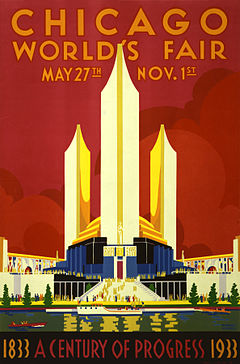
Twenty year old Milt Stein had a tough time in 1932, the depth of the Great Depression. He could find little steady work, though he had enough to eat thanks to living with his parents. Finally, he landed a full-time job at the opening of the 1933 Chicago World’s Fair. His boss told him that he could work every day if he wished (although he didn’t have to), but work and money were so dear that he did — 170 consecutive days from May 27th into November.

http://upload.wikimedia.org/wikipedia/commons/thumb/a/ab/Chicago_world%27s_fair%2C_a_century_of_progress%2C_expo_poster%2C_1933.jpg/240px-Chicago_world%27s_fair%2C_a_century_of_progress%2C_expo_poster%2C_1933.jpg

It was a few years after my dad died when I first realized that these two stories were actually different ways of telling the same morality tale: my dad was “Rain or Shine” Milt Stein, reliable and hard-working, both on the imaginary playing field of his “major league” career and at the World’s Fair performing a real job.

I don’t even know if my father was aware of the connection between these stories.

Dad was an intelligent, but uncomplicated man. If he had lived in a more prosperous time he’d certainly have graduated college. But, as things turned out he worked as a postal supervisor, raised three boys, and was married to the same woman for almost 60 years.

When I was very little, my father played a game of make-believe with me. In those days before everyone had some sort of recording device, he used our floor model vacuum cleaner extension as a pretend microphone for a radio show he fashioned out of his imagination. We would take turns speaking into the nozzle as he interviewed me.

I guess my career in interviewing people goes pretty far back.

http://upload.wikimedia.org/wikipedia/commons/thumb/2/2f/Blue_vacuum_cleaner.svg/200px-Blue_vacuum_cleaner.svg.png

I owe my love of baseball, a sense of fair play, and a strong work ethic to my father; and the fact that years later, each night at bedtime, I would reach into my own imagination as he did with me during our “radio show,” to tell my young daughters a story; a different one nearly every night, especially with my first-born.

Dad was not a perfect man or a perfect father. His three sons all saw too little of him because of his dedication to work and the shadow of the Great Depression on his view of matters financial. He deferred to my mother too much for our well-being.

But it is Father’s Day, not the day to get into his shortcomings.

In 1985 Milton Stein’s youngest brother, my Uncle Harry, died suddenly. I’d not been very close to my uncle, so that loss didn’t much affect me except for the fact that it made my dad’s mortality palpable to me: if Harry, my father’s youngest brother could die, then surely my father would, possibly soon. The family history of heart disease had killed Harry, and my dad had narrowly escaped alive from his own heart attack at age 47, over 25 years before.

In the wake of Harry’s death, I asked my “old man” (now genuinely old) if he’d be open to doing a videotaped history of his life, with me as the interviewer — the “radio show” with the roles reversed. He complied readily.

I still have the four hours of video that my father and I created together. Much of it is filled with the detail of his life, but at a few points my normally controlled dad let down his guard.

Most moving of all was his recollection of returning to the USA from WWII service in Europe. He hadn’t seen my mom for about two years. He called her as soon as he was situated on American soil.

As I’ve detailed elsewhere (Love Letters), the catch in Milton Stein’s voice and the tears in his eyes as he recalled hearing the woman he ached for — the love of his life — would have been unforgettable even without the video evidence.

I’m sure that you can tell I have a soft spot for my dad.

And, lucky me, I have two wonderful daughters who will make me feel like the most important person in the world on Father’s Day.

But, I’m even luckier than that.

They make me feel like it is Father’s Day every day.

—

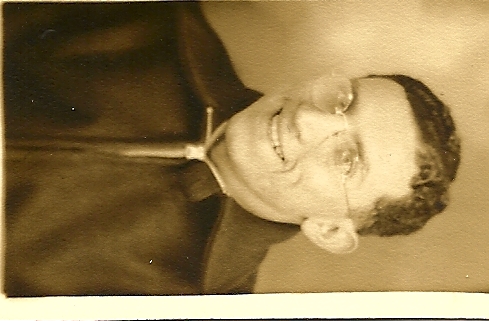
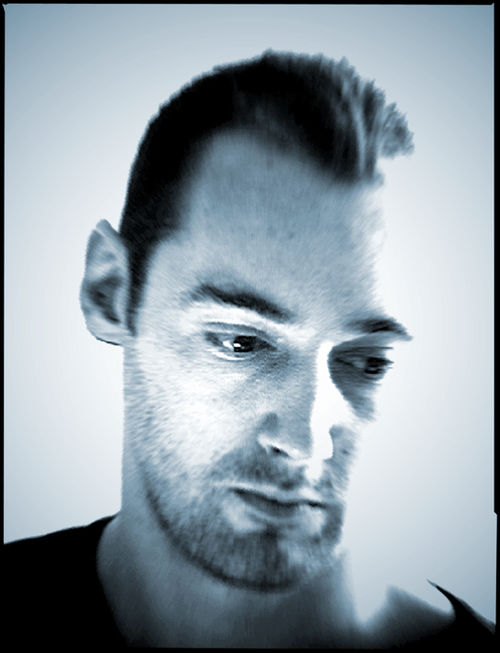
The photos above are all of my father, with the obvious exception of the vacuum cleaner, made available from the Open Clip Art Library; and the poster from the 1933 Chicago World’s Fair, created by Weimer Pursell, silkscreen print by Neely Printing Co., Chicago; both sourced from Wikimedia Commons.

The first picture of my dad is probably from some time in the early to mid-1930s. The second photo looks as though he was a teenager when it was taken.

The night time snap-shot probably took my dad by surprise while he was on a date, before he met his wife-to-be (my mother). It was likely shot by a street photographer, who would have handed my father a numbered envelope that identified the negative. Dad would have had to mail the envelope to the company with payment in order to get developed copies of the picture.

I recall seeing such photographers in downtown Chicago at least as late as the 1960s. Now, of course, just about everyone carries his own camera/phone.

The final image is of the young Stein family in late 1959: my mom and dad and, left to right, Jack, myself, and Eddie.

“I Know How You Feel”

Correct answer? I don’t. How could I?

But I may still be able to be helpful to you without absolutely knowing “how you feel.”

Why don’t I know exactly how you feel? I am not you. I am not your age or perhaps your gender. Maybe I’m not your religion. I wasn’t born in the same place under the same circumstances. My parents made more money or maybe less. They survived the Great Depression well, or badly, or not at all. And so on.

The point is, I’m not in your skin, so I can’t know precisely what it feels like to be there. It’s true, I might well have some idea, perhaps even a very good one. What might that idea be based on?

First of all, we are both human and have a certain set of broadly shared, although not identical life experiences. Secondly, as a therapist, I’ve talked to thousands of people who have told me what they think about certain things and how some events effected them. So I know the range of what is possible in reaction to an enormous number of events. I’ve also read much in the way of text books, been told much by my teachers, and have shared in the richness of emotion, perception, and experience found in great memoirs and novels.

And yet, despite all of this, I am open to surprise. My father died in the year 2000 at the age of 88. Rather suddenly. I’d known he was mortal at least since the time of his heart attack when I was 11. Prior to his death I’d counseled numerous people who were suffering from losses. I listened to their stories. Still, despite dad’s advanced age, I was shocked at the abruptness of his death, the “here today, gone tomorrow” reality of it. And surprised, too, by how tired I was for months afterward. As if some of the life force taken from him had been taken from me too. And even with this experience now well under my belt, even with having “lived” a loss like this (rather than just read about it or heard about it), I can’t say for sure that “I know how you feel” if you tell me about the death of your father. Your relationship with your dad might have been different enough, and his life circumstance different enough to explain some of this lack of identity.

You might ask me: “How then can you help me in grieving my own loss?” In several ways. I can listen to you and bear witness to your pain. I can be sympathetic. I can accept the emotions and stories you share: the varied combination of sadness, anger, exhaustion, and sense of separation from the world that comes with the death of a loved one. I can abide with you, acknowledge your pain, and let you knowI will “be there” until it passes. And, if you will accept the comfort, our relationship will help to reattach you to life, even while you are grieving something that tends to detached you from it.

You will never be exactly the same as you were before your loss, of course. But, you will very likely heal if you share your grief. If you hold it in or try to “move on” too quickly or shed your tears only privately — then your sadness might well pass more slowly or not at all. Human contact in the aftermath of a loss is crucial. A supportive spouse, friend or therapist can help. Time usually does the rest.