When Someone Uses You

http://upload.wikimedia.org/wikipedia/commons/thumb/b/bd/Slot_machine.jpg/500px-Slot_machine.jpg


The people we think of as friends don’t always act that way.

In one case I recall, a patient of mine was in an intimate relationship with a cross-dressing man. She accepted his desire to use some of her clothes, but felt taken advantage of when he didn’t return them.

When you want those close to you who ask for your time, help, sex, grocery pickup, or loans they rarely repay, you may have a problem.

You fear losing them if you become noncompliant.

They only contact you when they need your services.

Finally, you are unsure of yourself—uncertain whether you are generous and kind rather than selfish.

Some folks treat you like a candy machine requiring no coins to deliver the product into their hands. You are thought of as reliable and uncomplaining.

Reciprocity is a word they do not understand.

Imagine you were to list their shortfalls. They might register disbelief and injury at what you said.

At your job, such Individuals might take credit for your work, blame you for their errors, and talk behind your back while smiling when they interact with you.

Sexual partners can come to expect you to make a living for them. This might involve their routine job losses, your having to supply their living expenses, and paying off failed investments.

Providing their post-high-school tuition, or their attempts to start another new, surefire, can’t-miss business that never works out, also add to the financial woes you’re expected to remedy.

Those on the losing end of similar predicaments ought first to reckon with what has kept them from standing up for themselves.

Therapists are used to encountering individuals who have long endured people who take advantage of them, perhaps since childhood.

When they begin to address these one-sided relationships, the results are complicated. They often don’t realize they will be tested as they try both to change the nature of the affiliation and keep it going on a less distressing level.

Maintaining the connection is not guaranteed.

Mark this down. Anyone making a brave, face-to-face effort to repair such relationships must prepare for the worst. Alleged friends may lean against the new version of yourself, hoping to reclaim your earlier, more docile and accommodating form.

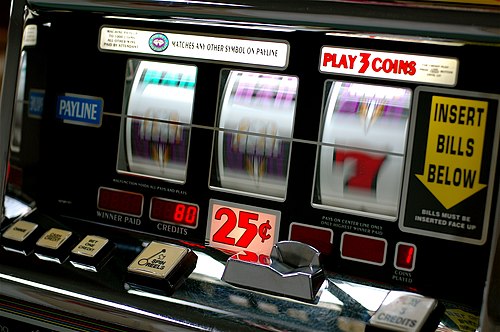
Let’s assume you turn away from being the comrade’s private candy machine and become more like a slot machine.

The candy machine is dependable, reliable, and consistent. Every time your chum inserts his coins and makes his selection, he receives the item he chose. You are the prize he expects, not a chocolate bar.

He assumes you are at his service 24/7, without putting money into your pocket.

The slot machine is a different story.

Your thoughtless pal’s knowledge and life experience tell him that the machine’s failure to pay on one occasion doesn’t mean he won’t be a winner the next time or the time after that.

It might take him a long period of failure before he concludes that the machine is broken beyond repair. Broken from where he stands, but not for the now gifted human who refuses to be someone else’s sucker.

Do you want to be the one who waits on another when he makes a request?

Perhaps you have delivered the desired results on an intermittent (or inconsistent) reinforcement schedule. Reinforcing for someone else, not for you. Don’t do what the other asks intermittently. Doing so only encourages further requests and makes them harder to extinguish.

You used to show up and do your master’s bidding each time he asked. Now you only sometimes fulfill his needs, a choice that still works against you.

By giving him what he wants on occasion, he is likely to do two things:

  1. Try to charm you back into the dutiful individual you were.
  2. Tell you that you’ve changed for the worse, have become selfish and unlikeable, and tries to make you feel bad about yourself in the interest of your returning to duty.

Getting the picture?

If you become consistent and reliable (like the candy machine) in responding to another’s desires and pleadings, the other party will become aware that repeated requests will do no good: the answer shall be NO every time.

And once they have learned this (you will still have to hold your ground before he gives up), your peer makes fewer requests of you after the first.

But if he perceives you as similar to the slot machine, you’re in trouble! He keeps at you because he recognizes one failure at winning doesn’t mean the game is lost. Perhaps the second try will work, or the fifth, or the fiftieth.

This fellow grasps your nature better than you know yourself. He is aware that he has a good chance of wearing you down and pestering you until you are both long gone.

His assault includes threats to stop the friendship you have, so that you return to your previous butler-like self.

The message is simple. Say what you mean and mean what you say. Do what you say you must do.

Every time you give in, it gets harder because you are reinforcing the kinds of behavior in your friend that you are trying to extinguish.

It will work only if you stay the course.

=========

The top image is a Slot Machine by Jeff Kubina from the Milky Way galaxy,

The next image shows Two Grotesque Heads Facing One Another in a Circle by Gaetano Piccini (1727). Both pictures are sourced from Wikimedia Commons.


What Children Need From Parents III: Beware the Extinction Burst!

http://upload.wikimedia.org/wikipedia/commons/1/1d/Albino_Rat.jpg

Popular culture gives us just enough information to be confused.

Not surprisingly, many parents who have never taken a psychology course know it is important to set limits on their children and to be consistent in enforcing those limits. Despite this, a good many parents don’t have the strength of will to withstand the repeated pleading of their kids, or the energy to do so.

If your child wants you to buy him a candy bar or a toy while you are in the store, many parents believe it is simply easier to give in than to listen to the endless entreaties of their offspring.

In some cases it can be too exhausting or overwhelming to have to deal with a persistent child, in other instances the parent might fear losing the child’s affection if the desired treat isn’t forthcoming, and in still other situations the parent feels guilty if he or she deprives the youngster of something.

For all the reasons I’ve just mentioned, I always tell parents before they intend to change their style from one that inconsistently reinforces their child’s misbehavior, they have to be strong enough and knowledgeable enough to be prepared for what comes next.

And what comes next is something pretty powerful.

Its called an “extinction burst.”

First, what is “extinction?” Extinction occurs when a behavior that has been previously “reinforced” (some would use the word “rewarded”), no longer receives reinforcement. Eventually, the organism (animal or person) will stop performing the behavior. Put differently, the undesirable behavior is “extinguished.”

Take, for example, a laboratory rat. You can teach these creatures to press a bar in order to get a food pellet. Rats are good at this. But, if you no longer give the rat food pellets for pressing the bar, the critter will eventually stop doing the bar press. But there is a catch here and it relates to the word eventually. And the catch is what is called an “extinction burst.”

Let us assume your child, like the lab rat, has learned something about how you deliver reinforcers. The reinforcer could be the aforementioned candy bar or toy; it could be money; it could be your attention; it could be staying home from school; it could be a lot of things.

And, let’s further assume that you no  longer want the child to keep pestering you for whatever it is that he wants. Now, remember he hasn’t gotten what he wanted every time, but often enough to learn to be persistent and keep at it until you “break” under the assault.

The “extinction burst” consists of the young-one doing even more of the behavior you want to eliminate at the point you stop reinforcing him.

That might mean he will be louder, or pursue you longer, or repeat more often whatever has worked before. It can go on for a very long time until, finally, the child learns the lesson you want to teach him; in other words, learns he will no longer receive what he wants for his inappropriate actions.

But if you finally do break down and reinforce the child with what he wants during the “extinction burst,” he will have learned an awful truth: “Well, maybe I just have to do this behavior longer or more or louder in order to get what I want.” Indeed, the child doesn’t even have to be able to think or say this to himself.

Even laboratory rats operate according to the same rules of learning, and no one I know has had a very deep conversation with a rat lately.

At least, not the four-legged kind.

Parents sometimes tell therapists they have tried to be consistent and it failed. In other words, that the science regarding “extinction” and setting limits is inaccurate.

But what has really happened in this kind of case is the parent wasn’t ready to deal with the extinction burst. Their inability to tolerate the “burst” of seemingly relentless pestering or complaining eventually led them to reinforce the child once again for the undesirable behavior; and, in so doing, made it harder to extinguish the behavior than when they started.

Had the mom or dad only be able to stay-the-course and resist the child a bit longer, the “extinction burst” would have ended.

The moral of the story is to prepare yourself before changing your parenting-style in an effort to become more consistent. If you aren’t absolutely sure you have the organization, energy, strength, patience, and self-confidence to withstand the “extinction burst,” don’t even try. You will only make things worse.

And don’t expect your child to really believe you when you say “this is the last time I will let you do this” while you once again reinforce troublesome behavior.

Talk is cheap and, like those same lab rats who can’t understand your language, your child will pay attention to what you do and not what you say.

But, if you do have the requisite qualities that any good parent needs and you are fully prepared to hold your ground with your child, you might be quite pleased at how you have reasserted yourself and gotten control over the home situation.

To do that, the earlier you start in your child’s life, the better.

—

You may be interested in the following post on the topic of consistency: What Children Need From Parents II: On Slot Machines and Candy Machines.

—

The photo of an Albino Rat was sourced from Wikimedia Commons.

What Children Need From Parents II: On Slot Machines and Candy Machines

http://upload.wikimedia.org/wikipedia/commons/thumb/b/bd/Slot_machine.jpg/500px-Slot_machine.jpg

Do your kids see you as more like a candy machine or a slot machine?

It’s not a silly question.

The two machines are rather alike. Both require you to insert some money. Both then demand that you engage the machine, set it in motion. In the case of the candy machine, you press a button or pull a lever to make your choice. The slot machine waits for your follow-through on its lever or “arm,” hence the name, “one-armed bandit.”

That is where the similarity ends and the answer to the question becomes essential: do your kids see you as more like a candy machine or a slot machine?

The reason is as simple as it is important. The candy machine is dependable, reliable, and consistent. Every time you insert your coins and make  the selection, it provides you with the item you have chosen. If, by chance, it should not, you would quickly stop inserting coins because your knowledge and experience tell you that no matter how many more coins you deposit, the machine will not do what you want. It is broken.

The slot machine, however,  is another story. Your knowledge and experience tell you that the machine’s failure to provide you with winnings on one occasion doesn’t necessarily mean that you won’t be a winner the next time, or the time after that. It might take you a very long period of failure and much expenditure of hard-earned silver dollars before you would come to the conclusion that the machine is broken. The machine, when its working correctly delivers winnings on an intermittent (or inconsistent) reinforcement schedule.

Getting the picture? If your children see you as consistent and reliable (like the candy machine) in responding to their requests and their pleadings, they will know that asking for what they want more than once will do them no good: the answer will be the same on the 10th request as it is on the first. And once they have learned this, they will make very few additional requests of you beyond the first one.

But if they see you as similar to the slot machine, boy are you in trouble! They will keep at you, over and over, because they know that one failure at winning doesn’t mean the game is lost. Perhaps the second try will work, or the fifth, or the fiftieth. They will know you better than you know yourself. Simply put, they will know that they have a good chance of wearing you down so that they can have the toy, the TV show, the attention, or the food they want; they will know that the punishment you are trying to enforce also can be changed, maybe not by pleading their case only once, but by repeated appeals to you. Your goose will be cooked.

Kids, of course, have more energy for this sort of “back and forth” than most parents do, so time is not on your side. And the longer they have experienced your inconsistency, the longer it will take for them to “unlearn” what you have taught them about yourself.

The message is simple. Say what you mean and mean what you say. Do what you say that you will do. It will easier on you and better for your children. But before you get started, be prepared for the “extinction burst.”

What is that, you say? I’ll cover that topic in my next blog.

—

The above image is a Slot Machine by Jeff Kubina from the milky way galaxy, sourced from Wikimedia Commons.