Finding Your Voice

Many struggle to fathom why they fail to act when it would benefit them. They might recognize the pattern, but do not understand where it originated. “That’s just me,” they think, or “That’s for someone else to try, not I.”

Thus, self-assertion takes the shape of a mountain in the distance, intimidating to the point of premature defeat.

Such a life is fear-based, explained in the language of rationalization.

The composer John Cage created a piece entitled “4’33.” It consists of a performer coming on stage, sitting down, and waiting four and a half minutes without making a sound, though he holds his instrument. 

Only then does he bow and depart. As Cage wrote in a poem, “I have nothing to say, and I’m saying it.”

“4’33” is one thing. Letting your lifetime pass is another. This is the time to speak, as it always is, as it always has been.

Be careful of small talk when it becomes too small. People are increasingly afraid of mentioning anything controversial. If you want to be interesting, you might have to say something worth considering, perhaps after some study.

You can view this as a threat or an opportunity. Individuals with worthwhile and well-expressed ideas may not be invited to the next party, but could be the show’s star.

If you see the world as a place full of adult-version playground bullies, you have a problem. It’s not that they don’t exist, but that we assign them unwarranted credit.

Would-be bullies think of themselves as the Big Bad Wolf, able to blow down any home. The reverse can be true. Most of the blowhards can’t take a blow.

Practice saying no. No is a complete sentence, not requiring explanation. Learn to repeat it and take back your life. If you want some reinforcements, find the growing number of people who realize fighting back is the antidote for anxiety.

Walking together is enlivening. Sometimes, around disagreeable or threatening people, prepare to walk away. Again, no words are required, but try to have transportation nearby.

Living in dread of a repetition of what has happened, what is happening, or what might yet happen offers unhappiness and a self-fulfilling prophecy. Past, present, and future are compromised thereby.

The anticipatory anxiety squeezes out all room for joy. Make friends, collaborate with both the nervous and the unafraid. Some will be buddies with whom you laugh a lot.

You have been here before. Do you wish to be subservient the rest of your life? Part of life involves taking things on. The only question is which ones and when.

Hiding is no escape from worry. Those who seek shelter from our chaotic world discover unkind bosses, dismissive parents, unfair competitors, teachers who are petty dictators, and abusive mates who still invade their path.

You gain strength, courage, and confidence by every experience in which you stop to look fear in the face. You are able to say to yourself, ‘I lived through this horror. I can take the next thing that comes along.’ — Eleanor Roosevelt

Consider being scary periodically. It is another antidote for terror.

The point here is to take control of something, however small or intimidating, and find agency within. Do not wear a “Kick Me” sign on your back.

Remember what you have told your children.

Imperfect action takes you anywhere you want faster than perfect inaction.

The old saying tells us, when the going gets tough, the tough get going.

==========

The top image is Norman Rockwell’s Freedom of Speech from The Four Freedoms. Below it follows Eleanor Roosevelt, from 1949. Both are sourced from Wikimedia Commons.

Giving Too Much: When Others Use You

Can you be too sweet, too giving, as if the goal were to disadvantage yourself and permit friends to use you routinely?

Is excess yielding fun? Do you defer as a matter of routine, forever allowing people to go first, hoping this makes you saintly?

At day’s end, are you at the end of the bread line?

Have you become invisible?

How might you determine whether you are providing too much?

Here are some signs your social life appears too much like social work, caring for another to the point you fail to take care of yourself:

  1. Are you the person who listens to others’ problems, the first person your acquaintances go to? By itself, this might indicate you are kind and sympathetic. But these relationships change to problematic when they do not go both ways.
  2. Do the same people impose on you unreasonably? Are you regularly asked to drop your needs to help them? Have the same individuals called late at night over minor upsets?
  3. Beyond words of thanks for your kindness, do the beneficiaries of your generosity express gratitude in more than words? Do you receive greeting cards, flowers, or candy? Dinner?
  4. Are you disappointed when “friends” contact you only when something from you is needed, without offering invitations to get together when their days are sunny?
  5. By your estimate, does your only value consist of working as an errand boy? If you failed to “give,” would your social life collapse? Do you doubt your worth beyond the ability to assist or console?
  6. Might relationships begin with the other’s gratitude for your kindness but move to a point where your generosity is taken for granted as an entitlement?
  7. Are you exhausted by the demands and requests of others?
  8. Can you say no when something is asked, whether this involves your time, money, or a ready ear?
  9. Do you fear being dropped from the A-list if you should become less available to them?
  10. Do you worry about hurting others if you refuse a request?
  11. Do you hesitate to express strong opinions? Are you afraid of rejection or criticism if you disagree?
  12. Are too many of your friends troubled souls? When you consider your contacts as a group, do they have more than their share of problems? Do you have a reputation for helping that draws more people to seek your assistance?
  13. Do you believe saying no is selfish or inconsiderate? When you don’t perform the required task, are you accused of being too much for yourself? Do you endure guilt regardless?
  14. Were you told you were selfish growing up?
  15. When unappreciated, might you believe you haven’t done enough?
  16. Do you make excuses for the other when your efforts are unappreciated?
  17. Do your friends make excuses that they don’t accept from you under similar circumstances?
  18. Are you unable to assert yourself with those who use you? If you do speak up, are your concerns dismissed?
  19. Do you hesitate to end toxic relationships?

If you have answered yes to several of these questions, you might have problems with self-confidence and an inability to assert yourself.

A dilemma exists when others regularly take advantage of such individuals as you. Might you suffer from a fear of abandonment?

This style of relating to people doesn’t go away. Consider psychotherapy if you recognize yourself in the above examples.

Life is easier and more fulfilling when those claiming to matter to each other show concern in action. The sooner you address this problem, the more likely your life will provide satisfaction.

As an old friend likes to say, “Buddies don’t count.” They don’t keep track of helping the other or paying for a cab ride. Keep in mind, however, that this can be taken too far. My buddy would tell you so.

===============

Both images above come from Wikiart.org/ The first is called Two Lotus by Huang Youngyu. The second is entitled Opera Figures by Ding Yangong.

Signs of Insecurity: Behavior That Reveals a Lack of Confidence

Here is a post many people have found useful. This version has been updated since its publication in 2010:

How to Make Yourself and Those You Love Miserable

http://upload.wikimedia.org/wikipedia/commons/thumb/a/ae/Bertram_Mackennal_-_Grief.jpg/500px-Bertram_Mackennal_-_Grief.jpg

It is easy to find on-line guidance to a better life. But the recommendations contained on those self-help web sites (and in books that aim at the same audience) have become almost too commonplace to make any impact.

The remedy? Something that is just the opposite: a list of suggestions on how to make yourself and others miserable. Of course, I’m not wishing that you follow these directions. Rather, I’m hoping that some of you who might yawn at still another list of “things to do” to improve your life, will be struck by the things you already do that make it much worse.

Here goes:

  • Regularly compare your material and financial circumstances to others, especially to those who are doing better than you are.
  • Make a list of all the people who have wronged you over the years and try to remember exactly how awful they made you feel. Think about those who owe you an apology. Forgive no one. Let no slight be too small to dwell on it.
  • Carry on a vendetta. Stay up late at night planning and plotting how you might get back at people. Stay angry. Let all your hatred out in blistering, profane, and cowardly “flames” behind the mask of the Internet.
  • Give your children gifts rather than your time. Set no limits on them. Then wait until they are teenagers and wonder why they are depressed or rebellious.
  • Curse the darkness, the winter, the cold, the rain, the frailty of the human condition, and all the other things that you can’t change.
  • Get impatient with the people who are walking in front of you at a snail’s pace, the couples whose bodies and shopping carts block the entire grocery aisle, and the slow progress of the check-out line at the store.

http://upload.wikimedia.org/wikipedia/commons/thumb/7/74/John_F._Kennedy_Inauguration_Speech.ogv/mid-John_F._Kennedy_Inauguration_Speech.ogv.jpg

  • Make no contribution to the betterment of humanity. Assume an attitude of entitlement. Figure out how to avoid work. Idle away your time. Ask “what your country can do for you,” not “what you can do for your country” in opposition to JFK’s 1960 inaugural address admonition.
  • Forever rationalize your dishonorable or questionable behavior or deny it altogether, even to yourself.
  • Persuade yourself that you need to wait until you feel better before you do the difficult thing that you have been postponing. Keep waiting, even if the time never comes when you believe that you can take action.
  • Do not let conversation with your spouse or children get in the way of watching TV. Keep the TV on most of the time, most importantly at family dinners. If possible have a television in every room.
  • Ignore the beauty of a spring or summer day, the newly fallen snow, and the cheerful laugh of small child. Stay in-doors as much as possible, year round.

http://upload.wikimedia.org/wikipedia/commons/thumb/d/d8/Sommerblumen01.JPG/240px-Sommerblumen01.JPG

  • Allow yourself to be upset by overpaid, under-performing athletes who doom the home team to continued failure. Yes, Cubs fans, this means you!
  • Treat emotions of sadness, tenderness, and hurt as your enemy. Push them away and thereby alienate yourself from yourself. Curtail grieving and try to deaden your feelings to the point of numbness.
  • Work up as much hatred as possible toward opposition political parties. Listen to every talking head who wants to whip you into a frenzy.
  • Expect justice and fairness in all things.
  • Drink too much, drug too much, and spend every extra minute on the web or playing computer games instead of having direct human contact with someone who is in the same room with you. Further distract yourself from your problems by watching TV and listening to music. Escape reality.

http://upload.wikimedia.org/wikipedia/commons/thumb/4/4b/Jack_rose.jpg/120px-Jack_rose.jpg

  • Keep using failed solutions to your problems even though they haven’t worked in years, if ever.
  • Behave in mid-life the way you did as a young person; or, if you are a young person, behave the way you did as a child. Do not reflect on or learn from experience which might teach you something new.
  • Use others instrumentally. That is, value them only in terms of what they can do for you. Lie, cheat, betray, and steal from them if that serves your interests. Then wonder why people mistrust you.
  • Spend as much time as possible worrying about the future and regretting the past, rather than living in the irreplaceable moment.
  • Aim low. Avoid the disappointment that comes with high expectations. When the going gets tough, quit.
  • Train yourself to be a miser. Practice selfishness. Hold on to your money as if you expect to live forever and will need every last cent. Make Scrooge from A Christmas Carol your hero.

File:Chicklet-currency.jpg

  • Judge others less fortunate than you are by using the phrases “he should have known better,” “he didn’t try hard enough,” and the like. Assume that all people deserve whatever misfortune befalls them. Disdain compassion, but remain puzzled when others call you heartless.
  • Indulge in every available excess: unprotected sex, food, spending, smoking, caffeine, etc. Don’t exercise. Ignore medical advice and, even better, avoid going to your doctor. Treat your body badly and then wonder why it betrays you.
  • Be sarcastic, passive-aggressive, and indirect whenever you are injured rather than looking someone in the eye and expressing your displeasure in a straight-forward fashion.
  • Avoid facing things. Give in to your fears, anxieties, and phobias.

http://upload.wikimedia.org/wikipedia/commons/thumb/5/5b/Children_in_Sonargaon.jpg/240px-Children_in_Sonargaon.jpg

  • Don’t let anyone know you well. Believe that your vulnerabilities will always be used against you. Keep social interactions on the surface. Eschew intimacy and maintain your distance, thinking that this is the best way to avoid personal injury. Trust no one!
  • Assume that the normal social rules regarding fidelity to friends and lovers don’t apply to you. Hold on to a double-standard that favors you.
  • Insist on having your way. Don’t compromise. Don’t consider others’ needs or wants. Assume a position of moral superiority, self-righteousness, and arrogance in things religious, political, and personal.
  • Do everything others ask of you. Rarely say “no.”
  • Try to control people and events as much as you can. Don’t go with the flow. Micromanage. Hover over others. Repeat complaints to them incessantly. Remind subordinates, friends, spouses, and children of small errors, even if they are ancient history.
  • Make no significant effort to better your life. Depend on others to take care of you and make all significant decisions for you. Be a burden.
  • Raise all your children exactly the same way even though it is obvious that they are not all the same.
  • Imitate vampires (who have no reflection in the mirror and therefore keep their mirrors shrouded) by never really looking hard at your own reflection in the looking-glass. That is, never take a frank inventory of your strengths and weaknesses or the mistakes you’ve made. Be like the evil queen in Snow White, whose only desire was that the mirror would tell her that she was “the fairest of them all.”
  • Whenever you talk with someone, wonder what they really mean, pondering the possibility that they find you boring, stupid or physically unattractive.
  • Feed yourself on gossip more than food. Delight in talking about others behind their backs.
  • Value beauty, appearance, reputation, and material success over integrity, knowledge, kindness, hard work, and love.
  • Try to change others, but do not try to change yourself. Take no responsibility for your life circumstances, instead blaming those who have stymied you.
  • Stay just as you are regardless of changing life conditions. For example, if wearing warm clothes worked for you when you lived in Alaska, continue to wear them when you move to Arizona in July.

http://upload.wikimedia.org/wikipedia/commons/thumb/3/37/Enrico_Caruso_VI.png/240px-Enrico_Caruso_VI.png

  • Don’t forgive yourself. Maintain the most perfectionistic and demanding moral and performance standard even if you are not a brain surgeon. Stay up at night castigating yourself over every imperfection, no matter how small.
  • Make a list of all the things that are wrong with your life, all the opportunities lost, every heartbreak, and the physical features and bodily changes that you don’t like. Stew in your own juices. Salt your wounds. Pick at your scabs.
  • Take everything personally.
  • Permit friends, family, and co-workers to walk all over you. Do not stand up to them for fear of causing offense and disapproval.
  • Discount your blessings. Concentrate on the dark side of life.
  • Never even consider going into psychotherapy. Assume that this is something only for those who are weak and that anyone who needs to grapple with emotional issues in counseling demonstrates a failure of will power and logic.

With thanks for the inspiration for this essay to Dan Greenberg and Marcia Jacobs, co-authors of a very funny, but ironic book entitled How to Make Yourself Miserable.

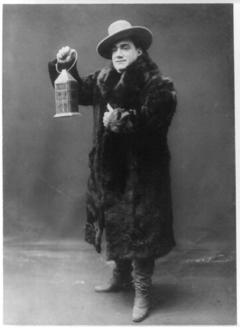
The top image is Grief by Edgar Bertram Mackenna. The video frame that follows is from John F. Kennedy’s 1960 inaugural speech. The next image is Sommerblumenstrauss by A. Gundelach. The following photo by Andygoodell is A Jack Rose Cocktail. The fifth picture is of two children in Bangladesh by Nafis Kamal, while the sixth is called Chicklet-Currency courtesy of the U.S. Department of the Treasury. After the image from Disney’s Snow White, is a 1911 photo of Enrico Caruso, the great Italian tenor. All but the Snow White frame are sourced from Wikimedia Commons.

Signs of Insecurity: Behavior That Reveals a Lack of Confidence

http://drgeraldstein.blog/wp-content/uploads/2010/07/insecurity.jpg?w=225

Insecure people often reveal their self-doubt without being aware of it. Indeed, a wise observer can “read” another individual. For example, members of the Chicago Symphony Orchestra have told me they can tell whether a new conductor is competent and talented within 10 minutes of the beginning of their first rehearsal with him. What follows is a short list of behaviors that suggest insecurity:

  • 1. Are you able to give a compliment? Even more important, can you graciously accept one? The latter behavior tends to be difficult for someone who is unsure of himself. He might blush or become flustered. Alternatively, he is prone to dismiss the validity of the praise, instead telling you why it isn’t true. What should one do if complimented? Smile and say “Thank you.” Nothing more.
  • 2. The ability to maintain eye contact is hard for many individuals who lack confidence. They will turn away or look down, but rarely hold the gaze of the other by looking into his or her eyes.
  • 3. The self-doubting person tends to apologize when no apology is necessary. It is as if she expects to be reproached or is afraid to give offense; so, she prophylactically tries to excuse any possible mistake to avoid such a response.
  • 4. Answering a question with an upward inflection of the voice has been done by everyone. The person being questioned doesn’t have certainty about his answer, so he replies with a tone betraying his insecurity. Since I originally wrote this piece, a name has been given to the practice: upspeak.
  • 5. Men and women who are uncomfortable with sharing personal information for fear of being judged will oft-times turn the conversation to a different topic, away from anything that might make them vulnerable or reveal too much. This is also called “changing the subject.”
  • 6. One way of inoculating yourself against criticism is to joke at your own expense. Do this often and others may conclude you believe you are flawed.
  • 7. Do you have trouble making a decision? The comedy team “Cheech and Chong” (I’m not sure which one) said: “Taking responsibility is a lot of responsibility.” If you automatically let others choose the restaurant, movie, and other activity, you are either easy-going and good-natured or don’t want to be held accountable for making the wrong choice.
  • 8. Do you state strong opinions? Those who avoid doing so might maintain the peace — often a good thing — but some fear drawing fire and unwanted attention.

Before I give you nine more signs of insecurity, I’ll say what might cause the condition. Many possibilities. Critical or neglectful parents, poor academic skills, frequent moves making you “the new kid” (especially if you are introverted by nature), learning disabilities and ADHD, being “different” in some fashion (size, shape, color, religion), thinking of yourself as the “poor” kid in a community of the affluent, sensing you are the average child in a school filled with bright youngsters, feeling ashamed of your parents or residence, frequent rejections, getting fired (whether deserved or not), clumsiness, a history of abuse or bullying; physical unattractiveness, deformity, or injury, etc. For a more thorough discussion of these causes, click here: The Causes of Insecurity. Now back to the list of signs of insecurity:

  • 9. Do you laugh nervously in social situations? It is another behavior betraying self-consciousness.
  • 10. People will appraise you harshly if they see you bite your nails or they appear bitten.
  • 11. Are you self-effacing, placing yourself at a disadvantage — letting others go first, speak first — reluctant to raise your hand? Do you hesitate to take your turn? Do you sacrifice your interests as a matter of course? Insecurity can make you wait until the opportunity before you is lost. Excessive deference displays little regard for yourself, even if some amount can be a sign of good breeding and consideration.
  • 12. Are you nervous eating in front of others? Do you fear dropping something, displaying poor table manners, or making a mess? You probably won’t, at least not more than the rest of us.
  • 13. Can you make phone calls without trepidation; especially those in which you need to introduce yourself, correct a problem, or speak to an authority? Too much discomfort in anticipation of these actions can reveal your sense of uncertainty.
  • 14. Might you make too many excuses? Those who are unsure give explanations where none are required. Imagine you order an entrée at an elegant restaurant and the waiter asks whether you want an appetizer to start. You explain why you don’t. Some folks offer multiple excuses for what they do, anticipating criticism. If you must give a reason, limit yourself to one. The more you give, the more uncertain (or dishonest) you sound. For  example, “I can’t come to the party because I have a stomach ache and my car broke and I need to study.” One reason will be more convincing. You needn’t explain yourself as often as you think.
  • 15. Insecurity can be suggested by hesitation to ask for a favor or an inability to say “no.” Anticipation of rejection or disapproval is the motivator for both of these problems with self-assertion. By contrast, a self-assured person will not believe the relationship (or his own value) is dependent upon going along with someone else’s wishes or fulfilling the desires of others as a matter of routine.
  • 16. Do you make frequent requests for reassurance? A few examples: “Does that make sense?” “What do you think?” “What would you do?” “Do you think that is a good idea?” “Do I look OK?” Must you have sex to prove your partner remains interested in you? If you are self-assured, you won’t implore your lover to calm your doubts and remind you, over and over, in words and deeds, of your desirability or intelligence.
  • 17. Last one. Here insecurity takes a different form. This person wants the spotlight at all times, the better to be told “You are the fairest of them all!” She or he pushes for recognition, strutting about the stage we call life; checking to see where he stands and what others think of him. Bragging and display become a full-time job. Perhaps he was the class clown in grade school, but now he drops names to prove his importance and get your attention. His inner emptiness must be filled and refilled, like a bucket with a hole in it. Such people are plagued by narcissism as well as insecurity, a troublesome combination. There is hell to pay for those who expose the pretender’s flaws: lacerating attacks against any critics. If you are this variety of insecure person, I doubt you will admit it even to yourself. If you meet such an individual, run!

I suspect you get the idea. Please add an item if you like. You can use the list in one of two ways: to consider whether you are insecure or evaluate the confidence of those around you. Of course, you are the only one whose self-confidence you can change.

You may find the following related post of interest: Signs of Self Consciousness: When the Mirror Isn’t Your Friend. Also, you might want to read  The Upside of Insecurity or, this very recent post: Insecurity and Our Preoccupation with Appearances/

The image above is Insecurity by Lacey Lewis: http://www.lacey-lewis.com/ With permission.

The Power of “No”

File:No sign.svg

Most people don’t realize how much power they have. Or how easily they give it away.

The key is to be able to say “no.” And to hold to that position without alteration.

I learned how easily I could give it away in graduate school.

A door-to-door salesman rang the bell of my apartment. He had a list of magazines. Did I want to subscribe to any of these?

The simple and direct answer was “no.” Had I said this and held to it steadfastly, his time wouldn’t have been wasted and my money, of which I had very little, would have been saved. Instead, I felt that I had to give him a reason, an excuse. I didn’t of course.

But, I chose to say, “Gee, its too bad you don’t have Sports Illustrated on your list.”

“Oh, but I can get that for you!”

I was sunk. I didn’t really want to buy anything. But I’d given the young man, probably no older than I was, an opening. And now I was committed to purchase a thing I didn’t need.

Well, I suppose I was young, inexperienced, and immature. All true. I allowed myself to be held hostage to my insecurity, a feeling of guilt, a need to explain myself, even though it wasn’t required.

If you must have the approval of others, if you believe that you are duty-bound to give them a reason for your actions, then these situations present you with a problem. So too, if you fear confrontation. If you think someone will only provide approval if you consent to their wishes, then you will leave the interaction as the other’s thrall. In effect, the keys to your life and the certificate of ownership will be the property of someone else.

But if you don’t let them or their opinion of you count for so much — if you can live with their unhappiness and don’t feel the need to convince them of the rightness of your position — you will come out of the interaction still in possession of yourself, as opposed to being the possession of your counterpart.

Remember, in many situations you don’t have to persuade the person across the table of your position. You just have to hold to it.

Short of pulling a weapon on you, there is usually very little that people can do to require you to do something that you don’t want to do.

Unfortunately, there are quite a number of people, especially female, who are able to say “no” in defense of their children, but not as an advocate for themselves; all the more, they are prepared to go on attack if they believe that those same little ones have been ill-served by someone else. And yet, when it comes to defending themselves, these moms have trouble. Put simply, it comes down to the fact that they don’t value themselves very highly and therefore can’t easily assert themselves. But for a person they do value, especially their flesh and blood, they are transformed.

If you can’t yet do it for yourself — say “no,” stand your ground — you’ve got some work to do. Your life will be much more the life that you want it to be, if you prevent others from taking you in their direction against your wishes. Think of all the favors you’ve done that you wanted to avoid, the responsibilities you took on at work that really shouldn’t have been yours to take, and (for some women only) the men whose attention you suffered unnecessarily.

If you can’t prevent these things on your own, psychotherapy can help you to learn to employ the word “no” to great effect. It allows you to examine the reasons for your inability to be assertive and gives you tools (and practice) in how to live in a new way.

The ability to say “no” is extraordinarily empowering.

This is one thing you shouldn’t say “no” to.

The above image is by Fibonacci from Wikimedia Commons.

Relationship Warning Signs: Fighting the Last War

http://upload.wikimedia.org/wikipedia/commons/thumb/e/e6/Oscar_Wilde_portrait_by_Napoleon_Sarony_-_albumen.jpg/240px-Oscar_Wilde_portrait_by_Napoleon_Sarony_-_albumen.jpg

Relationship choices are a little bit like the old military saying that generals are always preparing to fight the last war. Military men are apt to focus closely on past mistakes, without realizing the dangers of a new strategy, perhaps inadequate for whatever lies ahead.

In the same way, we try to avoid past relationship mistakes, without being aware our strategy might produce new, unfortunate problems in the future.

Let’s take an example. Suppose your last relationship was with an authoritarian, demanding, insensitive, maybe even somewhat abusive man. Now you want a lover who won’t be like him. Now you want someone who won’t push you around in any sense of the word — a companion less threatening and more accommodating. This might work well – for a while.

But, perhaps gradually, you will notice the same person who gives-in to you is also giving-in to others; not standing up for himself or for you; spending too much time away from you, instead doing favors for his parents or his friends. Perhaps you will conclude he is too passive and, that while he won’t often say “no” to you, you must push him to do the things you want.

Or maybe your last boyfriend wasn’t ambitious and industrious. You had to lend him money or serve as his source of financial support. You got tired of this of course. Now, you only choose to date someone who is hard-working and successful. You pick a workaholic mate and hardly ever see him, and you must do the job of raising the children pretty much on your own, even if the joint bank account is substantial

Or the discarded mate was easy with money and piled up debt. So now you select somebody with a dead-bolt lock on his wallet, cheap in the extreme, frugal to the point of wanting an accounting of every dollar spent by you, and nearly every small purchase the two of you make is treated with the gravity of buying a house.

Or your last companion didn’t pay much attention to you, seemed more interested in being with friends, playing football and computer games. So you target someone who wants to be with you nearly every minute and gets jealous when you even look at another man – a mate who requires an itinerary of your daily activities and seems interested in controlling you more than loving you.

Last but not least, the boring, by-the-book, ever-cautious man who you trade-in for a dashing, spontaneous, risk-taking, unpredictable, funny, charming, devil-may-care partner; later discovering he is reckless, unreliable, and inconsiderate.

The list goes on. The point is, as with so many of life’s offerings, the opposite of what you have is often as bad or worse, only in a different way.

Best to consider all sides of the human mating grab bag and not pick someone at either extreme of most any dimension.

Just like King Midas, who wished for the power to turn everything into gold, sometimes you must be careful about getting too much of what you thought would be a good thing.

Or, as Oscar Wilde said, “there are only two tragedies in life: one is not getting what one wants, and the other is getting it.”

The image above is Oscar Wilde in a photographic portrait by Napolean Sarony from about 1882, sourced from Wikimedia Commons.