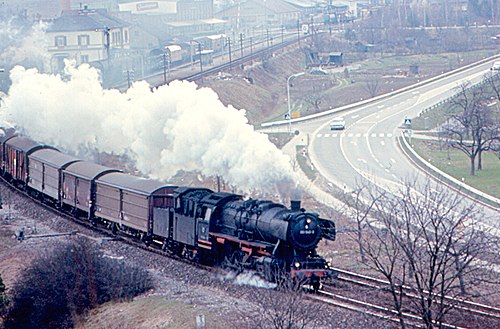
When Bloggers Stop Blogging

A substantial number of bloggers, like the “old soldiers” in the antique song, “never die, they simply fade away.” Some are captured by other priorities or overtaken by demanding events. A few write books or publish elsewhere. And some, I believe, are “written out.” At least for a while.

I’ve posted in this space since 2009. Almost 600 essays. From the beginning, I wondered how long I’d have something new to say; well-crafted ideas bright people might want to read. But especially to spill out my brain for my kids and future grandchildren. To leave, in the composer Bela Bartok’s words, “an empty trunk.”

I didn’t liken myself to Shakespeare and, while I note some improvement in my writing , my belief hasn’t changed. Though several dedicated readers suggest I should compile the best of these in a book, we are overwhelmed with print already. Nor does ambition drive me to take on such a task.

I wrote while recuperating from surgery. I scrawled when embroiled in difficult moments in my life. Words appeared on the page in times happy and sad, when energetic and tired, when I was kind to the people I loved and when less than my best.

That’s the way writers are. Not all of them are “called” to write, but they must expel whatever is inside. Compulsion describes the act. A real writer, adept or not, doesn’t wait for the conditions to be perfect. His industry summons the muse, rather than being summoned by it.

I have less interest now, I’m afraid. The lure of other parts of my life draws me more. I don’t intend to abandon the blog, but I imagine I will space out my attention to the space.

Thank you for reading. Please continue to read. Your kind words are appreciated. Thanks for disagreeing with me or asking questions. I’m not disappearing and I’m not dying. Whether my posting life “fades away,” I cannot predict.

Remember, you can still peruse 10 years worth of my efforts.

Or read Shakespeare.

I won’t be jealous.

—–

The top Cartoon of Skywriting Aircraft by NASA was sourced from Wikimedia Commons.

Pondering Gratitude and the Admirable, Imperfect Life of Morris Abram

512px-heart_of_my_heart_2529992211

A boost to the spirits can come from an unexpected place, even an obituary. The March 17, 2000 account of Morris Abram’s life, as written by William Honan in The New York Times, included this:

Mr. Abram was a young lawyer in Atlanta specializing in railroad cases in 1949 when he began a 14-year struggle to overturn a Georgia electoral rule that gave disproportionate weight in primary elections to ballots cast in predominantly white rural areas at the expense of those cast by urban blacks. The rule perpetuated segregation in Georgia.

Mr. Abram felt the sting of the rule in 1953 when he sought the Democratic nomination for Congress from the Fifth District. He ran on a platform that urged the desegregation of schools and carried populous Fulton County, which includes Atlanta. But he lost two smaller rural counties that had disproportionate weight under the rule and lost the election.

Over the years Mr. Abram helped bring cases against the rule to the United States Supreme Court. On March 18, 1963, Attorney General Robert F. Kennedy, who had been briefed by Mr. Abram, argued the case before the Supreme Court. In a historic ruling, the court declared the rule unconstitutional because ”within a given constituency there can be room for but one constitutional rule — one voter, one vote.”

A remarkable story, then, both for the achievement and the time and persistence it took. Abram advantaged not only those who heard of him in his lifetime, but those who did not. Countless others benefit today. Abram’s name fades, but his work remains. Thanks to him we are closer to a country where “all men are created equal,” even if not yet close enough. As a friend of mine, Rich Adelstein, likes to say, we are all the beneficiaries of people we never met whose names we do not know.

—

Life, however, rarely stops in the moment you achieve something of genuine greatness or personal importance. Glory is fleeting, the river flows on. Abram faced many ups and downs in his future, professional and relational: failed jobs, marital problems, and more.

In 1973, Mr. Abram was told he had acute myelocytic leukemia. His fight against the disease impelled him to write an autobiography, The Day is Short, in 1982.

Abram lived another 18 years after publication of his story and died of something else. He was 81.

At the conclusion of The Day is Short, Abram offers this:

I have never been a cautious man, and in a good cause, I would be more willing than ever to take risks. As my remission continues, I notice that I am more inclined to consider the long-term consequences of my actions. But I know that time is limited, and I tend to be in a hurry. I am daily reminded of an ancient Hebrew text that says, ‘The day is short, the work is great … It is not thy duty to complete the work, but neither art thou free to desist from it.’

The work to repair yourself also repairs the world. Those who find therapy self-indulgent misunderstand. In making ourselves better we impact the life around us. Perhaps in not so grand a way as this small-town Jewish man’s 14-year struggle to right injustice, but a contribution still. Even Abram’s battle to defeat disease provides an example; as does his sense of urgency in doing his work because, as he reminds us, “the day is short.”

abram_cropped

Morris Abram was grateful for his usefulness to others, offering us still another lesson in how to live. Therapists benefit from their usefulness, too. All of you have my thanks for spending time with my words. I am heartened that you do.

I have been told there are those who look to me for answers, some for encouragement, some to enter one therapist’s mind. Perhaps you are drawn by an unaccustomed frankness about difficult and complicated topics. I hope you enjoy my peculiar slant on a variety of matters or my effortful attempt to achieve an artful turn of phrase. I am aware more than a few find comfort here and I am pleased to provide it when I can. Then too, I try to entertain.

I know my essays are sometimes unsettling. I would apologize, but I am indeed doing so knowingly, though not always with perfect tact. My intention is to get you to think in a new way. I hope I succeed from time to time. This virtual cubby-hole is designed as a safe and civil place in a world not always so. If my provocations do not shatter your trust in me — well — then I’ve accomplished my goal. I am on your side.

To those who feel dismissed in life, know that I and others like myself take you seriously. I think of you as I write. My effort is to speak to you as if we were face-to-face, eye-to-eye, without condescension. A handful of you are friends, some ex-patients, some fellow-bloggers. All of your comments are appreciated and frequently enlightening or touching. I’ve been lucky to make online friendships along the way because of them. All of you — silent or not, known to me or not — are welcome here.

Without people who pay attention to us there would be no therapists.

So thanks for taking me seriously, too.

The best of good wishes for the best possible New Year.

—

The top photo is called Heart of My Heart. It is the work of Koshy Koshy as unloaded by Jkadavoor to Wikimedia Commons.

A Dozen Ways to Avoid Regret (and a Warning about Endless Therapy)

512px-claude_monet_impression_soleil_levant_1872

When we suffer regret we are, by definition, occupied with the past. We lament things we did or didn’t do, time lost, vanished opportunities. Perhaps, however, it would be useful thinking about how to avoid regret going forward. Here are a few guidelines:

  • Recognize life’s limitations, learn from failure, and don’t stop trying. Anyone with imagination can think of several possible lives to lead, places to go, experiences to pursue. If  you are honest you can even envision a different spouse or children, no matter your great good fortune in those you have. Thus, the world is like a candy store in which only so much consumption of sweets is possible, to borrow a metaphor from Haruki Murakami and Forrest Gump. The earlier you recognize this the more you are forced to refine and narrow your choices. Moreover, you must reach for some of those candies without ever having tasted them and before obtaining experience in how to grasp each one artfully, a guarantee of mistakes.
  • We can only learn from disappointments and try again. Live your values as best you can: dive deep into those few candied heaps of life you deem worth the effort in the short time permitted. Don’t end your days saying, “I should have” or  “Why did I waste my time on … ” Or, worst of all, “Why didn’t I?” Michael Jordan, basketball hero, said:

I’ve missed over 9,000 shots in my career. I’ve lost almost 300 games.Twenty-six times I’ve been trusted to take the game-winning shot and missed. I’ve failed over and over and over again in my life. And that is why I succeed.

  • Improve your choices. Moving through life, take stock, reflect. Write down your analysis, perhaps every five or 10 years. Look where you’ve been, where you are, and where you would like to go. I’m talking about what career you might still pursue, what you’d like to learn about, how much of yourself you hope to devote to relationships, what personal characteristics you still wish to alter, where you’d like to live, what you’d like to see, and the legacy you might leave behind. No one can do everything, be everything. Too much candy, too little time, too much indigestion.
  • Since we can’t invent more hours, we are left to determine how best to spend our allotment. If you hope to become World Champion in the art of perusing and responding to tweets, stop reading this now. You are wasting minutes you could devote to your curious focus on 280 characters or less. For myself, I watch TV/video less than an hour a day on most days, except for those in the baseball season! Why? Because I value the time spent in the company of fine novelists, historians, and ancient philosophers more than what is on the tube. Some of this might strike you as elitist, but no.
  • Literature isn’t automatically “superior” to TV, film, or theater. I’ve simply made a choice: my personal preference. You can find superb TV shows if that is what you believe is a good use of your day. I’m suggesting you think through choices. Assuming you are mature, the most satisfying life possible for you will be a life designed by you — not a consequence of habit or the persuasion of advertising, the boss, or friends. Quiet consideration of how you spend your waking hours is essential to the success of your plan, especially if you are not happy.
  • Be active, take risks, always seek to grow. Some of these endeavors will assume the form of self-disclosure and vulnerability, some the shape of honest self-reflection, some the act of trying new things. The courage to know yourself and then be yourself is never easy. The ground is shifting under all of us. Move, don’t sit still. Reinvent yourself, at least a bit. Proceed, don’t rush, but live with intensity. Walter Pater wrote:

To burn always with this hard gem-like flame, to maintain this ecstasy, is success in life.

256px-soleil_couchant_sur_le_vercors

  • Be wary of bucket lists. I’m referring to the postponement of activities until late in life, the things you want to do before you begin residence below ground. Several problems come with delay: a) you might not live long enough. b) if you are forever looking forward you won’t live in the moment and experience joy in the now. c) bucket lists assume excellence at predicting what will bring fulfillment in 10, 20, or 40 years. We are poor at this. Research on “affective forecasting” (being able to predict how life events will influence our emotions) affirms the weakness. Richard Posner, in his book Aging and Old Age, puts the dilemma of anticipating our future self this way. Say we sentence a 20-year-old to life in prison. Are we punishing the same person when he is 65? That is, does a man change over time? Possibly deepen, mature, give up old hobbies and take on new ones, learn more; become enriched and transformed by love or literature or experience, turn grateful or embittered, for or against life?
  • Unless we can predict the manner in which events and people will work on us and how we will work on ourselves, we might realize a long postponed trip to Paris would have been better in life’s springtime; or, in my case, a Chicago Cubs World Series victory would have meant more to me at 20, when I lived and died by the team’s fortunes, than it did in 2016. By the way, I didn’t plan on morphing into a less avid fan. I simply changed.
  • Regret can be a result of idealization. As Janet Landman observes in her book, Regret: The Persistence of the Possible, this emotional state is akin to the aftermath of a decision made at a fork in the road. We reach the divide and must choose. Proceeding down the chosen path, past the time of easily retracing our steps, we think: “I was mistaken. The other way was better.” But really, do we know?  We only understand the lived experience of the choice we made. The other avenue is easy to idealize because it exists in imagination, because we didn’t encounter the imperfections one can only suffer by a different choosing. Do you wish to spend a lifetime lamenting a mirage?
  • Ask whether there is another side to losses, mistakes, and missed opportunities. I am not Pollyanna. Few who read my writing regularly would think so, I suspect. I will say, however, that I have learned far more from the “slings and arrows of outrageous fortune” than from any other source.
  • Not every mistake can be rationalized, not every loss offers even close to equal compensation in some other form. But before you devote the rest of your days to regret, take a few moments to seek what can be learned from life’s hard and unequal distribution of pain. Perhaps you can create some good out of your awareness of those things you did or didn’t do, the words you said or didn’t say, the chances missed and the poorly chosen roads endured — if not for yourself, then for someone else.
  • Remember that research says you will be happier if you take newfound money and buy a cup of coffee for a stranger than if you use the gift for yourself. King Midas wasn’t a happy guy, was he? Take a hard look at your desire to gain triumphant, towering status and wealth.

256px-sonnenaufgang_schilf_im_winter

  • Be careful how much time you spend looking back. I am on thin ice in saying so. A good therapist begins with history. The untying of binding emotional knots is essential, often requiring discovery of how they came to be, where they remain, and more. Danger exists, however, in believing every knot requires attention, every cognitive or behavioral change demands agonizing soul-searching. Some will loosen with the passage of time, others aren’t too important. CBT (Cognitive Behavior Therapy) is able to master many without endless and wrenching historical probing. Meanwhile, weigh the time spent on a backward focus versus possible gains from attention to the now via action. Curtail whatever retrospective view isn’t essential to making a satisfying life.
  • Is this avoidance, cowardice? Only sometimes. Psychotherapy in-depth encourages a seemingly perpetual return to the bottomless gorge of your memory-distressed soul until you dredge up every dark thing at its floor. Sometimes we must put an end to reruns and begin a new season in the installment series of our lives. Your therapist might urge digging deeper. He may be correct. I’m here to say — on reflection — my patients sometimes knew when to stop when I didn’t.
  • Is there room for gratitude? Such a sentiment is hard to summon in the midst of despair, maybe impossible. The practice of routinely reminding yourself what is good can, nonetheless, diminish sadness much of the time.
  • Time is always moving forward and doesn’t permit time-travel for do-overs. Those facts set the stage for regret. Not because you made horrible mistakes, but because you are human and were thrown into a set of unalterable physical laws (as are all of us). The best way we can deal with what nature offers is to make good use of the present and plan for the future, even though the person for whom we are planning (our future self) may not be as thrilled as we hope with the baton we pass him.
  • Regret is inevitable because our genetic inheritance keeps us unsatisfied, always seeking more and better. Those early humans without such ambitions — those who were easily satisfied — didn’t survive, nor did their offspring become our ancestors. Evolution enabled the perpetuation of our forefathers’ genes in the form of their progeny, but offered no guarantee of joy in our status, our mate, or our job. Regret, therefore, is built into who we are: restless creatures still driven by the biological imperative to behave in a way that increases the chances of our genes surviving, even past our reproductive years.
  • Learn to forgive yourself. You cannot do everything, you will never be perfect, you will disappoint and injure others, your imprint on the planet will (unless your last name is Will Shakespeare or Hawking or Beethoven) be small. We are always learning and forever changing course. Do your best, try to do better, and leave it at that. Life is punishing enough for most of us without volunteering for the cross and offering to hammer in the nails, to boot. As a Christian colleague occasionally told her patients, “Get off the cross, we need the wood.”

You need the wood, too. Take the timber and carve a sculpture or draw a lovely image or build a house; or burn it to keep yourself and another good human warm. Leave the job of summing up your life to history, assuming history cares.

In my book that is enough.

—

The top painting is Impression, Sunrise by Claude Monet. The second photo is Sunset Over the Vercors Mountains, Seen From Grenoble by Guillaume Piolle. Finally, Sunrise with Reeds in Winter is the work of Benjamin Gimmel. All are sourced from Wikimedia Commons.

When Therapy is Long Does Your Therapist’s Patience Grow Short?

512px-exit_2896991112

Some phrases never grow old, never become routine. “I love you” is one.” So is “I don’t want you anymore.” It is not that we’ve never heard the words before, but that they are so powerful and fraught with significance (or so hard to say or mean so much) either to the one who utters them or the one to whom they are delivered. In therapy the dread-laden expression is different: “I can’t do more. I need to refer you. Treatment has been long. The lack of progress means we must stop.”

Yes, perhaps it is said differently or becomes evident not through language, but impatience or facial expression or indifference. Where once enthusiasm and intensity bloomed, now the counselor seems to be enduring you, too conscious of the time, growing weary of your moments together. Two of my readers, Claire and Rosie, asked me to write about what permits a therapist not to take this dreaded path, the one leading to his desire to dump you — hoping you “never again darken my door” even if he doesn’t say the precise words I just used. Thanks to them I will try. I speak for myself, but know many therapists who would agree with much of what they will find below.

  • I like people. I like stories. I like individuals, not groups. I try to provoke meaningful conversations even with friends, not small talk. The time I spent with my patients was the perfect environment for me to look into a person’s history, history being a favorite subject from my early school years on.
  • I learned to notice small signs of progress. Sometimes we advance in microscopic steps. We reach a plateau on the mountain climb of treatment and then must catch our breath or wait for the storm to pass. The old Chinese saying tells us, “A journey of a thousand miles begins with a single step.” Therapists measure their work in moving toward a goal, not reaching it in quick time.

512px-ill_miss_you_dad_by_cecilio_m-_ricardo_jr

  • The work is gratifying. Where else do people come to you, rather than requiring your travel? Watching others grow — helping them grow — generates good feeling on both sides. You receive thanks.
  • The work is an honor. New counselors find the responsibility almost overwhelming: another person places his well-being in your hands. A wiser, more experienced, older doc should know (or remind himself) of the implicit tribute his patients give him by their consultation and expectation of his help.
  • I received payment for my effort. It was easier to be patient with patients in the knowledge some of my compensation came in a material way. That said, in a handful of cases, long-term clients were thousands of dollars in debt to me before the sessions ended and they achieved the life they wanted. Yes, they did then pay me, usually over time. Healers must not be so self-sacrificing that they become resentful of those they treat.
  • The patient’s life was not mine or that of my spouse or children. While clients sometimes wish to be closer to their doctor, the therapeutic distance created by him makes it possible to put treatment still-points in perspective. I am less calm and understanding with my wife and adult children than with those who sought my professional skills. I cared about the people I treated, but (usually) not to the point of a disruption of my equanimity. Thus, I tended to be patient with a lack of movement, thinking of such episodes as a rather commonplace experience not usually requiring a desperate and immediate remedy.
  • I was responsible for making therapy fresh. A therapist’s job is to bring his intense focus to every session. He must also reflect periodically on whether he has missed something important. I reevaluated my patient and my approach, made course corrections as needed. A therapist who is often bored or unable to change perspective and look anew at the client is in the wrong profession. I kept it interesting both for myself and for those who put their trust in me. A patient is not your entertainer. The counselor should be emotionally and intellectually engaged on his own
  • Of course, if you aren’t putting in the effort, you might wear the therapist down. If you are simply paying for a friend, buying his time because you have affection for him (or using him to replace a missing social life) then he should recognize this and talk to you about it. So long as you rededicate yourself to “the work” of therapy, no ouster need be expected.

512px-sign_-_new_mexico_-_truth_or_consequences_-_exit_4892943477

  • Progress isn’t linear. I once asked my money manager, a professional analyst of financial markets, what he expected in the near term from the stock market. He answered, “It will fluctuate.” What he said was funny, but his comment acknowledged that no one predicts economic busts or booms, much as many people claim to. Therapy doesn’t move in a straight line of ascent from start to finish, anymore more than the stock market goes straight up or down in perpetuity. There are bursts of change, but more often, periods of little movement. I didn’t expect patients to be elite prodigies of self-analysis and courage, sprinting to psychotherapy’s finish line, so I wasn’t desolated if treatment took its time.
  • The therapist discovers value in challenges. If therapy were always smooth sailing, counselors would become bored with it.  They would learn nothing new because no greater progress could be made by doing so. Since I lacked a magic wand, I had to continue to consult colleagues, read books, and attend classes. Those who posed therapeutic dilemmas generated some of my growth as a counselor and a person. Why would I wish to cast aside people who were, in effect, helping me to do better?
  • Elite athletes are useful models for clinicians. Baseball players grind out a 162-game schedule from April through September, longer if they reach the playoffs. Successful athletes learn to put today’s failure behind them, lest they worry themselves into being unable to perform well tomorrow. I was better than many in my capacity to go home and think about other things, relate to my loved ones, and set the therapist hat on a closet hook. To do otherwise would have burned me out. I was not available 24/7, nor did I guarantee rapid responses to email or phone messages. I made sure I didn’t get used up. A doctor who takes good care of himself is less likely to get tired of you.
  • Buddhists provide yet another excellent example for therapists. You know the frustration of a long static line: a line where there is but one indolent checker or ticketing agent taking care of all those in the queue. You have places to go, people to see. Yet your reaction to just this type of setting — one seemingly out of your control — might determine whether you lead a satisfying life: 1) You can be frustrated and make yourself miserable. 2) You might jump to the line’s front and complain, which will not usually make the line shorter or the ticket agent more efficient. 3) You can reframe the experience. A Buddhist would say, in fact, you should be grateful for the line and the plodding employee because they are giving you the opportunity to learn patience. A lengthy term of treatment where every inch of progress is dearly won offers the same opportunity.
  • My job was a gift. I performed work that was not always “work.” A summer job during my school years in the 100-degree heat of a metal-stamping factory taught me how soul-killing “work” can be. I later came to make a good living in clean, climate-controlled surroundings as a psychologist. My patients helped me become more patient, more thoughtful, more loving — more grateful. I was my own boss and I took meaning from the relationships and the privilege, the stories and the intimacy. I used my brain, one of my favorite body parts! Living this professional life and remaining (mostly) grateful defused many frustrations.

The task of a therapist is not to say, “You’re fired,” but to find a way through or around, under or over; whether running, crawling, pushing, pulling, cajoling, asking questions, waiting, reconfiguring, staying silent, or getting his own help. Much as some of our patients worry about being put into a dumpster, we are working to get them out of one.

Rest easy.

—

The top photo is called Doraemon by istolethetv from Hong Kong, China. The second is named I’ll Miss You Dad by Cecilio M. Ricardo, Jr., USAP. The final image is a highway Sign at the Truth or Consequences, New Mexico Exit taken as part of an August 24, 2009 road trip by CGP Grey.

Anticipation and Realization: Can Expecting Disappointment Reduce Your Pain?

409px-In-Erwartung_Keller

My mother used to say, “Anticipation is greater than realization.” She uttered the phrase more than once, always unprompted. It was as if she were giving me a warning about the disappointments of life, the hoped-for moments that wouldn’t fulfill my expectation of them. Certainly, she was speaking of her own pain-filled history. Her strategy was not to predict too much good from events and especially from people, for fear of adding to the list of letdowns. In doing therapy I heard many others tell me they adopted a similar defense, the better to buttress themselves against the world’s assaults. Simply put, don’t get your hopes up, they would say. Otherwise you will be ripe for dismay.

I am no blind optimist, but I think mom was wrong. First, I’m not sure you can effectively steel yourself against all the blows of life. If Death is an opponent with an undefeated record, Life is sometimes your best friend and at others your worst enemy. He will lift you up and tear you down. Even in a lucky life like mine “there will be blood.” But since I like the heady experience of those times life lifts you off your feet, I must pay the cost of admission to the airport. These are the terms of the contract we accept by taking our first breath. We do well, if we can, to bounce back when defeated, since the future may hold more glorious and unexpected flights.

Secondly, many of the injuries we suffer are impossible to anticipate except in an abstract way: we know people will leave, we expect occasional betrayal, we recognize nobody wins every game, on and on. Only a fortune-teller knows exactly how and when. Thus, in a moment of pain, we are taken by surprise despite our preparation. Moreover, we risk wasting our days in a state of general worry or dullness, bypassing every chance for love, kindness, and accomplishment. Expecting disappointment rarely reduces the hurt, but the strategy guarantees little possibility of joy.

My most memorable experiences were impossible to fully forecast. A trivial example: as a kid I looked forward to attending a NY Yankees baseball night game against the Chicago White Sox on May 18, 1956. I couldn’t wait until my Uncle Sam took me. The thrill I imagined weeks in advance was amplified a thousand fold when the mighty Mickey Mantle hit one home run batting right-handed and another left-handed, a feat rarer than pitching a no-hit game. I can still picture the port side clout, as if carried by a rising tide, the ball aglow in the arc lights until the spheroid struck the right field upper deck of old Comiskey Park. But for the impediment of the rafters I thought it would reach the moon.

I have been moved to tears by music, by the birth of my children, and amazed that I could move many of my high school classmates to tears by a speech given at one of our class reunions. A crackling physical electricity of athletic performance passed through my body on one occasion — a sensation I never knew possible. I’ve enjoyed luck in love and friendship as well as heartbreak and betrayal. A business partner and friend stole tens of thousands of dollars from our enterprise. My parents are both long dead. A lifetime of movies, books, conversations and observations did not prepare me for these sensations and emotions when the moment arrived. Life is about taking action and being surprised and being grateful despite the fact there is no free lunch.

Some hunker down in their shelter of straw thinking the big bad wolves will thereby be held off. I’m here to tell you I know of no fool-proof defense against injury and no Teflon-infused clothing to deflect the “slings and arrows of outrageous fortune.” What we are offered is a life of imagination and fear and effortfully summoned courage and friendship and tears and laughter and loss and taking chances: in other words, of winning and losing. If you think otherwise, well, you haven’t been paying attention.

Sample the menu of life. Not all the dishes are tasty, but even some of those you don’t like are informative, and knowledge is usually desirable. Don’t make the highlights of your life the things you buy for yourself. Do make some of those highlights the gifts (of all kinds) you give to others.

The best events cannot be anticipated. And don’t glut yourself: a gourmet meal should be a special treat, not a routine pattern of diminishing novelty. The greatest art, music, and literature become old if revisited daily. I wouldn’t want to attend a performance of Beethoven’s 9th Symphony even once in three years. Celebrate the rare occasion. Become an enemy of routine. Do look forward to some things, be they goals worth working for, a date with your sweetie, a trip, or a once a year get-together with old friends. Anticipation has magic, as we note in the lives of children every Christmas. Don’t become like the worker in a candy factory who grows tired of chocolate by eating too much.

The world is not your oyster, but there are some good bites. No one gets out alive, yet brave souls seize the day. On a fine afternoon your bite will feel like more than enough. You might even uncover a pearl.

—

The top image is called In Anticipation by Albert von Keller. It was sourced from Wikimedia Commons.

Two Life Lessons From Dale Clevenger

clevenger

There are people who have traveled great distances to spend an afternoon with Dale Clevenger, but since he lives in a nearby Chicago suburb, I didn’t have to. Those who journeyed thousands of miles are musicians who dreamed of the chance to be coached by the world-famous solo French Horn player of the Chicago Symphony Orchestra (CSO). Most of them wanted to improve their technique on that fiendishly difficult instrument. Most of them hoped to heighten their musicianship, elevate their art in performance.

I don’t play the horn, but in the course of recording Dale Clevenger’s oral history for the CSO, I received some lessons, too.

Not about music, but about life. About the beginnings and the ends of things. About the way careers in any field are started; and how they finish.

The first had to do with auditions. And also the need for perseverance despite repeated rejection.

If you are a musician, an audition can feel as though you are on stage naked in front of a small group of listeners who will decide whether you have “the chops:” the ability to make music at the highest possible level. But if you aren’t a musician, you probably still have had something close to this experience: giving an oral report in school, sitting for an oral defense of your masters thesis or dissertation, giving a speech; or perhaps simply going for a job interview or asking someone on a date.

Clevenger had significant successes before he came to the CSO. He played in the Kansas City Philharmonic, the Radio City Music Hall Orchestra in New York, and the American Symphony under Leopold Stokowski (the conductor Disney captured on film in Fantasia). He toured Europe with the Pittsburgh Symphony and recorded the Shostakovich Symphony #7 with the New York Philharmonic under Leonard Bernstein.

While a member of the American Symphony, at age 22, a big chance came: an opening in the world-renowned Berlin Philharmonic Orchestra, several steps above any of the ensembles with which he had previously worked full-time. The Berlin band was in New York on tour, performing in Carnegie Hall. And when he walked on stage for the audition, he performed not for a small group of listeners, but for the entire orchestra, as well as its storied music director, Herbert von Karajan.

Dale Clevenger: “I played for about 20 minutes. That’s a long audition.”

Gerald Stein: “And I would think, an intimidating one, too. That is, if one were inclined to be intimidated.”

Dale Clevenger: “That’s the key. I wanted to show them what I could do. I was not worried too much about intimidation.”

When the audition was over, Herbert von Karajan told the young performer that he played “very well,” but that he didn’t match “the tone” of the Berlin horn section; in effect, didn’t fit their sound. “But,” said Karajan, “you will have a fine job one day.”

Karajan was right. In January, 1966, Clevenger would win the competition to become the Principal Horn player of the Chicago Symphony. But not before failing to become a permanent member of the orchestras in New Orleans, Dallas, the New York Philharmonic, Pittsburgh, the Metropolitan Opera, and even his first try at the CSO in 1965.

I asked him how one deals with those kinds of defeats. He then proceeded to tell me about a Boston Symphony horn player who had only gotten that job on his 48th professional audition:

Dale Clevenger: “How do you stick it out? How do you do that? Would I have done that? I don’t know, but I don’t think so. There are a lot of people who play five to 15 auditions (before they win a big one). I played 9 or 10. It didn’t affect my ego. You just keep going. (For example), how can an actor be an actor unless he is used to the failure to get jobs? It’s not possible. You have to try to find the positive in that situation.”

Not to mention lots of practice to keep improving.

In the course of our long conversation, I also talked to the virtuoso about his coming departure from the CSO. And, he told me that he’d written a farewell letter to his colleagues. We’d arrived at a the second life lesson — about gratitude and saying goodbye.

If there is a more graceful way to leave the stage, I don’t know it; especially his quotation of a line from the vocal text of Mahler’s 8th Symphony, borrowed by Mahler from Goethe, which is perhaps the best description I’ve ever heard applied to a life devoted to recreating that which is indescribable: the music of the great composers.

February 12, 2013

My dear friends and colleagues of the CSO,

One of the most euphoric days of my life was the day I was engaged to play solo horn in this great and classic orchestra. All of you know exactly that feeling. To quote Mahler in the 8th Symphony, “Das Unbeschreibliche, hier ist’s getan” (“What cannot be described with words, we have done”). I have been so fortunate for forty-eight seasons to do just that. It is with incredible bitter-sweetness, joy, and sorrow that I announce to you that at the end of June I plan to retire from this amazing Chicago Symphony Orchestra. I am the most fortunate and grateful musician ever to have played here, the elite of the elite of orchestras. This will end an amazing tenure, but retiring from music I am not. Indiana University has engaged me to be a Professor of Horn starting August 1, 2013.

You are truly some of the finest musicians on the planet. To have had the pleasure and privilege of making music and sharing the stage with you in thousands of concerts is a sweet memory I shall cherish to my grave. Please, I encourage you all to do everything possible in your power the keep my Chicago Symphony Orchestra “the best of the best!”

A very heart-felt thank you for these wonderful years,

Dale

Wonderful years, too, for those of us who just listened. Thank you, Dale. And thanks for the lessons.

“Have a Little Faith in People:” Therapy and Love in the New Year

manhattan

The beginning of the New Year is one of those moments when love-past and love-future stand back-to-back. I suppose they always do, but rarely do we so literally turn the page, see the annual number change, and acknowledge our movement across time. The advancing calendar makes our heart’s progress (or lack of progress) harder to ignore than usual.

If you had a relationship-past that is better than your present, there is a chance that the New Year will remind you of those times when there was love and enchantment in your life; when bygone people who meant everything to you also believed that you meant everything to them. The New Year in that case offers another chance, hoping to recapture what was lost or trying to achieve the thing that has been so elusive.

The subject of love — the lost and found quality of it — is at the heart of Woody Allen’s 1979 movie Manhattan; much more a romance than a comedy, for all its good humor. You may not think of Woody Allen as someone who specializes in tenderness, but Manhattan certainly does.

Mariel Hemingway plays “Tracy,” a young woman in a May-December romance. She is soon to find that her openness to love leaves her as vulnerable as if she were in surgery. Perhaps she is also too young to know that the operating theater of romance always involves the potential for heartbreak as well as the hope that finally — finally — someone will see all the good inside of us and cherish it without conditions. That their eyes will brighten on our arrival, and that even our scent on a just-worn garment will warm the frozen sea within. Love is compensation for the lacerations of living, but also the cause of those same cumulative cuts.

If the New Year’s dawn is spent in the company of someone who is constant and caring, it is easy to feel intoxicated even without champagne. But if we are alone on New Year’s Eve, the back-to-back character of the old year turning new forces us to look both ways. In one direction is the receding memory of ended romance and present loneliness, while the tightrope of hope beckons in the other direction — the hope that relationships yet unknown are just up ahead; if only we can keep our balance and brave the journey from here to there.

That dream confronts the darker aspect of our memory. All of us have been betrayed or rejected by lovers. The surgical scars bear witness. As Sartre said in No Exit, “Hell is other people,” but so is heaven, at least as we imagine it. Still, it is easy to give up.

The line I love the best in Manhattan comes in its closing moments: “You have to have a little faith in people.” For those who have been repeatedly hurt, this is asking terribly much. Yet the first job of the lovelorn is to keep alive the faltering flame of future possibilities. A therapist can be of help in this.

It is faith in what another person might be able to do that ultimately brings the lonely to therapy and keeps them in the game of love, doing the hard work that treatment involves; dreaming finally to come out whole; and trying once more to find a lasting romance.

With or without therapy our job is the same, this New Year and every year: To have enough faith in people to keep searching; and, once the right one is found, to hold tight.

Why the Holidays “Bum You Out” and What to Do About It

We are about to enter one of the darkest times of the year — and ironically are expected to feel great about it. I’m talking about the period from just before Thanksgiving through January 1st, also known by therapists as “six weeks from hell” for a good part of their clientele. But while the therapeutic community knows it is a tough time, much of the rest of the world works hard to look upbeat despite suffering inside.

What’s going on?

1. Fall and Winter. Things are dying. Nature is cold and wet, not warm and bright. Driving takes longer and is more dangerous. Days grow shorter until December 21st.

2. If you are looking for work, you are entering the season of waiting for the New Year when, you hope, job openings and hiring will begin again. Waiting is rarely easy.

3. People have less time for you and you have less time for yourself. Holiday gifts must be chosen, crowds must be endured, parties must be planned, food must be purchased and prepared. Budgets get stretched. Planes are costlier; while airports, train stations, and roads are more crowded. Lines are longer.

4. You dread the fact that you will have to see Uncle Ralph and Aunt Matilda over the holidays. Your uncle will drink too much and make dirty jokes that aren’t funny and your aunt will criticize your homemaking, while you are expected to smile through it all and be a good host or hostess.

5. TV and the Internet shall offer inescapable images of other people having a wonderful time, a striking contrast to your own existence. You can begin to feel that you — you alone — are out of the mainstream; and that the world really doesn’t care. This will be particularly hard to endure if you are without someone who recently was important in your life or if your social options are limited.

6. Many therapists go on vacation at this time of year (“Those SOBs!”), leaving their patients feeling abandoned.

7. You might begin to ask yourself where the year went, reflecting on all the things you hoped to do that somehow didn’t get done. The media will remind you of New Year’s Resolutions that you failed to enact and encourage you to make more of them.

8. Much about the holidays involves shopping, surely one of the emptiest, most soul-slaying activities ever invented. Yes, it can give you a “sugar rush,” but it is one that usually leaves you emptier after the thrill of purchase is over than you were before.

9. New Year’s Day — especially if you failed to get a date for New Year’s Eve — offers the possibility of capping the season in a truly miserable state. You will have a full 24 hours with nothing to do but reflect on your existence, compare yourself to all those people in sunny California having a good time at the Rose Parade, and look in the mirror and realize (to quote Dan Greenburg and Marcia Jacobs in How to Make Yourself Miserable) that

…every year you get to look less and less like the little kid with the diaper and the banner across his chest and more and more like the old guy with the beard and the hourglass and the scythe.

What to do?

First, realize that there are tons of people like you who are suffering silently — who don’t want anyone to see them in their unhappiness at a time of the year when everyone is “supposed to be” happy, and when lots of people are faking it.

Second, remember that if you don’t have someone to spend the holidays with, many people will be welcoming if only they are informed that you would be open to an invitation. Yes, it can be embarrassing to admit your lack of holiday plans, but it could lead to having a nice time.

Third, find activities to fill your day, even if it is organizing your photo collection. Shelters and soup kitchens where you might volunteer will remind you that there are usually people who are worse off (and more cut-off from the world) than you are. And you could discover, as some psychologists suggest, that giving does actually feel better than receiving, and make you feel better at a difficult time of year.

Fourth, if you sense your mood dipping as you enter this period you might consider calling your MD and asking for antidepressant or anti-anxiety medication. Most general practitioners are comfortable with prescribing these if they know you well. Many of the antidepressants can take a few weeks to have a positive effect, but the anti-anxiety drugs generally have a more immediate impact.

Fifth, recognize that the holidays will pass and that you’ve probably endured them (and things that are worse) before.

Sixth, if your mood typically plummets during the dark months, you might be suffering from Seasonal Affective Disorder. The use of a “light box” to provide you with the full spectrum of light found out-of-doors can provide relief. Have this possibility evaluated.

Seventh, avoid relying on drugs or alcohol to deal with the holiday blues. Whatever immediate benefit they might provide, they can quickly make things worse. Take care too, that your nutritional intake not be thrown out of whack by too many parties and big dinners; perhaps also, your exercise schedule. Get back on the track in all senses.

Eighth, make a list of those things that you are grateful for. Things you take for granted — the health of your children, the roof over your head, a good book, and even a single friend — can help you reframe your current condition.

Ninth, take some time to plan activities for January and February. Once the “low-grade frenzy” of the holidays is over, there may be an anticlimactic let-down. Without preparation and a return to normal social contact, the weather-challenged months of the early part of the year can be much too quiet.

Finally, you might want to read a portion of a benediction by William Sloane Coffin. Take it as a holiday wish for you, whether or not you have religious faith:

May God give you grace never to sell yourself short.
Grace to risk something big for something good.
Grace to remember that the world is now too dangerous for
anything but truth, and too small for anything but love.
So may God take your minds, and think through them.
May God take your lips, and speak through them.
May God take your hearts, and set them on fire.
—
If you know anyone who might benefit from reading this, please do pass it on. For most of you, clicking on the Facebook icon makes that easy.
—
The top image is The Grinch Who Stole Christmas. The second comes from a Wikimedia Commons post of a 1910 New Year’s Post Card by Frances Brundage.

The Simple Beauty of a Power Outage

Powerless.

They said it would be over by the next day; the Commonwealth Edison recorded message said so, that is, about the power outage that began at about 9 PM Tuesday night, June 21, 2011.

It would be over by Wednesday. An estimate? A guess? A hope? Of course, there was the caveat that it could go on until Friday night or maybe even longer. Storms, tornadoes, fallen trees, and downed power-lines had done it. Nothing to do but wait. And so we did nothing, my wife and I.

http://upload.wikimedia.org/wikipedia/commons/thumb/6/6f/Bright_Darkness.JPG/500px-Bright_Darkness.JPG

The first thing we noticed was the quiet. Quieter than the usual quiet, which, it turns out, isn’t really still. No music, no TV, no radio, no computer (with its “You’ve got mail” greeting), no air conditioning; just the low-frequency chugging of a few distant gasoline powered generators. Everything by candlelight and flashlight. Time to sleep: earlier than usual, more dictated by the sun than by the clock.

—

Wednesday morning. Still no power. It is still still. How dependent are we on electricity? What about the food? The stuff in the refrigerator and the freezer? It is cool out, not to worry — yet. We will get ice, pack it in the freezer and refrigerator if we need to.

Things are slowing down. Listening to bird sound and song — pretty nice. The quiet seems to simplify things. The rooms look different by candlelight. The shadow of a lamp, not the usual light-giving object itself, but the elongated, misshapen outline of the object on the other side of a candle, cast against the wall.

Easier to think. Easier to read: no distractions. And then there is the pleasure of sitting in the dark or in the half-light, just listening to the small squeaks and creaks of the house; the small sound of footsteps, your breath and your heartbeat — all the things so easily missed, so meditative.

http://upload.wikimedia.org/wikipedia/commons/thumb/8/86/Remiz_pendulinus_-Estonia_-singing_by_partly_built_nest-8_cropped.jpg/500px-Remiz_pendulinus_-Estonia_-singing_by_partly_built_nest-8_cropped.jpg

The latest Edison recording said that the power was expected by 10 this Thursday morning. “Check that,” as Cubs announcer Jack Brickhouse used to say — now the prediction is 2 PM. And later a real person at Edison tells me that we should be back to normal by 11 PM tonight, still Thursday. Maybe another trip to get ice will be needed.

—

Bored? Not at all. It is remarkable how interesting little things can be: the perspiration accumulating on your upper lip after you’ve lifted weights; the physical sensation of your feet as they touch the floor; the feedback from muscles and joints simply doing their job, if you are paying attention; the tiny sounds your neck makes when you turn your head; the air around your fingers as your open hands extend beyond the touch of the chair’s arm rests.

In T. S. Elliot’s words from Burnt Norton, I arrived

At the still point of the turning world. Neither flesh nor fleshless;
Neither from nor towards; at the still point, there the dance is…

—

Friday morning, 6:03. The power company’s message now says that they think we will be back in business by 5:30 PM. Over 440,000 “customers” have been without power, meaning that many more people have been affected than originally reported. One-hundred-sixty crews from other states are working on the problem, along with the Illinois contingent of 440 repair groups.

By now I’ve finished Sissela Bok’s Exploring Happiness: From Aristotle to Brain Science and am on the home stretch of Philip Roth’s Sabbath’s Theater. Thank goodness for the Light Wedge battery-powered reading accessories provided by my youngest daughter. Much better than candlelight.

The planned week off from work is stretched, but not by impatience; rather, by the ratcheting down of the slave-driving electronic grid and its attendant, inessential distractions. I have less to do, but more focus in doing it. A bit like an earlier time, I suppose — most of human history, after all, was lived by nature’s tempo, not according to man’s technologically created stopwatch. No electronically calibrated exercycle to use, so I walk more.

Remember how, when you were a kid in the car with your folks and a train stopped the traffic at the railroad crossing? How neat it was to look at all the different cars going by? How it made your eyes crazy with back-and-forth movement? How if the train was long enough you started to count the cars, all of them or just particular types like box cars or cattle cars? How some of the names on the sides of the cars suggested far away places — different states that you’d never been to? When did being “stuck” at a train crossing become an inconvenience and not a delight, something that slowed you down, something to get angry about?

http://upload.wikimedia.org/wikipedia/commons/thumb/5/53/Gundelsheim_-_Class_50_and_Freight_Train.jpg/500px-Gundelsheim_-_Class_50_and_Freight_Train.jpg

Two-thirteen PM Friday afternoon. The dishwasher is whirring! The lights are flashing! The power is back! Wow, electricity! The dazzle of a working computer, of artificial light, of TV!

That won’t last, of course. It didn’t even literally last because we lost power again one week later, again at night, although only for a few hours.

The long powerless interlude was pretty nice, partly because it wasn’t a flood or a tsunami; partly because we had hot water and motorized transportation; partly because it wasn’t too hot. Happily, as little as it was, it didn’t go on forever. Just long enough to give some perspective.

Take nothing for granted.

—

The photo reproduced at the top is called Old Bottles of Wine Aging by Candle Light, by Steffan Hausmann. The second photo is Sky at Sunset from Brancoli’s Crux on December 26, 2007 by Luccio Torre. Next is A European Penduline Tit in Estonia on June 19, 2010, the work of Alastair Rae. The final image is of a Class 50 steam locomotive near Gundelsheim Station, Germany taken on April 4, 1970 by Roger Wollstadt. All are sourced from Wikimedia Commons.

Betting on Life: A Psychologist’s Guide to Making Retirement and “Bucket List” Plans

http://upload.wikimedia.org/wikipedia/commons/thumb/d/d8/Card_games_and_game_tokens_01.jpg/256px-Card_games_and_game_tokens_01.jpg

When you reach a certain age (which some of you have not), you might have occasion to fill out a retirement planning questionnaire. It is a sobering experience. It asks all the expected questions, but somehow still unsettles you. How much do you make? How much do you owe? How much have you saved? And then the big one: how long will you need the money after you retire? Or, to put it differently, how long do you expect to live? You know, how long before you “kick the bucket,” from whence the phrase “bucket list” comes?

Even if you are very young, you are probably already making an unconscious bet on your future. You are assuming that some things must be done pretty soon and that others can wait. Implicit in this decision is that you will be alive long enough to do those things you choose to delay. If you are relatively young, you probably will. But, of course, there are no guarantees. If you’d like to find out what the Northwestern Mutual Life Insurance Company thinks your life expectancy might be, you can take an easy and free 13 question test that will take less than five minutes and give you an immediate estimate: Lifespan Calculator.

When you get a bit older, however, the probabilities begin to turn. You might not want to think about this, and some of you could be about to search the net for the latest update on Snooki; in other words, a topic that is less weighty and more amusing. Still with me? Good. You are a brave soul.

—

All of us take risks, including young people, and we usually avoid disaster in spite of that. The sun rises tomorrow despite drinking too much, having unprotected sex, and eating the wrong things. I don’t advise you to do stuff like that, but I can’t imagine having any kind of life worth living if one were so cautious as to avoid all possible risks, always wear a bullet-proof vest, and never give one’s heart away for fear that it might be broken.

But, time does tend to march on, and the odds don’t improve with its passage; specifically, the chance of having enough time to do all the things you might want to do. I bring this up because I retired in December and have had tons of conversations with people in the last two years about their retirement plans. I wanted to learn as much as I could in order to inform myself about what I might be getting myself into.

I talked with a lot of very smart people, some who weren’t retired and couldn’t imagine it, some who were retired involuntarily, and some who made a choice to do it. I tried to find out the ups and downs of it all and, now that I am retired myself, I’ve been asked questions by people who are hoping to learn from my experience; to find out what things are like on this side of the work force.

What have I learned? First, even though I feel good about my personal choice, I know that it fits only the particular circumstances of my life and personality. I can’t promise you that you would be as pleased with the decision to retire as I have been thus far. It might be absolutely wrong for you.

Second, if you are young it might be useful to run through the list below while you have the time to achieve fulfillment in the first half of your life. The eventual retirement decision will be easier if you make good use of the early years and have little regret over misspent time that can no longer be recovered.

Third, I realize that there are risks on both sides of the choice. You can retire when you are at the top of your game or when you are well-past your prime. You can retire when you are still healthy and active enough to enjoy life or when your body and your brain make that impossible. You can retire with enough money to live comfortably or discover that the days of your life have outpaced your ability to pay for lunch.

http://upload.wikimedia.org/wikipedia/commons/thumb/9/97/No_death.svg/256px-No_death.svg.png

What factors, then, do people think about as the try to figure this out? For the sake of this list, I’ve not included those individuals for whom continued work is an absolute necessity because they are without the financial resources to retire even for a short time:

1. Money. Even though some people have enough money to retire for a while, many are afraid to take the risk of retirement for fear of eventual destitution. Others have knocked themselves out to make a high salary and find the idea of walking away from that income to be difficult. This is particularly true for people who have known financial hardship in their lives, those who see their income as a kind of measure of their rank among their peers, or folks who simply put great importance on dollars and cents.

In the absence of financial necessity, the decision to retire pits the value of money vs. the value of time, unless your work itself is engaging enough to be the best possible use of that time. Put differently, ask yourself whether you would continue to do the work you do in the absence of financial compensation. The answer will tell you something about how much you value the job vs. how much you value the money that it provides.

2. Lifestyle Issues. This is certainly correlated with the money concerns I’ve just mentioned. The difference with this item, however, is that some people believe it is essential to live just as they always have, or perhaps even more grandly, in terms of vacations and the other non-essential things that money can buy: fine clothing, expensive dinners, and the like. They plan to continue working so that their level of non-essential expenditures can be maintained.

3. Responsibilities, Obligations, and a Strong Work Ethic. Continued work can be driven by having relatives who are financially dependent or have large medical expenses. But even without such demands, I know individuals who have a strong desire to serve others and believe they have a duty to an organization, a team, or simply their fellow-man or woman. Others, however, have a sense of guilt if they do not “work,” because they were required to do so growing up and evaluated accordingly by their parents. For them, work is driven not so much by its “meaning,” but by some sense of having to do it in order to measure up to an old, internalized standard of what makes them worthy of affection or approval.

4. Hobbies, People, and Interests. If one is to have a decent retirement, it is essential to have interesting things to do. Lying around, watching TV, and observing the grass growing are not weigh-stations on the highway to happiness. For most people, a good retirement requires human contact. Those whose social ties are to be found largely in the office can get pretty lonely after the office is permanently closed to them. For doctors, that can include the absence of social fulfillment derived from seeing patients; for teachers, it can be the sorely missed daily contact with students.

Similarly, productive endeavors are essential. Worry and anxiety are likely to close in without some way of organizing your life and engaging in fulfilling activity, even if that activity is labeling your coke bottle collection. Folks who have developed neither social networks nor hobbies often keep working for fear of what the alternative would be like. The routine of work can be comforting and give you a sense of stability. Without an adequate retirement routine — especially for those prone to worry or anxiety — there is also the risk of reliance on the self-medication of alcohol or recreational drugs. Before you retire, you’d best have an idea of how much you will still need the society that work provided and the routine it required, and how else these might be achieved.

5. Energy. If you still feel enormously energetic most of the time once you reach 65 — well, then you are a better man or woman than I am. Some of us retire, at least in part, because the physical cost is greater than it used to be. Others, because they have less resilience available to deal with the stress of working — the “emotional overhead” of staying in the rat-race. Moreover, if you want to have an active retirement, you do still need to have some gas left in the tank. Wait too long and you will be running on empty. It is one reason why a few of us choose to get off the escalator.

6. The Lure of the “Bucket List.” Most of those who belong to the “mature” or middle-aged set have the idea that they will eventually get to the category of things that I mentioned at the beginning of this essay: those items that have been postponed until there is “enough time” to do them. Thanks to the movie starring Jack Nicholson and Morgan Freeman, the concept of The Bucket List has entered popular consciousness.

The list provides an incentive to flee your day job while you still have the capacity to enjoy the activities you’ve delayed. They don’t have to be elaborate or difficult to achieve. The list can include items as simple as taking a course of study in something you’ve always had an interest in, reading Proust’s magnum opus, or learning how to sail or fly a kite. My friend Ron has a very thoughtful list that is part-way toward completion. He has already done things like working for Habitat For Humanity and going to see a space-shuttle launch. The “great hot dog tour” waits for him. Yours truly will be riding shot-gun alongside of him, hoping that eating our way across the country on a diet of “red-hots” (a kind of sausage on a bun) won’t kill us.

Don’t think, however, that everything can be postponed. Something that sounded good at age 25 might not feel as good if you accomplish it at 65. All work and no play when you are young sets you up to miss the boat on those things that are best done early. Paris in the springtime of the year feels better in the springtime of your life, when you can flirt with a comely young Parisian rather than watch someone else do it and realize that you should have made the trip decades before.

http://upload.wikimedia.org/wikipedia/commons/thumb/3/31/Gr%C3%BCner_Eimer_im_Watt.JPG/256px-Gr%C3%BCner_Eimer_im_Watt.JPG

7. The Joy of Work and Making a Contribution. I am pleased to say that I know a number of people who get great joy and fulfillment out of doing the job that they also do to make a living. Why give something up if it is akin to a “calling?” Symphony conductors are well-know to continue their work well into their 80s, so strong is their passion for making music. I also had a legendary pediatrician, Dr. Albert Stein (no relation), who maintained his medical practice into his 90s. For myself, I found my work as a clinical psychologist very satisfying. But was it a “calling?” Probably not.

8. The Desire for Freedom From the Oppression of the Clock and “Responsibility.” The wear and tear of life can erode your soul. The second-hand of the clock slices you a small sliver of your life, like a piece of pie that you can no longer consume. We are a “time driven,” deadline-driven society. The machines and electronic devices task us to keep up with them. E-mail, voice mail, and text messages seem to demand instant responses in a way that letters and a hand-written message taken by your secretary did not a few years back. Workplaces often expect you to surrender your life to the company, putting your family second, your friends third, and any personal time out of the question.

You might know that the origin of the word “deadline” comes from a line that was drawn in a military prison yard during the Civil War to make sure that the prisoners did not get too close to the prison wall. If you did cross the “deadline,” it was assumed that you intended to escape. You were shot simply for violating it. Today’s work deadlines might just be killing us too. In Japan, they even have a word for working yourself to death. It is called karõshi.

9. The Desire to Spend More Time with Your Spouse, Family, Grandchildren, and Friends. This is not exactly a “bucket list” item, but can be very important, nonetheless. First, however, I should point out that some people postpone retirement for fear of spending more time with their spouse! Others are surprised only after they have left the job that there are complications from more proximity to their partner. Best to know whether you are really compatible with the older version of your companion (and she with you) before the decision to quit work. If not, make plans to do lots of things separately. With respect to others, one of the most often cited benefits of retirement is the ability to be with grandchildren and the opportunity to spend more time with old friends or make some new ones.

10. Status and Its Loss. Many of us define ourselves, at least in part, by our work. For those who take particular pride in what they do and the status that it confers, it is especially difficult to surrender their profession. Loss of identity is a risk. In such cases a satisfying post-work life requires that one be flexible enough to re-define oneself and no longer feel the necessity of being “the big guy” who is indispensable to the organization. The truth is that work will go on without us. Put very darkly, “the cemetery is full of indispensable people.” However much your absence might mean on a personal level, there is probably someone who can do your job as well or better than you can, other than raising your children and grandchildren.

11. The Ability to Appreciate and Accept Things. It is useful at any age to feel gratitude for the things you have. It is equally beneficial to enjoy simple pleasures: a beautiful day, laughter, and the excitement of a game of ball — especially if you are playing in it.

If you are aging well there will be some loss of restlessness and driving ambition over time — a sense of being “in the hunt.” Be grateful for that, too. Unless you have tamed the beast that youthful ambition can be, you will feel more like the pursued than the pursuer when that youth is well behind you. Win the games you can win while you have the grace and speed and drive of a young man. A good retirement usually requires a belief in accomplishment that one can look back on — the feeling of a job well done. If retirement age finds you still maniacally trying to beat the competition, you should either stay working or ask yourself why you remain driven.

—

I think it is pretty easy to fool yourself about the reasons you continue to work, as well as those that might cause you to retire. But, from a psychological viewpoint, the greatest risks in life are usually those that require change. Even though retirement isn’t the same as walking a tightrope over Niagara Falls, to some people it feels that way.

The decision to stop working requires not only that you establish a new kind of life, but some amount of courage in facing the fact that you won’t live forever; and that even if you do live many more years, you might not be in the shape required for the life you imagine. High achieving individuals are generally good at postponing gratification, perhaps too good. Be careful not to fool yourself into thinking that there will always be more “good” time.

That said, neither work nor its absence in retirement ever produce a perfect state of being. Work or no work, all the same daily indignities are available, from people cutting you off in traffic to dealing with insurance companies over a claim. Few people achieve serenity, but acceptance of things “as they are” can occasionally come close. If and when you decide to retire — assuming that you have planned it well, have enough money in the bank, and have a sustaining curiosity about life and people — you just might find it to be lovely.

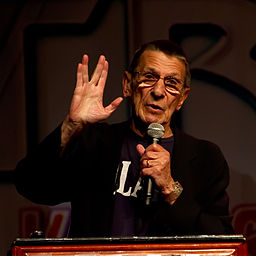
Whatever your choice, Star Trek’s Mr. Spock (Leonard Nimoy in both the images below) has the best salutation: “Live long and prosper;” to which a fellow Vulcan would respond “Peace and long life.” These extra-terrestrial, science fiction-based humanoids are said to have lifespans that can extend beyond 200 years. Yet, as the above salutations suggest, even they remain mindful of the preciousness of time.

http://upload.wikimedia.org/wikipedia/commons/thumb/4/4a/Leonard_Nimoy%2C_2011%2C_ST_Con-2.jpg/256px-Leonard_Nimoy%2C_2011%2C_ST_Con-2.jpg

—

The top picture is called Card Games and Game Tokens by victor vic. The second image is called No Death (the grim reaper crossed out) by Benjamin Hauber. It is followed by a Green Bucket by 4028mdk09. All are sourced from Wikimedia Commons. Finally, Leonard Nimoy as Mr. Spock in the 1960s and at the 2011 Star Trek Convention, the latter by Beth Madison, sourced from Wikimedia Commons. In each instance he is giving the sign that goes along with the salutation “Live long and prosper.”