Treating Insecurity and Anxiety: Eight Roads to a Solution

512px-Anxiety_cloudImagine you are considering therapy for the first time. Or perhaps your treatment isn’t working. You stand at a crossroads, like the hub of a wheel where eight spokes beckon for attention. How should you choose among them?

Not all are good and you may even realize that as you decide. Here is a guide to thinking about what to do (and what not to do) with the weighty package of insecurities velcroed to your life. Click the link for a comprehensive list of the signs of insecurity.

ALCOHOL AND DRUGS. The issue of substance dependency should not be ignored. Recall the old Chinese proverb, “First the man takes the drink, then the drink takes the man.” Alcohol’s comforting relief and buoyancy is commonly replaced by longer term emotional darkness. Marijuana (cannabis) might mellow the smoker out but leaves underlying insecurity and anxiety untouched when sober. If you are attempting psychotherapy, best to tell the counselor the extent of your substance use straight away. The deepest wounds are slippery things. Grasping them is harder (if not impossible) when alcohol or drugs add to the excess lubrication.

WILLPOWER AND SELF-ANALYSIS. The old saying tells us, “When the going gets tough, the tough get going.” Yes, some few people manage their own psychotherapeutic project. Indeed, Freud analyzed himself. What is required? Although I know of no research on this, I suspect one needs a strong capacity for self-reflection, high intelligence, some degree of emotional openness, the courage to look in the mirror, tenacity, and knowledge gained through reading about treatment. Willpower is necessary because the self-analyst must inevitably get out of his head and leap the wall of fear to master behaviors blocked by insecurity: good eye contact, self-assertion, saying no, asking for things, making uncomfortable phone calls, inviting someone on a date, public speaking, etc.

THE SEARCH FOR A STRONGMAN. Some rely on a mate to perform avoided tasks. The significant other becomes a caretaker or body-guard, an individual who is sought to do the jobs the hesitant one believes he cannot: return a product to a store, accompany him to events otherwise avoided, and so forth. This is no solution to anxiety or insecurity, but a human crutch to sidestep the need to change. Another danger: too often the protector becomes an overlord, pushing you around or worse; the mister turned monster you hoped he would protect you against.

PSYCHOTROPIC MEDICATION. Medications, like other drugs, carry possible side-effects. Antidepressants can impair sexual performance, anti-anxiety tablets often have addictive properties. While a good psychiatrist will carefully watch for these, pharmaceuticals do not create a sense of security and confidence beyond the time you use them. Moreover, to the extent that the psychotropics help you feel better, your motivation to tackle underlying reasons for your symptoms may be reduced. That said, sometimes susceptibility to anxiety and depression is inherited and biologically-based, making the booster of drugs a necessary and permanent mode of treatment.

Girl_suffering_from_anxiety

AVOIDANCE AND THE INTERNET. Anticipation of discomfort, humiliation, or failure translates to turning down invitations — limiting chances for growth, accomplishment, and joy. The troubled soul is assaulted by hatchet-bearing ideas that have become permanent, non-rent-paying residents in the head. The data set of the insecure is based on an unfortunate history. The job of recovery translates to writing over your old history by gradually taking on social challenges and accumulating successes reinforcing your effort.

Beware the false god of the internet! The more time you worship at its alter and “let your fingers do the walking” on the keyboard, the less you have for direct human contact (involving actual walking out of the apartment). For all its marvels, this deux ex machina can become a screen behind which to hide the human face, trading yours for a virtual one. Yes, social media can be a stepping stone to a life beyond the keypad. For many, however, it’s another form of concealment and self-distraction. You can identify too fervent online social network disciples by the pain they will suffer for their god: a malady called text neck, the product of bending over their smartphone.

PSYCHODYNAMIC PSYCHOTHERAPY. Psychodynamic treatment, the traditional talking cure, can be a foundational part of counseling. It helps one clear the life-history undergrowth undermining a healthy self-image, planting  seeds of sturdiness to deflect the inevitable defeats we all encounter. Such counseling also lifts the weight of self-blame by recognizing the fingerprints of others on one’s problematic background story. It cannot stop there, of course. Grief and grieving demand attention.

Beyond relieving submerged pain, one must eventually take psychoanalytic insight for a test-drive: try new behaviors just as one would a new car before purchase. However much a “depth psychology” approach is needed, empirically based (research supported) interventions provide the practical impetus for emotional availability, symptom reduction, and behavioral change.

COGNITIVE-BEHAVIORAL THERAPY (CBT). Many of the well-researched and effective treatments just referred to fall into the category of CBT. Obsessive-Compulsive Disorder (OCD), for example, is among those problems amenable to this set of tools. Indeed, attempting a solution for OCD psychodynamically is, in contrast, a therapeutic cul-de-sac. CBT can often, however, be combined with more traditional talking therapy to join the best of both worlds.

ACT (ACCEPTANCE AND COMMITMENT THERAPY). ACT is described in the following way on its website: “Developed within a coherent theoretical and philosophical framework, Acceptance and Commitment Therapy (ACT) is a unique empirically based psychological intervention that uses acceptance and mindfulness strategies, together with commitment and behavior change strategies, to increase psychological flexibility. Psychological flexibility means contacting the present moment fully as a conscious human being, and based on what the situation affords, changing or persisting in behavior in the service of chosen values.”

Plowing through this technical language, ACT deals with the losses most patients have sustained, traveling from a grieving process toward acceptance of those life circumstances that can’t be changed, reduced avoidance, learning to live in the moment via meditation, deciding what is most important to you, and choosing behavior consistent with your stated values.

WE ALL TAKE TURNS at life’s crossroads. Sometimes the best advice is to make no movement, patiently waiting for the traffic to clear. Do remember, however, not choosing is also a choice. The clock is always ticking, even if, in the digital age, we must strain to hear it.

The top image by John Hain is called Anxiety Cloud sourced from Wikipedia Commons. The photo beneath it is Girl Suffering from Anxiety by Bablekahn at Kurdish Wikipedia.

Passive or Active? Choosing Your Life

512px-GuidoReni_MichaelDefeatsSatan

Simple words are not so simple. Rather, we forget their meaning. We forget how much they should provoke a reevaluation of our lives. Consider the words “take” and “make.” I’ll try to “make” something of their importance in describing the lives we choose.

Here is a common sentence: “I must make a decision.” It sounds more passive than it is. I have heard the same phrase from non-native English-speakers, slightly altered: “I must take a decision.” As in grab or capture. Even in “making” a decision, at least in its most active form, we “build” or “construct.”

Take stock. Take over. Take responsibility. Make a choice. Make something of yourself.

Do you see where I’m taking you? What kind of life do you want? One you take or one left over because you did not capture a place in line?

We all know not choosing is a choice. If you don’t make a decision someone else will; or, perhaps the opportunity to intervene on your own behalf will pass. Many times an active decision is right even when wrong. You grab hold of the wheel of your life and try to steer. Value resides in ownership of yourself: self possession.

Many of the newer therapeutic models are not as contemplative, reflective, and retrospective as Freudian therapy, but add conceptual, emotional, and behavioral change — action — in the present. True, Freud warned about making personal decisions early in the treatment process, when still burdened by unresolved issues. There is recklessness in acting without thought, but finally one must roll the dice of life or stay on the sidelines, part of the audience. Indeed, one persuasive therapy model goes by the name of ACT (the word, not the initials): Acceptance and Commitment Therapy. ACT leads you to a point of decision about what is important to you, commitment to those revealed values, and an eventual behavioral enactment of your commitment.

You have doubtless noticed women whose companions are men of action, whether thespians, builders, or “makers and shakers.” Indeed, a man pursuing a woman is described as “being on the make.” Some of those “gentlemen” are less than uniformly admirable, but their grasp of initiative is. Many other males (and females) lead lives of “quiet desperation.”

Please don’t misunderstand me. You needn’t be a leader to take charge of your life. Each of us has problems. Our inner life can be like a room filled with shelves of challenges we avoid. One must clear the shelves. We either sweep them clean or avert our eyes and lock the room wherein they reside. We then avoid any part of life reminding us of the courage we lack. Our failure might even be rationalized as good judgment — as an avoidance of danger.

How many people can’t eat out alone, try to make a new friend, or phone a stranger (choosing email instead)? How many of us can’t speak in a group or attend a class out of fear? How many adults can’t say no, ask for things, or look someone in the eye while uttering a necessary truth? If you are 16 and you don’t tackle such challenges, OK. At 56, if you still can’t, what then?

A graduating high school senior tells a younger, awe-struck young man why she couldn’t be with him:

“Charlie, I told you not to think of me that way nine months ago because of what I’m saying now. Not because of Craig (her then boyfriend). Not because I didn’t think you were great. It’s just that I didn’t want to be somebody’s crush. If somebody likes me, I want them to like the real me, not what they think I am. And I don’t want them to carry it around inside. I want them to show me, so I can feel it, too. I want them to be able to do whatever they want around me. And if they do something I don’t like, I’ll tell them.”*

Life in a fetal position is not a life in full. Trying always to please others is a life given away to people who won’t value you because you set your price tag too low. Such an existence is the opposite of “being a man,” a phrase that applies to any mature, confident adult, regardless of gender. Some of us persuade ourselves that the things we don’t do (because we don’t try) aren’t important. A kind of self-delusion. Others live in regret, consumed by “what might have been,” shadowed by the effort they did not “make.”

Regret is the only six-letter word equivalent of a four-letter swear. Unless you do an irreparable injury to another, perpetual regret is like a judge you have assigned the job of looking down on you, pointing an accusing finger eternally.

We all must stretch ourselves to our limit, especially in the first half of life, and learn to hold our head high always. Ironically, in the act of lengthening the spine by standing upright we feel better, and tend to overcome whatever sense of shame lives inside. Few of us, after all, wish to appear spineless.

Passivity isn’t the opposite of activity as much as it is the adversary of “living.”

Make the best of your life. You will die whether you do or not, so you might as well die trying.

*Chbosky, Stephen. The Perks of Being a Wallflower. New York: Pocket Books, 1999: 201.

The painting of The Archangel Michael Tramples Satan by Guido Reni is sourced from Wikimedia Commons.

Signs of Insecurity: Behavior That Reveals a Lack of Confidence

Here is a post many people have found useful. This version has been updated since its publication in 2010:

Advice for Life: Dr. S’s Savvy Suggestions for Survival

Swiss_army_knife_open_20050612

When I was 16 I thought that life would be peachy once I knew how to drive and had a girlfriend. Unfortunately, achieving those two goals did not produce a permanent state of bliss. The first didn’t seem very important once it was accomplished; and the second — well, I regret to say that even love becomes something that one takes a bit too much for granted, except when it is absent.

If I could have given that kid I was some guidance, the list of advice wouldn’t have included those items because he (I) already knew I needed to learn to drive and find love. Nor would I have instructed him to work hard; or about the importance of the almighty dollar, values osmotically communicated within my childhood home. But here is a list of the things I might have offered, even if that 16-year-old version of myself couldn’t have fully understood them all:

1. When your mother told you that “Your eyes are bigger than your mouth” as you looked at a glorious piece of pie, she was on to something: the illusion of appearances. Some things and some people who look good, aren’t good. Or, have no lasting value, only a temporary pleasure that, like the food your mother was talking about, might not be as wonderful as you think.

2. Be quick to recognize patterns of mistakes and stop repeating them. As Bill Clinton said, “When you find yourself in a hole, the first thing to do is stop digging.”

3. Perpetual regret is some version of hell. The first half of your life gives you lots of chances to recover from wrong turns and thereby avoid sentences that start with “I should have” or “I shouldn’t have.” You have the time to start most things over.

4. Hiding, hesitating, and hoping don’t work very well. To get ahead in life you can’t just read about it, imagine it, or worry about it. You actually have to do it. It’s a little like jumping into a cold pool. Once you’re in the water, you get used to the cold temperature and discover you can swim.

5. Don’t fool yourself by rationalizing your misdeeds or denying the real reasons you do what you do. But do learn to forgive yourself for most things. You are human, after all, and mistakes come with the package.

6. Perfectionism will kill you. So will slovenliness. Goldilocks was right about a lot of things: don’t aim for “too hot” or “too cold,” but for “just right.” In philosophical terms it is “the golden mean” — that place between excess and deficiency, between too much and too little of a quality. Some people call it balance.

7. No one cares about you except your mother, and even she has other things on her mind. OK, the first part of the last sentence is an exaggeration, but most of the people you know are too busy thinking about themselves to think much about you. Get over your self-consciousness.

8. You will pay for wisdom. Pain teaches, pleasure not so much. The body gives way in any case. Take care of your body; enjoy it and all the many pleasures of being young. Indeed, don’t take life so seriously that you miss the joy in living.

9. You too will die. Marcus Aurelius, the great Stoic philosopher and Roman Emperor, actually hired someone to remind him of this fact every day. The cemetery is full of irreplaceable people. As Gregory Maguire has written, “Happy endings are still endings.” That tends to put things in perspective, so note the truth of it without constantly dwelling on it.

10. There is always someone better (and better off) than you are. There is always someone worse (and worse off) than you are.

11. You can’t have it all. Choose wisely, but remember Einstein’s words: “Try not to be a person of success, but rather a person of value.”

12. Accumulate experiences moment to moment, not possessions. Money and “stuff” are overrated unless you don’t have enough to get by.

"Follow_the_Oldtimers_Advice."_-_NARA_-_514272

13. Make friends. People are the problem, but they are also the solution. Grudges will eat you alive, so try to let go and enjoy people for who they are, not who you want them to be, unless they are real scoundrels who should then be avoided. Spend more time trying to change yourself and less trying to change others.

14. Be nice. Or, to quote from American Opinion Magazine: “My boy,” said a father to his son, “treat everyone with politeness, even those who may be rude to you. For remember that you show courtesy to others not because they are gentlemen, but because you are a gentleman.”

15. Religion isn’t essential to morality. Some of the kindest and most decent people you will encounter don’t believe in God. But some really wonderful people do.

16. You must change yourself perpetually because of the changing circumstances in any life, not the least of which is aging. Think of life as a moving target, not one that is stationary. It follows that you should always seek to learn more from both study and experience. By the way, the most interesting people you meet will be the ones from whom you learn, by their words or their example.

17. You have to take chances, otherwise you can’t grow. Make the transition from seeing challenges as a crisis to seeing them as an opportunity.

18. Acceptance of the things that can’t be changed and appreciation of the good things you have are both life long tasks. Work at them.

19. Think about how you relate to money, food, time, and sex. Know where your potential spouse stands on each of these before your wedding day.

20. Reproduce. That’s why you are here, but don’t do so to save your marriage, and recognize that raising a child is a tremendous amount of work. Only have a baby if you want to be involved in all aspects of your little one’s life.

21. Overcome the things of which you are afraid. If you don’t they will diminish your life and continue to haunt you until you die.

22. Get to know your parents and, if possible, their early history. Whether by their good or bad example, they have something to teach you. There is also probably at least one person in your family who is so nuts that you want to reach for a giant nutcracker. Try to stay out of his or her way.

23. If you are an anxious or worried person, know that most of the things you anticipate either won’t happen or are survivable.

24. Always treat the wait-staff well.

25. Learn to be assertive. The world can be a merciless place if you don’t. Don’t explain your reasons or make excuses when no one asked. Don’t ask for permission when none has been requested. Someone might just say “no.”

26. Dr. S’s Bonus Item: Almost all the things you think will be the permanent solution to your problems provide only temporary relief. Once you solve one difficulty you are on to the next one, which probably requires a different remedy. Life is about learning that you can take on new challenges, not about finding permanent solutions to a fixed and unchanging set of problems.

27. Dr. S’s Second Bonus: If you want to get ahead, do what President Woodrow Wilson said: “Do not follow people who stand still.”

The top photo by Jonas Bergsten is of a Victorinox Swiss Army Knife, Mountaineer Model. The poster is called Follow the Old-timer’s Advice and comes from the Office of Emergency Management, Office of War Information, 1941-1945. Both are sourced from Wikimedia Commons.

Fooling Yourself Into Failing Yourself: The Trap of Anxiety and Avoidance

File:Fear of a blank planet.jpg

“But I just don’t like to do that.”

That is what she told me — the young woman who said she didn’t want to go to a restaurant alone. “Why should I do that? I’d much rather eat with someone and be able to talk at dinner. Eating alone wouldn’t be any fun.”

True. Most of us would prefer a dinner companion. It probably would be more enjoyable to dine with a friend. But there is an important distinction here. It is between being able to do something that you might prefer not to do, and being unable to do the thing because it is uncomfortable for you; maybe even frightening. And, it is between deluding yourself into thinking that the activity might be boring or stupid when the truth is that you are afraid to do it.

Deluding and denying. We do it all the time. “I don’t like to do that. Why would I want to do that? Why do I have to do that?” And so we persuade ourselves that we can live without certain experiences, side-stepping the things we don’t know about or haven’t done — the small and large challenges of life.

But what are we really doing here?

http://upload.wikimedia.org/wikipedia/commons/thumb/4/4a/WeirdTalesv36n1pg068_Shocked_Woman.png/240px-WeirdTalesv36n1pg068_Shocked_Woman.png

For the young woman in question, her repeated need to be accompanied to places — her fear to act alone — caused her to be dependent upon people, especially boyfriends. As a result, she found it difficult to be without a male companion for very long and, when she did find one, discovered that she wanted (and needed) to be with her lover more than he wanted and needed to be with her. Thus, her insecurity about being alone and her avoidance of doing things alone made her dependent upon others.

Eventually, the “clinging” drove her boyfriends away. Then she really was alone. Finding herself abandoned and rejected, she turned her reliance on family or friends; if she had those friends, that is, because she had spent so much time with her boyfriends that she’d neglected making platonic friends, along with the work required to keep them.

Some people who are avoidant don’t realize how anxious they are — how much fear dominates their lives. After all, if you turn down invitations to parties because of underlying social anxiety, you manage to avoid getting nervous as you think about the party, dress for the party, drive to the party, walk in the door, and then try to fit in.

The fact that you don’t feel anxious doesn’t necessarily mean that you don’t have anxiety problems. In fact, sometimes a better way to determine whether you have a life-compromising form of anxiety is to make a list of the things you will not do unless forced to at gun point.

  • Things like giving a public speech, raising your hand in class, traveling to the downtown area of a big city, driving on the expressway, making a phone call, going to a party where you know few people, and eating at a fancy restaurant or any place where you are not familiar with the cuisine.
  • Things like going to a movie, play, lecture, or concert alone; flying, sending a poorly prepared dish back to a restaurant’s kitchen, saying “no,” returning an item at the store, etc.
  • Things like trying some new activity on your own or voicing a strong opinion that just might be criticized by someone else; and not looking for a new job for fear of the interviewing process.

Please notice that I’m not talking about some of the very commonly experienced fears such as spiders, high places, and confined places: the phobias we call arachnophobia, acrophobia, or claustrophobia and the like. Rather, my focus is on the anxieties that make for daily difficulties — that make a life so narrow that it begins to look a little bit like this:

http://upload.wikimedia.org/wikipedia/commons/thumb/f/fa/Toledo_narrow_street.jpg/240px-Toledo_narrow_street.jpg

To the avoidant, anxious person, the narrowly confined life seems safer. It is fraught with fewer frustrations and failures. It demands less. It feels less foreboding.

If you are heavily invested in social media, you can even persuade yourself that your electronic social life of texting, instant messages, blogging, tweeting, role-playing games, and hundreds of Facebook friends is better than the real thing. And what might the real thing be? Dedicated time unmediated and uninterrupted by technology spent with a person who is right in front of you and within the reach of an outstretched hand.

Can you approach social situations without a preliminary drink or joint? Are you certain that the alcohol or marijuana you use to unwind is recreational rather than an effort to self-medicate your anxiety? Yes, we are pretty good at talking ourselves into just about anything rather than seeing ourselves as we really are.

But if we are avoidant, there is a price:

  • The same things done over and over and that can be done only in the same places and in the same way; and sometimes only in the realm of electronically achieved distance and safety.
  • The need to rely on others who provide an emotional security blanket, or substance use upon which one is also reliant.
  • The self-doubt and the worry that accompanies thoughts of leaving our “comfort zone.”
  • Too much time spent looking at a television or a Smart Phone or a computer screen.

Avoidance offers no growth and no “life,” only the illusion of safety and the temporary relief that we all know from our school days when the teacher was sick and the test was postponed. I suppose that you can try to postpone the “tests” that life offers until the end of your days. Believe me, I’ve seen it happen. I’m talking about a life of challenges unmet, mastery unachieved — the narrow life that Thoreau described when he said:

The  mass of men lead lives of quiet desperation. What is called resignation is confirmed desperation.

And, in a companion quote often misattributed to Thoreau:

Alas for those that never sing,
But die with all their music in them.

But he also wrote:

Great God, I ask for no meaner pelf

Than that I may not disappoint myself,

That in my action I may soar as high

As I can now discern with this clear eye.

We live in “The Age of Anxiety” according to W.H. Auden. In any life there is a first time — a clumsy, unsure time — for everyone and every thing. We fear the judgment of others, the embarrassment, and the mortification of taking a chance and stumbling in public. We compare how we feel inside to the apparent (but not always real) serenity, calm, and self-confidence of others as we look at them from the outside. We condemn ourselves for lost time and opportunity, say to ourselves that we are “too late” or “too old” to take on a new challenge, and thereby guarantee that even more time will be lost; perhaps all the time we will ever have.

We tell ourselves that we can’t try a thing until we first feel better, calmer, and more confident; not realizing that “trying” is just what we need to do in order to feel better about the thing; failing to grasp that anxiety is not the biggest part of the problem, but that a failure to act in spite of the anxiety is.

If you are anxious enough or avoidant enough you might well avoid counseling, too. That is a shame, because there are very good treatments available in the realm of Cognitive Behavior Therapy (CBT). For a discussion of therapy for Social Anxiety Disorder, for example, you can look at this: Social Anxiety Disorder and Its Treatment.

Only if you fully realize that your avoidant coping strategies are costing you something of value will you call a therapist. Are you afraid to call? Is it less distressing to email? Did I hear you say, “Maybe tomorrow?” You may not detect the sound, but the clock is ticking.

As Eleanor Roosevelt said, “You must do the thing you think you cannot do.”

Now.

http://upload.wikimedia.org/wikipedia/commons/2/2e/RelojDespertador.jpg

The top image is described as Fear of a blank planet, cover by Lasse Hoile Porcupine Tree Band 2005: http://www.porcupinetree.com/ “OTRS Ticket 2006082110002647.” The Illustration of a Shocked or Frightened Woman has been altered by AdamBMorgan from the original that appeared in Wierd Tales (September 1941, Volume 36, Number 1). The next image is One of the narrow streets in the old part of Toledo, Spain by Allessio Damato. Finally, An old style alarm clock captured by Jorge Barrios. All are sourced from Wikimedia Commons.

Boyhood Heroes and Autograph Stories: Remembering Bill “Moose” Skowron

Moose Skowron

The Brooklyn Dodgers won the 1955 World Series thanks to the MVP performance of an unheralded 23 year-old pitcher named Johnny Podres. That winter I had a chance to meet him. He was scheduled to make a weekend appearance at the Peter Pan restaurant in West Rogers Park, Chicago. I couldn’t wait.

My dad drove me there and I could see the line in the eatery, all eager young boys, some older than my nine years, some younger. And there he was, seated at a table in front of the long line, observable at a distance through the restaurant’s large pane glass window. A genuine baseball player in the flesh. A real World Series hero.

But there was only one problem.

I couldn’t get myself out of the car. I froze. I was intimidated. My dad did his best to persuade me and I certainly had enough time to muster the courage to go in. Podres wasn’t going anywhere fast. But neither was I. I was fastened to the seat at a time before seat belts.

I cannot tell you what exactly I was afraid of. I don’t remember what I was thinking. All I know was that I was terrified, all too shy, and eventually my dad drove me home.

I was reminded of this story recently when a high school friend asked me if I remembered Johnny Podres appearance at the Peter Pan. He had the courage to go in. In fact, I suspect it simply wasn’t in his nature to even to be scared of it.

Within a very few years, however, I became an eager autograph collector, brazenly approaching my heroes (probably only 10 years or so older than I was at the time) as they emerged from their locker room or outside the ball park, usually Wrigley Field. I nearly got trampled trying to get Willie Mays’ signature. He simply bulled his way through the crowd of boys who were hoping to have a less physical kind of contact. But young men like Ernie Banks and Ron Santo would sign and sign and sign until everyone had a turn and a treasured keepsake.

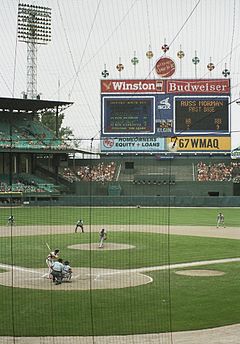
In the summer of 1960, when I was in eighth grade, my Jamieson School friend Joel and I went to Comiskey Park to see the White Sox play the Yankees. My uncle Sam had gotten us great box seat tickets and we were eager to get some autographs before the game.

We noticed several kids bunched on the stadium side of the infield wall, all getting the popular Sox outfielder Minnie Minoso to sign their scorecards. Soon, Joel and I observed that there seemed to be a man in charge — a man who had a camera hanging by a strap around his neck. We joined in the crowd milling about the pale hose star, even getting into a picture that was taken.

The adult leader didn’t take too long before persuading various other Sox players to come over to the same group of boys about our age, making autograph collecting easier than usual. Normally one had to call to a player from the stands, requesting him to take pen in hand and ink that day’s score book. From that point we did our best to blend in with the others, getting as many autographs as we could.

Curious, I asked one of the boys in the group who they were. It turned out that the kids were there on an excursion from South Bend, Indiana. All of them were newspaper boys who had won the Comiskey Park adventure for doing their deliveries and collections reliably and well. That was why, of course, the photographer/chaperone of the group had taken a picture of all of us with Minnie, for eventual publication in the very same daily paper.

Joel and I wondered how we would get a copy of the photo. “We’ll figure it out,” I said. “Just be sure you don’t say anything to that guy,” as I motioned toward the adult overseer.

We were standing a bit apart from the group, not wanting them to hear our plotting, when the same man called to us, “Hey, you two, come over here!”

At first I wondered if he’d figured out that we didn’t belong. But instead he told us he was going to try to get our photo with Mickey Mantle! We watched with heady anticipation as he talked to the Yankee great and future Hall-of-Famer. But Mantle shrugged him off. He seemed more intent on watching the other Yankees take batting practice and waiting for his own turn to hit.

Next he approached Bill “Moose” Skowron, the Yankee’s heavy-hitting first baseman. I’d always thought that “Moose,” a popular Chicago native who would eventually play for the White Sox, was called by that nickname because he was so powerfully built, unusually square-shouldered and intimidating in physique. But, it turns out that his childhood friends called him “Moose” after Benito Mussolini, who Skowron resembled a bit, especially in the 1930s when the young Skowron started to wear his hair in the crew-cut style that made him look even more like the Italian dictator.

Skowron would end his playing career with 211 regular season home runs and a .293 batting average in eight World Series appearances that led to five World Championships. He was also elected to the American League All-Star team on six occasions.

http://upload.wikimedia.org/wikipedia/commons/thumb/b/b2/Comiskey_Park_860817.jpg/240px-Comiskey_Park_860817.jpg

The “Moose” walked with our benefactor behind the home plate batting cage toward the place where we were standing — on the stadium side of the barrier to the field. Skowron smiled and said hello, then turned and sat himself on the flat top of the low brick partition as he faced the gigantic center field “exploding” scoreboard that Bill Veeck, the Sox owner, had installed only that year — the first of its kind.

The photographer stood with his back toward that same scoreboard and motioned us to get on either side of the ball player, as close as we could to “Moose” while remaining in the stands. Then the 29 year-old athlete leaned back a bit, put his arms around us and the photo was taken.

Skowron said goodbye and quickly returned to his pre-game routine. But we were in trouble. Joel couldn’t restrain himself and blurted out the question I had feared, “Say, how do we get to see these pictures?”

As the saying goes, if looks could kill two 13 year-olds would have expired behind home plate at Comiskey Park.

“Aren’t you… don’t you belong… you’re newspaper delivery boys, right?”

“Uh, uh, uh…”

“Oh, s**t, f***k, you little a*s h***s, you sons of b*****s.”

I think there might have been another dozen or so swear words, some of which I never heard before and haven’t heard since. By now it is kind of a blur. And so ended any hope of ever getting our hands on a picture of the two of us with Bill Skowron.

Fortunately, my dad was able to track down the South Bend newspaper and did, in fact, find the group photo with Minnie Minoso in which we can be easily recognized. Only one problem. The caption identifies Joel as Steve Carpenter and me as Claude Fitzgerald. Or something like that.

I wrote the above in May, 2011 and for some reason set it aside. But the story was on my mind, and I told it to a recent acquaintance, a neatly bearded, fine older gentleman named Abe. He’d mentioned that he was a friend of the “Moose,” who apparently continues to live in the Chicago area.

Stories are funny things. Sometimes you think a narrative is finished when in fact it isn’t. Something else happens to someone involved in the tale that adds an important twist to it, changing its meaning. So it was with this story.

To my surprise, a few months after I’d related the yarn to Abe, he said that he told the story to “Moose” and asked him if he would sign a photo of himself in his playing days, inscribed to me. With that Abe handed me the image (below) featuring the young “Moose” and a few words to me in his still steady hand. It was an act of unexpected kindness from both of these men, something that made my day.

Thus, the story did not end with my disappointment at the failed opportunity to get my hands on a photo with a baseball hero, but with me receiving a picture after all; one that, because of the way it happened, means more to me than the half-century old version possibly could have.

I guess it just goes to show that (if you are willing to wait 51 years) you can have just about anything you want in life.


I have reposted this essay as a tribute to Bill “Moose” Skowron, whose death was reported today. He was 81.

—-

The top photo is “Moose” in his days with the Yankees. The second photo is of the scoreboard at Old Comiskey Park by Baseball Bugs sourced from Wikimedia Commons. The final photo is of  Bill “Moose” Skowron at old Comiskey Park in his days with the White Sox.

Boyhood Heroes and Autograph Stories: Remembering Bill “Moose” Skowron

Moose Skowron

The Brooklyn Dodgers won the 1955 World Series thanks to the MVP performance of an unheralded 23 year-old pitcher named Johnny Podres. That winter I had a chance to meet him. He was scheduled to make a weekend appearance at the Peter Pan restaurant in West Rogers Park, Chicago. I couldn’t wait.

My dad drove me there and I could see the line in the eatery, all eager young boys, some older than my nine years, some younger. And there he was, seated at a table in front of the long line, observable at a distance through the restaurant’s large pane glass window. A genuine baseball player in the flesh. A real World Series hero.

But there was only one problem.

I couldn’t get myself out of the car. I froze. I was intimidated. My dad did his best to persuade me and I certainly had enough time to muster the courage to go in. Podres wasn’t going anywhere fast. But neither was I. I was fastened to the seat at a time before seat belts.

I cannot tell you what exactly I was afraid of. I don’t remember what I was thinking. All I know was that I was terrified, all too shy, and eventually my dad drove me home.

I was reminded of this story recently when a high school friend asked me if I remembered Johnny Podres appearance at the Peter Pan. He had the courage to go in. In fact, I suspect it simply wasn’t in his nature to even to be scared of it.

Within a very few years, however, I became an eager autograph collector, brazenly approaching my heroes (probably only 10 years or so older than I was at the time) as they emerged from their locker room or outside the ball park, usually Wrigley Field. I nearly got trampled trying to get Willie Mays’s signature. He simply bulled his way through the crowd of boys who were hoping to have a less physical kind of contact. But young men like Ernie Banks and Ron Santo would sign and sign and sign until everyone had a turn and a treasured keepsake.

In the summer of 1960, when I was in eighth grade, my Jamieson School friend Joel and I went to Comiskey Park to see the White Sox play the Yankees. My uncle Sam had gotten us great box seat tickets and we were eager to get some autographs before the game.

We noticed several kids bunched on the stadium side of the infield wall, all getting the popular Sox outfielder Minnie Minoso to sign their scorecards. Soon, Joel and I observed that there seemed to be a man in charge — a man who had a camera hanging by a strap around his neck. We joined in the crowd milling about the pale hose star, even getting into a picture that was taken.

The adult leader didn’t take too long before persuading various other Sox players to come over to the same group of boys about our age, making autograph collecting easier than usual. Normally one had to call to a player from the stands, requesting him to take pen in hand and ink that day’s score book. From that point we did our best to blend in with the others, getting as many autographs as we could.

Curious, I asked one of the boys in the group who they were. It turned out that the kids were there on an excursion from South Bend, Indiana. All of them were newspaper boys who had won the Comiskey Park adventure for doing their deliveries and collections reliably and well. That was why, of course, the photographer/chaperone of the group had taken a picture of all of us with Minnie, for eventual publication in the very same daily paper.

Joel and I wondered how we would get a copy of the photo. “We’ll figure it out,” I said. “Just be sure you don’t say anything to that guy,” as I motioned toward the adult overseer.

We were standing a bit apart from the group, not wanting them to hear our plotting, when the same man called to us, “Hey, you two, come over here!”

At first I wondered if he’d figured out that we didn’t belong. But instead he told us he was going to try to get our photo with Mickey Mantle! We watched with heady anticipation as he talked to the Yankee great and future Hall-of-Famer. But Mantle shrugged him off. He seemed more intent on watching the other Yankees take batting practice and waiting for his own turn to hit.

Next he approached Bill “Moose” Skowron, the Yankee’s heavy-hitting first baseman. I’d always thought that “Moose,” a popular Chicago native who would eventually play for the White Sox, was called by that nickname because he was so powerfully built, unusually square-shouldered and intimidating in physique. But, it turns out that his childhood friends called him “Moose” after Benito Mussolini, who Skowron resembled a bit, especially in the 1930s when the young Skowron started to wear his hair in the crew-cut style that made him look even more like the Italian dictator.

Skowron would end his playing career with 211 regular season home runs and a .293 batting average in eight World Series appearances that led to five World Championships. He was also elected to the American League All-Star team on six occasions.

http://upload.wikimedia.org/wikipedia/commons/thumb/b/b2/Comiskey_Park_860817.jpg/240px-Comiskey_Park_860817.jpg

The “Moose” walked with our benefactor behind the home plate batting cage toward the place where we were standing — on the stadium side of the barrier to the field. Skowron smiled and said hello, then turned and sat himself on the flat top of the low brick partition as he faced the gigantic center field “exploding” scoreboard that Bill Veeck, the Sox owner, had installed only that year — the first of its kind.

The photographer stood with his back toward that same scoreboard and motioned us to get on either side of the ball player, as close as we could to “Moose” while remaining in the stands. Then the 29 year-old athlete leaned back a bit, put his arms around us and the photo was taken.

Skowron said goodbye and quickly returned to his pre-game routine. But we were in trouble. Joel couldn’t restrain himself and blurted out the question I had feared, “Say, how do we get to see these pictures?”

As the saying goes, if looks could kill two 13 year-olds would have expired behind home plate at Comiskey Park.

“Aren’t you… don’t you belong… you’re newspaper delivery boys, right?”

“Uh, uh, uh…”

“Oh, s**t, f***k, you little a*s h***s, you sons of b*****s.”

I think there might have been another dozen or so swear words, some of which I never heard before and haven’t heard since. By now it is kind of a blur. And so ended any hope of ever getting our hands on a picture of the two of us with Bill Skowron.

Fortunately, my dad was able to track down the South Bend newspaper and did, in fact, find the group photo with Minnie Minoso in which we can be easily recognized. Only one problem. The caption identifies Joel as Steve Carpenter and me as Claude Fitzgerald. Or something like that.

I wrote the above in May, 2011 and for some reason set it aside. But the story was on my mind, and I told it to a recent acquaintance, a neatly bearded, fine older gentleman named Abe. He’d mentioned that he was a friend of the “Moose,” who apparently continues to live in the Chicago area.

Stories are funny things. Sometimes you think a narrative is finished when in fact it isn’t. Something else happens to someone involved in the tale that adds an important twist to it, changing its meaning. So it was with this story.

To my surprise, a few months after I’d related the yarn to Abe, he said that he told the story to “Moose” and asked him if he would sign a photo of himself in his playing days, inscribed to me. With that Abe handed me the image (below) featuring the young “Moose” and a few words to me in his still steady hand. It was an act of unexpected kindness from both of these men, something that made my day.

Thus, the story did not end with my disappointment at the failed opportunity to get my hands on a photo with a baseball hero, but with me receiving a picture after all; one that, because of the way it happened, means more to me than the half-century old version possibly could have.

I guess it just goes to show that (if you are willing to wait 51 years) you can have just about anything you want in life.


I have reposted this essay as a tribute to Bill “Moose” Skowron, whose death was reported today. He was 81.

—-

The top photo is “Moose” in his days with the Yankees. The second photo is of the scoreboard at Old Comiskey Park by Baseball Bugs sourced from Wikimedia Commons. The final photo is of  Bill “Moose” Skowron at old Comiskey Park in his days with the White Sox.

Too Many Balls in the Air: The Frustrated and Frustrating Life of ADHD

http://upload.wikimedia.org/wikipedia/commons/c/c8/Carbon_Cycle-animated_forest.gif

He was dynamic, outgoing, and enormously entertaining.

He was creative, full of ideas, and energetic.

And he was one of the most frustrating people you would ever care to be around.

About whom do I speak? A bright, charming man with Attention Deficit Hyperactivity Disorder.

ADHD is more complicated than you might think. Although there is much written about it, I want to cover a few of the things that can be missed about the condition. But first, let me explain the name and define it.

There are three types of ADHD (Attention Deficit Hyperactivity Disorder):

  • 1. ADHD, Predominantly Inattentive Type. This used to be called ADD, but technically speaking, sufficient inattentiveness is considered a category of ADHD, even though little hyperactivity may be present. These are the folks who seem to be listening, but are lost in space; easily taken away by a tune, a sound, or an idea; the people who miss the details and forget the assignments.
  • 2. ADHD, Predominantly Hyperactive-impulsive Type. This is what most people think of when they hear or read the four letter acronym ADHD. People with this diagnosis are characteristically talkative, active, intrusive; a bundle of unmanaged, impulsive activity.
  • 3. ADHD, Combined Type (meaning it includes the symptoms typical of the first two categories); too many balls in the air, for sure.

What about the man I mentioned at the top; a person who had the “combined type” of ADHD?

He had lots of energy and ideas, so people found him engaging. But it wasn’t a very productive sort of energy. He would begin things, but not complete them. He was disorganized — losing keys and papers, and forgetting appointments. He promised to do things, but couldn’t be relied upon to do them as quickly or as well as expected, if at all.

This man (let’s call him A.T.) went nowhere fast; very fast. A.T. looked liked the “Energizer Bunny,” but mostly traveled in circles.

http://upload.wikimedia.org/wikipedia/commons/5/5f/Tux_Linux_crystal_award_nevit.gif

He tended to over commit himself, taking on more tasks than he could handle effectively, chronically underestimating what he could accomplish in the time available. A.T. was routinely late for appointments, and made decisions quickly, without fully considering the longer term consequences of his actions. Bored easily, distracted more easily, and prone to procrastination, he knew that he wasn’t what others hoped for and expected. Although he was full of promise, his reputation was that of someone who was a thoughtless, irresponsible underachiever — an individual who needed minding.

Employers were disappointed, co-workers were frustrated by A.T., and his spouse was driven just a little crazy, feeling that she couldn’t depend on her partner. She’d married someone who was exciting, only to find that the excitement he produced was more of the “Oh, no!” kind that made her sweat when she discovered he was late to pay a bill or pick up the kids. Not surprisingly, she started to see him as just another one of the kids, as their partnership turned into more of a “disapproving mother/resentful child” relationship than either of them wanted.

http://upload.wikimedia.org/wikipedia/commons/thumb/9/96/Europa-Park_-_getroffen_4_-_von_Mama_ausgeschimpft.jpg/240px-Europa-Park_-_getroffen_4_-_von_Mama_ausgeschimpft.jpg

Before I tell you about A.T.’s treatment, let me say a few things that might not automatically come to mind about the condition and its consequences:

1. Hyperactive/impulsive ADHD individuals can sometimes look like they are world beaters, but mostly beat themselves; indeed, they are often chronic underachievers. If you are planning on forming a working group or partnership with such a person, don’t be fooled by a positive first impression of excitement and energy. You will almost certainly be disappointed down the road.

2. ADHD, even today, is sometimes not detected in schools. There are several reasons:

  • The inattentive form of this condition may well produce school failure, but not misbehavior. Inattentive children are often quiet and relatively well-behaved, unlike their hyperactive-impulsive counterparts.
  • School personnel may incorrectly attribute ADHD-like behavior to laziness or oppositionality. Moreover, school systems, even when they do formal evaluations, are frequently reluctant to identify problems that require additional resources and personnel, which they are hard-pressed to provide given their limited funds.
  • An ADHD child who is bright can compensate (to some extent) for his attentional problems by relying on his excellent intellectual abilities, at least for a while. Eventually, however, many of these children (as they age and school begins to demand more of them) find out that advanced intelligence is no longer sufficient to permit success.
  • There is no single standard measure that reliably identifies ADHD. Evaluators commonly use some combination of paper and pencil tests, clinical judgment, and attentional measurements. Intelligence (IQ) and neuropsychological tests can easily miss some of the most clinically obvious cases of this condition.

3. The fact that ADHD children are able to become “hyperfocused” on things like computer games or other tasks that they find especially interesting, does not invalidate the diagnosis of ADHD. Indeed, this sort of selective attention is seen fairly often.

Some researchers believe that those games provide rewarding stimulation in the form of frequently changing images, sounds, and challenges; as well as the success of achieving points or increasing levels of success, thus “capturing” the attention and imagination of the ADHD youngster. By comparison, the real world school room seems boring. Recommendation? Limit your child’s screen time, even in front of regular TV shows.

http://upload.wikimedia.org/wikipedia/commons/thumb/a/a3/2_men_using_their_computers.jpg/500px-2_men_using_their_computers.jpg

4. Although many people are hesitant to take medication, ADHD is a diagnostic category that is especially responsive to psychotropic medication. Hundreds of studies support the effectiveness of such treatment for about 85% of children with this condition according to Russell Barkley’s authoritative 2006 book Attention-Deficit Hyperactivity Disorder. In a 2007 paper by Elliot and Kelly — “ADHD medications: an overview” published in the journal Attention — the authors state that “No medicine available to psychiatrists produces a more rapid and dramatic effect more safely than the proper dose of a stimulant to a patient with ADHD.”

5. If medication does work, it will likely be needed on a continuing basis, not as a temporary fix. The irony is that stimulant medication, which will cause internal agitation in those who are not suffering from ADHD, actually permits the person with the condition to focus more and become less prone to the hyperactivity/impulsivity that had been a problem.

6. ADHD is correlated with a greater risk of developing a Conduct Disorder, typically characterized by antisocial misbehavior and defiance of authority. Not surprisingly, such individuals often abuse alcohol or drugs (not only as an act of rebellion, but also as a self-medication designed to calm their hyperactive state). Adolescents and adults who have ADHD are thought to make up at least 25% of the population of prisons according to Barkley.

In all these examples, the impulsive, ill-considered behavior that is typical of ADHD takes a fearful toll. Such individuals are easily bored, requiring intense and novel reinforcement (rewards) to motivate them, and are prone to “sensation-seeking” — looking for extreme excitement that their condition seems to make them crave. Indeed, one patient of mine reported driving at speeds approaching 100 MPH on city streets simply for the feeling it produced in him. Nor did he think he was at much risk (or putting others at much risk) in doing so, thus demonstrating the poor judgment characteristic of those with the hyperactive-impulsive form of ADHD, as well as their tendency to disregard rules and authority figures.

7. While many general medical practitioners (GPs) can prescribe medication for ADHD quite well, some are hesitant to do so, sometimes due to lack of training or inexperience with this particular diagnosis. Cautious GPs will prescribe psychotropic medication, but are prone to giving doses that are too small. It is generally best to see a psychiatrist in such cases; that is, someone who specializes in the prescription of medication for psychiatric disorders.

8. The frustration that ADHD produces in school children can make them give up (and eventually drop out), believing that nothing they can do will make any difference in their performance. Some of them will become avoidant of academic or other work tasks because they believe that they will fail, thus producing a self-fulfilling prophecy. Many will get angry at the teachers, bosses, and parents who so often are reminding them of their inadequacies. Thus, ADHD fuels other behaviors that make a good life difficult.

What happened to our friend A.T?

You’d think it was simply a matter of telling him of the benefits of medication, wouldn’t you?

Not so fast.

He was one of those folks who was uncomfortable with the “idea” of having to be reliant on medicine. He told me that he didn’t “believe” in medication, as if it was a matter of religious faith.

A.T. was also quite narcissistic; in denial concerning his own responsibility for the things that went wrong in his life. Similarly, he had no trouble blaming others including bosses and wives. Not to mention that he drank too much and didn’t acknowledge that it was a problem. Indeed, he had only come into treatment at his spouse’s insistence.

One of the challenges of psychotherapy is the fact that few people fit “pure” diagnostic types. Instead, one must be aware of all the complicating factors that can make effective therapy difficult. This man’s narcissism, denial, and alcohol abuse certainly created just such complications.

Had A.T. been more motivated and self-aware, less prone to denying the misery he was creating around him, a cognitive-behavioral (CBT) approach to his ADHD could well have helped, even if he chose not to take medication.

CBT programs include formal guidance in planning and organizational skills, assistance in problem solving and decision-making, help in reducing the number of distractions in the environment, practice in new thinking skills, training in ways to reduce procrastination, and advice to help you cope with failure. Homework is required between sessions.

The program described by Steven Safren and his associates in the work book Mastering Your Adult ADHD, developed by psychologists at Massachusetts General Hospital and Harvard University, was able to produce significant improvement in about 50% of those patients who continued to have clear problems even after being treated with medication.

So, if you have ADHD, medication and CBT provide reasons for optimism that things can get better.

Just don’t drop the ball!

Thumbnail for version as of 15:40, 14 September 2005

The top image is the Carbon Cycle created by the U.S. Government Department of the Interior. The one that follows is the Tux Crystal Linus Award by Nevit Dilmen. The next photo was created by Thomas Pusch and is called Scolded By Mama. The fourth picture is of Two Men Playing a Computer Game by Love Krittaya. Finally, a picture of a Geode  by Whitsoft Development. All are sourced from Wikimedia Commons.

How to Make Yourself and Those You Love Miserable

http://upload.wikimedia.org/wikipedia/commons/thumb/a/ae/Bertram_Mackennal_-_Grief.jpg/500px-Bertram_Mackennal_-_Grief.jpg

It is easy to find on-line guidance to a better life. But the recommendations contained on those self-help web sites (and in books that aim at the same audience) have become almost too commonplace to make any impact.

The remedy? Something that is just the opposite: a list of suggestions on how to make yourself and others miserable. Of course, I’m not wishing that you follow these directions. Rather, I’m hoping that some of you who might yawn at still another list of “things to do” to improve your life, will be struck by the things you already do that make it much worse.

Here goes:

  • Regularly compare your material and financial circumstances to others, especially to those who are doing better than you are.
  • Make a list of all the people who have wronged you over the years and try to remember exactly how awful they made you feel. Think about those who owe you an apology. Forgive no one. Let no slight be too small to dwell on it.
  • Carry on a vendetta. Stay up late at night planning and plotting how you might get back at people. Stay angry. Let all your hatred out in blistering, profane, and cowardly “flames” behind the mask of the Internet.
  • Give your children gifts rather than your time. Set no limits on them. Then wait until they are teenagers and wonder why they are depressed or rebellious.
  • Curse the darkness, the winter, the cold, the rain, the frailty of the human condition, and all the other things that you can’t change.
  • Get impatient with the people who are walking in front of you at a snail’s pace, the couples whose bodies and shopping carts block the entire grocery aisle, and the slow progress of the check-out line at the store.

http://upload.wikimedia.org/wikipedia/commons/thumb/7/74/John_F._Kennedy_Inauguration_Speech.ogv/mid-John_F._Kennedy_Inauguration_Speech.ogv.jpg

  • Make no contribution to the betterment of humanity. Assume an attitude of entitlement. Figure out how to avoid work. Idle away your time. Ask “what your country can do for you,” not “what you can do for your country” in opposition to JFK’s 1960 inaugural address admonition.
  • Forever rationalize your dishonorable or questionable behavior or deny it altogether, even to yourself.
  • Persuade yourself that you need to wait until you feel better before you do the difficult thing that you have been postponing. Keep waiting, even if the time never comes when you believe that you can take action.
  • Do not let conversation with your spouse or children get in the way of watching TV. Keep the TV on most of the time, most importantly at family dinners. If possible have a television in every room.
  • Ignore the beauty of a spring or summer day, the newly fallen snow, and the cheerful laugh of small child. Stay in-doors as much as possible, year round.

http://upload.wikimedia.org/wikipedia/commons/thumb/d/d8/Sommerblumen01.JPG/240px-Sommerblumen01.JPG

  • Allow yourself to be upset by overpaid, under-performing athletes who doom the home team to continued failure. Yes, Cubs fans, this means you!
  • Treat emotions of sadness, tenderness, and hurt as your enemy. Push them away and thereby alienate yourself from yourself. Curtail grieving and try to deaden your feelings to the point of numbness.
  • Work up as much hatred as possible toward opposition political parties. Listen to every talking head who wants to whip you into a frenzy.
  • Expect justice and fairness in all things.
  • Drink too much, drug too much, and spend every extra minute on the web or playing computer games instead of having direct human contact with someone who is in the same room with you. Further distract yourself from your problems by watching TV and listening to music. Escape reality.

http://upload.wikimedia.org/wikipedia/commons/thumb/4/4b/Jack_rose.jpg/120px-Jack_rose.jpg

  • Keep using failed solutions to your problems even though they haven’t worked in years, if ever.
  • Behave in mid-life the way you did as a young person; or, if you are a young person, behave the way you did as a child. Do not reflect on or learn from experience which might teach you something new.
  • Use others instrumentally. That is, value them only in terms of what they can do for you. Lie, cheat, betray, and steal from them if that serves your interests. Then wonder why people mistrust you.
  • Spend as much time as possible worrying about the future and regretting the past, rather than living in the irreplaceable moment.
  • Aim low. Avoid the disappointment that comes with high expectations. When the going gets tough, quit.
  • Train yourself to be a miser. Practice selfishness. Hold on to your money as if you expect to live forever and will need every last cent. Make Scrooge from A Christmas Carol your hero.

File:Chicklet-currency.jpg

  • Judge others less fortunate than you are by using the phrases “he should have known better,” “he didn’t try hard enough,” and the like. Assume that all people deserve whatever misfortune befalls them. Disdain compassion, but remain puzzled when others call you heartless.
  • Indulge in every available excess: unprotected sex, food, spending, smoking, caffeine, etc. Don’t exercise. Ignore medical advice and, even better, avoid going to your doctor. Treat your body badly and then wonder why it betrays you.
  • Be sarcastic, passive-aggressive, and indirect whenever you are injured rather than looking someone in the eye and expressing your displeasure in a straight-forward fashion.
  • Avoid facing things. Give in to your fears, anxieties, and phobias.

http://upload.wikimedia.org/wikipedia/commons/thumb/5/5b/Children_in_Sonargaon.jpg/240px-Children_in_Sonargaon.jpg

  • Don’t let anyone know you well. Believe that your vulnerabilities will always be used against you. Keep social interactions on the surface. Eschew intimacy and maintain your distance, thinking that this is the best way to avoid personal injury. Trust no one!
  • Assume that the normal social rules regarding fidelity to friends and lovers don’t apply to you. Hold on to a double-standard that favors you.
  • Insist on having your way. Don’t compromise. Don’t consider others’ needs or wants. Assume a position of moral superiority, self-righteousness, and arrogance in things religious, political, and personal.
  • Do everything others ask of you. Rarely say “no.”
  • Try to control people and events as much as you can. Don’t go with the flow. Micromanage. Hover over others. Repeat complaints to them incessantly. Remind subordinates, friends, spouses, and children of small errors, even if they are ancient history.
  • Make no significant effort to better your life. Depend on others to take care of you and make all significant decisions for you. Be a burden.
  • Raise all your children exactly the same way even though it is obvious that they are not all the same.
  • Imitate vampires (who have no reflection in the mirror and therefore keep their mirrors shrouded) by never really looking hard at your own reflection in the looking-glass. That is, never take a frank inventory of your strengths and weaknesses or the mistakes you’ve made. Be like the evil queen in Snow White, whose only desire was that the mirror would tell her that she was “the fairest of them all.”
  • Whenever you talk with someone, wonder what they really mean, pondering the possibility that they find you boring, stupid or physically unattractive.
  • Feed yourself on gossip more than food. Delight in talking about others behind their backs.
  • Value beauty, appearance, reputation, and material success over integrity, knowledge, kindness, hard work, and love.
  • Try to change others, but do not try to change yourself. Take no responsibility for your life circumstances, instead blaming those who have stymied you.
  • Stay just as you are regardless of changing life conditions. For example, if wearing warm clothes worked for you when you lived in Alaska, continue to wear them when you move to Arizona in July.

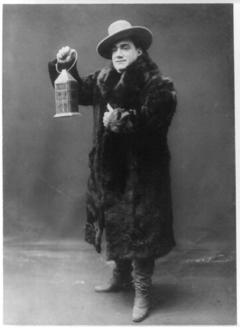
http://upload.wikimedia.org/wikipedia/commons/thumb/3/37/Enrico_Caruso_VI.png/240px-Enrico_Caruso_VI.png

  • Don’t forgive yourself. Maintain the most perfectionistic and demanding moral and performance standard even if you are not a brain surgeon. Stay up at night castigating yourself over every imperfection, no matter how small.
  • Make a list of all the things that are wrong with your life, all the opportunities lost, every heartbreak, and the physical features and bodily changes that you don’t like. Stew in your own juices. Salt your wounds. Pick at your scabs.
  • Take everything personally.
  • Permit friends, family, and co-workers to walk all over you. Do not stand up to them for fear of causing offense and disapproval.
  • Discount your blessings. Concentrate on the dark side of life.
  • Never even consider going into psychotherapy. Assume that this is something only for those who are weak and that anyone who needs to grapple with emotional issues in counseling demonstrates a failure of will power and logic.

With thanks for the inspiration for this essay to Dan Greenberg and Marcia Jacobs, co-authors of a very funny, but ironic book entitled How to Make Yourself Miserable.

The top image is Grief by Edgar Bertram Mackenna. The video frame that follows is from John F. Kennedy’s 1960 inaugural speech. The next image is Sommerblumenstrauss by A. Gundelach. The following photo by Andygoodell is A Jack Rose Cocktail. The fifth picture is of two children in Bangladesh by Nafis Kamal, while the sixth is called Chicklet-Currency courtesy of the U.S. Department of the Treasury. After the image from Disney’s Snow White, is a 1911 photo of Enrico Caruso, the great Italian tenor. All but the Snow White frame are sourced from Wikimedia Commons.

Signs of Insecurity: Behavior That Reveals a Lack of Confidence

http://drgeraldstein.blog/wp-content/uploads/2010/07/insecurity.jpg?w=225

Insecure people often reveal their self-doubt without being aware of it. Indeed, a wise observer can “read” another individual. For example, members of the Chicago Symphony Orchestra have told me they can tell whether a new conductor is competent and talented within 10 minutes of the beginning of their first rehearsal with him. What follows is a short list of behaviors that suggest insecurity:

  • 1. Are you able to give a compliment? Even more important, can you graciously accept one? The latter behavior tends to be difficult for someone who is unsure of himself. He might blush or become flustered. Alternatively, he is prone to dismiss the validity of the praise, instead telling you why it isn’t true. What should one do if complimented? Smile and say “Thank you.” Nothing more.
  • 2. The ability to maintain eye contact is hard for many individuals who lack confidence. They will turn away or look down, but rarely hold the gaze of the other by looking into his or her eyes.
  • 3. The self-doubting person tends to apologize when no apology is necessary. It is as if she expects to be reproached or is afraid to give offense; so, she prophylactically tries to excuse any possible mistake to avoid such a response.
  • 4. Answering a question with an upward inflection of the voice has been done by everyone. The person being questioned doesn’t have certainty about his answer, so he replies with a tone betraying his insecurity. Since I originally wrote this piece, a name has been given to the practice: upspeak.
  • 5. Men and women who are uncomfortable with sharing personal information for fear of being judged will oft-times turn the conversation to a different topic, away from anything that might make them vulnerable or reveal too much. This is also called “changing the subject.”
  • 6. One way of inoculating yourself against criticism is to joke at your own expense. Do this often and others may conclude you believe you are flawed.
  • 7. Do you have trouble making a decision? The comedy team “Cheech and Chong” (I’m not sure which one) said: “Taking responsibility is a lot of responsibility.” If you automatically let others choose the restaurant, movie, and other activity, you are either easy-going and good-natured or don’t want to be held accountable for making the wrong choice.
  • 8. Do you state strong opinions? Those who avoid doing so might maintain the peace — often a good thing — but some fear drawing fire and unwanted attention.

Before I give you nine more signs of insecurity, I’ll say what might cause the condition. Many possibilities. Critical or neglectful parents, poor academic skills, frequent moves making you “the new kid” (especially if you are introverted by nature), learning disabilities and ADHD, being “different” in some fashion (size, shape, color, religion), thinking of yourself as the “poor” kid in a community of the affluent, sensing you are the average child in a school filled with bright youngsters, feeling ashamed of your parents or residence, frequent rejections, getting fired (whether deserved or not), clumsiness, a history of abuse or bullying; physical unattractiveness, deformity, or injury, etc. For a more thorough discussion of these causes, click here: The Causes of Insecurity. Now back to the list of signs of insecurity:

  • 9. Do you laugh nervously in social situations? It is another behavior betraying self-consciousness.
  • 10. People will appraise you harshly if they see you bite your nails or they appear bitten.
  • 11. Are you self-effacing, placing yourself at a disadvantage — letting others go first, speak first — reluctant to raise your hand? Do you hesitate to take your turn? Do you sacrifice your interests as a matter of course? Insecurity can make you wait until the opportunity before you is lost. Excessive deference displays little regard for yourself, even if some amount can be a sign of good breeding and consideration.
  • 12. Are you nervous eating in front of others? Do you fear dropping something, displaying poor table manners, or making a mess? You probably won’t, at least not more than the rest of us.
  • 13. Can you make phone calls without trepidation; especially those in which you need to introduce yourself, correct a problem, or speak to an authority? Too much discomfort in anticipation of these actions can reveal your sense of uncertainty.
  • 14. Might you make too many excuses? Those who are unsure give explanations where none are required. Imagine you order an entrée at an elegant restaurant and the waiter asks whether you want an appetizer to start. You explain why you don’t. Some folks offer multiple excuses for what they do, anticipating criticism. If you must give a reason, limit yourself to one. The more you give, the more uncertain (or dishonest) you sound. For  example, “I can’t come to the party because I have a stomach ache and my car broke and I need to study.” One reason will be more convincing. You needn’t explain yourself as often as you think.
  • 15. Insecurity can be suggested by hesitation to ask for a favor or an inability to say “no.” Anticipation of rejection or disapproval is the motivator for both of these problems with self-assertion. By contrast, a self-assured person will not believe the relationship (or his own value) is dependent upon going along with someone else’s wishes or fulfilling the desires of others as a matter of routine.
  • 16. Do you make frequent requests for reassurance? A few examples: “Does that make sense?” “What do you think?” “What would you do?” “Do you think that is a good idea?” “Do I look OK?” Must you have sex to prove your partner remains interested in you? If you are self-assured, you won’t implore your lover to calm your doubts and remind you, over and over, in words and deeds, of your desirability or intelligence.
  • 17. Last one. Here insecurity takes a different form. This person wants the spotlight at all times, the better to be told “You are the fairest of them all!” She or he pushes for recognition, strutting about the stage we call life; checking to see where he stands and what others think of him. Bragging and display become a full-time job. Perhaps he was the class clown in grade school, but now he drops names to prove his importance and get your attention. His inner emptiness must be filled and refilled, like a bucket with a hole in it. Such people are plagued by narcissism as well as insecurity, a troublesome combination. There is hell to pay for those who expose the pretender’s flaws: lacerating attacks against any critics. If you are this variety of insecure person, I doubt you will admit it even to yourself. If you meet such an individual, run!

I suspect you get the idea. Please add an item if you like. You can use the list in one of two ways: to consider whether you are insecure or evaluate the confidence of those around you. Of course, you are the only one whose self-confidence you can change.

You may find the following related post of interest: Signs of Self Consciousness: When the Mirror Isn’t Your Friend. Also, you might want to read  The Upside of Insecurity or, this very recent post: Insecurity and Our Preoccupation with Appearances/

The image above is Insecurity by Lacey Lewis: http://www.lacey-lewis.com/ With permission.