So You Say You Want to Know Yourself? Thoughts on Examining Your Life

256px-La_Fontaine_de_Jouvence_Paul_Gervais_m

Our choices tell us who we are. In hypothetical situations it is easy to be heroic or generous, but no one can be sure what he would do until tested in real life. Since we prefer to believe the best of ourselves, if faced with a genuinely costly decision we might act differently than we think. You already know your history in life choices familiar to most of us: electing more time at work or at home, determining what to spend your money on, choosing a life partner, etc. What of those you haven’t experienced?

With all that in mind, I offer you several imaginary scenarios designed to reveal your values. You might find out something new about yourself if you take any of them seriously. After all, the words “know thyself” were inscribed in the forecourt of the Temple of Apollo. I’d be grateful if you comment and share your thoughts as you consider the outlined scenes, even if you mention only one. I suggest you consider just one at a time. In a future post, I’ll give you my own ideas about the dilemmas listed below:

  1. Someone asks you for a year off your life — a transfer of 365 days from you to him in return for money. Would you accept? How much money seems sufficient? The old Twilight Zone TV series presented an interesting story involving such an offer: The Self-Improvement of Salvadore Ross.
  2. If you could trade one extra year of good health and youth for one less year of longevity, would you make the exchange?
  3. What would you die for?
  4. What would you kill for?
  5. Imagine you are given the opportunity to improve your physical beauty by 25% or your intelligence by a similar percentage. One or the other, just by saying so. Please discuss your decision and justify it.
  6. You are offered the chance to live one day over again. A “do-over.” Which 24-hours would you choose, if any? Describe what led you to this determination.
  7. A genie will give you the ability to relive one day of your life just as it happened, without change. Which would you choose? Explain.
  8. The gift of immortality on earth is yours — to live forever, never aging beyond your current age. Do you want it? Why or why not?
  9. In your travels you come upon a fountain of youth enabling eternal earthly life at whatever chronological age you choose, with only the knowledge and experience you possessed at that time. To what moment would you return? Might you decide not to drink from the fountain? Tell me more.
  10. Who is the one person living to whom you most owe an apology? Why haven’t you expressed your regret?
  11. Imagine you can live the fantasy of succeeding in everything you try and being continuously satisfied by the progress of your life. It will be experienced as absolutely real, even though you will be in a chair connected to a machine keeping you healthy, supplying you with food, and fooling you into believing you are elsewhere. Alternatively, you can try to make your way in the real world you and I live in, as you do today. Which would you opt for?
  12. You are offered a risk-free, brief surgery permitting you to give yourself ecstatic pleasure by pressing a button whenever you want: the most powerful mood-changer ever invented. The marvelous joy beyond joy lasts only 10 minutes, so if you want more you have to press repeatedly. Do you accept this “gift”? Explain.
  13. You are given a trip in a time machine, enabling you to go back to the moment in history you’d prefer to live in, in whatever place you’d like to live, though you’d remain your current age. The journey is one-way — no coming back. Moreover, you can bring only one other person with you. Would you do so and with whom? To what historical moment and place? Elaborate your deliberation process.

No right or wrong answers here. Have at it!

—

The painting is The Fountain of Youth, 1908, by Paul Jean Gervais. It comes from Wikimedia Commons.

Thoughts about Dependence on My Grandson’s First Independence Day

This morning I found myself thinking about my grandson’s first Independence Day: how he is growing, keen to learn and master the world, but also how he will react to the dazzle and display of fireworks. Thrilled, I’m sure, whenever he can stay up late enough to watch. And, I couldn’t help but wonder about an implicit trade-off as children begin to master the world, but perhaps lose some of its magic in the process.

My free association took me to a 1956 nighttime baseball game my uncle promised to take me to — take me to watch the great center fielder Mickey Mantle. I fairly burst with anticipation to monitor Mantle in a contest under the lights, the latter still a novelty for the adults and a first-time experience for me. I continue to enjoy baseball and have traveled to nearly 20 cities for games in ballparks old and new. But I’m not anymore the nine-year-old boy blown away by the idea — the impatient, invisible, excited expectation of attendance — or the youngster of a similar age on another occasion who was stunned by the color green and the expansive daytime beauty of Wrigley Field as I walked up to the concourse from the shadowy underworld of the old stadium, feeling as if I were in a better place — as if the gates of heaven opened for me.

We become more experienced, more confident, and wiser while losing a bit of the thrill of accomplishment. You notice the growing security in any small child and the tenacity and curiosity driving it, but he can’t yet imagine his adult self who will be more used to things, less overwhelmed; a person who, having “seen it all,” won’t get as excited, stimulated, and intoxicated. Perhaps, in part, that’s why we drink or drug to mimic the feelings of a world from which the cellophane wrapper has just been removed.

The little one is so desperate to get away. Yes, he checks over his shoulder to assure himself that the parent has his back, but eventually no longer checking and no longer wanting to be checked, supervised, reigned in. Freedom and competence and recklessness rule. Later come maturity and jadedness, too. We are like toothpaste out of the tube, pristine for a moment, then losing something hard to define. The rewards of the life of one who has broken free are different, more dependable and therefore more essential, but less remarkable and joyous. The colors are duller.

Perhaps, as adults, some of us go places not seen and seek the thrill of a fresh relationship with a younger body to recapture the old intensity: an unconscious effort to touch an uninnocent-innocent in the hope her relative newness will rub off.

Our mature challenge is to make the day new, a bigger effort than for the 10-month-old for whom it simply is new.

But, little boy, I’m sure you wouldn’t be happy as a forever dependent oldster, even for all the moments of untarnished delight joined to your present dependency. Yours is the wonder of a life of constant enlightenment and unfolding, but there is no profit in perpetual incapacity, of reliance on your parents. You must know this deep down because you work so hard to escape it and enter an existence full of mastery achieved at the expense of routine.

One of the happiest memories of my life took place after being taken to a drive-in movie by my parents. It was not only the first film I’d ever seen and the first outdoor movie I’d ever attended, but 3-D to boot! You had to wear special glasses to get the effect, of course. (The trailer above displays an over-the-top promotion of said entertainment: The House of Wax).

I possess little memory of the video. What I do recall is the ride home in the family Chevrolet. The horizontal, seven-year-old version of myself drifted into that Neverland between waking and sleep on the pre-seat-belted bench behind my parents. I was as content as I have ever been, fully confident of having mom and dad to myself (since my two little brothers were back home with a sitter) in the days when I still thought of my elders as Zeus and Hera, god and goddess of the universe. I was sure of being taken care of: safe, serene, and inexpressibly happy, as though a fairy god-mother had touched me with her wand.

I have no advice for the little guy who will visit our home today: it would make no impact on his not-yet-perfected word processor-mind. But if my experience would make a difference, I’d say this:

Don’t grow up too fast, tiny man. Your parents will never again be so young, handsome, and wonderful. You will never be loved with more self-sacrificing intensity. The sparklers on this still dependent Independence Day will never so astonish you.

Seize the day, now and forever.

Graduation: How I Found My Way Back to School and Realized I Was There for the First Time

When I was young I thought reading the right authors and listening to Beethoven and Mozart might make everyone a better person. No longer young, I realize being “good” isn’t so simple. But, even if education is insufficient by itself, I still believe in the effort to ennoble oneself, to try hard to be guided by virtue. Socrates provided instruction: “The unexamined life is not worth living.”

All this sounds like a frightful amount of work and who has the time? Actually, I do. Thus, after retirement, one of the first things my wife and I did was to enroll in the Basic Program of Liberal Education for Adults at the Graham School of the University of Chicago.

It was one of the best decisions we’ve ever made. Now I realize you might find this incredible. Moreover, if you’d asked me when I was 18 to predict whether I’d do such a thing voluntarily, I’d have said, “More school? No way!”

What happened between then and now?

I dutifully plowed through college and graduate school. True, I enjoyed many of my classes, but I always had the sense of “having to” more than “wanting to.” I needed to learn, not for its own sake, but for the sake of getting somewhere: namely, achieving the credentials and knowledge required to make a decent and interesting living — the letters after my name needed to do some good in the world. The shadow of the Great Depression my parents barely survived compelled my work ethic and success.

Then, of course, there were tests to take, papers to write, presentations to give (which I hated until, much later, I decided to master the art of public speaking), and oral exams for my advanced degrees. ACTs, SATs, and GREs, too. Obligation and pressure were what I experienced, what I lived. Looking back, I was a prisoner of my goals and the joy of learning was not even on the list of priorities. School was a grind. I made school into a grind.

Now, 50 years on, I’m a different man on a different mission. Over the past half-century I learned the process is sometimes as important as the product. I learned that when the instructor calls my name I will benefit more if the question is difficult than if it is easy. I am therefore grateful for such questions. I learned that all those old white European males like Socrates, Lucretius, and Kant (and ladies like Jane Austen and Virginia Wolff) knew more about my 18-year-old life than I did when I was 18.

Above all, I learned that learning can be stimulating, thought provoking and exciting. I learned to learn for the love of it.

We live in a time when, more than ever, students are encouraged to be practical and attend university to be trained in technique as a means to a material end. They try to imagine their entire employment future (an impossible task), take classes designed to match their vocational choice, and hope society will be willing to pay them if they guess right. Some people sneer at the idea of taking liberal arts courses, and universities are purging them. Recently, for example, Western Illinois University decided to eliminate four degree programs, including Philosophy and Religion. Poor enrollment and low graduation rates were blamed — saving money, in other words.

With reasoning like this we will be left with a population of people who know how to make a living, but don’t know how to live.

I’ve had the good luck to be able to attend the only program of adult classical education of its kind in the country. The “Basic Program” offers many texts someone like Thomas Jefferson would have read and owned in a library he eventually sold to the Library of Congress, to make up for those burned in the War of 1812. Other “lifelong learning” or senior education programs exist, but none aim to teach those already well-educated to practice a new way to read and reason, based on an integrated program of classics designed to “speak to each other:” to look at the big questions found in life, philosophy, and magnificent fiction, providing a set of different perspectives on the same important issues. Should you be interested, the four-year reading list is here: Basic Program Curriculum. There are no lectures, only the Socratic Method of the instructors — exploring questions by asking questions — and the author’s voice to guide us.

I must explain, too, the Basic Program requires no papers to be written, no speeches to be given, no exams to be taken. Yet, as some of our instructors note, we students devour the material and come prepared to class, often more thoroughly than those who are 50 years our juniors in degree programs around the city. No disrespect is meant to our younger counterparts. Perhaps another half-century of life is sometimes required to prepare the human soil for the seeds of lofty thoughts, to approach the writing with respect, to set aside preconceived notions and be open to the enlightenment a careful reading provides. As T.S. Eliot wrote:

We shall not cease from exploration
And the end of all our exploring
Will be to arrive where we started
And know the place for the first time.

I was honored to be asked to give a speech at the June 4th commencement held at the Graham School. The video is posted above. Please turn up the volume and watch. The view you will see from the Gleacher Center is southeast across the Chicago River. Thanks go to the university, my classmates, and the gifted group of instructors who led us into the joyful intellectual thicket of “the best which has been thought and said in the world,” as Matthew Arnold put it: a journey without end.

On the Need for Reassurance: What Do You Do After Therapy?


256px-'The_Thinker'_by_Auguste_Rodin,_14.75_inches,_North_Carolina_Museum_of_Art

When we go to the doctor our expectation is to receive a cure: something to finish off the illness. We might expect a similar result from a therapist. He will apply the magic ointment to make our hurt go away. Typically, however, we are not offered a fix with a lifetime guarantee, but guidance in developing a method — a way of living “differently:” a “practice” designed to enable a more satisfying and manageable life.

Perhaps our desire for someone to “make it better” goes back to childhood. Indeed, depending on people is, for many, an endless and desperate project. We look for them to put things right, whether to captain our team, lead our country, or reassure us everything will be OK. Unfortunately, however, there are no magicians, only experts. They cannot be with us forever and, even if they could, our excess dependence would transform them into the human equivalent of a security blanket.

If life is to be lived with adequate confidence we need a method to practice regularly, not another human as our permanent rabbit’s foot or talisman. Not a replacement for an inadequate parent. Not excess dependency, but self-reliance coming from the development of a new “groove:” a repeatedly rehearsed approach to the challenges particular to our life.

How can we carve out such a path?

This is a big question. Usually, however, other questions take precedence. Will I wear out my therapist? Will he leave me? Will he ever say he cares about me in a convincing way?

The unstated belief is that the mental health professional is essential for my well-being; and the hope he will be there as long as I need him. In effect, he possesses the magic, I don’t. You hear this in the lament of the lonely, as well: I cannot do this by myself and my life can only be better when I find “the one.”

Therapists, at least with most of their clients, recognize they need to be transitional objects. A portion of what they do is to enable the patient to develop a method of living designed to make him (the doctor) unnecessary. Put differently, the client learns to master his problems most of the time.

Many patients resist the notion to the point of hoping to become the friend (or lover) of the counselor after treatment ends. Just as we look to our aged parents for wisdom or reassurance, we want not only the therapist’s attachment, approval, and security, but his guidance, as if he can never be replaced, least of all by relying on ourselves.

The idea of “a practice” is not always mentioned by counselors. Oh, the clinician will assign homework, but he might never say homework must continue when treatment ends. Leaving the therapist’s office upon termination is not enough. Rather, the client must continue to do work on himself, climb even higher, take on different versions of the same challenges, and bounce back when thrown to the floor. He needs to remind himself of his strengths, his successes, and what he must do now. This is a practice: “repeated exercise in or performance of an activity or skill so as to acquire or maintain proficiency in it,” according to the Google online dictionary.

images-2

Your program might involve regular, organized self-reflection; journaling, mindfulness enhancement, recitation of those people and things for which you are grateful, time set aside to challenge negative self-talk, a plan for increasing your compassion, writing down all those difficult moments you’ve overcome; and a step-wise, graduated list of challenges you want to take on and a chart of your progress.

You may already engage in other such practices. Daily meditation would be one. Daily reading of passages from a religious text is another. Professional athletes and body builders maintain a regular workout routine, even in the off-season. The goal is to solidify your thought and action, create a habit, improve your focus, rely on yourself, and beat back whatever might encroach on past gains.

One of the best examples of this idea is found in Plato’s Phaedo, the story of Socrates’s last day. Knowing that he will shortly drink hemlock to fulfill the state’s death sentence, it is perhaps unsurprising that Socrates speaks with two younger philosophers (Simmias and Cebes) on the subject of mortality and whether an afterlife for the soul can be foreseen. Despite his attempt at philosophical “proofs” of the likely existence of an eternity, they acknowledge the extent to which they (and we) are like children in search of a magician for reassurance. They despair that once Socrates is gone, no such person will be able to provide his kind of logical, well-reasoned, persuasive confidence in the possibility of a life after death.

Socrates gives Cebes the following advice, as applicable to therapy as to facing one’s mortality in a philosophical way, in both cases to dispatch fear:

What you should do, said Socrates, is to say a magic spell over him (the scared child in each of us) every day until you have charmed his fears away.

Cebes persists, believing only Socrates, soon to be dead, has the necessary sorcery.

Greece is a large country, Cebes, he replied, which must have good men in it, and there are many foreign races too. You must ransack all of them in your search for this magician, without sparing money or trouble, because you could not spend your money more opportunely on any other object. And you must search also by your own united efforts, because it is probable that you would not easily find anyone better fitted for the task.

Thus, Socrates has advised these well-trained philosophers to repeat their own magic spell over the child within them: to seek the wizard in themselves to calm their anxieties by way of what he has taught them and whatever further ideas they can reason out on their own. In effect, to develop a practice maintaining or enhancing proficiency in dealing with this challenge of life.

The proper approach for the therapy patient might be said to take whatever he has learned in treatment and make it a practice. Yes, this is lots of work, but what is the alternative? Life will not hesitate to provide you with more challenges. We stop growing at our own peril, just as the athlete risks getting out of shape by abandoning his practice routine. Concern for your psyche is not like a diet, to be ignored and replaced with poor nutritional habits once the target weight is achieved.

Whether you maintain a practice or not, your counselor will still be there in most cases. But don’t you think you would be more secure by taking your life in your own hands once he passes the baton?

Your therapist does.

—

The top sculpture is The Thinker by Auguste Rodin, sourced from Hiart at Wikimedia Commons. The second photo is of Baseball Hall of Fame pitcher Bob Feller.

The Challenge of Pain

512px-Antoni_Madeyski_-_Ból

Two years ago I suffered from nerve pain of an uncertain cause: excruciating discomfort below the right side of my rib cage, like a burning cigarette against my flesh. I could not sit for more than a few minutes without a growing conflagration. Trying to sleep on my back delivered the same distress. I spent every day and night for a month standing or on my side. Upon making my return to a humanities class I still had to remain upright for long periods on the commuter train, with frequent episodes in a vertical position in the seminar room. Eventually, medication eliminated my symptoms and life went on without ever knowing for certain what caused the problem, even after extensive testing. I’m long past the treatment and the pain, but my experience was a trial.

I cannot draw parallels or contrasts. Not with you or anyone else, except those who suffer worse for far longer. Too many of you, I know. At the time, however, such knowledge counted for little. I lacked a yard stick to measure the combination of severity, the fraying of the soul, the psychological darkness, the difficulty of passing the minutes without counting the time, the presence of a thing I didn’t understand and couldn’t will away. The worst part? Not knowing if the unseen torturer had plans to leave.

As I mentioned, the most acute stage of the process lasted a month and over two months passed start to finish. The physicians were excellent. One idea persisted: not fear of death, but a life of endless illness. I would be ground to little bits like flesh subjected to mortar and pestle.

Pain tests you. You are asked what you are living for. The longer the pain, the greater the uncertainty of its duration, the louder the question.

Time stretches, food becomes a necessity — not a pleasure. Some folks you tell, others you don’t. The best of those informed remain concerned and supportive. A few disappear, usually to protect themselves from your travail and their fear of contagion; contagion of your distress or, just as often, the idea something else will target them.

Illness does not wait until all else in your life is ready to take on the burden. Issues with which you are struggling pile on, like a football team that’s already tackled you and enjoys the thrill of seeing how many bodies can be stacked on top of your own.

Joy flees, laughter is brittle — a momentary distraction. The “tough guy” images on TV don’t help, but suggest everyone else is more durable. The future — imagination of time ahead that would normally give anticipatory pleasure — slips away. All you want is relief. You work to hold on to your self, the one who prided himself in taking on difficult things, facing people, being a man. Self-image alters. Perhaps you are not who you thought you were; or perhaps you were that man, but are no longer.

You lack control of what is outside and what is inside, all except your response. The messiness of the world you thought you organized is evident, like carefully arranged blocks now scattered beyond reach.

What do you hang on to?

For some it is future plans, jobs to be done, achievements targeted long ago. Gratitude for what you still have is a mental weapon pitched at the physical giant set against you. Meditation can be a salve, but only if you are already an expert.

I had an uncle who was so into technology he wished to live to witness how men might change the world. I know of a former patient who stays alive because almost her whole family died in the Holocaust. She will not give away by choice the thing taken from them without choice, no matter the suffering she endures.

512px-Madeyski_Pain

Perhaps you reframe the challenge before you as a test, the way a Stoic philosopher would. They thought pain was something unremarkable because such a time comes to most of us. Greatness, they say, is the product of the bravery you show only when events turn against you, not on the sunny days.

God can figure in, though individuals so sustained would not all give you the same definition of the role he plays. Then there are people toward whom you feel love and responsibility. You persist because of what they mean to you and what your absence would do to them. Made aware of the extent of your distress, they offer support and love more strengthening than water and food.

If, like me, you are lucky, the crisis ends. You recall it, but as an idea, not a sensation. Now, however, you are different. It is time to make sense of what happened, who you have become, and whether you wish to live in the same way, with the same values and expectations as before. You did not predict your response to the pain any more than you predicated its onslaught. One day you were fine, the next day you were not.

My friend Rick wrote a profound comment to my last post: “these are emotions we are normally unfamiliar with until the event happens, and so we do not know how to deal with them.” The surprises of life, especially when they are as terrible as he described (the suicide of his mother), leave us unprepared. Moreover, they can cause us to redefine ourselves. Those who act heroically or stoically perhaps think better of themselves. More commonly, however, we struggle with the blows life delivers and our self-image also becomes one of the casualties or, at least, one of the personality characteristics transformed by our bout with suffering. Perhaps the pain provides an opportunity to grow, but if so, without a guarantee.

You have been marked. Remember, though, that in the Hebrew Bible, there is also a story of being marked. Cain murdered his brother Abel, for which he received the “mark of Cain.” This, however, was not to harm him, but God’s warning to stop those who might wish to punish Cain for the crime.

For the rest of us there is no such indelible symbol evident to the world. Whether God has used a different way to safeguard you is for you to say. For myself, however, I was lucky to have a sustaining love and enough will to keep going. Objectively, the time was short, however much it seemed endless.

True, I know more about human frailty and my own limitations now. I think I am more humane, but do not think me a hero. I wouldn’t have chosen the ordeal had I been promised some great reward for my persistence. Nor would I volunteer for such “learning” again.

We are clay and sculptors of that clay, both at the same time. Its final form, however, is not our work alone. Unseen hands offer their careful, kind, or calamitous touch.

—

The photos are of the sculpture, Pain by Antoni Madeyski. The first of these was provided by A blakok. Both are sourced from Wikimedia Commons.


Whatever Became of Julius Rosenwald and William Schuman?

Have you ever opened the old photo album of a parent or grandparent and wondered, “Who are these people?” So many smiling faces lost to the passage of time.

We spend lots of effort at the job of being remembered. No one wants to be forgotten, unless, like the old-time actress Greta Garbo, you “want to be alone.”

Indeed, one of the chief reasons people skip high school reunions is the fear of not being recalled.

Look around you at the buildings. Once gone, the person whose name appears on the edifice loses control. Buildings get torn down, names get changed.

Take Dyche Stadium, Northwestern University’s football field in Evanston, Illinois. The edifice opened in 1926, named after William Dyche, an NU grad in the Class of 1882, who later became the Mayor of Evanston and oversaw the venue’s creation. To the dismay of the Dyche family, NU sold the rights to the name in 1997 to Pat Ryan, then the Chairman of Northwestern’s Board of Trustees. For eight-million dollars, Dyche Stadium became Ryan Field.

256px-Ryan_Field

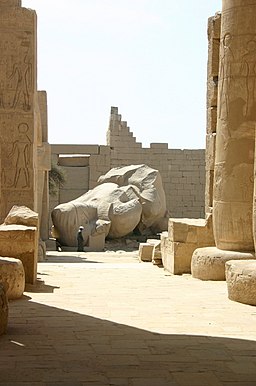
Percy Bysshe Shelley would have understood. His poem Ozymandias tells a similar story about the collapse and destruction of an ancient monument to a once formidable and arrogant ruler. An inscribed pedestal is the only thing left:

“My name is Ozymandias, king of kings:
Look on my works, ye Mighty, and despair!”
Nothing beside remains. Round the decay
Of that colossal wreck, boundless and bare
The lone and level sands stretch far away.

http://upload.wikimedia.org/wikipedia/commons/thumb/a/af/S_F-E-CAMERON_EGYPT_2005_RAMASEUM_01319.JPG/256px-S_F-E-CAMERON_EGYPT_2005_RAMASEUM_01319.JPG

If the exception proves the rule, then we should talk about Julius Rosenwald. You probably don’t know his name and Rosenwald wouldn’t have cared.

Julius Rosenwald (pictured at the top) was President of Sears, Roebuck, and Company from 1908 to 1924, and the Chairman of its Board until his death in 1932. In 1917 he established the Rosenwald Fund, a charitable enterprise designed to have no endowment, i.e. an untouchable bankroll to be invested for the purpose of the charity’s survival. Rather, Rosenwald intended the Fund to disperse grants “for the well-being of mankind” until there was nothing left. The money was gone by 1948; and with it, any chance we might hear about it in our time. Only a 2015 documentary on the philanthropist’s life has (for the moment) reintroduced his name to the public.

During its existence Rosenwald’s fund distributed about $70 million, with much money going to the establishment of over 5000 schools in the South, aimed at educating black youth. Rosenwald was also a principal founder of Chicago’s Museum of Science and Industry, seeding it with five-million dollars and serving as its president from 1927 to 1932. At the time, people in Chicago were as likely to refer to the structure as the “Rosenwald Museum” as they were the Museum of Science and Industry.

http://upload.wikimedia.org/wikipedia/commons/thumb/4/4e/Museum_of_Science_and_Industry.jpg/512px-Museum_of_Science_and_Industry.jpg

William Schuman’s name, on the other hand, was never a household word. But in his day (1910-1992), only Aaron Copland was a more prominent living American composer in the classical world. Moreover, as president of the Juilliard School and then of the emerging Lincoln Center, no one had a greater influence on serious music in the middle portion of the last century. Schuman also wrote 10 symphonies among other works, and won the first Pulitzer Prize ever given for musical composition. His Symphony #3 is arguably the greatest such piece written by an American.

William Schuman: Symphony No. 3

Yet, the centenary of his birth in 2010 was hardly noticed by performing groups and the major US orchestras pay him little attention. I asked an orchestral executive why, with few exceptions, deceased 20th century Americans like Schuman are not performed. His wry answer: once dead “it is easier to say ‘no’ to them.” All the friends in high places who programmed Schuman’s music are now gone, along with his music, except for occasional performances and recordings. The musicians and executives of our own time don’t know his work and don’t care, or so it seems.

Schuman would have agreed, I suspect, with the notion that a composer’s life is like trying to create art on a block of ice on a hot day in July, to paraphrase Arthur Miller. In other words, you hope those notes will last and be played, but the odds are against you.

Shakespeare treated the fleeting memory of our existence more gently in the words he gave to Prospero, the sorcerer, in The Tempest. Prospero’s comment comes as he ends a brief staged performance — a play within a play. What he says refers not only to the matter of creating illusions in the theater, but also to the insubstantial and temporary nature of life itself, not just our names:

Our revels now are ended. These our actors,
As I foretold you, were all spirits, and

Are melted into air, into thin air…

We are such stuff
As dreams are made on; and our little life
Is rounded with a sleep.

The irony implicit in Shelley’s and Shakespeare’s words is that while they talk of the transience of things, their names and works live on. Though it’s not called Dyche Stadium any more, the place Dyche built still stands along with the “Rosenwald Museum.”

Got to run. A recording of Schuman’s Symphony #3 is coming on the radio. Perhaps his music, like that of Gustav Mahler, will be revived 50-years after his death.

The future is full of surprises.

Who knows. Somebody at the reunion might remember you after all.

—

The top video is the trailer for the 2015 documentary, Rosenwald. The 1970 photo of Ryan Field (formerly Dyche Stadium) comes from Greenstrat. Steve F-E-Cameron is the author of the Temple of Ramses II, Luxor, Egypt. The photo of the Museum of Science and Industry is courtesy of Knarfol. All of these are sourced from Wikimedia Commons. The final image is the Columbia LP (long playing record) cover of William Schuman’s Symphony #3 with the smiling Schuman facing the photographer.

Anticipation and Realization: Can Expecting Disappointment Reduce Your Pain?

409px-In-Erwartung_Keller

My mother used to say, “Anticipation is greater than realization.” She uttered the phrase more than once, always unprompted. It was as if she were giving me a warning about the disappointments of life, the hoped-for moments that wouldn’t fulfill my expectation of them. Certainly, she was speaking of her own pain-filled history. Her strategy was not to predict too much good from events and especially from people, for fear of adding to the list of letdowns. In doing therapy I heard many others tell me they adopted a similar defense, the better to buttress themselves against the world’s assaults. Simply put, don’t get your hopes up, they would say. Otherwise you will be ripe for dismay.

I am no blind optimist, but I think mom was wrong. First, I’m not sure you can effectively steel yourself against all the blows of life. If Death is an opponent with an undefeated record, Life is sometimes your best friend and at others your worst enemy. He will lift you up and tear you down. Even in a lucky life like mine “there will be blood.” But since I like the heady experience of those times life lifts you off your feet, I must pay the cost of admission to the airport. These are the terms of the contract we accept by taking our first breath. We do well, if we can, to bounce back when defeated, since the future may hold more glorious and unexpected flights.

Secondly, many of the injuries we suffer are impossible to anticipate except in an abstract way: we know people will leave, we expect occasional betrayal, we recognize nobody wins every game, on and on. Only a fortune-teller knows exactly how and when. Thus, in a moment of pain, we are taken by surprise despite our preparation. Moreover, we risk wasting our days in a state of general worry or dullness, bypassing every chance for love, kindness, and accomplishment. Expecting disappointment rarely reduces the hurt, but the strategy guarantees little possibility of joy.

My most memorable experiences were impossible to fully forecast. A trivial example: as a kid I looked forward to attending a NY Yankees baseball night game against the Chicago White Sox on May 18, 1956. I couldn’t wait until my Uncle Sam took me. The thrill I imagined weeks in advance was amplified a thousand fold when the mighty Mickey Mantle hit one home run batting right-handed and another left-handed, a feat rarer than pitching a no-hit game. I can still picture the port side clout, as if carried by a rising tide, the ball aglow in the arc lights until the spheroid struck the right field upper deck of old Comiskey Park. But for the impediment of the rafters I thought it would reach the moon.

I have been moved to tears by music, by the birth of my children, and amazed that I could move many of my high school classmates to tears by a speech given at one of our class reunions. A crackling physical electricity of athletic performance passed through my body on one occasion — a sensation I never knew possible. I’ve enjoyed luck in love and friendship as well as heartbreak and betrayal. A business partner and friend stole tens of thousands of dollars from our enterprise. My parents are both long dead. A lifetime of movies, books, conversations and observations did not prepare me for these sensations and emotions when the moment arrived. Life is about taking action and being surprised and being grateful despite the fact there is no free lunch.

Some hunker down in their shelter of straw thinking the big bad wolves will thereby be held off. I’m here to tell you I know of no fool-proof defense against injury and no Teflon-infused clothing to deflect the “slings and arrows of outrageous fortune.” What we are offered is a life of imagination and fear and effortfully summoned courage and friendship and tears and laughter and loss and taking chances: in other words, of winning and losing. If you think otherwise, well, you haven’t been paying attention.

Sample the menu of life. Not all the dishes are tasty, but even some of those you don’t like are informative, and knowledge is usually desirable. Don’t make the highlights of your life the things you buy for yourself. Do make some of those highlights the gifts (of all kinds) you give to others.

The best events cannot be anticipated. And don’t glut yourself: a gourmet meal should be a special treat, not a routine pattern of diminishing novelty. The greatest art, music, and literature become old if revisited daily. I wouldn’t want to attend a performance of Beethoven’s 9th Symphony even once in three years. Celebrate the rare occasion. Become an enemy of routine. Do look forward to some things, be they goals worth working for, a date with your sweetie, a trip, or a once a year get-together with old friends. Anticipation has magic, as we note in the lives of children every Christmas. Don’t become like the worker in a candy factory who grows tired of chocolate by eating too much.

The world is not your oyster, but there are some good bites. No one gets out alive, yet brave souls seize the day. On a fine afternoon your bite will feel like more than enough. You might even uncover a pearl.

—

The top image is called In Anticipation by Albert von Keller. It was sourced from Wikimedia Commons.

Why Patients Deserve Special Respect

512px-Tristeza_-_El_Capítulo_Final

The stigma of mental illness lingers despite the carloads of Xanax-filled vials in the pockets and purses of America. The notion of life as an easily mastered enterprise persists. When the going gets tough, the tough get going — so we are told. Those who cannot, by force of will, get through difficult events unaided are thought to lack the right stuff.

I disagree. There is a quiet heroism in admitting you need help. Opening yourself to a stranger requires courage.  Awareness of your limitations is humbling. If all this were easy, therapists would observe lines leading to our turnstiled offices. Traffic pile-ups would slow the route.

Don’t get the wrong idea. The people who seek treatment are indistinguishable from everyone else. They range from rich, famous, and gorgeous to a more unremarkable lot. They are your neighbor and your friend. They might have been you and they may yet be you.

The best of them are willing to do anything to change their lives. They risk, cry, and expose their naked psyche. They meditate, think, try new behaviors and revisit old ones. They confront themselves in the darkness.

They look in the mirror for reasons beyond hair arrangement and shaving.

You may say you’ve been through worse than they and came out better, all without the crutch of psychotherapy or medication. Can you be certain? There is no calculus to compute your pain and measure your suffering against others. When you invent one call me, for then you can say you did it all alone, by the superior force of your will against the greatest odds.

Those faced with severe anxiety or mood disorders know things too terrible for words: endless sleep disturbance, perpetual unease, and (in the case of depression) minute-by-minute misery fraying the cord binding them to life.

You would not want to feel as they do if you could, and if you could the experience would not be as you imagined. You’d live inside of a monster who lives inside of you, consuming joy until your former self is gnawed away. Living the experience would lead you to repent any prior judgment, but shame might mute your apology. When patients choose to live and fight in spite of their calamity, the rest of us can only bow before them. To heap scorn on those souls who display courage even they themselves doubted adds to their misery. The crowd owes them encouragement instead. We diminish ourselves by withholding it.

Judgement, however, is hard to escape. A young married man who was a therapy-virgin told me he thought unfaithful males are weak in their lack of resistance to temptation. Yet he had never been severely tempted by a woman to whom he was drawn since his wedding; never had to turn from the scent, sensuality, and softness of another with seduction in her eyes. His thoughts on the subject were largely abstract and observational. What value might one give his opinion? No more, I suspect, than the rest of us when we say, “I would have done that” or “He shouldn’t do this” as we witness the battlefield of life from a safe distance, like the chest-beating bravado of old men who send young men and women to war.

The same gentleman, by the way, was a brilliant extemporaneous public speaker, but struggled to make a phone call. We are frail creatures, no? A lack of experience in counseling, like other opportunities one hasn’t had, puts negative judgment on a slippery slope to irrelevance.

Among those who think therapy deserves its stigma are at least a few who choose another way of living, less heroic than they think. There you will note plenty of avoidance, alcohol use, nightly marijuana trances. Some of their marriages are endured rather than enjoyed. You will discover those with few friends and jobs they wish were better. Anger and depression reside among them disguised. In other words, their lives are not so different than those of the pilgrims to the counselor’s office, except …

People who search for a therapeutic remedy face the imperfection not only in themselves, but in life. They tend not to live with the illusion that faith, by itself, will transform this mortal coil and their place in it, even if they await a more distant reward.

Perhaps most admirable of all, the most dedicated clients wish to learn: to do new things, explore the psyche, reexamine their past, and travel to the unnamed, undiscovered country. They are discontented with their present life and the majority wish to move beyond blame — though blame they may — and take responsibility for change.

Winston Churchill said that “Democracy is the worst form of government, except for all the others.” Maybe therapy is like that: the worst remedy for unhappiness, except for doing nothing; a painful attempt to face the truth and reorder your existence, modify relationships, and pour yourself into a vessel on which you’ve written: “This has value. This is worth my best effort.”

If you find a better way, let me know. Until that time, hats off to those who take Socrates to heart: “The unexamined life is not worth living.”

—

The top photo is called A Life of Theater Photo: Sadness –Final Chapter. It is the work of Gabriel S. Delgado C. and sourced from Wikimedia Commons.


The Lists We Keep and the Meaning of Life

51E68PBGVEL

“Everyone has a list and everyone is on someone’s list.” I heard this from a musician, speaking of himself and his 100 orchestral colleagues. The statement reminded me of the 1971 “Enemies List” kept by President Richard Nixon’s assistant Charles Colson, naming Nixon’s biggest political and public opponents. He even included the movie actor Paul Newman. I suspect, however, those of us who make lists like this don’t actually intend to meddle and damage other lives, as Nixon did by means of Internal Revenue Service audits and the like. Fortunately, the IRS Commissioner Donald C. Alexander refused to do the President’s dirty-work.

Our catalogues of people and things are usually more benign. Here are a few:

  • Shopping lists.
  • To-do lists.
  • Bucket lists. I always wonder about this one. Postponing gratification is useful to get ahead in life, but assumes there will be life ahead, and the kind of health permitting joy in the delayed experiences. Anyone over 50 will tell you not to postpone too many activities. The things of youth belong to their time. Any athlete past his prime can affirm this. Down the road, the bucket springs some leaks and will not hold the treats we put in it.
  • Lists of lovers. I recall a conversation with an old friend and somehow it came up that he’d slept with about 50 women in his long life. He wasn’t bragging, but his production of a number suggests he counted them. In fact, in the opera Don Giovanni (Don Juan) by Mozart, the composer gave us something called “The Catalogue Aria,” sung by his servant Leporello. Here is how it begins:

My dear lady, this is the list
Of the beauties my master has loved,
A list which I have compiled.
Observe, read along with me.

In Italy, six hundred and forty;
In Germany, two hundred and thirty-one;
A hundred in France; in Turkey, ninety-one;
But in Spain already one thousand and three …

I leave it to the reader to come up with the proper (?) response to this.

  • Lists of medications. The tally is created by older people, of necessity, because new specialist physicians need to avoid prescribing drugs likely to produce a dangerous interaction with those already in the system.
  • Lists of jobs (a résumé).
  • Lists of publications. Academics are judged by their number of writings, the excellence of the journals or books in which they appear, and the extent to which their work generates further scholarship from other authors and researchers.
  • “Ten best” lists. News and entertainment media enjoy ranking athletes, movie stars, and places to go. Of course, you can make your own.
  • Lists of employees, those who sign up for a course, etc.
  • A catalogue of life unfairness and injury. Those who routinely recite these (we all know at least one such friend) is someone whose presence can only occasionally be tolerated.
  • A similar list of grudges.
  • A short list of regrets — the big ones. Some of us keep circling our thoughts back to a handful of actions we ought to have done or not done. Interestingly, research suggests men are more likely to kick themselves about the chances they didn’t take with the fair sex (the woman not pursued, the opportunities bypassed), while the ladies reflect on relationships they chose with the wrong men.
  • Lists of things for which we are grateful. Not everyone has a list of this kind, but the benefits can be considerable if you review and remember the items.
  • Mental lists of subjects to talk about on a date. Young men often create these for fear of running out of topics of conversation.
  • The things you can’t do anymore and the parts that hurt. Older folks, without much pressure, can tell you and tell you — and tell you.

Lists tend to fall into categories. Those that are practical and helpful (to-do and grocery), achievement (publications and lovers, the latter if you are a braggart), tales of woe (the times you’ve been dumped and jobs lost), etc.

We probably are better off with fewer lists, other than those involving gratitude or producing a sense of fulfillment. List making, beyond what is necessary, doesn’t get you too engaged in the world in front of you, unless it includes actions you intend and a plan to carry them out. You need a method for your new year’s resolution madness, for sure.

Holding grudges doesn’t make you feel better, while creating a list of conversations topics for a date might. Remember, past a certain indeterminate age, we tend to enjoy telling stories about good old days. The best advice, perhaps, is to experience as many of those days as you can, not only to enjoy them in the moment, but bank them for fond remembrance later.

We often look for a cognitive lightning bolt, an epiphany, or a turning point to change our lives: “If only I do this or try that, then I will be transformed and fulfilled.” Or maybe you say, “These five things are what I need,” as if the check-offs on your list are both necessary and sufficient — a guarantee of happiness. Ah, but perhaps you will think of one more to achieve and then one more still when the last one is done. There is no end to the number of awards to attain, money to bank, and places to see.

I wonder if sometimes we miss the simplest things, forgetting to put them on the paper with the tangible wish list. Our feverish pursuit of goals — intent upon grasping and holding each one we touch — suggests a permanence not present in life. We believe once we grab them they will assuage all discontent. Are we like dazed and thirsty souls in the desert who see an oasis ahead, not recognizing it is a mirage instead?

Meanwhile, those simplest things cost us nothing and bestow what we all want: to live well. Yet they are easily lost in the overheated tumult of life and the mind-numbing routine of the day.

As Jack Palance said to Billy Crystal in the 1991 movie City Slickers, the secret of happiness (if there is one) all comes down to “one thing.”

What is that “one thing?” Watch:

How Life is Like an MRI

User-FastFission-brain

Compacted into 30-minutes, having an MRI is an analogue for living. It took only one half hour in the machine to get a visual impression of my knee. There were no life threatening conditions. Just possible surgery due to wear and tear. Both words, literally.

I lay myself down on a movable platform. Imagine me as a cigar on my back, electronically slid into and out of a narrow, cylindrical enclosure. The magnets, on at all times, made a metallic, heartbeat-like racket; louder and arrhythmic when the machine got excited attempting to get a proper picture of the crucial body part: the kind of sound to make a person believe he was being fed into a meat grinder. I was given ear plugs which never fully killed the noise. The technician reminded me to be still, lest the exercise become worthless.

In the magnetic resonance imaging machine you enter a world of “booming, buzzing confusion,” as William James said. Is that any different from the world outside the hospital? You are on a very short assembly line. On it. Now you know something new: not what a factory worker knows, but the piece of metal or plastic on which he works before the product moves on to the next employee on the line. I had become a thing, objectified, like people we pass every day, unknown to us except by a few details. Just as we are unknown to them.

The cigar was left to mark the time. Nothing to read or notice. I’d been offered headphones and a choice of music, but experience informed me tunes couldn’t compete with the creature swallowing me. If one is a catastrophizing sort, here is a major opportunity to think the worst: “I won’t be able to be still, I’ll screw up the picture and therefore screw up the surgery and therefore screw up my life!” “I’ll sneeze or need to pee.” “One of the technicians will mess up.”

Or, if you prefer, you can take the 30-minutes and contemplate everything else wrong with your life or capable of going wrong. You are in any case, at the mercy of circumstances beyond controlling. Like life, again.

I did, in fact, have a foot cramp while on my back. The right foot, not the one in need of stasis. A few flexes calmed it down.

My left hand held a “panic button.” MRIs sometimes require the patient to live in the tube head-to-toe. I’ve had that done too and if your claustrophobic (I’m not) you need the panic button. The machine mimics how fate acts upon us. There are some things to which one can only submit. Fortunately, I took the event as an opportunity to meditate. Until, at least, I got the idea for this essay and thought about what to write. Make lemonade out of lemons, another life lesson.

Had I been upset, instead of panicking I could have reminded myself the hospital visit would soon be over. This too shall pass. My first time in the tube I remember thinking it might be an experience from which I’d learn something new and interesting. “This isn’t a misfortune, but a part of life.” If I lived a while back I’d have no remedies such as the knee surgery ahead. Psychologists call this “reframing.” Taking a new perspective on your situation.

In the big picture we are kind of like the cigar. On a conveyor belt that sometimes moves forward, sometimes in reverse, and makes no progress much of the time. We are dependent on the kindness of strangers — people like the two competent and kind ladies who took care of me. We move and are moved, not only as a matter of inches, feet, or miles, but in the emotional sense. The experience in the tube, like all experience, is time-limited.

The key, if you can find it in the “booming, buzzing confusion” of the world inside and outside your brain, is sometimes to relax. Control what you can, give in to the rest. Take the people around you for who they are, not objects, but folks made of the same stuff you are. We laugh, we cry, we struggle, and — if paying attention to what is important — we give some love, get some love, and do a little good.

Two out of three is a passing grade.

Enjoy the ride. However long, it is brief. So you better, in the words of Woody Guthrie, “take it easy, but take it.”

—

The top image is explained by the man whose brain was imaged, FastFission: “Made from an fMRI scan I had done. Goes from the top of my brain straight through to the bottom. That little dot that appears for a second on the upper-left hand side is a vitamin E pill they taped to the side of my head to make sure they didn’t accidentally swap the L-R orientation.” It comes from Wikimedia Commons.