The Stress of Everyday Life

http://upload.wikimedia.org/wikipedia/commons/thumb/b/b8/Tension_belt.jpg/500px-Tension_belt.jpg

Much ink and electronically generated language have been expended commenting on the oppressive and stressful nature of everyday life. We are expected to move too fast, produce instant answers to complex problems, and respond with a fax or an e-mail or a text on the spot.

Many of us travel long distances just to get to work. We hardly know our neighbors and, even if we do, don’t have the time to talk to them. Each of us has his own individualized shipping container (called a car), further separating us from each other. We relate to gadgets more than to people — voice mail and snail mail need answering, internet sites demand surfing, our phones are always on and in our pockets — even vacations don’t place us out of reach of urgent demands and obligations.

Teacher conferences require our attendance, our children plead for our time and homework help. The house needs minding, the lawn needs mowing — there is never any rest.

Witness this commentary:

I cannot help but regret that I did not live fifty or a hundred years sooner. Life is too full in these times to be comprehensible. We know too many cities to be able to grow into any of them, and our arrivals and departures are no longer matters for emotional debauches — they are too common. Similarly, we have too many friends to have any friendships, too many books to know any of them well; and the quality of our impressions gives way to the quantity, so that life begins to seem like a movie, with hundreds of kaleidoscopic scenes flashing on and off our field of perception — gone before we have time to consider them.

I should like to have lived in the days when a visit was a matter of months, when political and social problems were regarded from simple standpoints called “liberal” and “conservative,” when foreign countries were still foreign, when a vast part of the world always bore the glamour of the great unknown, when there were still wars worth fighting and gods worth worshipping.

These words were written by George Kennan, a Pulitzer Prize winning author, diplomat, and scholar.

Yesterday, you ask?

No.

They were written 83 years ago in his journal, on December 20, 1927 when he was 23.

They can be found in his book, Sketches From a Life, published by Pantheon.

—

The above image is Tension Belt by LeonWeber, sourced from Wikimedia Commons.

The Upside of Depression and the Downside of Medication

http://upload.wikimedia.org/wikipedia/commons/thumb/d/dc/Depression.jpg/500px-Depression.jpg

Are there advantages to being depressed? Something good about something we think of as so bad? A recent New York Times Magazine article by Jonah Lehrer makes just that case: Depression’s Upside.

The essence of the argument is that some episodes of depression allow for and encourage a kind of analytic rumination that is productive. Put another way, the tendency in depression to focus on a problem, mulling it over to the exclusion of other thoughts, permits the sad person to find a solution to his difficulty and change his life in a positive way.

The counter-argument, however, is that the ruminative process is both painful and unproductive — that it often creates a kind of self-flagellating preoccupation with one’s trouble rather than a process that leads to something good; that unhappiness and focusing on pain and its concomitants simply feed on themselves to no helpful end.

In my clinical experience, therapy with people who are depressed over loss or injury often breaks down into two phases. The first of these is a grieving process, where the person expresses and processes (or sometimes purges) the feelings of anger, sadness, emptiness, desolation, and hopelessness that come with the loss of something of value — a love, a job, high social status, a capability, a fortune, etc.

The second phase involves learning from one’s painful experience about how to live differently, make different decisions, associate with different people, become more assertive, overcome fear; value things differently in life such as money, material things, status, accomplishment, friendship, and love.

Naturally, neither of these two phases is absolutely discrete — they blend into each other and overlap each other. As a practical example, someone who has had a series of bad relationships will typically need to grieve the unhappy end of the most recent one and, in the process, learn how he happened to choose a person or persons who made him so miserable; then changing whatever needs to be changed internally and externally so that different and more satisfying choices occur in the future.

People who are like the hypothetical individual just cited usually come into therapy in emotional pain and seek relief of that pain as promptly as possible. This desire is entirely reasonable — who wouldn’t want this? Some of them request medication, which is often the fastest way to “feel better.”

But many are leery of psychotropic drugs and see them as artificial, hoping that therapy will produce a more lasting fix without dependency upon a foreign substance. Indeed, while a good therapist will strongly encourage the use of medication for someone who is seriously depressed, i.e. suicidal, unable to work, sleeping away the day away (or almost unable to sleep); that same therapist will also know that medication sometimes serves to “de-motivate” the patient, giving him or her a relatively quick solution that allows that person to tolerate an intolerable situation. In the New York Times Magazine article mentioned above, Dr. Andy Thomson describes this problem eloquently:

I remember one patient who came in and said she needed to reduce her dosage. I asked her if the antidepressants were working, and she said something I’ll never forget. ‘Yes, they’re working great. I feel so much better. But I’m still married to the same alcoholic son of a bitch. It’s just now he’s tolerable.’

Clearly, this woman was aware that she needed to be in some amount of discomfort in her relationship with her husband in order to be motivated to get out of it. The drug made her feel better, but, it also reduced her incentive to change herself and her life. It was, in effect, a kind of band-aid, rather than a real cure. It anesthetized her and, in so doing, robbed her of something that was essential for new learning and behavior change to occur.

Unfortunately, most people who come to therapy are neither as courageous or insightful as the woman just described. Once they feel significantly better, whether due to therapy or medication, it is common for them to be less interested in continuing treatment. They have recovered from the event that precipitated their entry into therapy, but they might not yet have learned enough to avoid making the same mistakes that contributed to the problem in the first place.

Such a person can reason that the cost of therapy (both financially and in terms of time, effort, and the difficulty that comes with changing one self) is now greater than emotional pain from which they might still be suffering. Put another way, at this point, doing therapy “causes” more difficulty and pain than not doing therapy, just the reverse of what seemed true when they started the treatment process.

At this stage, those who continue in therapy have something that an old mentor of mine, Truman Esau, used to call “therapeutic integrity.” What he saw in some of his patients was an almost heroic desire to make themselves better regardless of how much the actual process of doing so was difficult, uncomfortable, or painful.

These patients didn’t shy away from problematic truths about themselves or others. They worked hard to stretch and challenge themselves, knowing that it was crucial to improve. They didn’t simply want a quick fix. Like the woman in Dr. Thomson’s example, they recognized that some pain was essential to being motivated. They knew that there was no such thing as “a free lunch,” and were willing to do whatever it took to repair and better their lives.

If you are in therapy now, it will be important for you to be sensitive to this shift from the often intense distress that brought you into therapy, to the point when the therapy itself might seem distressful. This can mean that the therapist is not skillful or that he is pushing you too much, but it just might also signal that some of the most difficult life changes you need to make are still ahead of you, even if the cost of making those changes seems greater than when you started treatment.

If you leave therapy because it is hard and unpleasant work, the problems you have won’t care. They will simply continue to reside in you, work on you, and trip you up. It is not enough to get over your last disappointment or unhappiness, but to change yourself enough to avoid future problems.

Few things that are worthwhile come to us for free.

—

The above image titled Depression is the work of Hendrike, sourced from Wikimedia Commons.

“I Was Only Joking”

http://upload.wikimedia.org/wikipedia/commons/1/1a/Laughing_Fool.jpg

I’ll give you an example of an ill-timed joke. It happened during the oral examination for my Masters thesis at Northwestern. Oral exams tend to generate a good deal of anxiety in the examinee, and I was no exception to this. The protocol is that the examining committee first meets together and then calls you into the room to join them. After exchanging greetings, the chairman of the committee, your thesis advisor, opens the gathering to questions from the other committee members. And so it was that Philip Brickman asked me the first question, beginning just this way:

There is a very serious problem with this thesis.

Dead silence ensued. My anxiety level went up 400%. I began to imagine my future taking a very wrong turn into four lanes of on-coming traffic. And then, after a pause that seemed to last for ages, he turned to the “Acknowledgements” section of the thesis and said:

Philip is spelled with one “L.”

Philip was calling attention to the fact that I had spelled his name “Phillip,” with two “Ls.” I have no memory of exactly what happened immediately after, although I can imagine that everyone laughed. I certainly was relieved; maybe that was Phil’s intent. But, however funny or well-intentioned, it was also a bad joke, one totally at my expense and possible only because of the vulnerability of anyone sitting for an oral exam, and Phil’s authority as one of the examiners. I had no residual resentment toward Phil, who was otherwise always more than pleasant toward me and, I should add, quite a significant research psychologist. But, I give you this example to point out that humor at another’s expense is a problematic undertaking.

I am sure that there are very few of us who haven’t ever taken advantage of the insecurity, vulnerability, or anxiety of someone, to make just such a remark as Phil made. I’ve certainly done it. It is a very human thing to do. And worse if it is done in front of an audience than one-on-one. I’m raising the point only because sometimes people who are sarcastic or mean-spirited do this with regularity and glee. And often, if the target of the humor complains, the jokester will blame the alleged “over-sensitivity” of the person who is the butt of his comment with admonishing words like, “you can’t take a joke,” “I was only kidding,” or “you are too sensitive.”

Maybe, maybe not.

But, once done, we owe the person who we toyed with the courtesy to respect his wishes and whatever sensitivities he does have, whether “over” sensitive or not. To do so is the civil and polite thing to do. Children are especially easy targets for barbs of the kind I’m describing and need particular respect, I think. Life is tough enough for the little guys and girls without adults taking advantage of their unshielded tenderness. That, at least, is my 2 cents on the subject.

And, if you are curious, I did pass the oral exam!

—

The image above is that of a Laughing Fool (ca. 1500) sourced from Wikimedia Commons.

High School Reunions

So you have a high school reunion coming up. And, perhaps you are a bit uncomfortable with the idea of attending. I’ve heard quite a few reasons that cause people to hesitate to go to just such events:

  1. No one will remember me.
  2. Everyone will remember me.
  3. I’ve gotten ________(fill in the blank here with such things as: fat, bald, wrinkled, or the physical defect of your choice).
  4. I haven’t accomplished anything or I haven’t accomplished enough.
  5. I’m divorced.
  6. I’m_________(another blank to fill with such things as: living with my parents, an ex-convict, dreadfully boring, etc).
  7. I never liked those people when I was 17, so why would I like them now?

I imagine there are other reasons, but you get the idea.

Let’s see if I can counter some of these excuses:

  1. Lots of people believe that they won’t be remembered. It is unlikely that no one will know your name. But even if you are recalled by few others, a reunion is actually an opportunity to get to know some of the people who you didn’t know well in high school.
  2. Apparently, you believe that you were well known as a social outcast or as an obnoxious teenager. But perhaps you will be surprised to discover that people are pretty forgiving after 10 or 20 years. If you are no longer on the outside looking in, you have nothing to worry about — people will take you as you now are. And, if you were a bad guy, maybe you need to apologize to a few people. They will almost certainly be gracious.
  3. Do you really think you are the only person who changed physically since your graduation? Unless your classmates live in a jar of formaldehyde, its likely that they haven’t escaped the aging process. It’s true that people age differently, and a lucky few are pretty well-preserved (or have been cosmetically altered to give that appearance), but only one or two have made pacts with the devil to remain ageless.
  4. In the midst of the “Great Recession” more than a few people are out of work or under-employed. You will hardly be alone in this either. Indeed, the reunion might be an opportunity to network.
  5. You are divorced? Look at the reunion as a chance to encounter a new love. Many of the divorced people in attendance are looking for just that opportunity. You might be the person they seek.
  6. OK, living with your parents is not something to brag about. Unless, of course, you are taking care of an aging parent, in which case it tells your old friends that you have a heart. And, if you have a criminal record and are reformed, good for you. Unless you made the front page of the Chicago Tribune, its unlikely that anyone will know this. As far as being boring, you have some time to think about what you might say to the people you meet at the reunion. Work on it. Think of some good questions to ask them. And remember what notable or amusing events you’ve lived through since the last time you saw your old friends.
  7. So you didn’t like your classmates. You didn’t get along with the snobs, the jocks, the brains, the preppies, the druggies, the burn-outs or all the above and more. The good news is that some of these people have changed and are now much more approachable. More good news: some of the people who seemed stuck-up were actually just as shy as you were, and you mistook their distancing for disdain.

A few more observations about high school reunions. The closer in time to your graduation, the more people will resemble their high school avatars. The first reunions, certainly including the 10th and 20th, do involve a certain amount of social comparison among people.

But, by the time you reach reunion 40, almost anyone who comes is just glad to see you and likely to be unconcerned with anything to do with your social status, bank account, or beauty. The feeling of good-will is pretty palpable by the time you are reunited in middle-age: you know that not everyone from your class is still alive, and you are likely to appreciate old friends more than ever.

There is something about being with people who lived in the same place as you did, had the same teachers, in the same moment in history, at precisely the same age as you were when you achieved many of the “firsts” of your life: first kiss, first love, learning to drive, taking your college board (SAT/ACT) exams, and so forth.

You (and your old classmates) had all the same anxieties, worries, hesitations, and learning experiences as you tried to figure out who you were and what was the best direction for your life. It’s likely that you’ve made good friends later in life, but these high school friends were the people you walked with in the formative moments of that life, the people who knew your still relatively young parents and your siblings, and the almost brand-new version of you. Nothing can replace that shared background and knowledge.

So, if your not certain about attending your reunion, I hope you will think about what I’ve written. You might be pleasantly surprised by the experience.

What To Expect From Your Partner When Your Baby Arrives

Sometimes the idea of a baby is a little different from the reality of a baby. Ask a parent. But the reality doesn’t comprise only the feeding and care of the little one. It also involves changes in the relationship to the spouse–the person who contributed half of the genes that make up your tiny new person.

Mostly I’m talking about a first child here, since the newness of the event and a number of other parts of it are things for which one cannot  prepare.

Let’s start with the sheer exhaustion you will feel. Babies are demanding creatures and will disrupt your sleep and test your stamina. Whatever schedule you had now must be altered to fit your child’s needs. How will you and your partner divide the new responsibilities?

Everything must now be planned out, so if you were a spontaneous, in-the-moment sort of person before, you will be thrown off your game. Do you want to go to the movies? Who will watch the baby? Are you breast-feeding? Will you leave some milk behind while you are out? Do you feel good about the person who is watching the infant? Is he/she conscientious and responsible?

The job of going out with the baby is not less demanding. Packing all his/her stuff, bundling him up, carrying or pushing him around, and trying to concentrate on driving or shopping or friends or your spouse at the same time.

Then there is the question of your parents and your in-laws. Do they want to be very involved with your new-born? How will you and your spouse feel if they are around more often? Will they be supportive or critical of you as new parents?

Of course, in order to go out, you must have a few dollars in your pocket. Most new parents have only a few–the mother (yes, its still usually the mother) has, at least temporarily taken time off from work. And now there is baby furniture and clothing and food to buy and baby sitters to pay for. Fewer dollars tends to mean more tension in the marriage and more decisions to be made about how to use those dollars.

New parents also face an increased sense of responsibility. After all, you have a little one who is entirely dependent upon you for everything–his life, safety, financial well-being, his clothes, food, and not least, his emotional health. Are you doing it right? Are you harming him/her? These concerns are enough to make nearly anyone insecure.

And, with the demands and responsibilities of this new life, you will necessarily have less time for each other and less time for yourself and your friends. Not surprisingly, especially among insecure men, jealousy can come into play. In an unexpected turn of events, the adoring sex-bomb he married just might have eyes for someone else–his own child! And, the needs of that kiddie will tend to come first. Moreover, if you have parents staying with you, your sexual spontaneity can be further diminished by their proximity. Later, you might also hear the phrase, “Not now–wait until the baby is asleep,” or later still “Not now, the kids might hear.” And one or both of you might occasionally find yourself thinking, to your surprise, that a nap sounds a lot better than sex.

In the time following the birth, the wife often feels less attractive, especially if her weight doesn’t come down to her pre-pregnancy number and the bags under her eyes reflect the sleeplessness of her new duties. Will the husband be understanding about this?

Heard enough? I haven’t even mentioned the differences in child-rearing styles that you will likely discover when your baby gets older.

Now that I’ve made the case against springing for a new off-spring, I will say something else: it can be one of the most wonderful times of your life. A time when you and your spouse pull together, find out new things about each other and about life, and glow with the love that only a child can evoke from you. If you are not dazzled by this new life, a life that you and your partner created out of nothing, a life that is different from any other one that exists now or ever existed, then you are missing one of the most wonderful experiences possible; it is a kind of falling in love, just as overwhelming as the romantic kind, but different.

Sure its a challenge, but what worthwhile tasks are not? It can be intense, delightful, joyous, worrying, demanding, and frustrating all at once.

But if you do it close to right and have a little luck, you will look back on your time on the planet knowing that it was the most important and rewarding thing you ever experienced.

Hope For the New Year: Old Words After a Tough Twelve Months

Its been a tough year, but not the first in human history. These old words from the great nineteenth-century Scottish writer Robert Louis Stevenson seem just right:

“Give us grace and strength to forbear and to persevere. Give us courage and gaiety and the quiet mind. Spare us to our friends and soften us to our enemies. Give us strength to encounter that which is to come, that we may be brave in peril, constant in tribulation, temperate in wrath and in all changes of fortune, and down to the gates of death loyal and loving to one another.”

Are You Too Emotional?

http://upload.wikimedia.org/wikipedia/commons/thumb/7/7d/Frenchmanweeps1940.jpg/512px-Frenchmanweeps1940.jpg

You’ve heard it before — “You are too emotional!” Surely you heard it as a child, at least once. But, what does it mean? How do you know if it is true? What is the proper place of emotions in any life? And, if you are “too emotional,” what should you do about it?

First let us establish some ground rules. Emotion is necessary. Imagine a life without it. No  love, no families based on that love, no compassion, no empathy, no righteous anger. What would be left? A life of relating to others as objects, like chairs or tables, their only value in utility — the function that they perform; only reason would be left — cold computation of what to do and how to do it. No laughter, no tears, no gratitude, no passion.

If you agree with what I’ve just said, then it is clear that emotion has a place. It binds us to others, plays a part in letting us know when we have been injured, allows for the possibility of good relationships and a joy in living. It also creates an energy that is necessary for self-defense and for the pursuit of causes. Emotion motivates us and permits the creation of communities.

But, when you are called “too emotional,” the accuser usually isn’t referring to love or happiness or even anger. No, usually he means that you are too easily hurt. And, when you are young, especially if you are male, you are encouraged to “be a man” and live by the “athlete’s creed;” if you are hurt, in other words, rub some dirt on the injury and get back into the game. Don’t complain; that is for whiners and wimps and little kids.

Well, if you are an athlete, that is what you have to do. Think too much about the injury and you won’t be able  to perform. Moreover, if you even think too much about your past failure in the game, you won’t have the confidence and focus to be able to succeed in the remainder of the contest. So, under those circumstances, being “emotional” does, indeed, get in the way. Similarly, emotion interferes with necessary behavior in war-time or in other crises that require focus, indifference to pain, and steadfast action.

But how about situations that are less demanding and fraught with danger or competition?

For me at least, emotion has become, for the most part, a friend. I can be moved by the sadness of my patients and those in my life who I love. I do not consider it a weakness. It is simply a part of being the responsive, sensitive person I aspire to be. And I can be moved by music or drama, again to the point of a tear. Life seems richer, warmer, more eventful and worthwhile that way. I don’t feel the need to keep up a brave front, an appearance of having tamed my emotions.

No, I’m not often whipsawed by my feelings, but, in part, that is because I give them their place in things and don’t keep them all bottled-up, looking for a way to burst out of the container that I would otherwise have put them in. And, when it is required, I am prepared to seek solace from a few of those closest to me, just as I give solace to my patients and those I love.

True, being emotionally vulnerable means that you can be injured. But, don’t fool yourself, life will have its way with you whether you are deadened to feelings or not. By killing your emotions, you are probably only succeeding in limiting the fullness of your life while attempting to create an illusion of strength.

Put another way, it is only human to have emotions and best if you are comfortable with that fact almost all the time.

But, beware when the emotions have you!

At the extreme is a condition called Borderline Personality Disorder (BPD).

The Diagnostic and Statistical Manual of Mental Disorders, Fourth Edition, states that “the essential feature of BPD is a pervasive pattern of instability of interpersonal relationships, self-image, and affects (emotions), and marked impulsivity that begins by early adulthood and is present in a variety of contexts.” These folks are, unfortunately prone to “frantic efforts to avoid real or imagined abandonment,” instability, recklessness, suicidal behavior, rapid and intense mood changes, emptiness, and anger. They are the flesh-and-blood definition of what it means to be “too emotional.” And, not surprisingly, they are difficult to treat, although Dialectical Behavior Therapy is a treatment specifically designed to do so, and has demonstrated great promise with this patient group.

For those who are not categorized with this diagnostic label, how do you know if you are too emotional? Here are a few questions you might ask yourself:

1. Do people, not only family members, often tell you that you are too emotional?

2. In an over-heated moment do you tend to make impulsive decisions that you later regret?

3. Do you have many arguments and blow up easily?

4. Do friends and relatives have to handle you with kid gloves?

5. Do your emotions suck the life out of you, change easily and quickly, and generally whip you around?

6. Do you weep easily and often in the absence of major set-backs or great losses (I’m not talking about having a tear come to your eye here, but something more gut-wrenching)?

7. If you are in mid-life, are you no less emotional than you were in your teens? (Most of us become less volatile, more in-balance, over time).

If you’ve answered too many of these in the affirmative, you may want to seek counseling.

A last word or two. Life is challenging. We need to permit ourselves feelings and we need to express them, within limits, and to have a sympathetic soul there to bear witness and listen to us. Balance is the key most of the time. It may help to remember a portion of the “serenity prayer:”

God grant me the serenity

to accept things I cannot change;

courage to change the things I can;

and wisdom to know the difference.

If you do not “know the difference,” often enough and go to emotional extremes over the routine ups and downs of life, if even the small things seem too big, then it might be time to seek professional help. Not to kill your feelings, but to make sure that they don’t destroy your ability to have a good life.

—

You may find the following post of related interest: Vampires and Buried Feelings: The Therapy of Getting Over Your Hurt.

—

The above scene, Frenchman Weeps 1940, was used in the 1943 US Army propaganda film Divide and Conquer (Why We Fight #3) directed by Frank Capra. The photo shows “French people staring and waving at remaining troops of the French Army leaving metropolitan France at Toulon Harbour, 1940, to reach the French colonies in Africa where they will be organized as Free French Forces fighting on the Allied side, while France is taken over by the Nazis and the Petain regime collaborating with them.”

Wikimedia Source: Records of the Office of War Information, NARA. *Date: June 14, 1940 *L.

Surely, under the circumstances, this man’s emotions were quite appropriate.

Letting Go of Your Children

One of the hardest things a parent has to do for his child’s well-being is “letting go.” The attachment between a parent and child, at its best, is profoundly intense and rewarding to both parties. But, at some point, earlier than most parents think, the tie must be loosened. There are at least two reasons for this.

The first involves the danger of overprotection. While the world is a harsh place at times, children who are not seriously disabled need to begin to obtain some mastery of that world. They will not do so if the parent hovers too closely, watches every move, makes every decision, and doesn’t permit the child to get a sense of accomplishment and independence, that is, to get a sense of their own mastery of the world.

Secondly, if the child is ultimately to break-free, the parent must prepare him and encourage him. Kids will make bad decisions; they will get hurt by life. All that is a part of growing up and, in fact, a part of life as an adult, too. If they are to succeed in life, attach to others outside the family (mate), produce children, and develop a personality that is different from that of either parent, they will profit from the permission and encouragement to do so.

There is no perfect guidebook for how to disengage–how to, little-by-little, give your child more freedom, less oversight. It is easier, of course, if the young one is reasonably outgoing, a good student, and doesn’t get into much trouble with authorities. But even with kids who are having difficulty, micro-management can create resentment and rebellion, while constant criticism can be depressing and efface the child’s shaky self-esteem. A parent needs to know which children need a heavy hand, which a light touch, when to praise, when to correct, and when to punish. No one can provide  precise direction to this in the abstract, because each child is different and each parent is different. That said, here are a few pitfalls to watch out for:

1. Don’t try to raise each of your children the same way. While this should be obvious, it rarely is. Some parents even brag: “I treated all my kids the same.” This is preposterous, but, even if you came close, you probably shouldn’t have. All children aren’t the same and therefore require the kind of individually tailored attention that works for them. Why would it make sense to raise an active child in the same way as a passive one, or an outgoing offspring just like an introspective little person? One size doesn’t fit all.

2. Don’t “own” your child’s life. He isn’t you. He needs to have his own ideas, not some Xeroxed version of what you think he should be. He ultimately needs to “own” his direction in life, meaning that the desire to do well in school and in other things needs to be his. If he only does his school work because he is required to, even when he is in high school, somehow the transfer of responsibility from you to him hasn’t been made. You’ve got about 15 years to accomplish that hand-off; after that, demands from parents to “do better” usually generate diminishing returns.

3. Don’t set unreasonable expectations. Most middle-class folks see their children, at least a little, as a reflection of themselves; someone to carry the family banner into the future. But, you can make yourself a little crazy by wanting great fortune and fame for your kids, and letting them know you will settle for nothing less. Harvard isn’t for everyone and there is no guarantee of a good life that comes with admission to Princeton, Northwestern, Yale, etc. If your child can make a living, find love in his life, behave honorably, and experience some measure of fulfillment, that just might be quite enough.

4. Don’t make your child feel guilty over leading his own life, not providing you with grandchildren, and not being as close to you as he was when he was little. He needs to break-free and take care of himself. He should (and probably will) want to have you in his life, but don’t be an anchor around his ankle.

5. Don’t live and die with every success and failure on your son or daughter’s path. Easier said than done, by the way. Learn to accept things as they are. Get some distance. Meditate. Get a life of your own. As a famous basketball coach once said, “If every game is a matter of life and death, you’re going to have a problem. You are going to die a lot.”

6. As your kids move into adulthood, don’t preach and do be careful about giving advice, especially if it hasn’t been requested. Let your children know that you are proud of them. Not because they became captains of industry, but because they are good, decent, and loving people. Give your grown kids support and encouragement. Enjoy them, don’t manage them.

7. Remember that they aren’t you, they won’t always do what you would do, what you think wise, believe what you believe to be true. They might belong to a different political party, root for a different baseball team (God forbid!), change religion or give up religion. They might marry someone you don’t completely fit with. Remind yourself that what is important is your child’s happiness and fulfillment and decency.

8. Take good care of yourself. Find a meaning in life that is not 100% about your adult children. Try to get there gradually, not on his or her 21st birthday.

If you are lucky, your children will turn out well, and be grateful for all you did, and for your wisdom in not “doing it all” for them forever. It’s quite an adventure for the concerned parent, and you will never stop being concerned. As Sir Francis Bacon wrote, “He that hath wife and children, hath given hostages to fortune…” But, with practice, you will sleep at night even on many of the nights that your adult child is having some bumps in the road.

When you look at her, fast asleep in her crib, all of that seems impossible and impossibly far away. But it can happen.

I’ve been there.

He Who Hesitates is (Sometimes) Lost

http://upload.wikimedia.org/wikipedia/commons/0/02/Newtons_cradle_animation_smooth.gif

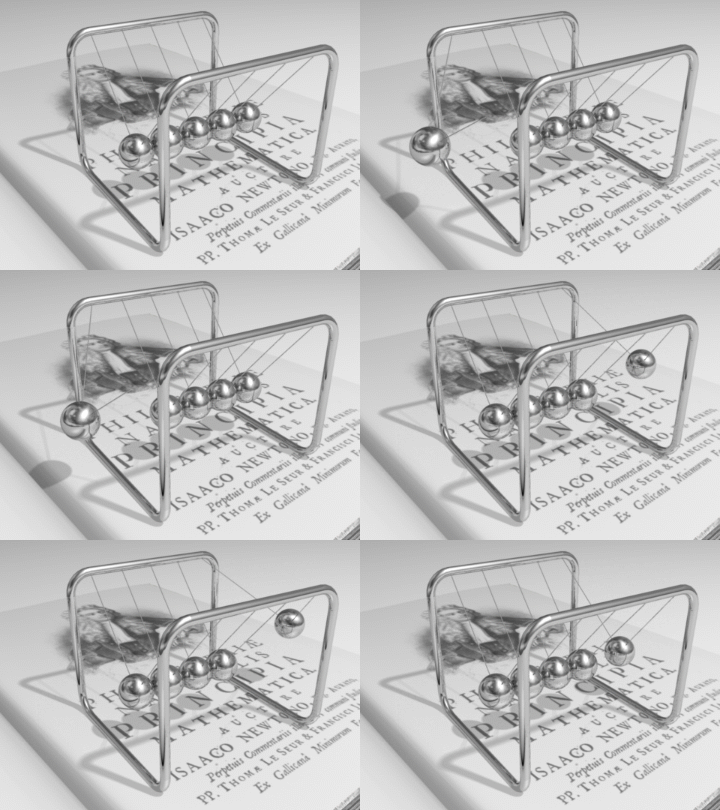
Fear and hesitation go hand in hand. They hold you back, creating a slow motion to your progress (see above) and sometimes no progress at all. The trick is to separate the two, to recognize that you needn’t wait until you are free of fear in order to act. Indeed, if that were the case, most of the people whom we consider brave would still be waiting for the moment of bold action that earned them the appellation “hero.”

Years ago I heard a panel discussion on the subject of Wagner’s opera cycle The Ring of the Nibelung that actually touched on the issue of courage and decisive action. The experts focused on the character Siegfried, who is described as someone who has never known an instant of fear in his life. Should we therefore consider Siegfried’s fearless behavior to be indicative of heroism and bravery? The panel in question concluded it did not. After all, they reasoned, how can one be a hero without fear to overcome? Only a fool would rush to action without being aware of the attendant dangers. But a brave and courageous man would know the perils facing him and choose to act in any case.

Most of us won’t face dragons or fire, of course, but we still will all have numerous chances to act decisively or to hold back. Here is a trivial, but instructive example from my own life. In college, I was fulfilling a PE requirement by taking fencing. Now, I wasn’t a very good fencer, despite being a reasonably good athlete. And, my heavy academic course load didn’t permit me the luxury of spending time outside of class to practice fencing. Thus, in the first seven matches I had against my classmates, I won only three, a pretty mediocre showing.

Nonetheless, I was competitive enough to want to win more often, so I reasoned that there just might be a way that wouldn’t take time away from my other studies. I realized that I was a relatively tentative fencer, and so I decided to become more aggressive. I set myself the task of getting in the first “touch” as soon as each new match began. The strategy worked. Of the next 17 matches, I won 14. I was almost always able to get a 1 to 0 lead within a few seconds of the start of the competition by catching my adversaries off-guard. Yet, despite my new found success, I was really no better at fencing than I’d been when my record was three wins and four losses. I was simply less hesitant, more aggressive.

I once had a biology professor named Hudson who conducted the “Quiz” portion of his classes in a way to encourage behavior similar to my fencing experience. You were graded on the number of questions you answered correctly and lost points if you answered the interrogatories wrong. Hudson asked the questions aloud and it was a race to get your hand up first and have him call on you to answer. Naturally, you had to make a quick decision as to whether you had the right answer. Very fast indeed. Those who hesitated were, as the saying goes, “lost.”

But how does this all apply to daily life, the life outside of the university. You might say that “normal” life is less competitive than my examples suggest, but is it? To answer that question, ask yourself how often you hesitate to do things, take chances, give public voice to concerns that might engender disapproval, avoid tasks that are difficult or challenging? Do you ask out the beautiful woman, or do you wait until you feel “ready,” only to watch someone else beat your time in getting her attention? Do you, at least sometimes, see a crisis as an opportunity? Or do you hold back, put things off, wait and hope that another or better time for action will come? Sometimes it will, but sometimes it won’t.

If your “default” strategy, your habitual tendency, is to wait, you have a similar problem to those whose standard operating procedure is to act impulsively, without thinking. It may be the case that “fools rush in where angels fear to tread,” but it is also true that you are an equal fool if you forever hold back, hesitate, and watch the moment pass or see someone else “seize the day (carpe diem).”

What I am talking about is fear and the uncertainty that fuels it. When we are fearful and decide not to take action, most of us feel an immediate sense of relief. That relief reinforces our hesitation, while simultaneously depriving us of the opportunity to succeed in the endeavor. Soon enough the relief will pass, but not the self-doubt and lack of personal esteem and confidence that might have been won by an effective action.

The danger in allowing too many chances to pass by is a life of “quiet desperation,” a life on the sidelines, watching others play the game, but not playing it ourselves. And, at the end of life, regret for the opportunities passed and the chances not taken is more likely to be troubling than the failed efforts made. Beware the heartache of the words “what if?” True, acting boldly often fails; but, it also sometimes succeeds.

No wonder, then, that musicians spend relatively little time passively listening to music. They are too busy making it.

Make music of your life, then. Let the trumpet announce (or remind) the world of your presence. Sing your song. And if you cannot, find a therapist who will give you the tools to beat back your fear and help encourage you.

—

The above image is an Animation of Newton’s Cradle created on August 8, 2006 by Demon Deluxe and sourced from Wikimedia Commons.

The Things We All Need to Learn

The things we need to learn wait for us. They are very patient.

I think you know what I mean. At least, you have seen it in others: the angry person who never learns how to control his anger or perhaps isn’t even aware of the need to control it.

Then there is the passive person, who cannot stand up for himself easily, defers to others, and gets taken advantage of pretty routinely. And, despite this, it hasn’t changed over the years.

Some of us choose the wrong friends, lovers, or business associates, making the same mistakes repeatedly. Others continue to use failed methods in raising children. Some of us never face our fears fully (see Albert Brook’s film Defending Your Life for a funny take on this problem). And then there are the people who are impulsive and act without thinking, over and over; or the ones who are sloppy at tasks, not careful enough; or those who are too compulsive, too detail-oriented, trapped by their obsessive attention to small things.

I could go on, but instead, it’s time to ask you a question. What challenges in your life have you yet to master, the ways of thinking or behaving that don’t work for you but which you repeat? Most of us have a pretty easy time spotting the errors in others, but how about your own?

There is an old joke about how we learn:

A man walks down a road and falls into a hole. He doesn’t see it, and it takes some time to get out because it is deep.

The next day, the man walks down the same road and falls into the same hole. He still doesn’t see it, but he might just get out of it more rapidly this time.

The day after, the man walks down the same road, sees the hole, and falls into it anyway.

The following morning, the man walks down the same road, sees the hole, and this time walks around it.

And what does our hero do after the next sunrise? He walks down a different road.

Holes, like unsolved problems, have all the time in the world. They wait for us to recognize them, see the danger they pose, and change our behavior to avoid the danger. As the saying goes, “If you do what you’ve done, you’ll get what you’ve got.” Others have said that one definition of insanity is continuing to use the same failed strategy, all the while expecting different and better results.

How long will you wait to change? Your problems can last a lifetime. They have no train to catch or meetings to attend; they take their time, not troubled by waiting. Or, should I say, they take your time. All of your time.

Do you really want to wait that long?