The Therapist’s Office as a Refuge

Therapy sessions have changed. Or perhaps I should say, they are the same as always, but the world isn’t. The consulting room remains a quiet place for quiet conversation. Everywhere else is noisier and more crowded, with fewer spaces of refuge and much distraction. Almost nowhere are you (and you alone) the sole concern of someone who is not your small child.

You are worse for this, but something can be done. More on taking action later.

First, let’s look back before the advent of cell phones. I’m speaking of the days prior to elevator music (unless you brought a violinist with you), TV, and radio. In other words, less than one hundred years ago.

If you don’t live a rural life or reside away from flight paths and railroads, you probably don’t know what has been lost.

Where else, other than in therapy, do you obtain the undistracted concentration of another? Not over dinner if the TV is on or music is playing. Not if your phone is on. Not if you or your partner are reading or looking out the window.

I recall a single-cell cartoon showing a middle-aged couple over coffee. He is reading the newspaper and his partner is talking.

“I’m sorry dear, I wasn’t paying attention. Can you repeat everything you’ve said since we married?”

The draw of the personal phone is powerful. According to a 2013 survey, “At least 9 percent (of those surveyed) admitted to grabbing the phone while having sexual relations. Among those 18 to 34 years-old, the number climbs to 20 percent.”

This finding gives new meaning to the word “threesome” and the phrase ménage à trois.

Some patients might benefit from a public address announcement requesting them to turn off electronic devices. Would they want their surgeon to take calls while operating on their brain? For much of my career I made sure I couldn’t be summoned instantaneously. Patients understood I checked messages a few times a day. The ER was available if they needed urgent care. Nobody died.

Many of us complain of lacking intimacy, but the little bugger in our pocket mocks those complaints. Should you wish someone’s full attention, start by giving it.

Why must the TV be on during dinner, creating a hurdle to conversation? How many TVs do you own? The husband of a friend installed a television in every room of their home, including the bathrooms. He was neither a patient nor a patient man, by the way. I recall a famous therapist who carried two cell phones. I once saw him holding conversations on both simultaneously.

I’d guess, for some of you at least, the unconscious draw of counseling is not only your therapist’s help, but that the time is yours, yours alone, without disturbance: a refuge.

I realize a few of you need noise — the hum of things — to distract you: the radio or TV chatter makes you feel secure and reduces your loneliness.

However, if you don’t fear the stillness, and want greater relationship intensity and intimacy, here is some guidance: an antidote for the monstrous, electronically hectored life you live.

First, acknowledge that your life is partly of your making.

Then, take control. Make the days what you wish them to be, don’t simply endure them.

You need not tolerate people who invite their phone to dinner with you. You can say, “I thought this was for the two of us alone,” nodding in the direction of the inanimate third-party on the table. Smile sweetly when you do.

Sell or junk all but one or two TVs. Exclude electronics from dinner at home.

The family will not cheer this: “Mom! Dad! This is the 21st century! Everyone else does this. Why are you punishing me?”

Turn off the music. Sound proof your room. Get ear plugs. Go to quiet restaurants. Spend time in the country. Alert companions that you are no longer a slave to your phone, the Twitter account, and the latest update on their visit to the w/c.

If you struggle to do these things, perhaps you need to talk with a therapist about self-assertion.

Whose life is it? Who’s the boss, applesauce?

Have a nice day!

No. Make a nice day.

Rant over.

Signs of Insecurity: Behavior That Reveals a Lack of Confidence

Here is a post many people have found useful. This version has been updated since its publication in 2010:

Last Words: Be Sure to Choose Wisely

The elderly Lady Nancy Astor, the first female member of the British House of Commons, awoke during her last illness to find that her family was assembled around her bed. Clever to the end, she said, “Am I dying or is this my birthday?”

Most of us associate the idea of last words with the solemn and quotable pronouncements of great men and women, not the sassy commentary of the once beautiful English politician pictured above. Here is something more typical: John Adams, our second President, alternately rival and friend of Thomas Jefferson, found some relief and gratitude in uttering “Thomas Jefferson still survives” as he (Adams) lay dying.

What he did not know in the pre-electronic year of 1826, was that Jefferson had predeceased him by a few hours. Nor did either of them appear to reflect on the irony that these founding fathers both expired on July 4th, precisely 50 years after the Declaration of Independence that they both signed and Jefferson wrote.

On a less ironic note, those of us in Chicago might have heard of Giuseppe Zangara, an anarchist, who took aim at President-elect Franklin D. Roosevelt as he and the Mayor of Chicago shook hands in Miami’s Bayfront Park on February 15, 1933. The bullet hit Mayor Anton Cermak, who reportedly said to FDR, “I’m glad it was me instead of you.” Cermak died soon after and is memorialized to this day by a Chicago street that bears his name.

There are other kinds of last words, of course. And though most of us probably won’t plan out what to say in advance, I think you will agree that you could do worse than follow the example of Ernesto Giulini, an Italian timber salesman born in the 19th century. He gathered his family around his death-bed, including musician-son Carlo Maria, to remind them that the word “love” — “amore” — should guide their thought and conduct throughout their lives. And one can only imagine how many times the words “love” and “I love you,” have been on the lips of both the dying and their survivors at the very end of earthly things. The religiously faithful have been heard to add, “See you on the other side.”

A rather more wry approach to imminent mortality is attributed to Voltaire. Asked by a priest to renounce Satan, he reportedly uttered: “Now, now my good man — this is not the time for making enemies.”

As Voltaire’s comments suggest, timing is everything and it is best to consider carefully what you want to be remembered for — and by whom. Last words from or to our parents tend to linger in the memory of those who survive, sometimes because of what was said, sometimes because of what wasn’t. Too many people — including some of my ex-patients — lament never having heard the words “I love you” from a parent at the time of his death or any time before.

We are often cautioned to part from loved ones on a high note, not a dissonant one, lest someone be left with the recollection and pain of a final disagreement, or the regret of causing an injury in what proves to be the last possible moment. Nearly all of us would avoid cruelty if we only knew when that would be. Usually we don’t. The dead may not care, but those surviving surely do.

Two unfortunate examples from my clinical practice come to mind in this regard. One woman, whose mother had died many years before, had difficulty in shaking her mom’s last minute assertion, “You’re an ass, Jenny (not her real name).” It is not the only such example I can recall hearing from one or another of my patients. But the all-time cake-taker, the grand prize winner in an imaginary “Hall of Shame” of ill-timed and venomously expressed invective, are the words of a rebellious teenager to his severely taxed father.

A long history of mutual destructiveness typified their relationship. It seems that the pater familias was inept and self-interested in raising his son, and the son repaid his parent’s cruelty and clumsiness with as much drug use and petty crime as he could muster. Nor did it help that the family was under financial pressure and that the two adults of the home were a badly matched, fractious pair.

The father had only recently sustained a heart attack when the school reported to him and his wife that the son had once again been suspended. The “mother-of-all” shouting matches ensued between the middle-aged man and his first-born disappointment. And then, the last words: “You’re going to kill me.” And the reply, “I don’t care.”

Not 24 hours later the words were realized. Deserved or not, the father was dead of a second cardiac arrest. And despite the fact that one could easily make a convincing argument that his death would have happened very soon even without the argument as a trigger, it is easy to imagine a lasting sense of guilt in the son.

That said, I’m not opposed to standing up to people who have injured you, including parents, well before they check out of this mortal coil. Choosing to say, “I know what you did (even if you deny it or justify it) and I won’t let you do it any more” is sometimes perfectly appropriate. That act of self-assertion can be therapeutic, even though it is usually not essential.

You can also recover from childhood mistreatment without confronting the offender. Witness those individuals who do so when their abusive parents are already dead and therefore unavailable for real-life discussion. What is essential, however, is to make certain that any continuing mistreatment stops. This usually means that you, the by-now adult child, have to stop it: walk away, say “no,” or hang up the phone — whatever is required.

If, instead, you aim to change the offender, be prepared to be disappointed. Most won’t change or even admit that they did anything wrong. But if you wish to overcome your fear and master the situation, that mastery, at least, is possible. Nor should you usually hesitate for fear of “killing” your parent, as in the example I’ve given, especially if health issues aren’t present. That is the only story of its kind I’ve ever been told.

Better, though — so much better — to live among friends and relatives who live as Giulini’s family lived, with love at the center of their being. That way, even if there is no time for a formal goodbye, nothing will have been left unsaid: respect and affection will be well-known long before the end because of the way each treated the other. I’m told that the old Italian expression for this is “volersi bene” or “voler bene:” an untranslatable sentiment indicating that you cannot be happy without the happiness of the other. Yes, much better this way.

Perhaps it is no mistake that in English and German the words for life and love are so close. Change the word “live” by one letter and you have “love.” In German, change the word “leben” (to live) by adding one letter and you have “lieben” (to love). Not just last words or Ernesto Giulini’s last words, but words to live (and love) by.

—

Lady Astor (1909) by John Singer Sargent, is sourced from Wikipedia Commons. The photo of Carlo Maria Giulini comes from the front cover of the superb biography by Thomas Saler, published by University of Illinois Press. The present essay is a revised version of an earlier blog post from 2009: “Last Words: Be Careful What You Say.”

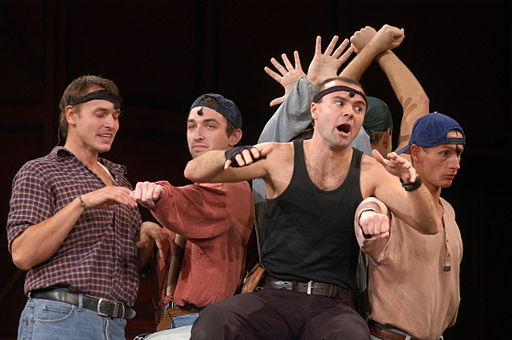
A “West Side Story” Story (A.K.A. “The Angry Lady Incident”)

http://upload.wikimedia.org/wikipedia/commons/thumb/d/de/West_Side_Story_%28M%C4%9Bstsk%C3%A9_divadlo_Brno%29.jpg/512px-West_Side_Story_%28M%C4%9Bstsk%C3%A9_divadlo_Brno%29.jpg

Being the parent of talented children is a tough job.

Especially when they are performing on stage or on the field of play.

You want them to succeed, you hold your breath as they do their stuff, and are delighted and relieved when the show (or the game) is over. You want to find a balance between identifying completely with their performance and being totally indifferent.

You don’t want to pressure them too much or feel like the fate of the free world hangs in the balance, entirely dependent on a flawless effort.

And you try to remember (and remind them to remember) the quotation of a Hall of Fame basketball coach who said, “If every game is a matter of life and death, you’re going to have a problem: you’re going to die a lot.”

Then there is the question of how much encouragement or discouragement you visit upon your child if he actually wants to make a career in the arts or sports given the long odds of actually being able to make a living.

Two stories about that, the first a joke:

Question: What is the difference between a musician and a Domino’s pizza?

Answer: A Domino’s pizza can feed a family of four!

The other story has to do with Leonard Bernstein, who was the composer of West Side Story, not to mention a famous symphony conductor, pianist, and educator.

http://upload.wikimedia.org/wikipedia/commons/thumb/c/cd/Leonard_Bernstein_NYWTS_1945.jpg/500px-Leonard_Bernstein_NYWTS_1945.jpg

Sam Bernstein, Lenny’s father, came to the USA from Russia, where musicians were held in low esteem. The musicians Bernstein’s father had encountered in his old country were mostly “klezmers,” itinerant Jews who played at weddings and other celebratory occasions, but had a hard time gaining respect and keeping bread on the table. Thus, when Sam’s oldest son displayed an interest in this “profession,” the elder Bernstein did his best to discourage the young man’s pursuit.

Eventually, his son Leonard became world-famous. And, the story is told that a newspaper reporter asked Sam why it was that he hadn’t encouraged his son in the field of music.

The senior Bernstein answered, “How was I supposed to know he would become Leonard Bernstein!”

Then there is the problem of the audience, of which you are a part; and what people say and do while your child is doing his stuff. We all have heard or witnessed parents and fans who go a bit crazy in opposition to each other over the performance of their eight-year-olds. It is worth remembering what happened on occasion when Jackie Robinson became the first black man in the 20th century to integrate organized baseball.

http://upload.wikimedia.org/wikipedia/commons/thumb/a/ab/Jackie_Robinson_Story_lobby_card.jpg/256px-Jackie_Robinson_Story_lobby_card.jpg

Before his 1947 debut in the major leagues with the Brooklyn Dodgers, Robinson played one season for the Montreal Royals of the International League. The rudeness and racism recalled by his wife Rachel at the time of the team’s April, 1946 appearance in Baltimore is recounted by Jules Tygiel in Baseball’s Great Experiment: Jackie Robinson and His Legacy:

When Jackie appeared on the field, the man sitting behind her shouted, “Here comes that nigger son of a bitch. Let’s give it to him now.” The Baltimore fans unleashed an unending torrent of abuse. All around her people engaged “in the worst kind of name-calling and attacks on Jackie that I had to sit through.” For one of the few times Rachel feared for Jackie’s physical safety. That night as she cried in her hotel room, Rachel thought that perhaps Jackie should withdraw from the integration venture.

http://upload.wikimedia.org/wikipedia/commons/7/71/Rachel_Robinson.jpg

Fortunately, as the proud parent of daughters who have performed, I never had to deal with anything like that. Just the usual twittering, texting, whispering, program rustling, and bracelet jangling, that is the commonly experienced thoughtlessness in auditoriums world-wide.

But on one noteworthy occasion attended by me with my wife, I went beyond an occasional stern look to take on a woman who should have known better than to converse with her neighbor when my youngest child was in a high school production of West Side Story.

The lady was a senior citizen two seats to my right, nicely dressed, who was talking pretty loudly to a friend seated to her right. Because she was turned in her neighbor’s direction most of the time, it was difficult to catch her eye in the hope that “a look” might communicate my wish for her to quiet down. About 20 minutes in to the performance I’d had about enough.

I leaned as far to my right as I could (across the body of my friend Rich who was our guest) and, in one of the few moments when she was looking forward, she noticed me as I said, “Please be quiet!”

It was not said with ferocity, but I’m sure she knew I meant business. And, indeed, she was quieter for the rest of the first half of the performance.

Rich and I had to walk past this woman in the aisle as we began to make our way to the lobby at intermission. To my considerable surprise, as I passed this lady, she actually pushed me into the railing barrier to my left. I turned right to face her.

“Why were you so angry?” she said.

“I wanted to listen to the performance.”

“But I was only talking during the orchestra part, not the singing!” she indignantly continued.

“But I wanted to hear the orchestra. You know, you are not in your living room and this is not TV!”

With that, the encounter ended.

No guns were drawn, no knives displayed, no one put on brass knuckles, and no chains or tire irons were brandished — there was no “rumble” — no example of life imitating art, as in the gang fight that is a central part of the musical we were watching.

And my antagonist and her companion did not return after intermission.

Given that more and more states permit concealed weapons, I suppose I was taking a risk. I can’t recommend that you take on rude audience members, who might retaliate even more forcefully than did the lady in question.

But, it is hard to “tune out” people who create a volume of sound sufficient to compete with the main attraction.

It was another one of those situations in which different people react differently, sometimes dependent on mood, the capacity to tolerate frustration, an evaluation of the importance of the matter, and one’s ability to be assertive or foolhardy — however you happen to label such action.

In the end, I guess I should simply be glad that it wasn’t Baltimore in the 1940s and my adversary didn’t have her own set of family members handy, and a length of rope to hang from the nearest tree.

Rachel Robinson would understand.

—

The top image is from a 2003 performance of West Side Story given in Brno, Czech Republic by Městské divadlo. It is the work of Jef Kratochvil. The second photo is of Leonard Bernstein in 1945, taken by Fred Palumbo, then a photographer for the World Telegram. The third picture is a 1950 lobby card for The Jackie Robinson Story. The final image is of Rachel Robinson Accepting the Congressional Gold Medal for her husband, deceased baseball star Jackie Robinson on March 2, 2005. From left to right: Nancy Pelosi, President George W. Bush, Mrs. Robinson, and Dennis Hastert. The picture was taken by White House photographer Eric Draper. All photos are sourced from Wikimedia Commons.

How to Make Yourself and Those You Love Miserable

http://upload.wikimedia.org/wikipedia/commons/thumb/a/ae/Bertram_Mackennal_-_Grief.jpg/500px-Bertram_Mackennal_-_Grief.jpg

It is easy to find on-line guidance to a better life. But the recommendations contained on those self-help web sites (and in books that aim at the same audience) have become almost too commonplace to make any impact.

The remedy? Something that is just the opposite: a list of suggestions on how to make yourself and others miserable. Of course, I’m not wishing that you follow these directions. Rather, I’m hoping that some of you who might yawn at still another list of “things to do” to improve your life, will be struck by the things you already do that make it much worse.

Here goes:

  • Regularly compare your material and financial circumstances to others, especially to those who are doing better than you are.
  • Make a list of all the people who have wronged you over the years and try to remember exactly how awful they made you feel. Think about those who owe you an apology. Forgive no one. Let no slight be too small to dwell on it.
  • Carry on a vendetta. Stay up late at night planning and plotting how you might get back at people. Stay angry. Let all your hatred out in blistering, profane, and cowardly “flames” behind the mask of the Internet.
  • Give your children gifts rather than your time. Set no limits on them. Then wait until they are teenagers and wonder why they are depressed or rebellious.
  • Curse the darkness, the winter, the cold, the rain, the frailty of the human condition, and all the other things that you can’t change.
  • Get impatient with the people who are walking in front of you at a snail’s pace, the couples whose bodies and shopping carts block the entire grocery aisle, and the slow progress of the check-out line at the store.

http://upload.wikimedia.org/wikipedia/commons/thumb/7/74/John_F._Kennedy_Inauguration_Speech.ogv/mid-John_F._Kennedy_Inauguration_Speech.ogv.jpg

  • Make no contribution to the betterment of humanity. Assume an attitude of entitlement. Figure out how to avoid work. Idle away your time. Ask “what your country can do for you,” not “what you can do for your country” in opposition to JFK’s 1960 inaugural address admonition.
  • Forever rationalize your dishonorable or questionable behavior or deny it altogether, even to yourself.
  • Persuade yourself that you need to wait until you feel better before you do the difficult thing that you have been postponing. Keep waiting, even if the time never comes when you believe that you can take action.
  • Do not let conversation with your spouse or children get in the way of watching TV. Keep the TV on most of the time, most importantly at family dinners. If possible have a television in every room.
  • Ignore the beauty of a spring or summer day, the newly fallen snow, and the cheerful laugh of small child. Stay in-doors as much as possible, year round.

http://upload.wikimedia.org/wikipedia/commons/thumb/d/d8/Sommerblumen01.JPG/240px-Sommerblumen01.JPG

  • Allow yourself to be upset by overpaid, under-performing athletes who doom the home team to continued failure. Yes, Cubs fans, this means you!
  • Treat emotions of sadness, tenderness, and hurt as your enemy. Push them away and thereby alienate yourself from yourself. Curtail grieving and try to deaden your feelings to the point of numbness.
  • Work up as much hatred as possible toward opposition political parties. Listen to every talking head who wants to whip you into a frenzy.
  • Expect justice and fairness in all things.
  • Drink too much, drug too much, and spend every extra minute on the web or playing computer games instead of having direct human contact with someone who is in the same room with you. Further distract yourself from your problems by watching TV and listening to music. Escape reality.

http://upload.wikimedia.org/wikipedia/commons/thumb/4/4b/Jack_rose.jpg/120px-Jack_rose.jpg

  • Keep using failed solutions to your problems even though they haven’t worked in years, if ever.
  • Behave in mid-life the way you did as a young person; or, if you are a young person, behave the way you did as a child. Do not reflect on or learn from experience which might teach you something new.
  • Use others instrumentally. That is, value them only in terms of what they can do for you. Lie, cheat, betray, and steal from them if that serves your interests. Then wonder why people mistrust you.
  • Spend as much time as possible worrying about the future and regretting the past, rather than living in the irreplaceable moment.
  • Aim low. Avoid the disappointment that comes with high expectations. When the going gets tough, quit.
  • Train yourself to be a miser. Practice selfishness. Hold on to your money as if you expect to live forever and will need every last cent. Make Scrooge from A Christmas Carol your hero.

File:Chicklet-currency.jpg

  • Judge others less fortunate than you are by using the phrases “he should have known better,” “he didn’t try hard enough,” and the like. Assume that all people deserve whatever misfortune befalls them. Disdain compassion, but remain puzzled when others call you heartless.
  • Indulge in every available excess: unprotected sex, food, spending, smoking, caffeine, etc. Don’t exercise. Ignore medical advice and, even better, avoid going to your doctor. Treat your body badly and then wonder why it betrays you.
  • Be sarcastic, passive-aggressive, and indirect whenever you are injured rather than looking someone in the eye and expressing your displeasure in a straight-forward fashion.
  • Avoid facing things. Give in to your fears, anxieties, and phobias.

http://upload.wikimedia.org/wikipedia/commons/thumb/5/5b/Children_in_Sonargaon.jpg/240px-Children_in_Sonargaon.jpg

  • Don’t let anyone know you well. Believe that your vulnerabilities will always be used against you. Keep social interactions on the surface. Eschew intimacy and maintain your distance, thinking that this is the best way to avoid personal injury. Trust no one!
  • Assume that the normal social rules regarding fidelity to friends and lovers don’t apply to you. Hold on to a double-standard that favors you.
  • Insist on having your way. Don’t compromise. Don’t consider others’ needs or wants. Assume a position of moral superiority, self-righteousness, and arrogance in things religious, political, and personal.
  • Do everything others ask of you. Rarely say “no.”
  • Try to control people and events as much as you can. Don’t go with the flow. Micromanage. Hover over others. Repeat complaints to them incessantly. Remind subordinates, friends, spouses, and children of small errors, even if they are ancient history.
  • Make no significant effort to better your life. Depend on others to take care of you and make all significant decisions for you. Be a burden.
  • Raise all your children exactly the same way even though it is obvious that they are not all the same.
  • Imitate vampires (who have no reflection in the mirror and therefore keep their mirrors shrouded) by never really looking hard at your own reflection in the looking-glass. That is, never take a frank inventory of your strengths and weaknesses or the mistakes you’ve made. Be like the evil queen in Snow White, whose only desire was that the mirror would tell her that she was “the fairest of them all.”
  • Whenever you talk with someone, wonder what they really mean, pondering the possibility that they find you boring, stupid or physically unattractive.
  • Feed yourself on gossip more than food. Delight in talking about others behind their backs.
  • Value beauty, appearance, reputation, and material success over integrity, knowledge, kindness, hard work, and love.
  • Try to change others, but do not try to change yourself. Take no responsibility for your life circumstances, instead blaming those who have stymied you.
  • Stay just as you are regardless of changing life conditions. For example, if wearing warm clothes worked for you when you lived in Alaska, continue to wear them when you move to Arizona in July.

http://upload.wikimedia.org/wikipedia/commons/thumb/3/37/Enrico_Caruso_VI.png/240px-Enrico_Caruso_VI.png

  • Don’t forgive yourself. Maintain the most perfectionistic and demanding moral and performance standard even if you are not a brain surgeon. Stay up at night castigating yourself over every imperfection, no matter how small.
  • Make a list of all the things that are wrong with your life, all the opportunities lost, every heartbreak, and the physical features and bodily changes that you don’t like. Stew in your own juices. Salt your wounds. Pick at your scabs.
  • Take everything personally.
  • Permit friends, family, and co-workers to walk all over you. Do not stand up to them for fear of causing offense and disapproval.
  • Discount your blessings. Concentrate on the dark side of life.
  • Never even consider going into psychotherapy. Assume that this is something only for those who are weak and that anyone who needs to grapple with emotional issues in counseling demonstrates a failure of will power and logic.

—

With thanks for the inspiration for this essay to Dan Greenberg and Marcia Jacobs, co-authors of a very funny, but ironic book entitled How to Make Yourself Miserable.

—

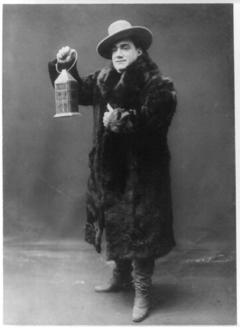
The top image is Grief by Edgar Bertram Mackenna. The video frame that follows is from John F. Kennedy’s 1960 inaugural speech. The next image is Sommerblumenstrauss by A. Gundelach. The following photo by Andygoodell is A Jack Rose Cocktail. The fifth picture is of two children in Bangladesh by Nafis Kamal, while the sixth is called Chicklet-Currency courtesy of the U.S. Department of the Treasury. After the image from Disney’s Snow White, is a 1911 photo of Enrico Caruso, the great Italian tenor. All but the Snow White frame are sourced from Wikimedia Commons.

Signs of Insecurity: Behavior That Reveals a Lack of Confidence

http://drgeraldstein.blog/wp-content/uploads/2010/07/insecurity.jpg?w=225

Insecure people often reveal their self-doubt without being aware of it. Indeed, a wise observer can “read” another individual. For example, members of the Chicago Symphony Orchestra have told me they can tell whether a new conductor is competent and talented within 10 minutes of the beginning of their first rehearsal with him. What follows is a short list of behaviors that suggest insecurity:

  • 1. Are you able to give a compliment? Even more important, can you graciously accept one? The latter behavior tends to be difficult for someone who is unsure of himself. He might blush or become flustered. Alternatively, he is prone to dismiss the validity of the praise, instead telling you why it isn’t true. What should one do if complimented? Smile and say “Thank you.” Nothing more.
  • 2. The ability to maintain eye contact is hard for many individuals who lack confidence. They will turn away or look down, but rarely hold the gaze of the other by looking into his or her eyes.
  • 3. The self-doubting person tends to apologize when no apology is necessary. It is as if she expects to be reproached or is afraid to give offense; so, she prophylactically tries to excuse any possible mistake to avoid such a response.
  • 4. Answering a question with an upward inflection of the voice has been done by everyone. The person being questioned doesn’t have certainty about his answer, so he replies with a tone betraying his insecurity. Since I originally wrote this piece, a name has been given to the practice: upspeak.
  • 5. Men and women who are uncomfortable with sharing personal information for fear of being judged will oft-times turn the conversation to a different topic, away from anything that might make them vulnerable or reveal too much. This is also called “changing the subject.”
  • 6. One way of inoculating yourself against criticism is to joke at your own expense. Do this often and others may conclude you believe you are flawed.
  • 7. Do you have trouble making a decision? The comedy team “Cheech and Chong” (I’m not sure which one) said: “Taking responsibility is a lot of responsibility.” If you automatically let others choose the restaurant, movie, and other activity, you are either easy-going and good-natured or don’t want to be held accountable for making the wrong choice.
  • 8. Do you state strong opinions? Those who avoid doing so might maintain the peace — often a good thing — but some fear drawing fire and unwanted attention.

Before I give you nine more signs of insecurity, I’ll say what might cause the condition. Many possibilities. Critical or neglectful parents, poor academic skills, frequent moves making you “the new kid” (especially if you are introverted by nature), learning disabilities and ADHD, being “different” in some fashion (size, shape, color, religion), thinking of yourself as the “poor” kid in a community of the affluent, sensing you are the average child in a school filled with bright youngsters, feeling ashamed of your parents or residence, frequent rejections, getting fired (whether deserved or not), clumsiness, a history of abuse or bullying; physical unattractiveness, deformity, or injury, etc. For a more thorough discussion of these causes, click here: The Causes of Insecurity. Now back to the list of signs of insecurity:

  • 9. Do you laugh nervously in social situations? It is another behavior betraying self-consciousness.
  • 10. People will appraise you harshly if they see you bite your nails or they appear bitten.
  • 11. Are you self-effacing, placing yourself at a disadvantage — letting others go first, speak first — reluctant to raise your hand? Do you hesitate to take your turn? Do you sacrifice your interests as a matter of course? Insecurity can make you wait until the opportunity before you is lost. Excessive deference displays little regard for yourself, even if some amount can be a sign of good breeding and consideration.
  • 12. Are you nervous eating in front of others? Do you fear dropping something, displaying poor table manners, or making a mess? You probably won’t, at least not more than the rest of us.
  • 13. Can you make phone calls without trepidation; especially those in which you need to introduce yourself, correct a problem, or speak to an authority? Too much discomfort in anticipation of these actions can reveal your sense of uncertainty.
  • 14. Might you make too many excuses? Those who are unsure give explanations where none are required. Imagine you order an entrée at an elegant restaurant and the waiter asks whether you want an appetizer to start. You explain why you don’t. Some folks offer multiple excuses for what they do, anticipating criticism. If you must give a reason, limit yourself to one. The more you give, the more uncertain (or dishonest) you sound. For  example, “I can’t come to the party because I have a stomach ache and my car broke and I need to study.” One reason will be more convincing. You needn’t explain yourself as often as you think.
  • 15. Insecurity can be suggested by hesitation to ask for a favor or an inability to say “no.” Anticipation of rejection or disapproval is the motivator for both of these problems with self-assertion. By contrast, a self-assured person will not believe the relationship (or his own value) is dependent upon going along with someone else’s wishes or fulfilling the desires of others as a matter of routine.
  • 16. Do you make frequent requests for reassurance? A few examples: “Does that make sense?” “What do you think?” “What would you do?” “Do you think that is a good idea?” “Do I look OK?” Must you have sex to prove your partner remains interested in you? If you are self-assured, you won’t implore your lover to calm your doubts and remind you, over and over, in words and deeds, of your desirability or intelligence.
  • 17. Last one. Here insecurity takes a different form. This person wants the spotlight at all times, the better to be told “You are the fairest of them all!” She or he pushes for recognition, strutting about the stage we call life; checking to see where he stands and what others think of him. Bragging and display become a full-time job. Perhaps he was the class clown in grade school, but now he drops names to prove his importance and get your attention. His inner emptiness must be filled and refilled, like a bucket with a hole in it. Such people are plagued by narcissism as well as insecurity, a troublesome combination. There is hell to pay for those who expose the pretender’s flaws: lacerating attacks against any critics. If you are this variety of insecure person, I doubt you will admit it even to yourself. If you meet such an individual, run!

I suspect you get the idea. Please add an item if you like. You can use the list in one of two ways: to consider whether you are insecure or evaluate the confidence of those around you. Of course, you are the only one whose self-confidence you can change.

—

You may find the following related post of interest: Signs of Self Consciousness: When the Mirror Isn’t Your Friend. Also, you might want to read  The Upside of Insecurity or, this very recent post: Insecurity and Our Preoccupation with Appearances/

—

The image above is Insecurity by Lacey Lewis: http://www.lacey-lewis.com/ With permission.

The African Dip: Thoughts on Passive-Aggressiveness, Powerlessness, and Acceptance

The  Flying Turns

My dad occasionally took me to a legendary Chicago amusement park called Riverview when I was a little boy. I was dazzled by the roller coasters, the “Waterbug” ride, and something called the “Rotor.” The latter required you to enter a circular room which spun on a central axis until the velocity and centrifugal force were sufficient to pin you against the wall, just as the floor dropped away.

But, as small as I was, it is a sideshow called The Dip that I remember most vividly. Today I’d like to use this politically incorrect carnival attraction as a spring-board to a few thoughts on the expression of indirect anger that sometimes is called “passive-aggressive,” as well as a therapeutic approach to setting aside the temporary upsets that are a part of any life.

—

Black men in cages. That is what “The Dip” involved.

Unbelievable, perhaps, as we think about it in 2010. Each man sat on a stool inside the cage. In front of the cage, off to the side a bit,  stood a small circular metal target that was attached in some fashion to the stool, perhaps electronically, but more likely mechanically.

For less than a dollar, you could purchase three balls to throw at the target, one at a time. If you struck the target solidly, the stool on which the man sat collapsed, and he dropped into a pool of water underneath the cage. You might have seen similar “dunk tanks” at various fund-raising events, often giving students the chance to dunk their teachers.

Harmless fun? Not so in the case of a black man doing the sitting and a white man trying to knock him off his seat.

This sideshow was once reportedly called, “Dunk the N****r,” later “The African Dip,” and finally “The Dip.” It was eventually shut down by a combination of Negro outrage and the increasing disgust of white people to the offensiveness of its implicit racism.

The black men were in a relatively powerless situation — almost literally, “sitting ducks.” But, they did what the situation allowed them to do so as to unsettle, tease, and otherwise disrupt the white pitcher’s aim. The Negroes were careful not to say anything too frankly insulting, lest they stir up the racism (and potential for less veiled violence) that was at the heart of the event.

But they would and could get away with belittling their adversaries athletic skill or throwing ability in a way that was amusing. If their comments distracted the opposition at all — got them to laugh (or the crowd to laugh at them) — or caused a break in the hurler’s concentration, the chance of staying on the seat improved a bit.

According to Chuck Wlodarczyk in his book Riverview: Gone But Not Forgotten, the caged men’s banter could include comments about one’s appearance: “If you were heavy, they’d call you ‘meatball.’ If you were thin, they might have called you ‘toothpick.’ If you were with a girl, they might have said ‘Hey fella, that ain’t the same girl you were with yesterday!'”

You don’t have to be a black man in a cage to have some experience of expressing anger indirectly. We’ve all done it. It takes many forms: talking behind someone’s back and mocking that person, being sarcastic, complaining to a co-worker’s superior rather than to the offender’s face, neglecting tasks you have been assigned unfairly, and procrastinating. These passive-aggressive words or acts are rarely very satisfying. The anger doesn’t dissipate; the grudging discontent usually continues; nothing positive happens.

The sense of powerlessness and lack of control that the passive-aggressive individual experiences can come to dominate that person’s emotional life, rather than allowing him to put effort into changing the power dynamic or to remove himself from a position of weakness.

Unfortunately, for some of those who feel powerless and injured, even a passive-aggressive action seems impossible. Consequently, they take a more uniformly passive role. They defer to others, try to avoid giving offense, act meekly, and position themselves under the radar. All that does, however, is give them second class status, just as it informs bullies that they are easy targets.

Someone in this situation, who repeatedly feels mistreated but isn’t able to take on those who inflict the injuries directly, needs to ask himself a few questions. Why do I put up with it? What am I afraid of? Am I really as powerless as I feel? Am I perhaps overreacting? What would happen if I were more direct? Is there any way to get out of the situation I am in?

Cognitive Behavior Therapy (CBT), which aims to quell and counter irrational thoughts, is often helpful in dealing with a lack of self-assertion and the fear that is usually associated with it. Equally, it gives you practice (sometimes using role-playing within the therapy session) in a gradually ascending hierarchy of challenging situations that require an assertive response.

Some CBT therapists, much like ancient Stoic philosophers, employ an “acceptance-based” psychotherapy and integrate this Zen-like element into their treatment. Why, they might ask you, do you so value the minor indignities of daily life and of opinions and behavior of boorish persons? Is it really a good idea to spend the limited time of your life being upset over rudeness from a tardy repairman or a fender-bender accident you didn’t cause — things that will be of no significance in a week, a month, a year?

Put differently, there will always be injustice, and some of it must simply be accepted as the nature of life and of living. Not every fight is worth fighting about, not every slight is intended. If your skin is so thin that you are regularly being upset by people, perhaps you are valuing the approval and opinions of others too much.

For those who ask “Why me?” those same therapists might say, “Why not you — you are alive, aren’t you, so you are subject to all the same things that can affect any other person.” And, as the Stoic philosophers and Zen practitioners would tell us, if we can accept this vulnerability as part and parcel of living, thereby assigning it less meaning and taking it less personally, our lives will be more satisfying — less fraught with anguish, anger, and hurt.

This is not to say society should have tolerated the indignity and racism of “The Dip.” There are times when the indirect, but pointed wit of the caged men is the best course of action; and, many occasions when the force of your personality must be brought to bear by confronting injustice. But some combination of directness in taking on unfairness and forbearance in accepting things — in allowing oneself not to sweat the small stuff — tends to produce as good a result as life will allow.

Of course, you have to figure out what the small stuff is and what other things really do matter to you.

Meditation is usually a part of the treatment enabling you to stay in the moment, and let go of your attachment to passing feelings and thoughts, worries and regrets, and anticipations and fears. To be preoccupied with just such temporary upsets causes you not to be able to fully experience what is going on in the present and determine what is really of importance in your life.

By encouraging and training you in meditation, the counselor  is attempting to give you a method to achieve a state of psychological enlightenment that (without using words) helps you to distinguish the transitory aggravations, disappointments, worries and anxieties of life from whatever matters the most to you, so you can put your effort into the things of greatest value in your life.

Some final questions:

  1. Do you often find yourself fighting over things others consider to be small?
  2. Do you frequently feel put-upon but are capable only of a passive-aggressive response?
  3. Do you (too easily and too often) assume a fetal position with others (metaphorically speaking), who come to think of you as an easy target and treat you badly (in part) because they know you will not stand up for yourself?

If you have answered any of these questions in the affirmative, you might benefit from asking a couple of other questions:

  1. What does this mode of living cost me?
  2. Am I willing to do the work necessary to change?

If the cost is substantial and you are eager to change, then a therapist can be of assistance. Only then will you be ready to get out of the cage, real or not, in which you find yourself.

—

The image above is the Flying Turns, a toboggan-style ride that was one of the many attractions that made Riverview Park famous.

The Limits of Reason: How to Think about Your Date, Your Boss, Your Mom, etc.

http://www.southdacola.com/blog/wp-content/uploads/2009/04/rodin20thinker.jpg

As a therapist, I hear a lot of concerns from my patients about parents, bosses, romantic partners, and so forth. The thoughts often take the form of “Why did he do that?” or “What was he thinking?”

Some of this is worth questioning. In life it is useful to take the role of the other person, to look at things from his or her perspective, to try to “understand” that individual’s motivations and reasoning process.

But, there are limits. Here are just a few that make understanding difficult:

1. People don’t always carefully weigh their decisions before making them. We humans frequently think and act impulsively or emotionally. It can be a bit harder to fathom an ill-considered act than one that is carefully reasoned.

2. The person whose mind you wish to enter may not know himself well at all. When you recall what he says are the reasons for his actions, you need to be aware that he may be fooling himself. Alternatively, he might be dishonest with you, giving you less than a full set of data, trying to prevent himself from looking bad in your eyes, or attempting to protect you from being hurt by the truth.

3. We all act in self-serving ways much of the time. The same person who says that he hates it when someone ends a relationship without explaining why — not even making contact or returning phone calls — might well avoid the discomfort of a final farewell or confrontation himself when he decides that a relationship should end, thereby doing the very thing that has been done to him.

4. Most people, in or out of therapy, are often indirect in expressing their unhappiness with you or their disappointments about your behavior. (Marital conflicts and parents talking to children can be noteworthy exceptions to this general rule). But, in the absence of direct communication, it is difficult to be a good mind reader. Indeed, crystal balls are in short supply whenever I go shopping.

5. When trying to understand others, we look for some form of logic. To seek something that is often missing within the person is a pretty big misunderstanding of how people think and act.

6. You may not have enough history and background information to make an accurate analysis of what drives this individual to do what he does.

7. Do you really know the person well “under the skin?” There is often a mismatch between what is happening on the inside and what is occurring on the outside. Put differently, the contradiction between surface appearances and internal truth often affirms the old saying, “Don’t judge a book by its cover.”

Too much time trying to figure out another person is unproductive. For this reason and those cited above, I encourage my patients to set some limits on the amount of time they spend attempting to get into someone else’s head. At bottom, I think, what most of us are looking for is the understanding that will allow us to return to the relationship and put it right, now that we have found the “answer” to what transpired. Or, something that will console us or produce the closure that we are hoping for at the relationship’s end. By attempting to “understand,” we are frequently seeking a sense of intellectual control, partially to acquire information that will prevent future disappointments, but also to compensate us for our loss and to silence the nagging internal voice that asks “What happened?” and “Did I do something wrong?”

It is better, beyond a certain point, to consider several things about oneself:

a. Why did I choose that person to be with? (Obviously this doesn’t apply to your parents; nor does it always apply to bosses or co-workers).

b. How did it happen that I missed the early warning signs of trouble? Oh, I know that you might think that such signs didn’t exist, but it could be that you ignored them, minimized them, or had a blind-spot for them.

c. Why didn’t I set some limits on the relationship in order to prevent the other person from injuring me? And, if I tried, why did my efforts fail?

d. Why didn’t I leave the relationship earlier?

e. What, if anything, did I contribute to the problems that occurred between my friend/partner/lover/boss and myself?

f. Have I grieved the loss or disappointment fully (including attention to both my sadness and my anger)?

g. What do I have to do differently in order to minimize or avoid problems like this in the future?

Instead of addressing the situation in these ways, with these questions, most of us spend no small amount of time ruminating, and then looking for something we can say to the other person to get them to behave as we wish. With some individuals that is possible, but not with everyone.

Jackie Robinson’s breaking of the baseball color-line is instructive in this regard. As you might know, Robinson and his boss, Branch Rickey, agreed that he would not respond to the abuse from fans, players, and coaches that both expected he would receive when he became the first black man in the 20th century to play in the Major Leagues. But, despite two years of taking every racially demeaning insult known to mid-century white males, he succeeded in playing well. Moreover, by this time there were other blacks in the Major Leagues and a great experiment in civil rights had succeeded.

If the story I’ve heard is true, Robinson and Branch Rickey had a conversation at the beginning of Spring Training at the start of Robinson’s third year with the Brooklyn Dodgers. They agreed that Robinson could now be himself, and fight back with words or fists, if necessary. Soon after, the Dodgers played the Philadelphia Phillies, who did not know that Robinson was no longer on a leash. The middle-aged man from the deep south who coached third base therefore once again began the verbal onslaught that he had performed with impunity for the two previous seasons. Robinson called time and walked over to the third base coaching box.

Remember that Robinson had lettered in four sports at UCLA, including football (as a running back). More than most, he radiated intensity, strength, courage, and intelligence. So it was that Robinson moved within inches of the bigot, looked straight into his eyes, and said: “If you ever say anything to me like that again, I’ll kill you.”

Now, I bring this up not to recommend death threats, but rather to point out that Robinson knew exactly who he was dealing with. He knew this man was not going to be persuaded to behave himself by high-flown verbal eloquence; he knew that spending much time thinking about this man’s character was a waste. What Robinson knew for certain was that there was only one thing he needed to understand about his nemesis (his intolerance) and only one approach that would work:

  • I’m bigger and stronger than you are, so if you don’t stop, I will beat the crap out of you.

Everything changed that day as others quickly realized that Jackie Robinson was not a man who could be insulted any more.

Of course, we all need to spend some time thinking about others and why they do what they do. But, endless rumination on the subject rarely is enlightening or successful in making us feel better.

Some people are like boulders. They are big, hard, insensate, obdurate, and potentially damaging objects. It is essential to see their potential to injure and realize that when you are downhill from such a human bolder, you are in danger.

If you understand how gravity works and get out-of-the-way, that is all you need to know and do — all you can do.

A shame, but true.

—

The image above is The Thinker by Auguste Rodin.

The Power of “No”

File:No sign.svg

Most people don’t realize how much power they have. Or how easily they give it away.

The key is to be able to say “no.” And to hold to that position without alteration.

I learned how easily I could give it away in graduate school.

A door-to-door salesman rang the bell of my apartment. He had a list of magazines. Did I want to subscribe to any of these?

The simple and direct answer was “no.” Had I said this and held to it steadfastly, his time wouldn’t have been wasted and my money, of which I had very little, would have been saved. Instead, I felt that I had to give him a reason, an excuse. I didn’t of course.

But, I chose to say, “Gee, its too bad you don’t have Sports Illustrated on your list.”

“Oh, but I can get that for you!”

I was sunk. I didn’t really want to buy anything. But I’d given the young man, probably no older than I was, an opening. And now I was committed to purchase a thing I didn’t need.

Well, I suppose I was young, inexperienced, and immature. All true. I allowed myself to be held hostage to my insecurity, a feeling of guilt, a need to explain myself, even though it wasn’t required.

If you must have the approval of others, if you believe that you are duty-bound to give them a reason for your actions, then these situations present you with a problem. So too, if you fear confrontation. If you think someone will only provide approval if you consent to their wishes, then you will leave the interaction as the other’s thrall. In effect, the keys to your life and the certificate of ownership will be the property of someone else.

But if you don’t let them or their opinion of you count for so much — if you can live with their unhappiness and don’t feel the need to convince them of the rightness of your position — you will come out of the interaction still in possession of yourself, as opposed to being the possession of your counterpart.

Remember, in many situations you don’t have to persuade the person across the table of your position. You just have to hold to it.

Short of pulling a weapon on you, there is usually very little that people can do to require you to do something that you don’t want to do.

Unfortunately, there are quite a number of people, especially female, who are able to say “no” in defense of their children, but not as an advocate for themselves; all the more, they are prepared to go on attack if they believe that those same little ones have been ill-served by someone else. And yet, when it comes to defending themselves, these moms have trouble. Put simply, it comes down to the fact that they don’t value themselves very highly and therefore can’t easily assert themselves. But for a person they do value, especially their flesh and blood, they are transformed.

If you can’t yet do it for yourself — say “no,” stand your ground — you’ve got some work to do. Your life will be much more the life that you want it to be, if you prevent others from taking you in their direction against your wishes. Think of all the favors you’ve done that you wanted to avoid, the responsibilities you took on at work that really shouldn’t have been yours to take, and (for some women only) the men whose attention you suffered unnecessarily.

If you can’t prevent these things on your own, psychotherapy can help you to learn to employ the word “no” to great effect. It allows you to examine the reasons for your inability to be assertive and gives you tools (and practice) in how to live in a new way.

The ability to say “no” is extraordinarily empowering.

This is one thing you shouldn’t say “no” to.

—

The above image is by Fibonacci from Wikimedia Commons.

What It Means To Be a Man: Reflections on the Ides of March

http://upload.wikimedia.org/wikipedia/commons/thumb/f/fc/Jules_cesar.jpg/500px-Jules_cesar.jpg

We hear the expression frequently—“Be a man!” Usually when we are small and usually directed to males. In the context of an admonishment, it typically means to “be tough,” show little emotion, be stoic, have courage, avoid whining.

But, when you are a little older and more thoughtful you might come up with a different definition. The German word “Mensch” (“man” or “human being”) provides us with a starting point.

You will recall that Friedrich Nietsche gave us the idea of an “Übermensch” or “superman.” Not someone who “leaps tall buildings in a single bound,” but a superior creature to whom a new set of life rules applies. Indeed, the Übermensch creates a set of values, discarding those that belong to a world that he rejects and a god that he thinks to be dead.

Goethe, the great German poet, scientist, and philosopher of an earlier time, had something quite different to say about man in his poem The Divine:

Let man be noble,
merciful and good;
For that alone
Distinguishes him
From all the living
Beings we know…

In Yiddish, a language that has German roots, to be a “mensch” means to be decent, forthright, strong, honorable, and dependable. Someone to be leaned on and counted on. A person of principle, with both a good heart and a good head. A fellow to be reckoned with; a companionable individual of integrity, unafraid of self-assertion.

But there is a different version of “being a man” in the popular culture. In my mind, it is associated with the likes of Clint Eastwood and John Wayne, as portrayed in the numerous “Western” movie roles they took on; on the political front, George W. Bush probably is a rough equivalent.

This “man’s man” is a tough, intimidating, austere, cocky, unrepentant, decisive, and unflinching he-man who never complains or cries out in pain. A guy like this doesn’t look back. He is the opposite of the “Alan Alda,” version of what it means to be a man, which emphasizes a kind, empathic, more sensitive side of human possibility.

The popular vision of a man is someone who is more into solving problems than dealing with feelings, someone who is “logical,” someone more in touch with his head than his heart. When a woman opens herself to him with an injury, he is prone to offering a solution or trying to “fix” things rather than patiently listening and holding her hand.

This rock-solid, heroic figure is the strong-silent type, uncomfortable with public (and sometimes event private) emotion, and a person of few words; certainly not one given to eloquent speech. He is much more inclined toward action than talk. The “John Wayne” version of a man is well described in the closing lines of Shelley’s Prometheus Unbound:

To suffer woes which Hope thinks infinite;
To forgive wrongs darker than death or night;
To defy Power, which seems omnipotent;
To love, and bear; to hope till Hope creates
From its own wreck the thing it contemplates;
Neither to change, nor falter, nor repent;
This, like thy glory, Titan, is to be
Good, great and joyous, beautiful and free;
This is alone Life, Joy, Empire, and Victory.

In any discussion of manhood, one must also inevitably give a nod to “manhood” as it is understood in every day speech; that is, male sexuality. It takes a few forms.

One is simply the ability to be commanding and sexually appealing, to be an experienced and confident lover. Another is the capacity to perform sexually. The problem that follows from this, of course, has to do with the pressure to perform, the anticipated evaluation of that performance, and sometimes the failure to perform.

In old age, both the capacity and interest in such activity have been known to fall away, leaving it to the man and any companion or spouse to determine whether manhood should still be subject to judgment about anything to do with sex. Medicine is perhaps making such considerations irrelevant with the easy availability of Viagra, Cialis, and the like.

On the other hand, a failure of potency, that is, the ability to perform sexually coupled with an inability to foster children, remains a problem in the minds of most such men and one that still lacks a scientific work-around other than adoption or artificial insemination of the man’s wife by someone else, a solution that most males find decidedly abhorrent.

Finally, if you’d like a more Shakespearean commentary on the subject of being a man,  you must read Julius Caesar. Those of you who know the play are aware that Caesar is not the main character, even if he is the title character.

Rather, the story is about Brutus, Caesar’s friend and admirer, who is persuaded to believe that Caesar has become a tyrant and will visit evils upon the Roman people. Others among the conspirators have their own axes to grind against Caesar and seek personal gain by his overthrow. But Brutus agrees to the plot despite the fact that it is against his nature, only because he concludes that the assassination of Caesar is in the best interests of his fellow countrymen, in order to free the Republic from Caesar’s control.

As so often occurs in classical tragedy, the conflict between one’s public obligations and private loyalties is the undoing of the hero, in this case Brutus. And so, the famous murder happens in the Roman Senate on March 15th, 44 BC, 2054 years ago this week, after Caesar ignores the warning “Beware the Ides of March!” There is a fantastic movie rendition of the play starring James Mason as Brutus and a young Marlon Brandon as Marc Anthony, Caesar’s ally.

After Caesar’s death, Anthony is targeted for death by Brutus’s fellow conspirators, but Brutus stops them, allowing Anthony to speak to the people and eulogize the fallen Caesar, only to rally the Romans against the conspirators and ultimately, to defeat them in the ensuing civil war. It is Brutus’s essential humanity, decency, and sense of fairness (all qualities that contribute to “being a man”) that call him to let Anthony speak.

You will recall the words “Friends, Romans, countrymen, lend me your ears…,” so persuasively rendered by Brando in the aforementioned film, that stir the Roman crowd against the conspirators. Had Brutus been less honorable, he would have avoided the risk that Anthony’s words might incite the rabble against them and perhaps even agreed with his co-conspirators to kill Anthony. And, as portrayed by Shakespeare, it is the decision to allow Marc Anthony to live, not the murder of Caesar, that is the proximate cause of Brutus’s downfall.

The play ends with Brutus dead, and Anthony reflecting on who Brutus was and why he was worthy. And, it is Anthony’s words that provide us with a final comment on what Shakespeare has already told us in the play about what it means to be a man.

Please note that the word “gentle,” as used by Shakespeare, means something approximating “true, cultured, and affable:”

This was the noblest Roman of them all:

All the conspirators save only he

Did that they did in envy of great Caesar;

He only, in a general honest thought

And common good to all, made one of them.

His life was gentle, and the elements

So mix’d in him that Nature might stand up

And say to all the world ‘This was a man!’

—

The bust of Julius Caesar above is to be found in the Musée Arles Antique. The image was created by Mcleclat and sourced from Wikimedia Commons.