
What Children Need From Parents III: Beware the Extinction Burst!

http://upload.wikimedia.org/wikipedia/commons/1/1d/Albino_Rat.jpg

Popular culture gives us just enough information to be confused.

Not surprisingly, many parents who have never taken a psychology course know it is important to set limits on their children and to be consistent in enforcing those limits. Despite this, a good many parents don’t have the strength of will to withstand the repeated pleading of their kids, or the energy to do so.

If your child wants you to buy him a candy bar or a toy while you are in the store, many parents believe it is simply easier to give in than to listen to the endless entreaties of their offspring.

In some cases it can be too exhausting or overwhelming to have to deal with a persistent child, in other instances the parent might fear losing the child’s affection if the desired treat isn’t forthcoming, and in still other situations the parent feels guilty if he or she deprives the youngster of something.

For all the reasons I’ve just mentioned, I always tell parents before they intend to change their style from one that inconsistently reinforces their child’s misbehavior, they have to be strong enough and knowledgeable enough to be prepared for what comes next.

And what comes next is something pretty powerful.

Its called an “extinction burst.”

First, what is “extinction?” Extinction occurs when a behavior that has been previously “reinforced” (some would use the word “rewarded”), no longer receives reinforcement. Eventually, the organism (animal or person) will stop performing the behavior. Put differently, the undesirable behavior is “extinguished.”

Take, for example, a laboratory rat. You can teach these creatures to press a bar in order to get a food pellet. Rats are good at this. But, if you no longer give the rat food pellets for pressing the bar, the critter will eventually stop doing the bar press. But there is a catch here and it relates to the word eventually. And the catch is what is called an “extinction burst.”

Let us assume your child, like the lab rat, has learned something about how you deliver reinforcers. The reinforcer could be the aforementioned candy bar or toy; it could be money; it could be your attention; it could be staying home from school; it could be a lot of things.

And, let’s further assume that you no  longer want the child to keep pestering you for whatever it is that he wants. Now, remember he hasn’t gotten what he wanted every time, but often enough to learn to be persistent and keep at it until you “break” under the assault.

The “extinction burst” consists of the young-one doing even more of the behavior you want to eliminate at the point you stop reinforcing him.

That might mean he will be louder, or pursue you longer, or repeat more often whatever has worked before. It can go on for a very long time until, finally, the child learns the lesson you want to teach him; in other words, learns he will no longer receive what he wants for his inappropriate actions.

But if you finally do break down and reinforce the child with what he wants during the “extinction burst,” he will have learned an awful truth: “Well, maybe I just have to do this behavior longer or more or louder in order to get what I want.” Indeed, the child doesn’t even have to be able to think or say this to himself.

Even laboratory rats operate according to the same rules of learning, and no one I know has had a very deep conversation with a rat lately.

At least, not the four-legged kind.

Parents sometimes tell therapists they have tried to be consistent and it failed. In other words, that the science regarding “extinction” and setting limits is inaccurate.

But what has really happened in this kind of case is the parent wasn’t ready to deal with the extinction burst. Their inability to tolerate the “burst” of seemingly relentless pestering or complaining eventually led them to reinforce the child once again for the undesirable behavior; and, in so doing, made it harder to extinguish the behavior than when they started.

Had the mom or dad only be able to stay-the-course and resist the child a bit longer, the “extinction burst” would have ended.

The moral of the story is to prepare yourself before changing your parenting-style in an effort to become more consistent. If you aren’t absolutely sure you have the organization, energy, strength, patience, and self-confidence to withstand the “extinction burst,” don’t even try. You will only make things worse.

And don’t expect your child to really believe you when you say “this is the last time I will let you do this” while you once again reinforce troublesome behavior.

Talk is cheap and, like those same lab rats who can’t understand your language, your child will pay attention to what you do and not what you say.

But, if you do have the requisite qualities that any good parent needs and you are fully prepared to hold your ground with your child, you might be quite pleased at how you have reasserted yourself and gotten control over the home situation.

To do that, the earlier you start in your child’s life, the better.

—

You may be interested in the following post on the topic of consistency: What Children Need From Parents II: On Slot Machines and Candy Machines.

—

The photo of an Albino Rat was sourced from Wikimedia Commons.

What Children Need From Parents II: On Slot Machines and Candy Machines

http://upload.wikimedia.org/wikipedia/commons/thumb/b/bd/Slot_machine.jpg/500px-Slot_machine.jpg

Do your kids see you as more like a candy machine or a slot machine?

It’s not a silly question.

The two machines are rather alike. Both require you to insert some money. Both then demand that you engage the machine, set it in motion. In the case of the candy machine, you press a button or pull a lever to make your choice. The slot machine waits for your follow-through on its lever or “arm,” hence the name, “one-armed bandit.”

That is where the similarity ends and the answer to the question becomes essential: do your kids see you as more like a candy machine or a slot machine?

The reason is as simple as it is important. The candy machine is dependable, reliable, and consistent. Every time you insert your coins and make  the selection, it provides you with the item you have chosen. If, by chance, it should not, you would quickly stop inserting coins because your knowledge and experience tell you that no matter how many more coins you deposit, the machine will not do what you want. It is broken.

The slot machine, however,  is another story. Your knowledge and experience tell you that the machine’s failure to provide you with winnings on one occasion doesn’t necessarily mean that you won’t be a winner the next time, or the time after that. It might take you a very long period of failure and much expenditure of hard-earned silver dollars before you would come to the conclusion that the machine is broken. The machine, when its working correctly delivers winnings on an intermittent (or inconsistent) reinforcement schedule.

Getting the picture? If your children see you as consistent and reliable (like the candy machine) in responding to their requests and their pleadings, they will know that asking for what they want more than once will do them no good: the answer will be the same on the 10th request as it is on the first. And once they have learned this, they will make very few additional requests of you beyond the first one.

But if they see you as similar to the slot machine, boy are you in trouble! They will keep at you, over and over, because they know that one failure at winning doesn’t mean the game is lost. Perhaps the second try will work, or the fifth, or the fiftieth. They will know you better than you know yourself. Simply put, they will know that they have a good chance of wearing you down so that they can have the toy, the TV show, the attention, or the food they want; they will know that the punishment you are trying to enforce also can be changed, maybe not by pleading their case only once, but by repeated appeals to you. Your goose will be cooked.

Kids, of course, have more energy for this sort of “back and forth” than most parents do, so time is not on your side. And the longer they have experienced your inconsistency, the longer it will take for them to “unlearn” what you have taught them about yourself.

The message is simple. Say what you mean and mean what you say. Do what you say that you will do. It will easier on you and better for your children. But before you get started, be prepared for the “extinction burst.”

What is that, you say? I’ll cover that topic in my next blog.

—

The above image is a Slot Machine by Jeff Kubina from the milky way galaxy, sourced from Wikimedia Commons.

The Upside of Depression and the Downside of Medication

http://upload.wikimedia.org/wikipedia/commons/thumb/d/dc/Depression.jpg/500px-Depression.jpg

Are there advantages to being depressed? Something good about something we think of as so bad? A recent New York Times Magazine article by Jonah Lehrer makes just that case: Depression’s Upside.

The essence of the argument is that some episodes of depression allow for and encourage a kind of analytic rumination that is productive. Put another way, the tendency in depression to focus on a problem, mulling it over to the exclusion of other thoughts, permits the sad person to find a solution to his difficulty and change his life in a positive way.

The counter-argument, however, is that the ruminative process is both painful and unproductive — that it often creates a kind of self-flagellating preoccupation with one’s trouble rather than a process that leads to something good; that unhappiness and focusing on pain and its concomitants simply feed on themselves to no helpful end.

In my clinical experience, therapy with people who are depressed over loss or injury often breaks down into two phases. The first of these is a grieving process, where the person expresses and processes (or sometimes purges) the feelings of anger, sadness, emptiness, desolation, and hopelessness that come with the loss of something of value — a love, a job, high social status, a capability, a fortune, etc.

The second phase involves learning from one’s painful experience about how to live differently, make different decisions, associate with different people, become more assertive, overcome fear; value things differently in life such as money, material things, status, accomplishment, friendship, and love.

Naturally, neither of these two phases is absolutely discrete — they blend into each other and overlap each other. As a practical example, someone who has had a series of bad relationships will typically need to grieve the unhappy end of the most recent one and, in the process, learn how he happened to choose a person or persons who made him so miserable; then changing whatever needs to be changed internally and externally so that different and more satisfying choices occur in the future.

People who are like the hypothetical individual just cited usually come into therapy in emotional pain and seek relief of that pain as promptly as possible. This desire is entirely reasonable — who wouldn’t want this? Some of them request medication, which is often the fastest way to “feel better.”

But many are leery of psychotropic drugs and see them as artificial, hoping that therapy will produce a more lasting fix without dependency upon a foreign substance. Indeed, while a good therapist will strongly encourage the use of medication for someone who is seriously depressed, i.e. suicidal, unable to work, sleeping away the day away (or almost unable to sleep); that same therapist will also know that medication sometimes serves to “de-motivate” the patient, giving him or her a relatively quick solution that allows that person to tolerate an intolerable situation. In the New York Times Magazine article mentioned above, Dr. Andy Thomson describes this problem eloquently:

I remember one patient who came in and said she needed to reduce her dosage. I asked her if the antidepressants were working, and she said something I’ll never forget. ‘Yes, they’re working great. I feel so much better. But I’m still married to the same alcoholic son of a bitch. It’s just now he’s tolerable.’

Clearly, this woman was aware that she needed to be in some amount of discomfort in her relationship with her husband in order to be motivated to get out of it. The drug made her feel better, but, it also reduced her incentive to change herself and her life. It was, in effect, a kind of band-aid, rather than a real cure. It anesthetized her and, in so doing, robbed her of something that was essential for new learning and behavior change to occur.

Unfortunately, most people who come to therapy are neither as courageous or insightful as the woman just described. Once they feel significantly better, whether due to therapy or medication, it is common for them to be less interested in continuing treatment. They have recovered from the event that precipitated their entry into therapy, but they might not yet have learned enough to avoid making the same mistakes that contributed to the problem in the first place.

Such a person can reason that the cost of therapy (both financially and in terms of time, effort, and the difficulty that comes with changing one self) is now greater than emotional pain from which they might still be suffering. Put another way, at this point, doing therapy “causes” more difficulty and pain than not doing therapy, just the reverse of what seemed true when they started the treatment process.

At this stage, those who continue in therapy have something that an old mentor of mine, Truman Esau, used to call “therapeutic integrity.” What he saw in some of his patients was an almost heroic desire to make themselves better regardless of how much the actual process of doing so was difficult, uncomfortable, or painful.

These patients didn’t shy away from problematic truths about themselves or others. They worked hard to stretch and challenge themselves, knowing that it was crucial to improve. They didn’t simply want a quick fix. Like the woman in Dr. Thomson’s example, they recognized that some pain was essential to being motivated. They knew that there was no such thing as “a free lunch,” and were willing to do whatever it took to repair and better their lives.

If you are in therapy now, it will be important for you to be sensitive to this shift from the often intense distress that brought you into therapy, to the point when the therapy itself might seem distressful. This can mean that the therapist is not skillful or that he is pushing you too much, but it just might also signal that some of the most difficult life changes you need to make are still ahead of you, even if the cost of making those changes seems greater than when you started treatment.

If you leave therapy because it is hard and unpleasant work, the problems you have won’t care. They will simply continue to reside in you, work on you, and trip you up. It is not enough to get over your last disappointment or unhappiness, but to change yourself enough to avoid future problems.

Few things that are worthwhile come to us for free.

—

The above image titled Depression is the work of Hendrike, sourced from Wikimedia Commons.

Relationship Warning Signs: Fighting the Last War

http://upload.wikimedia.org/wikipedia/commons/thumb/e/e6/Oscar_Wilde_portrait_by_Napoleon_Sarony_-_albumen.jpg/240px-Oscar_Wilde_portrait_by_Napoleon_Sarony_-_albumen.jpg

Relationship choices are a little bit like the old military saying that generals are always preparing to fight the last war. Military men are apt to focus closely on past mistakes, without realizing the dangers of a new strategy, perhaps inadequate for whatever lies ahead.

In the same way, we try to avoid past relationship mistakes, without being aware our strategy might produce new, unfortunate problems in the future.

Let’s take an example. Suppose your last relationship was with an authoritarian, demanding, insensitive, maybe even somewhat abusive man. Now you want a lover who won’t be like him. Now you want someone who won’t push you around in any sense of the word — a companion less threatening and more accommodating. This might work well – for a while.

But, perhaps gradually, you will notice the same person who gives-in to you is also giving-in to others; not standing up for himself or for you; spending too much time away from you, instead doing favors for his parents or his friends. Perhaps you will conclude he is too passive and, that while he won’t often say “no” to you, you must push him to do the things you want.

Or maybe your last boyfriend wasn’t ambitious and industrious. You had to lend him money or serve as his source of financial support. You got tired of this of course. Now, you only choose to date someone who is hard-working and successful. You pick a workaholic mate and hardly ever see him, and you must do the job of raising the children pretty much on your own, even if the joint bank account is substantial

Or the discarded mate was easy with money and piled up debt. So now you select somebody with a dead-bolt lock on his wallet, cheap in the extreme, frugal to the point of wanting an accounting of every dollar spent by you, and nearly every small purchase the two of you make is treated with the gravity of buying a house.

Or your last companion didn’t pay much attention to you, seemed more interested in being with friends, playing football and computer games. So you target someone who wants to be with you nearly every minute and gets jealous when you even look at another man – a mate who requires an itinerary of your daily activities and seems interested in controlling you more than loving you.

Last but not least, the boring, by-the-book, ever-cautious man who you trade-in for a dashing, spontaneous, risk-taking, unpredictable, funny, charming, devil-may-care partner; later discovering he is reckless, unreliable, and inconsiderate.

The list goes on. The point is, as with so many of life’s offerings, the opposite of what you have is often as bad or worse, only in a different way.

Best to consider all sides of the human mating grab bag and not pick someone at either extreme of most any dimension.

Just like King Midas, who wished for the power to turn everything into gold, sometimes you must be careful about getting too much of what you thought would be a good thing.

Or, as Oscar Wilde said, “there are only two tragedies in life: one is not getting what one wants, and the other is getting it.”

—

The image above is Oscar Wilde in a photographic portrait by Napolean Sarony from about 1882, sourced from Wikimedia Commons.
Unloading Your Therapist: Breaking Up is Hard to Do

Ending a relationship is difficult. Most of us have been on the receiving end of a relationship “break up” of some kind. We know that it doesn’t feel good. Indeed, we know that it can be taken as a rejection (and often that is exactly what it is). Nonetheless, that doesn’t stop some of the same people who decry the insensitivity of those who unceremoniously “dumped them” from doing the very same thing, in the very same way, when they wish to be free of seeing someone else ever again.

With that in mind, here are a few guidelines for thought and action, and some examples of what people do, when and if it comes time to end a relationship with a therapist. Today, I won’t be talking about the sense of loss or sadness that sometimes accompanies therapy’s end. I’ll leave that weighty topic to another time.

1. The “I’ll call you” strategy. Usually, this is delivered by phone message. The patient probably has an appointment with the therapist and cancels it, adding that he will call to reschedule. Experienced therapists know that many people will attempt to end the therapeutic relationship in this way. It avoids a face-to-face conversation which the patient might imagine as uncomfortable, and it avoids actually giving any reason for terminating therapy. It leaves the therapist a bit in the dark, not knowing whether the predicted call will ever come, and probably not knowing what the reason is for the decision to end treatment.

2. The “end of session” termination. Patients often wait until the end of the therapy session to say something of importance, in part because it is uncomfortable or they don’t want to discuss it in any detail, at least not yet. This method of termination has the advantage of being done face-to-face; what it doesn’t do is to allow the two parties to process the reasons for that decision and discuss any concerns. Without some time to talk, the therapist cannot be helpful to the soon-to-be-departed patient, or find out much about the client’s reasons for his decision. Without knowing what those reasons are, its hard for the therapist to learn from any mistakes he might have made, anything he did (or didn’t do) that made the patient uncomfortable, etc.

3. The “no-show” departure. Some individuals who are receiving counseling decide to end therapy by simply being absent from their next scheduled appointment. This is rude, of course, and also risks that the therapist will charge you for the time even though you didn’t come to his office (most therapists expect 24-48 hours notice of cancellation in order to relieve you of the obligation of payment).

4. The “nasty phone call” ending. While this is a rare event, sometimes people want to hurt the therapist because they believe that they have been hurt or neglected by him. They leave an angry phone message and avoid any chance for the therapist to find out why they are hurting, just as they make it impossible to come to a more amicable resolution of the issues at hand.

5. The “I need a break” message. It is, indeed, sometimes appropriate for patients to take a break from treatment. It can get too intense for some, who realize that taking a breather might be helpful. On other occasions, the complications of life outside of the counselor’s office make continued therapy difficult for the moment. However, when giving the message that you “need a break” is simply a way of leaving therapy, with no intention of return, it doesn’t allow for any closure to the relationship, or any of the benefits that such closure provides (which are described below).

6. The “best” way. Whether you have been seeing the therapist for a long time or a short one, the issue of termination is an important one. It is appropriate for you, even from the start of treatment, to ask how long it is expected to last. If you are finding counseling unsettling or unproductive at any point, it is best if you discuss your concerns with the therapist as they happen. Since many people who enter therapy have a hard time with being assertive and direct, it might well be tempting not to talk much about anything that you believe the therapist doesn’t want to hear, and simply to end the relationship unilaterally. Unfortunately, you and the therapist are short-changed if you do this.

Ideally, your concerns should be expressed early in a session, when there is sufficient time to talk about them. Be prepared for your therapist to ask you why you are thinking of ending treatment. You might be surprised that the therapist agrees with you. Alternatively, you might be persuaded if he makes a good case to continue for a while. But if you are certain that it is time to end things, be sure to hold your ground. A good counselor should accept this without trying to make you feel bad about your decision.

Once an understanding is reached about ending treatment, that doesn’t necessarily mean that it must end at precisely that moment. You and the therapist might decide to taper-off sessions or to have at least one additional session to sum up the history of your work together and to say “goodbye.”

There are several reasons for having just such a final session. First, it should allow the two of you to review what you have accomplished, how your life has changed, and what you have learned. Equally, if nothing or little of value has occurred, it can give you the chance to inform the therapist where treatment went wrong. Therapists should be grateful for this information since it allows them to learn, adapt, and improve so that they can help those patients who will follow you into their offices. And, a last session gives the therapist time to point out treatment alternatives or refer you to other available therapists who you might wish to consult.

Finally, a good therapist who has known you for a bit of time usually has some very nice things to say about you, about your courage, wit, grace, intelligence, and the guts it took to look your problems in the face and try to change your life. The last session also gives you a chance to say “thank you,” if that is something that you believe appropriate. The counselor will usually let you know that he would be grateful to hear from you again, just to know how you are doing. And, the door is almost always open if a return to therapy is required.

So, therapy, even when it wasn’t as helpful as you had hoped, can and should end with an expression of respect and good wishes for your future well-being. You will usually feel good about being direct in doing what you believe is in your interest, and having the self-confidence and respect to tell it to the therapist face-to-face. Your therapist will be grateful too, in almost all cases.

No losers here. Only winners.

He Who Hesitates is (Sometimes) Lost

http://upload.wikimedia.org/wikipedia/commons/0/02/Newtons_cradle_animation_smooth.gif

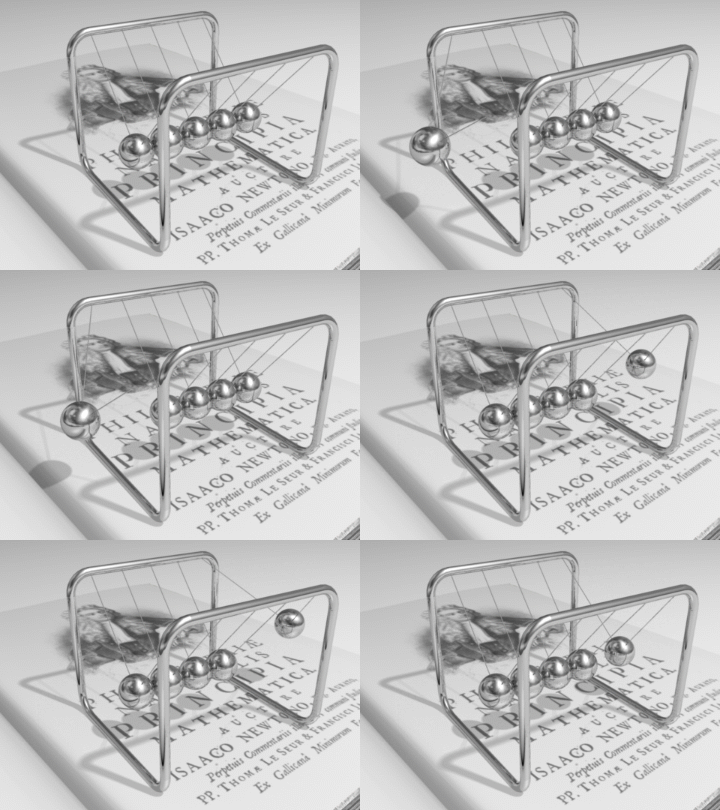
Fear and hesitation go hand in hand. They hold you back, creating a slow motion to your progress (see above) and sometimes no progress at all. The trick is to separate the two, to recognize that you needn’t wait until you are free of fear in order to act. Indeed, if that were the case, most of the people whom we consider brave would still be waiting for the moment of bold action that earned them the appellation “hero.”

Years ago I heard a panel discussion on the subject of Wagner’s opera cycle The Ring of the Nibelung that actually touched on the issue of courage and decisive action. The experts focused on the character Siegfried, who is described as someone who has never known an instant of fear in his life. Should we therefore consider Siegfried’s fearless behavior to be indicative of heroism and bravery? The panel in question concluded it did not. After all, they reasoned, how can one be a hero without fear to overcome? Only a fool would rush to action without being aware of the attendant dangers. But a brave and courageous man would know the perils facing him and choose to act in any case.

Most of us won’t face dragons or fire, of course, but we still will all have numerous chances to act decisively or to hold back. Here is a trivial, but instructive example from my own life. In college, I was fulfilling a PE requirement by taking fencing. Now, I wasn’t a very good fencer, despite being a reasonably good athlete. And, my heavy academic course load didn’t permit me the luxury of spending time outside of class to practice fencing. Thus, in the first seven matches I had against my classmates, I won only three, a pretty mediocre showing.

Nonetheless, I was competitive enough to want to win more often, so I reasoned that there just might be a way that wouldn’t take time away from my other studies. I realized that I was a relatively tentative fencer, and so I decided to become more aggressive. I set myself the task of getting in the first “touch” as soon as each new match began. The strategy worked. Of the next 17 matches, I won 14. I was almost always able to get a 1 to 0 lead within a few seconds of the start of the competition by catching my adversaries off-guard. Yet, despite my new found success, I was really no better at fencing than I’d been when my record was three wins and four losses. I was simply less hesitant, more aggressive.

I once had a biology professor named Hudson who conducted the “Quiz” portion of his classes in a way to encourage behavior similar to my fencing experience. You were graded on the number of questions you answered correctly and lost points if you answered the interrogatories wrong. Hudson asked the questions aloud and it was a race to get your hand up first and have him call on you to answer. Naturally, you had to make a quick decision as to whether you had the right answer. Very fast indeed. Those who hesitated were, as the saying goes, “lost.”

But how does this all apply to daily life, the life outside of the university. You might say that “normal” life is less competitive than my examples suggest, but is it? To answer that question, ask yourself how often you hesitate to do things, take chances, give public voice to concerns that might engender disapproval, avoid tasks that are difficult or challenging? Do you ask out the beautiful woman, or do you wait until you feel “ready,” only to watch someone else beat your time in getting her attention? Do you, at least sometimes, see a crisis as an opportunity? Or do you hold back, put things off, wait and hope that another or better time for action will come? Sometimes it will, but sometimes it won’t.

If your “default” strategy, your habitual tendency, is to wait, you have a similar problem to those whose standard operating procedure is to act impulsively, without thinking. It may be the case that “fools rush in where angels fear to tread,” but it is also true that you are an equal fool if you forever hold back, hesitate, and watch the moment pass or see someone else “seize the day (carpe diem).”

What I am talking about is fear and the uncertainty that fuels it. When we are fearful and decide not to take action, most of us feel an immediate sense of relief. That relief reinforces our hesitation, while simultaneously depriving us of the opportunity to succeed in the endeavor. Soon enough the relief will pass, but not the self-doubt and lack of personal esteem and confidence that might have been won by an effective action.

The danger in allowing too many chances to pass by is a life of “quiet desperation,” a life on the sidelines, watching others play the game, but not playing it ourselves. And, at the end of life, regret for the opportunities passed and the chances not taken is more likely to be troubling than the failed efforts made. Beware the heartache of the words “what if?” True, acting boldly often fails; but, it also sometimes succeeds.

No wonder, then, that musicians spend relatively little time passively listening to music. They are too busy making it.

Make music of your life, then. Let the trumpet announce (or remind) the world of your presence. Sing your song. And if you cannot, find a therapist who will give you the tools to beat back your fear and help encourage you.

—

The above image is an Animation of Newton’s Cradle created on August 8, 2006 by Demon Deluxe and sourced from Wikimedia Commons.

The Things We All Need to Learn

The things we need to learn wait for us. They are very patient.

I think you know what I mean. At least, you have seen it in others: the angry person who never learns how to control his anger or perhaps isn’t even aware of the need to control it.

Then there is the passive person, who cannot stand up for himself easily, defers to others, and gets taken advantage of pretty routinely. And, despite this, it hasn’t changed over the years.

Some of us choose the wrong friends, lovers, or business associates, making the same mistakes repeatedly. Others continue to use failed methods in raising children. Some of us never face our fears fully (see Albert Brook’s film Defending Your Life for a funny take on this problem). And then there are the people who are impulsive and act without thinking, over and over; or the ones who are sloppy at tasks, not careful enough; or those who are too compulsive, too detail-oriented, trapped by their obsessive attention to small things.

I could go on, but instead, it’s time to ask you a question. What challenges in your life have you yet to master, the ways of thinking or behaving that don’t work for you but which you repeat? Most of us have a pretty easy time spotting the errors in others, but how about your own?

There is an old joke about how we learn:

A man walks down a road and falls into a hole. He doesn’t see it, and it takes some time to get out because it is deep.

The next day, the man walks down the same road and falls into the same hole. He still doesn’t see it, but he might just get out of it more rapidly this time.

The day after, the man walks down the same road, sees the hole, and falls into it anyway.

The following morning, the man walks down the same road, sees the hole, and this time walks around it.

And what does our hero do after the next sunrise? He walks down a different road.

Holes, like unsolved problems, have all the time in the world. They wait for us to recognize them, see the danger they pose, and change our behavior to avoid the danger. As the saying goes, “If you do what you’ve done, you’ll get what you’ve got.” Others have said that one definition of insanity is continuing to use the same failed strategy, all the while expecting different and better results.

How long will you wait to change? Your problems can last a lifetime. They have no train to catch or meetings to attend; they take their time, not troubled by waiting. Or, should I say, they take your time. All of your time.

Do you really want to wait that long?

Making the Same Mistakes Over and Over: How to Learn From Childhood

There are few perfect childhoods out there. Indeed, it’s the nature of childhood to have some tough times. You are small, you don’t know anything, everything has to be learned for the first time. No wonder its a challenge! The adults tower over you and the big kids can belittle you, push you around, and trip you up. Literally.

So what do we do to survive childhood? Well, we figure out some strategies to deal with the problems that we face. For example, if you have an angry parent, you might learn to be sensitive to signs of upset in someone else, know when to keep your head down, try not to ruffle feathers. On the other hand, if you had a parent who only gave you attention when you were helpful and solicitous, doing things like looking after your younger siblings, you could have learned how to take care of others and seen that quality as, perhaps, one of your only virtues.

Often, the solutions that were necessary early in your life don’t work very well in the “older” (which is to say “current”) version of you. Being sensitive to possible anger in friends, lovers, and coworkers could well find you cowering unnecessarily, accepting half-a-loaf because your are afraid that if you speak up, you will get none. Being a care-taker as an adult might get you some initial approval, but it can prove unsatisfying when the person you are with expects that you will do all the caring and give all the help in the relationship, but doesn’t think to give much back to you.

It’s a little bit like this: Imagine that you were born in Alaska, learned to wear heavy clothes and multiple layers. It was a solution that was necessary and one that worked. If you continue to live in Alaska, you will find success if you use the same solution forever. But, should you move to South Florida and operate by the same set of internalized rules, now you will have quite a problem!

Childhood solutions only are useful to adults if you continue to live in circumstances similar to your childhood. But, by definition, most of us live in different circumstances. We are not any longer so small and defenseless, so unworldly and innocent. We now have much more capability to change the world around us. Unfortunately, some of us don’t know it.

Are you doing the same things that you did as a kid, using solutions that haven’t solved anything for a while? Are you suppressing emotions because that  was a good strategy in an uncaring childhood home? Are you still afraid of situations that resemble your early life challenges? Do you still avoid difficulties, never having figured out how to face them?

It’s worth taking an inventory of your early life and, even more importantly, your current life.  Look frankly at what did or didn’t work as a kid (and what does or doesn’t work now), asking yourself whether youthful difficulties produced a way of being that isn’t helpful. If you keep using failed solutions, you will likely continue to experience failure. Most of our problems are patient. They wait for us to recognize them and then to solve them. They can wait a lifetime.

Is that how you want to spend the rest of your life, making the same mistakes, accepting less than what might be possible and good for you? If you are willing to wait in that way, don’t call a therapist; you are too patient and not sufficiently motivated to change. But if you are beginning to be aware of how unsatisfying your way of living is and have the courage to face that fact, do call. That’s what therapists are there for.

To Wait, or to Wait: That is the Question

http://upload.wikimedia.org/wikipedia/commons/thumb/a/a7/Hesitation.jpg/256px-Hesitation.jpg

I was taught a valuable lesson by a bunch of inner-city kids when I was their 20-year-old summer camp counselor. The lesson was about when and whether to take action; and when and whether to do nothing and wait. But let me tell you the story…

The job was in Cambridge, Massachusetts, the home of Harvard and MIT. Although I was attending the U of Illinois, my friend Rich Adelstein was then involved in something called the “MIT Science Camp.” I never really found out what science had to do with it, because it wasn’t much different from any other summer camp, but for a few things having nothing to do with science. First, of course, it was at MIT, one of the world’s premier institutions of higher learning; a place where only the elite young minds already proficient in science were allowed to matriculate. And because of that, it was not an “outdoor” oriented summer camp, although we did do the usual things like playing baseball. But perhaps the most important distinction between this summer camp and most of those you might have heard about or attended, was the fact that it was for underprivileged kids from troubled homes and tough neighborhoods. Most of them were in the 12 to 15-year-old range. Some were shy, some were petty criminals, some were learning disabled, some were angry, and some were lost. But, it was thought that all of them might still benefit from the camp experience.

The counselors were all about my age, and all of them were MIT undergraduates with two exceptions: myself and a Harvard student. The kids were recommended by their schools. The project was funded by money then available as part of the “Great Society” vision of LBJ, otherwise known as President Lyndon Baines Johnson. The camp itself was supervised by a psychiatrist, Dr. Warren Brody. The year was 1967.

Many of the activities of my group of six kids were done in cooperation with another counselor, Geoff Smith. Geoff was a swell fellow, smart and easy to get along with, and we worked well together. We had money for some outings with the boys (all the kids in the camp were male) and even took them on a day trip to Martha’s Vineyard and another excursion to New York City, where we watched the Rockettes in Radio City Music Hall at Rockefeller Center. As I said, we played some baseball and also put on a play under the direction of a Boston College undergraduate theater major, Betty Rose. It was “Twelve Angry Men.” We had just enough players, and these kids were thereby exposed to performance. A fun summer was had by all.

On the day in question Geoff had a morning dentist appointment, so I was in charge of both of our groups. Depending on the day, not all the kids would necessarily be there. I imagine on this particular day, there were probably 10 of them present.

I was walking with the kids through Building 7 when one of the older ones quickly instructed the others to run in different directions. We had come to a four-way intersection, so there were four possible flight paths down which each kid could escape. In a flash they were gone. As I stood at the intersection and looked in each direction not one was to be seen.

Remember, I was 20 years old and in charge of these lives. Their safety was my responsibility. But what was I to do? Even though I was rattled, I was still smart enough to know that any direction I chose would, at best, avail me the possibility of finding only two or three or four kids. For the life of me, I didn’t know what to do, so I did nothing. Not because I thought that was a clever idea, but because I couldn’t think of any good solution.

Perhaps you’ve guessed that I had stumbled upon precisely the right course: inaction. In fact, it was the only solution. If I had started running down any one of the corridors, I’d probably still be running. But because I didn’t, the kids found that the “chase” they’d hoped for hadn’t materialized, and they weren’t having any fun. In the space of 10 minutes they were all back where they started and we proceeded on to our appointed destination.

Sometimes life is like that. If you stop chasing a thing or a person, it stops running away from you. You can drive people away in your pursuit, be it romantic or angry.

Slow down. Be patient. See if you can live with uncertainty. Don’t act impulsively. Wait, wait, wait and see… Take a breath. Action for the sake of action doesn’t make sense. You can actually make things worse. Assertiveness is not always the answer. Sometimes inaction is better — much better — than action.

A lot of things in life, like those kids, are like boomerangs — they come back to you.

At least, they sometimes have for me.

—

The top image is called Hesitation by Alfred Garth Jones, sourced from Wikimedia Commons.

What Children Need From Parents: Part I

A 15-year-old treated by me many years ago is a good example of one of the things that parents need to provide their children.

I’ll call him Ike (not his real name), a slender, silly kid with sandy hair. His family was middle class, hard working, and honest. Unfortunately, Ike lacked the latter two qualities. He was a minor league juvenile delinquent, prone to shop lifting, cutting classes, curfew violations, and occasional drug use. Ike was a poor student thanks to a lack of effort,  an Attention Deficit Hyperactivity Disorder condition that featured notable impulsivity, and the unfortunate fact that he wasn’t very bright. This teenager treated school as  diversion from his major life tasks of having fun and causing trouble. He rarely thought of the long term consequences of his behavior, instead choosing to do whatever felt right in the moment and whatever action seemed likely to produce some immediate payoff, the future be damned. Outpatient therapy had failed to make a dent in any of this, so his parents ultimately brought him in for whatever a psychiatric hospital could do to redirect Ike’s life and get some control over things.

Years ago it was often possible to keep a teenager in the hospital for several weeks or months if he needed it. Insurance policies were different and more generous then. And so, given the total control over someone’s life that a psychiatric adolescent treatment unit provided, you could produce changes in some very rebellious, out of control kids. Ike was like that. Eventually he figured out that the only way to get out of the hospital was to conform his behavior to the required standard.

While his parents participated in family therapy during his hospital stay, they remained uncomfortable with the job of setting limits on Ike. Neither one was very secure or self-confident and Ike fueled that insecurity by his behavior. Both parents were prone to feeling guilty when they punished him because of their own unresolved childhood issues, and Ike knew how to “play” them and get them to back off of threats and attempted punishments. These adults needed their son’s approval and good will too much for his, and their, good. Ike was running the show before his hospitalization. He knew it, they knew it, and his “will” was stronger than their wills were. If he complained and pleaded long enough, one or the other parent would typically break down and give him what he wanted. Despite the fact that family therapy hadn’t succeeded with the parents, Ike ultimately behaved himself in the hospital and had to be discharged even if his parents didn’t seem to have a better handle on how to deal with him in the real world. So, I crossed my fingers and hoped for the best.

As often happens after an adolescent is discharged from a psychiatric hospital, Ike and his folks went through a honeymoon period. But after a couple of months, he resumed his misbehavior and things weren’t much different from the way they had been the moment that Ike had first stepped into the hospital. So it was on the first day of his second stint in confinement (yes, his parents took him back and readmitted him), that I recall having the following conversation with Ike:

GS: “So, Ike, how does it feel to know that you can pretty much do anything you want when you are at home? How does it feel to know that your parents really can’t control you?”

Ike: “Terrific!” (Said with a big smile).

Silence ensued. I was quiet and just sat there with Ike for perhaps 30 seconds. Then, Ike spoke again and surprised me.

Ike: “And scary.”

This was the truth of it. Even Ike, who was one of the least thoughtful and least self aware patients I’ve ever treated, realized that if he could get away with anything he wanted, that wasn’t a good thing. Even Ike knew that if he was driving the bus, the bus was in trouble. Even Ike knew that he needed someone to rein him in, to set a good example, to steer him in the right direction, and to prevent him from doing some of the things he would do impulsively, recklessly, and thoughtlessly.

What then do children need? Parents with the will power, strength, consistency, motivation, intelligence, resilience, and the self confidence to set and stick to limits, take charge, and make sure that the combination of a child’s poor judgment and impulsive or rebellious behavior doesn’t rule the day. Ike was the problem, but without his parents getting a grip on their own lives and finding the strength and confidence to assume the proper role in the home, Ike wasn’t going to get better any time soon. And even though Ike would have and did resist a more assertive, consistent, and confident approach from his parents, he knew that he needed it.

Some children are easy, some more challenging for parents. It is our job in the latter role to figure out what each of our children need and provide it. Not all children are the same and not all of our children need an identical approach from us. Ike would continue to misbehave until his parents figured this out.

The strength that I’m talking about isn’t the only thing that children need from parents, and from time to time I’ll write about some of the other requirements. The good news is that if Ike, at age 15, was able to figure out what he needed, nearly all adults can too. From that point on, good things are possible.