Relationship Warning Signs: Fighting the Last War

http://upload.wikimedia.org/wikipedia/commons/thumb/e/e6/Oscar_Wilde_portrait_by_Napoleon_Sarony_-_albumen.jpg/240px-Oscar_Wilde_portrait_by_Napoleon_Sarony_-_albumen.jpg

Relationship choices are a little bit like the old military saying that generals are always preparing to fight the last war. Military men are apt to focus closely on past mistakes, without realizing the dangers of a new strategy, perhaps inadequate for whatever lies ahead.

In the same way, we try to avoid past relationship mistakes, without being aware our strategy might produce new, unfortunate problems in the future.

Let’s take an example. Suppose your last relationship was with an authoritarian, demanding, insensitive, maybe even somewhat abusive man. Now you want a lover who won’t be like him. Now you want someone who won’t push you around in any sense of the word — a companion less threatening and more accommodating. This might work well – for a while.

But, perhaps gradually, you will notice the same person who gives-in to you is also giving-in to others; not standing up for himself or for you; spending too much time away from you, instead doing favors for his parents or his friends. Perhaps you will conclude he is too passive and, that while he won’t often say “no” to you, you must push him to do the things you want.

Or maybe your last boyfriend wasn’t ambitious and industrious. You had to lend him money or serve as his source of financial support. You got tired of this of course. Now, you only choose to date someone who is hard-working and successful. You pick a workaholic mate and hardly ever see him, and you must do the job of raising the children pretty much on your own, even if the joint bank account is substantial

Or the discarded mate was easy with money and piled up debt. So now you select somebody with a dead-bolt lock on his wallet, cheap in the extreme, frugal to the point of wanting an accounting of every dollar spent by you, and nearly every small purchase the two of you make is treated with the gravity of buying a house.

Or your last companion didn’t pay much attention to you, seemed more interested in being with friends, playing football and computer games. So you target someone who wants to be with you nearly every minute and gets jealous when you even look at another man – a mate who requires an itinerary of your daily activities and seems interested in controlling you more than loving you.

Last but not least, the boring, by-the-book, ever-cautious man who you trade-in for a dashing, spontaneous, risk-taking, unpredictable, funny, charming, devil-may-care partner; later discovering he is reckless, unreliable, and inconsiderate.

The list goes on. The point is, as with so many of life’s offerings, the opposite of what you have is often as bad or worse, only in a different way.

Best to consider all sides of the human mating grab bag and not pick someone at either extreme of most any dimension.

Just like King Midas, who wished for the power to turn everything into gold, sometimes you must be careful about getting too much of what you thought would be a good thing.

Or, as Oscar Wilde said, “there are only two tragedies in life: one is not getting what one wants, and the other is getting it.”

The image above is Oscar Wilde in a photographic portrait by Napolean Sarony from about 1882, sourced from Wikimedia Commons.

Are You Too Emotional?

http://upload.wikimedia.org/wikipedia/commons/thumb/7/7d/Frenchmanweeps1940.jpg/512px-Frenchmanweeps1940.jpg

You’ve heard it before — “You are too emotional!” Surely you heard it as a child, at least once. But, what does it mean? How do you know if it is true? What is the proper place of emotions in any life? And, if you are “too emotional,” what should you do about it?

First let us establish some ground rules. Emotion is necessary. Imagine a life without it. No  love, no families based on that love, no compassion, no empathy, no righteous anger. What would be left? A life of relating to others as objects, like chairs or tables, their only value in utility — the function that they perform; only reason would be left — cold computation of what to do and how to do it. No laughter, no tears, no gratitude, no passion.

If you agree with what I’ve just said, then it is clear that emotion has a place. It binds us to others, plays a part in letting us know when we have been injured, allows for the possibility of good relationships and a joy in living. It also creates an energy that is necessary for self-defense and for the pursuit of causes. Emotion motivates us and permits the creation of communities.

But, when you are called “too emotional,” the accuser usually isn’t referring to love or happiness or even anger. No, usually he means that you are too easily hurt. And, when you are young, especially if you are male, you are encouraged to “be a man” and live by the “athlete’s creed;” if you are hurt, in other words, rub some dirt on the injury and get back into the game. Don’t complain; that is for whiners and wimps and little kids.

Well, if you are an athlete, that is what you have to do. Think too much about the injury and you won’t be able  to perform. Moreover, if you even think too much about your past failure in the game, you won’t have the confidence and focus to be able to succeed in the remainder of the contest. So, under those circumstances, being “emotional” does, indeed, get in the way. Similarly, emotion interferes with necessary behavior in war-time or in other crises that require focus, indifference to pain, and steadfast action.

But how about situations that are less demanding and fraught with danger or competition?

For me at least, emotion has become, for the most part, a friend. I can be moved by the sadness of my patients and those in my life who I love. I do not consider it a weakness. It is simply a part of being the responsive, sensitive person I aspire to be. And I can be moved by music or drama, again to the point of a tear. Life seems richer, warmer, more eventful and worthwhile that way. I don’t feel the need to keep up a brave front, an appearance of having tamed my emotions.

No, I’m not often whipsawed by my feelings, but, in part, that is because I give them their place in things and don’t keep them all bottled-up, looking for a way to burst out of the container that I would otherwise have put them in. And, when it is required, I am prepared to seek solace from a few of those closest to me, just as I give solace to my patients and those I love.

True, being emotionally vulnerable means that you can be injured. But, don’t fool yourself, life will have its way with you whether you are deadened to feelings or not. By killing your emotions, you are probably only succeeding in limiting the fullness of your life while attempting to create an illusion of strength.

Put another way, it is only human to have emotions and best if you are comfortable with that fact almost all the time.

But, beware when the emotions have you!

At the extreme is a condition called Borderline Personality Disorder (BPD).

The Diagnostic and Statistical Manual of Mental Disorders, Fourth Edition, states that “the essential feature of BPD is a pervasive pattern of instability of interpersonal relationships, self-image, and affects (emotions), and marked impulsivity that begins by early adulthood and is present in a variety of contexts.” These folks are, unfortunately prone to “frantic efforts to avoid real or imagined abandonment,” instability, recklessness, suicidal behavior, rapid and intense mood changes, emptiness, and anger. They are the flesh-and-blood definition of what it means to be “too emotional.” And, not surprisingly, they are difficult to treat, although Dialectical Behavior Therapy is a treatment specifically designed to do so, and has demonstrated great promise with this patient group.

For those who are not categorized with this diagnostic label, how do you know if you are too emotional? Here are a few questions you might ask yourself:

1. Do people, not only family members, often tell you that you are too emotional?

2. In an over-heated moment do you tend to make impulsive decisions that you later regret?

3. Do you have many arguments and blow up easily?

4. Do friends and relatives have to handle you with kid gloves?

5. Do your emotions suck the life out of you, change easily and quickly, and generally whip you around?

6. Do you weep easily and often in the absence of major set-backs or great losses (I’m not talking about having a tear come to your eye here, but something more gut-wrenching)?

7. If you are in mid-life, are you no less emotional than you were in your teens? (Most of us become less volatile, more in-balance, over time).

If you’ve answered too many of these in the affirmative, you may want to seek counseling.

A last word or two. Life is challenging. We need to permit ourselves feelings and we need to express them, within limits, and to have a sympathetic soul there to bear witness and listen to us. Balance is the key most of the time. It may help to remember a portion of the “serenity prayer:”

God grant me the serenity

to accept things I cannot change;

courage to change the things I can;

and wisdom to know the difference.

If you do not “know the difference,” often enough and go to emotional extremes over the routine ups and downs of life, if even the small things seem too big, then it might be time to seek professional help. Not to kill your feelings, but to make sure that they don’t destroy your ability to have a good life.

You may find the following post of related interest: Vampires and Buried Feelings: The Therapy of Getting Over Your Hurt.

The above scene, Frenchman Weeps 1940, was used in the 1943 US Army propaganda film Divide and Conquer (Why We Fight #3) directed by Frank Capra. The photo shows “French people staring and waving at remaining troops of the French Army leaving metropolitan France at Toulon Harbour, 1940, to reach the French colonies in Africa where they will be organized as Free French Forces fighting on the Allied side, while France is taken over by the Nazis and the Petain regime collaborating with them.”

Wikimedia Source: Records of the Office of War Information, NARA. *Date: June 14, 1940 *L.

Surely, under the circumstances, this man’s emotions were quite appropriate.
He Who Hesitates is (Sometimes) Lost

http://upload.wikimedia.org/wikipedia/commons/0/02/Newtons_cradle_animation_smooth.gif

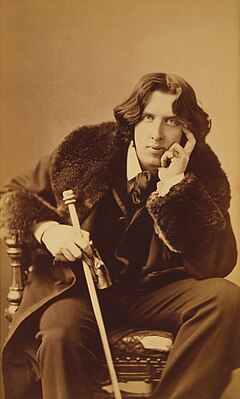
Fear and hesitation go hand in hand. They hold you back, creating a slow motion to your progress (see above) and sometimes no progress at all. The trick is to separate the two, to recognize that you needn’t wait until you are free of fear in order to act. Indeed, if that were the case, most of the people whom we consider brave would still be waiting for the moment of bold action that earned them the appellation “hero.”

Years ago I heard a panel discussion on the subject of Wagner’s opera cycle The Ring of the Nibelung that actually touched on the issue of courage and decisive action. The experts focused on the character Siegfried, who is described as someone who has never known an instant of fear in his life. Should we therefore consider Siegfried’s fearless behavior to be indicative of heroism and bravery? The panel in question concluded it did not. After all, they reasoned, how can one be a hero without fear to overcome? Only a fool would rush to action without being aware of the attendant dangers. But a brave and courageous man would know the perils facing him and choose to act in any case.

Most of us won’t face dragons or fire, of course, but we still will all have numerous chances to act decisively or to hold back. Here is a trivial, but instructive example from my own life. In college, I was fulfilling a PE requirement by taking fencing. Now, I wasn’t a very good fencer, despite being a reasonably good athlete. And, my heavy academic course load didn’t permit me the luxury of spending time outside of class to practice fencing. Thus, in the first seven matches I had against my classmates, I won only three, a pretty mediocre showing.

Nonetheless, I was competitive enough to want to win more often, so I reasoned that there just might be a way that wouldn’t take time away from my other studies. I realized that I was a relatively tentative fencer, and so I decided to become more aggressive. I set myself the task of getting in the first “touch” as soon as each new match began. The strategy worked. Of the next 17 matches, I won 14. I was almost always able to get a 1 to 0 lead within a few seconds of the start of the competition by catching my adversaries off-guard. Yet, despite my new found success, I was really no better at fencing than I’d been when my record was three wins and four losses. I was simply less hesitant, more aggressive.

I once had a biology professor named Hudson who conducted the “Quiz” portion of his classes in a way to encourage behavior similar to my fencing experience. You were graded on the number of questions you answered correctly and lost points if you answered the interrogatories wrong. Hudson asked the questions aloud and it was a race to get your hand up first and have him call on you to answer. Naturally, you had to make a quick decision as to whether you had the right answer. Very fast indeed. Those who hesitated were, as the saying goes, “lost.”

But how does this all apply to daily life, the life outside of the university. You might say that “normal” life is less competitive than my examples suggest, but is it? To answer that question, ask yourself how often you hesitate to do things, take chances, give public voice to concerns that might engender disapproval, avoid tasks that are difficult or challenging? Do you ask out the beautiful woman, or do you wait until you feel “ready,” only to watch someone else beat your time in getting her attention? Do you, at least sometimes, see a crisis as an opportunity? Or do you hold back, put things off, wait and hope that another or better time for action will come? Sometimes it will, but sometimes it won’t.

If your “default” strategy, your habitual tendency, is to wait, you have a similar problem to those whose standard operating procedure is to act impulsively, without thinking. It may be the case that “fools rush in where angels fear to tread,” but it is also true that you are an equal fool if you forever hold back, hesitate, and watch the moment pass or see someone else “seize the day (carpe diem).”

What I am talking about is fear and the uncertainty that fuels it. When we are fearful and decide not to take action, most of us feel an immediate sense of relief. That relief reinforces our hesitation, while simultaneously depriving us of the opportunity to succeed in the endeavor. Soon enough the relief will pass, but not the self-doubt and lack of personal esteem and confidence that might have been won by an effective action.

The danger in allowing too many chances to pass by is a life of “quiet desperation,” a life on the sidelines, watching others play the game, but not playing it ourselves. And, at the end of life, regret for the opportunities passed and the chances not taken is more likely to be troubling than the failed efforts made. Beware the heartache of the words “what if?” True, acting boldly often fails; but, it also sometimes succeeds.

No wonder, then, that musicians spend relatively little time passively listening to music. They are too busy making it.

Make music of your life, then. Let the trumpet announce (or remind) the world of your presence. Sing your song. And if you cannot, find a therapist who will give you the tools to beat back your fear and help encourage you.

The above image is an Animation of Newton’s Cradle created on August 8, 2006 by Demon Deluxe and sourced from Wikimedia Commons.

The Things We All Need to Learn

The things we need to learn wait for us. They are very patient.

I think you know what I mean. At least, you have seen it in others: the angry person who never learns how to control his anger or perhaps isn’t even aware of the need to control it.

Then there is the passive person, who cannot stand up for himself easily, defers to others, and gets taken advantage of pretty routinely. And, despite this, it hasn’t changed over the years.

Some of us choose the wrong friends, lovers, or business associates, making the same mistakes repeatedly. Others continue to use failed methods in raising children. Some of us never face our fears fully (see Albert Brook’s film Defending Your Life for a funny take on this problem). And then there are the people who are impulsive and act without thinking, over and over; or the ones who are sloppy at tasks, not careful enough; or those who are too compulsive, too detail-oriented, trapped by their obsessive attention to small things.

I could go on, but instead, it’s time to ask you a question. What challenges in your life have you yet to master, the ways of thinking or behaving that don’t work for you but which you repeat? Most of us have a pretty easy time spotting the errors in others, but how about your own?

There is an old joke about how we learn:

A man walks down a road and falls into a hole. He doesn’t see it, and it takes some time to get out because it is deep.

The next day, the man walks down the same road and falls into the same hole. He still doesn’t see it, but he might just get out of it more rapidly this time.

The day after, the man walks down the same road, sees the hole, and falls into it anyway.

The following morning, the man walks down the same road, sees the hole, and this time walks around it.

And what does our hero do after the next sunrise? He walks down a different road.

Holes, like unsolved problems, have all the time in the world. They wait for us to recognize them, see the danger they pose, and change our behavior to avoid the danger. As the saying goes, “If you do what you’ve done, you’ll get what you’ve got.” Others have said that one definition of insanity is continuing to use the same failed strategy, all the while expecting different and better results.

How long will you wait to change? Your problems can last a lifetime. They have no train to catch or meetings to attend; they take their time, not troubled by waiting. Or, should I say, they take your time. All of your time.

Do you really want to wait that long?

Self-Defeating Behavior and the Path to Loneliness

http://upload.wikimedia.org/wikipedia/commons/thumb/0/0b/Africa_lonely_kids.jpg/240px-Africa_lonely_kids.jpg

What price would you be willing to pay to feel that you are special? I will tell you a story of one young woman who has paid that price and then some. She is an example of how we sometimes defend our self-image at the cost of our happiness.

The patient of another psychologist, I knew this woman for about 20 years, filling-in for her therapist when he was on vacation. Gloria (not her real name) had a tragic early life. She was victimized by her parents’ verbal and physical abuse and neglect, and became an easy target for schoolmates. Gloria was unlucky, too, in that she was born with slightly less than average intelligence. Making things even worse, her body was naturally graceless and her facial features were less than attractive. But, Gloria could be sweet and socially engaging, willing and able to approach strangers and make conversation despite a long history of rejection.

Even with all her disadvantages and misfortunes, Gloria, now a middle-aged woman, might still be able to have a good and pleasing social life except for one thing: she believes that she is the world’s unluckiest person, the record-setter for having received the greatest misfortune in the history of the planet. Moreover, she feels compelled to report her tale of woe to those people she begins to get to know, very early in her relationship to them. This has the predictable result — they shy away from her, leaving her feeling rejected once more, and adding to her claim that she has been the most ill-treated human in recorded history.

I am not being facetious here; I once asked her to compare herself to various victims of misfortune including those who had been tortured, suffered in natural disasters, lived in concentration camps, or been plagued with disfiguring and painful illnesses. She assured me that her lot in life was far worse than any of them; and, that it was only fair and reasonable to expect people to be sympathetic to her and give her some of the understanding, sympathy, and support she had always been lacking.

Thus, Gloria pursues with a vengeance the comfort and affection that she believes she has coming to her. Her sense of entitlement to this, her insistence that her fellow-man should and must provide this, drives people away from her in her striving for the love she has never had. Of course, her therapist points out to her the self-defeating nature of this strategy, the need first to establish relationships based on something other than the other person’s willingness to listen to her sadness and anger. Gloria doesn’t accept this, unfortunately. The world and the rest of the human race owe her this hearing (so it seems to her), the sooner the better, and it is only fair and just to expect them to deliver what she wants.

Gloria is smart enough to understand that people she hardly knows might not have much patience or interest in accepting her premature self-disclosure. And so, you might well ask, why does she continue to do the same thing over and over with the same bad result? Why doesn’t she try something different?

After much consideration of that question, here is the best answer I can provide. First, Gloria is so desperate and needy, so starved for affection, that it is difficult for her to restrain herself from lunging at the thing she desires whenever she first sights it. But, more importantly, I think the one thing that Gloria values above everything in her life is her self-appointed status as The Most Unfortunate Person in World History.

Now, you might say that you wouldn’t want to hold that particular title. But, think about it. I suspect that this designation gives Gloria the only form of distinction she could every expect to achieve in life. Without it, she is simply a sad, angry, lonely, unattractive, unaccomplished, anonymous person; but with it, she is something special, someone who stands out from the crowd, a noteworthy individual, one in six billion, the leader in her class. And the self-nourishment she receives from licking the wounds attendant to this awful position in life almost certainly provides her with some amount of solace.

I’m sure Gloria would deny the psychological explanation I’ve just provided for her self-defeating behavior and I cannot promise you that it is accurate. But I would ask you this. Do you know people who persist in self-defeating behavior despite all the advice, therapy, or wise counsel offered by friends, relatives, and therapists? Have you sometimes wondered why they do so?

Often the answer isn’t “logical” in that it doesn’t “make sense” intellectually. But, it just might make sense emotionally, as I believe it does for Gloria. If, somewhere deep inside, she doesn’t really believe that she can achieve the life she wants, her behavior suggests that she has found a method, however self-defeating it is, to give herself some of the sense of status and recognition that life hasn’t and probably won’t provide to her.

Gloria was dealt a bad hand in life. Her response to that deal of the cards is instructive. She seems to have chosen a sort of fantasy, a story about herself that compensates her for her misfortune, just as it simultaneously fuels her continued loneliness. But be careful should you wish to dismiss her behavior as “crazy” too quickly. We all do self-defeating things in life.

Before you condemn her, check yourself out in the mirror.

The drawing above is called Africa Lonely Kids by Myfacebook. It is sourced from Wikimedia Commons.

Making the Same Mistakes Over and Over: How to Learn From Childhood

There are few perfect childhoods out there. Indeed, it’s the nature of childhood to have some tough times. You are small, you don’t know anything, everything has to be learned for the first time. No wonder its a challenge! The adults tower over you and the big kids can belittle you, push you around, and trip you up. Literally.

So what do we do to survive childhood? Well, we figure out some strategies to deal with the problems that we face. For example, if you have an angry parent, you might learn to be sensitive to signs of upset in someone else, know when to keep your head down, try not to ruffle feathers. On the other hand, if you had a parent who only gave you attention when you were helpful and solicitous, doing things like looking after your younger siblings, you could have learned how to take care of others and seen that quality as, perhaps, one of your only virtues.

Often, the solutions that were necessary early in your life don’t work very well in the “older” (which is to say “current”) version of you. Being sensitive to possible anger in friends, lovers, and coworkers could well find you cowering unnecessarily, accepting half-a-loaf because your are afraid that if you speak up, you will get none. Being a care-taker as an adult might get you some initial approval, but it can prove unsatisfying when the person you are with expects that you will do all the caring and give all the help in the relationship, but doesn’t think to give much back to you.

It’s a little bit like this: Imagine that you were born in Alaska, learned to wear heavy clothes and multiple layers. It was a solution that was necessary and one that worked. If you continue to live in Alaska, you will find success if you use the same solution forever. But, should you move to South Florida and operate by the same set of internalized rules, now you will have quite a problem!

Childhood solutions only are useful to adults if you continue to live in circumstances similar to your childhood. But, by definition, most of us live in different circumstances. We are not any longer so small and defenseless, so unworldly and innocent. We now have much more capability to change the world around us. Unfortunately, some of us don’t know it.

Are you doing the same things that you did as a kid, using solutions that haven’t solved anything for a while? Are you suppressing emotions because that  was a good strategy in an uncaring childhood home? Are you still afraid of situations that resemble your early life challenges? Do you still avoid difficulties, never having figured out how to face them?

It’s worth taking an inventory of your early life and, even more importantly, your current life.  Look frankly at what did or didn’t work as a kid (and what does or doesn’t work now), asking yourself whether youthful difficulties produced a way of being that isn’t helpful. If you keep using failed solutions, you will likely continue to experience failure. Most of our problems are patient. They wait for us to recognize them and then to solve them. They can wait a lifetime.

Is that how you want to spend the rest of your life, making the same mistakes, accepting less than what might be possible and good for you? If you are willing to wait in that way, don’t call a therapist; you are too patient and not sufficiently motivated to change. But if you are beginning to be aware of how unsatisfying your way of living is and have the courage to face that fact, do call. That’s what therapists are there for.

On the Fort Hood Tragedy

What happened at Fort Hood? Why would a psychiatrist, a physician trained in the treatment of “mental and nervous” disorders, go on a rampage against his own comrades? I suspect we will be reading about the following in the days ahead:

1. Did Major Nidal Malik Hasan, the accused murderer, have proper supervision of his work and his own fitness for duty? Did he suffer from a psychiatric disorder of his own and was he being treated? News accounts suggest that he was terrified in anticipation of an expected deployment to Iraq or Afghanistan.

2. To what extent did he feel marginalized within the Armed Services? He is said to be a man born in the USA, the son of immigrant parents. It is also reported that he had become increasingly devoted to his Muslim faith and might have experienced some harassment from other soldiers because of his religion.

3. Was the Major marginalized in other ways? He is described as a 39-year-old bachelor who had been looking unsuccessfully for a mate.

4. Major Hasan is believed to have treated numerous veterans suffering from PTSD (Post Traumatic Stress Disorder) returning from the Middle East. Is it possible that he suffered a form of vicarious trauma from hearing the disturbing, if not tragic stories of these young people?

5. To what degree have the Armed Services been able to reform an organizational culture that discourages soldiers from showing emotional vulnerability and seeking treatment before they become dysfunctional? It is one thing for the returning wounded veterans to get psychiatric services; it is another for them to believe, early on, that their anxiety, worry, and depression will not be seen as a weakness by their comrades, make it harder to perform their duties in war-time, and cause them to be ridiculed? Did Major Hasan, who apparently had not experienced combat himself, believe that his own inner-turmoil was acceptable and would have received support from his superiors?

6. Did Dr. Hasan have a history of having received treatment prior to his entrance into the military? If Dr. Hasan did seek treatment at any time, what was the result? Is their any routine assessment of the psychological status of both the soldiers and those who are given the task of treating them? Does the military realize that the nature of their work puts virtually all personnel at psychological risk?

7. What security procedures exist in military installations such as Fort Hood?

8. Is the military sensitive to cultural conflicts that are experienced by its uniformed personnel?

Most of us assume that mental health professionals have their own personal lives well under control. Unfortunately, such is not always the case. For more on this subject, please read my recent blog: “When Helping Hurts: Therapists Who Need Therapy.”

Beautiful and Smart, But Unlucky in Love: The Reasons Why

gentlemen_prefer_blondes_movie_trailer_screenshot_16-1

I have treated many beautiful women who reported a history of bad relationships: unfaithful boyfriends or husbands, frank physical or verbal abuse by their partners, or a loss of interest by the men from whom they most wanted that interest. There are lots of reasons for this. Here are a few:

1. If you came from a home where you were neglected, criticized, or abused, your self-worth is likely to be less than what it should be. Recall Marilyn Monroe: famous, beautiful, and talented, but insecure and unlucky in love. A woman with the background I’ve described often looks for approval from someone who unconsciously reminds her of the person who failed to love her as a child. It is as if the unconscious mind is still looking for the thing never achieved before (love or approval), and it only has value if it comes from a similar person. Since the parent in question was neglectful or critical, the chosen substitute will likely be that way as well, providing the woman with another chance to win loving attention. Given her poor choice of a partner, the sought-for affection and approval are no more likely than they were in childhood.

2. Whether male or female, if you moved too often as a youngster, the insecurity of being the new kid on the block is hard to shake. You may also feel the never-ending need to prove yourself. Once again, insecurity can lead to choosing someone less good and kind than you deserve.

3. Are you too needy? Are you dependent upon your boyfriend or husband to make decisions for you? Are you unable to support yourself financially? Can you bear to be without a boyfriend for very long? Do you need regular reassurance you are “the one and only?” This gets old. While that reassurance will temporarily calm your fears, your lover will almost surely tire of it, leaving you insecure if you don’t ask repeatedly for confirmation of his devotion (or him feeling put-upon if you do). As with a number of the concerns mentioned above, therapy is suggested if your self-worth requires an ever-present escort who constantly bolsters you; and a tendency to lose your sense of self in the relationship, forget about your friends when with a romantic partner, and give-in to the new love-interest for fear he will otherwise leave you.

4. Is your beauty (or sex) all you believe you have to offer? There are tons of gorgeous, sexy women out there and, unlike you, they won’t age! (Or at least it will seem so, since, as you get older there will be a new cohort of young females who eventually will look preferable in purely physical terms). Although men can be pretty primitive in their response to the physical characteristics of women, qualities like wit, kindness, intelligence, good humor, and integrity grow in their value to all but the most unenlightened men. As someone once said, “Beauty fades, but stupid is forever.”

5. If a man shows interest in you too early, are you turned off? It’s true that there is an element of gamesmanship in dating and mating, but don’t choose the intrigue of a man who is hard to get and miss the devotion and decency of another.


http://upload.wikimedia.org/wikipedia/commons/thumb/5/5b/Du_Caju_%28miss_Belgian_Beauty_2006%29.jpg/500px-Du_Caju_%28miss_Belgian_Beauty_2006%29.jpg

6. Are you entitled? Do you believe your boyfriend or husband should keep you on a pedestal, shower you with gifts, and buy the best house in just the right neighborhood? Do you value money, status, and material things too much? If you do, a well-grounded man will tire of you or avoid you. One who is less secure or less enlightened may simply become weary of your demands for “more,” and instead seek a woman who is less self-involved and shallow.

7. Are you a good listener? I hope so, because relationships demand this. If you aren’t, your partner will not feel understood. Unless you respect the differences between yourself and your lover (which very likely were initially attractive), you will find the relationship works poorly or not at all.

8. As I’ve said before on my blog, sexual interest and enthusiasm are necessary parts of a good relationship. Abandon them at your own risk. However, this is not to suggest you should have sex simply because your partner wants (or worse) demands it.

9. Do you allow yourself to be demeaned in public by the man you are with? I always ask marital couples seeking therapy what attracted them to each other. One male I recall said, “She ‘shows’ well,” about his beautiful wife. The words and tone were demeaning, in no way a compliment. Indeed, the man might have said the same thing about a show dog or show horse. The lovely lady remained silent. A more self-respecting woman might have walked out of the room.

10. Do you have a drinking or drug problem? Does your male friend? How do you know you don’t? Just because friends and acquaintances drink as much as you doesn’t mean you can avoid the alcohol or drug-driven downside of heartache, arguments, and a bad end to the relationship. Read up on alcohol abuse to get a sense of where you stand: http://www.alcoholscreening.org/

11. Do you wind up with men you feel sorry for? Not a good choice. Do you give in to men who pursue you relentlessly, even though you aren’t enormously attracted to them? Again, this is not destined to lead to a successful match.

12. Do you believe you can change the man you are with? A miraculous transformation is unlikely to occur. Meaningful alternations in any of us take their own time and much painful effort. As the old therapy joke goes, “How many therapists does it take to change a light bulb?” Answer: “One, but the light bulb has to want to be changed.” Take a measure of who you are with while you are still capable of being objective, which means your evaluation needs to be done early in the relationship. Once your heart takes over, rational judgments are either too late or altogether impossible.

13. As a father two two career-minded, married daughters, I applaud independent women who forge careers. But just as a man needs to remember his wife and children require attention, so do women in high-powered careers need to live by the same rules. If you are neglectful of your partner, mentally or physically exhausted by the work you do between 9 and 5, and consumed by issues related to your vocation, the relationship is at risk.

14. Are you too critical? If you experienced or observed a fair amount of criticism growing up, it is easy to become like the person who did this. Indeed, we are often at risk of becoming the thing we hate, or of normalizing the unfortunate characteristics we observed in our parents because we had no other family to compare them to. Compassion, understanding, forgiveness, and acceptance are needed in any good relationship, and in large quantities.

15. Do you expect your boyfriend or husband to fulfill your life and make you happy? No one can really do that for you, although having a companion can be worthwhile and important. But a relationship will not solve all problems or make life perfect. Don’t expect it to. The weight of that expectation is more than most lovers can bear.

16. One final point, and a sad one. If you are smart and beautiful, and especially if you are professionally accomplished, there are men out there who will be intimidated by your competence, intelligence, authority, and attractiveness. As a result, you might have to generate more than the usual amount of effort to find a good match. Unfair, but true.

In closing, I should say that making a good choice of mate, regardless of whether you are a man or a woman, is challenging. But there are a lot of good people out there (albeit fewer men than women), so if your history shows a pattern of failed choices, its best to look in the mirror and ask why. And, if you can’t come up with an answer or change your pattern even though you are aware of repeating the same mistakes, therapy often helps.

This post has generated one very heated and critical comment. You might want to read it and see what you think: Dealing with Online Criticism of that “Bald, Ugly, Old” Man: Me.

The top photo is of Marilyn Monroe, a cropped frame from her 1953 movie, Gentlemen Prefer Blonds. The second image is of Céline Du Caju, Miss Belgian Beauty 2006, taken by Eddy Van 3000 and sourced from Wikimedia Commons.

What Happens in Psychotherapy?

What does psychotherapy do and how does it do that? Good questions, and even some therapists might have a hard time answering them. Of course, some of the goals are obvious: reduce depression, have better relationships, eliminate anxiety, enjoy your life more, and stop worrying. But what are the elements that get you there? I’ll give you a sense of some of the factors that permit those goals to be achieved.

1. Trust. Many people entering treatment have trust issues: they trust too easily or not at all, usually the latter. Trust will start with the relationship between you and the therapist. Simple things: does he listen? Does he understand? Does he seem interested and dedicated? Is he dependable? Does he care? If the answers to these questions are “yes,” then it will be a bit easier to begin to trust others. The experience of a benign relationship with one person can open you to the possibility that this experience can be achieved elsewhere in your life.

2. Validation. Many people coming into psychotherapy having been told that they should “get over it,” that they “shouldn’t feel that way,” that they shouldn’t complain or “whine;” or having been ignored, dismissed, or criticized too often when trying to express themselves. Some folks believe feelings are unimportant; others might state that it is not “masculine” to feel too much, and so forth. As a result, many new patients have so buried their feelings that they are alienated from themselves and don’t know whether it is appropriate to think or feel as they do. A good therapist creates a safe place for talking about such things (trust again), and gives the person a sense that there is value in what they feel and think. Over time, this action, by itself, can help improve self esteem and reduce sadness and alienation.

3. Grieving. If one has not had supportive relationships (with people who are both trustworthy and validating), the sense of loss or absence contributes to sadness, and sometimes to depression. The relationship with the therapist allows you to express the emotions related to loss (both sadness and anger) to someone who listens patiently and shows concern. As you process those feelings of loss, your sadness should gradually diminish. The therapist serves as a witness and again, as someone who validates your pain. Grieving in isolation too often contributes to the feeling of disconnection and alienation from the world. Grieving with someone who cares reconnects you to one of the things that can be good in life: human contact.

4. Learning new things. Any good therapist needs to provide some guidance and tools that enable change. This might come in the form of helping you learn and practice new social skills (including acting these skills out with the therapist), assisting you in changing how you think (cognitive restructuring) that helps you reduce self-defeating thoughts, training in how to be assertive (again with role playing in the therapy session), or meditation.

5. A change in perspective. A good therapist will provide you with new ways of thinking about the world and about your life. Since he can see you from the outside, he is more likely to see you in a way that you cannot see yourself.

6. Facing things, not avoiding things. We all practice avoidance some of the time, and some of the time it is a useful thing. Unfortunately, many of us practice it all too much. We distract ourselves from pain and avoid challenging situations. We can use food, TV, shopping, sex, drugs, alcohol, the internet, and computer games to get us away from whatever it is we can’t handle. We worry about problems rather than coming up with a plan of action and taking them on. We don’t ask out the pretty girl for fear of rejection, or say “no” to people who want to befriend us for the same reason. We stay at a “dead-end” job because of our insecurities. And, of course, unhappiness is the result.

A therapist can assist you in identifying the patterns of avoidance, help you to gradually become able to tolerate anxiety (by use of such things as cognitive restructuring, role playing or meditation) and give you tasks that gradually increase in difficulty so that you reduce avoidance and begin to take action that works.

7. Acceptance. By acceptance I am referring to acceptance of the nature of life and the discomfort that comes with living; acceptance of the fact that being open to life allows you to experience satisfaction and joy, but also opens you to pain; and awareness of the temporary nature of most of that discomfort. The more that you take life on its terms, the less you will be trapped by it.

Remember playing with the Chinese Finger Puzzle as a kid, the cylindrical woven structure made of bamboo, open at both ends? You put your two index fingers into it, but when you pulled hard to get your fingers out, you became more stuck. Only by releasing the tension and moving your fingers toward the center of the device, did it collapse and no longer held you tight. Life is a lot like that to the extent that we must stop engaging in behaviors that only make us more “stuck.”Acceptance allows you to free yourself, at least somewhat, from what is distressing about life.

8. Valued Action. If you are caught in the struggle with your emotions, or focused on avoidance of pain, what is good in life will be hard to achieve. Therapy can help you to think about the life you would like to lead, the life that is consistent with your values, and help to relieve you of the habits that keep you so wound-up that you don’t have time to think about what it is you would really like to do, and what it is that would lead you to a sense of satisfaction and accomplishment. What is your true self? Therapy can help you find out and encourage that person to exist in the world.

The description I’ve given you is based, in part, on my experience in life and training, especially training in such therapeutic approaches as cognitive behavior therapy (CBT), mindfulness-based behavior therapy, Acceptance and Commitment Therapy (ACT), and psychodynamic psychotherapy. Other therapists may have a different view of what is important and how to help you get to the point that your life is more satisfying and less fraught with depression, anxiety, or chronic relationship problems. But here, at least, I hope that I have given you some sense of direction and some reason to be hopeful about the possibility of change in your life.

To Wait, or to Wait: That is the Question

http://upload.wikimedia.org/wikipedia/commons/thumb/a/a7/Hesitation.jpg/256px-Hesitation.jpg

I was taught a valuable lesson by a bunch of inner-city kids when I was their 20-year-old summer camp counselor. The lesson was about when and whether to take action; and when and whether to do nothing and wait. But let me tell you the story…

The job was in Cambridge, Massachusetts, the home of Harvard and MIT. Although I was attending the U of Illinois, my friend Rich Adelstein was then involved in something called the “MIT Science Camp.” I never really found out what science had to do with it, because it wasn’t much different from any other summer camp, but for a few things having nothing to do with science. First, of course, it was at MIT, one of the world’s premier institutions of higher learning; a place where only the elite young minds already proficient in science were allowed to matriculate. And because of that, it was not an “outdoor” oriented summer camp, although we did do the usual things like playing baseball. But perhaps the most important distinction between this summer camp and most of those you might have heard about or attended, was the fact that it was for underprivileged kids from troubled homes and tough neighborhoods. Most of them were in the 12 to 15-year-old range. Some were shy, some were petty criminals, some were learning disabled, some were angry, and some were lost. But, it was thought that all of them might still benefit from the camp experience.

The counselors were all about my age, and all of them were MIT undergraduates with two exceptions: myself and a Harvard student. The kids were recommended by their schools. The project was funded by money then available as part of the “Great Society” vision of LBJ, otherwise known as President Lyndon Baines Johnson. The camp itself was supervised by a psychiatrist, Dr. Warren Brody. The year was 1967.

Many of the activities of my group of six kids were done in cooperation with another counselor, Geoff Smith. Geoff was a swell fellow, smart and easy to get along with, and we worked well together. We had money for some outings with the boys (all the kids in the camp were male) and even took them on a day trip to Martha’s Vineyard and another excursion to New York City, where we watched the Rockettes in Radio City Music Hall at Rockefeller Center. As I said, we played some baseball and also put on a play under the direction of a Boston College undergraduate theater major, Betty Rose. It was “Twelve Angry Men.” We had just enough players, and these kids were thereby exposed to performance. A fun summer was had by all.

On the day in question Geoff had a morning dentist appointment, so I was in charge of both of our groups. Depending on the day, not all the kids would necessarily be there. I imagine on this particular day, there were probably 10 of them present.

I was walking with the kids through Building 7 when one of the older ones quickly instructed the others to run in different directions. We had come to a four-way intersection, so there were four possible flight paths down which each kid could escape. In a flash they were gone. As I stood at the intersection and looked in each direction not one was to be seen.

Remember, I was 20 years old and in charge of these lives. Their safety was my responsibility. But what was I to do? Even though I was rattled, I was still smart enough to know that any direction I chose would, at best, avail me the possibility of finding only two or three or four kids. For the life of me, I didn’t know what to do, so I did nothing. Not because I thought that was a clever idea, but because I couldn’t think of any good solution.

Perhaps you’ve guessed that I had stumbled upon precisely the right course: inaction. In fact, it was the only solution. If I had started running down any one of the corridors, I’d probably still be running. But because I didn’t, the kids found that the “chase” they’d hoped for hadn’t materialized, and they weren’t having any fun. In the space of 10 minutes they were all back where they started and we proceeded on to our appointed destination.

Sometimes life is like that. If you stop chasing a thing or a person, it stops running away from you. You can drive people away in your pursuit, be it romantic or angry.

Slow down. Be patient. See if you can live with uncertainty. Don’t act impulsively. Wait, wait, wait and see… Take a breath. Action for the sake of action doesn’t make sense. You can actually make things worse. Assertiveness is not always the answer. Sometimes inaction is better — much better — than action.

A lot of things in life, like those kids, are like boomerangs — they come back to you.

At least, they sometimes have for me.

The top image is called Hesitation by Alfred Garth Jones, sourced from Wikimedia Commons.