“Hurt-People” Hurt People*

[stef6123.jpg]

People who are in pain can cause others to have pain.

They don’t wish to; it is not intentional.

Instead, it’s sometimes hard for them to do otherwise.

This will sound insensitive, I know, but beware of starting a new serious relationship with someone who is hurting.

Bear with me here; perhaps you will think better of me and this advice once you read on.

Let us start with the image of a drowning man. If you swim out to save him, you are likely to find that, in his flailing, panicked, and desperate attempt to stay above water, he grabs on to you and pulls you under.

Life guards know this. Since it is their job to save the drowning, they approach them cautiously. They have been well-trained to constrain the movements of the struggling swimmer so that he can be saved and his threat to the rescuer is minimized.

Moving back to dry land in our discussion, how might someone who is hurting do harm to a new best friend or lover?

For one thing, the neediness of the suffering individual can establish an unhealthy basis for the relationship from the start. The unwritten “contract” between the two parties will require that one helps and the other receives comfort, with little reciprocal responsibility. This inequity risks eventual “burnout” in the caretaker and possible frustration that the damaged friend is not improving fast enough.

Some who are in the role of a “friend/helper” find that their own needs are perpetually postponed and that their efforts to provide solace will be seen as entitlement and, therefore, unappreciated and taken for granted. Indeed, even if the altruistic partner receives gratitude early in the relationship, such appreciation often fades.

Sometimes, the connection between the two people morphs into a “hostile dependency,” where the person receiving the assistance resents the fact that he cannot function without his comrade.

http://upload.wikimedia.org/wikipedia/commons/thumb/c/c9/US_Navy_100914-N-7293M-042_Lt._j.g._Daniel_Cooper_and_search_and_rescue_swimmer_Seaman_Apprentice_Ryan_Owens_take_turns_rescuing_an_injured_swimmer.jpg/500px-US_Navy_100914-N-7293M-042_Lt._j.g._Daniel_Cooper_and_search_and_rescue_swimmer_Seaman_Apprentice_Ryan_Owens_take_turns_rescuing_an_injured_swimmer.jpg

Once the injured person recovers, the helper might discover he is no longer needed. Healed from his injury, the formerly damaged partner now might be less interested in spending time together. Just as a bird with an injured wing will fly away when it becomes healthy, your friend might also take off to do other things with other people. Rebound romances are notorious for this sort of thing.

Unfortunately, the caretaker group of this world is overpopulated with people who believe that they have substantial personal inadequacies: that they aren’t bright enough, handsome enough, interesting enough, confident enough, pretty enough, or successful enough to win the interest of another emotionally stable and successful person.

Insecure people tend to believe that no psychologically healthy human would want to go near them. They seek those damaged and hurting souls who might, they reason, find someone with limitations tolerable simply because of the quasi-therapeutic assistance he provides.

To the dismay of the self-doubting persons I’ve just described, I’m here to report that this “solution” to reducing the chance of rejection is potentially disastrous.

Choosing a damaged partner because you believe that he will display perpetual gratitude is a recipe for being used and disappointed. Indeed, the accumulation of rejections from those to whom one shows devotion only reduces one’s sense of self and cements the tendency to choose others who are damaged in the belief that one cannot successfully appeal to anybody else.

It’s better to “get better” and become more confident than to select a lover or a group of friends in various stages of dysfunction because you think no one else will have you. Just because someone you know is unhappy or needy, however genuine his need is, doesn’t necessarily make him a good person or someone right for you.

In considering whether what I’ve written applies to your own life, you might ask yourself whether you know many relatively well-adjusted folks and whether your relationships commonly involve large amounts of hand-holding and quasi-therapeutic devotion. If most of your close social contacts take a good deal more than they give, you might be choosing the wrong close friends and lovers.

Can you predict who will be a reciprocal friend, returning to you close to as much as you give to him? Don’t assume that everyone in the world is badly damaged psychologically. It may simply be that everyone you know is struggling, and you are forever putting yourself out for the wrong people, effacing your needs.

http://upload.wikimedia.org/wikipedia/commons/thumb/5/54/Lange-MigrantMother02.jpg/240px-Lange-MigrantMother02.jpg

Yes, there will be many times in a relationship when generosity and a helping hand are healthy, considerate, and essential. Indeed, that kind of concern and responsiveness to our fellow man is part of what is best in the human species and is valued by almost every professional therapist at a personal level.

Charity is a good thing, but surrounding yourself with friends who regularly require your charity is different.

Most relationships should not demand perpetual self-sacrifice, especially at the beginning. Remember that therapists are paid for their services even if this is not the only reason they choose a helping profession.

Even counselors recognize that they cannot assist everyone and have emotional limitations to their capacity to help others.

At night, after the work day is done, the therapist goes home (we hope) to family and friends who do not consistently suck the life out of him. Nor does he allow his patients to do this because, if he does, he will not be able to do good work or do it for very long.

The bottom line is to leave therapy to professionals.

If your social life is social work, you have a problem.

Hurt people, hurt people.

One of the latter could be you.*

*For those who find this essay too harsh, please read the first comment below and my response.

—

The top image above is Oakie Family by Dorothea Lange.

The second image is described as Mediterranean Sea (Sept. 14, 2010): “Lt. j.g. Daniel Cooper and search and rescue (SAR) swimmer Seaman Apprentice Ryan Owens take turns rescuing an injured swimmer during SAR training aboard the amphibious transport dock ship USS Ponce (LPD 15)… (U.S. Navy photo by Mass Communication Specialist 1st Class Nathanael Miller/Released).” The picture was sourced from Wikimedia Commons.

The final image, Migrant Mother, (also by Dorothea Lange) is of Florence Thompson with some of her children. The Library of Congress caption reads: “Destitute pea pickers in California. Mother of seven children. Age thirty-two. Nipomo, California”

The Wikimedia website states that “in the 1930s, the FSA employed several photographers to document the effects of the Great Depression on the population of America. Many photographs can also be seen as propaganda images to support the U.S. government’s policy of distributing support to the worst-affected, poorer areas of the country…”


Why Therapists Want to Talk about Your Childhood

File:VysokePece1.jpg
Why do we have to talk about my childhood? Shouldn’t I be over that? What difference does that make now?

Sometimes, it makes all the difference.

Not everyone requires an in-depth therapeutic look at their childhood. Many people can benefit from short-term treatment to get over a crisis, a recent loss, or current relationship issues.

Others will profit from a cognitive-behavioral approach (CBT) that works to change present day action, thought, and emotion.

But there are times when the past is a dead-weight on one’s life, preventing any kind of lift-off into a more productive, joyous, lofty, airborne, less anxious and guilty way of being; one that is not grounded by a gravity — an invisible force — that seems to pull one back to a repetitive cycle of sadness, regret, and chronic avoidance of challenges.

An example:

Take an intelligent young woman in her 20s — movie-star beautiful — with a quirky sense of humor, and more than average intelligence. Her parents praised only her beauty, but derided everything else about her. From an early time their constant criticism made her worried about displeasing friends; and later on, lovers.

She learned that she could make a dazzling first impression while hiding her anticipation that others would find out what she offered was only skin deep.

This woman’s super-model exterior and surface gaiety belied her belief that there was nothing inside of her that was really valuable. She hid the thoughts and feelings that her parents had always put down, so as to prevent people from discovering her vulnerabilities.

But even when she was successful at “fooling them into thinking” that she was better than she really was, the praise and approval she received only persuaded her that she was a good actress — that beneath the stage makeup she was nothing — just nothing but an empty, worthless shell.

Her anxiety about being “exposed” for the fraud she felt herself to be was combined with a depression that grew out of her failure to win her parents’ love. And, in order to achieve that love, she continued to try to extend herself and prove herself to them, only to be rejected or neglected or taken advantage of once again, thus confirming her sense of worthlessness.

Unfortunately, she was also drawn to potential boyfriends and platonic companions who resembled her parents in their mistreatment of her — as if the only love worth having was one that would allow her to triumph over rejection and win the affection of someone who resembled her parents in their lack of affection for her.

Our heroine succeeded in graduating from college and getting a good job. But none of this filled her up more than temporarily, just as a new purchase of an attractive dress might make her feel good for a few hours or days until she sank back into her default state of sadness and misgiving.

Now imagine that you are her therapist. What would you do?

Tell her that she is beautiful, talented, and accomplished (as evidenced by her academic and vocational success)?

She has already tried to tell herself this, she has already heard this from others, and she still feels bad.

Work with her to improve her social skills?

She is already skilled socially; “a good actress,” as she would characterize it. She is able to be assertive professionally and put-up a good front; until, of course, it involves a personal relationship about which she feels strongly.

Send her to a psychiatrist for anti-depressant or anti-anxiety medication.

Perhaps, but this does not guarantee that she won’t continue to have the same self-doubts and make the same bad relationship choices of people who treat her poorly.

Use Cognitive Behavioral Therapy (CBT) to help her “talk back” to her negative self-attributions (put-downs of herself) and help her to evaluate herself more objectively.

This is not likely to be sufficiently helpful by itself if she continues to favor people who reject her, caught in some version of the old Groucho Marx joke: “I wouldn’t want to be a member of any club that would have me as a member.”

Use CBT to help her gradually stand-up to the people who are treating her badly.

Again, this might be somewhat useful, but will be countered by her belief that there is something wrong with her, and that she deserves the mistreatment she receives. Moreover, it will be hard to be assertive because of her terror that she will lose these same people if she pushes back against them.

What then is left?

In my opinion, this lovely young woman will have to begin to see (really see) and feel what has happened in her life, going back as far as necessary to the mistreatment she received at the hands of her parents: their failure to give more than lip-service to loving her, their cruelty, their inattention when she did something that should have been praised, their criticism, and their tendency to make her feel deficient and guilty.

If she does not see them for who they are, she is likely to continue to believe that it was largely her own inadequacy that caused her to fail in her quest for their love. And, if she continues to place them even on a relatively low pedestal, she will also keep reaching out for love from all the wrong people — the people who remind her of those parents; those who possess the only kind of love she wants because it is unconsciously associated with her parents.

It is not enough that this patient becomes intellectually aware of all that I’ve described.

For therapy of this kind to be successful, she will have to feel it, not just know it.

Feel it intensely.

Why?

Early life is a “hot” moment in virtually any life. Emotions are highly charged in children. We have not yet learned how to regulate those feelings, and so we are very, very vulnerable to injury. Nor do we have any of the defenses or the intellectual understanding of things and of people that will help us later to navigate the choppy waters of life.

And so, in this “hot” and challenging early time in our existence, we begin to formulate solutions to the difficulties of life.

For example, if voicing opinions different from dad’s beliefs results in his condemnation, many kids will learn to keep their mouths shut and internalize their feelings. Meanwhile, they are likely to feel diminished and less good about themselves if there is too little love and too much criticism.

A parent’s opinion counts enormously in the formation of the child’s self-image.

Time passes and the child perhaps has succeeded in reducing, at least a little, the amount of displeasure, anger, and targeted discontent coming from his mom or dad. So the behavior of keeping a low profile and “acting the part” that the parents expect is reinforced, even though depression and self-loathing are below the surface.

Such choices are made by the child unconsciously, but seem to make the best of a bad situation and become a well-ingrained pattern of behavior.

Eventually the child becomes a teen and soon a young adult, away from a good portion of the daily parental disapproval. Now, having established some defenses and skill in handling life, the crackling tension of early childhood is over. Instead of the ever-present hot moments of early life, existence now consists mostly of many more “cool” moments in which the pattern of behavior becomes solidified and habitual.

Think of it this way. A small child is like a piece of metal in a forge or foundry. The searing affective cauldron of early life is like the super-heated nature of a forge, designed to make the metal malleable so that it can be wrought or cast. Unfortunately, in the childhoods I’ve been describing, the little piece of metal that is this tiny life is shaped by the destructive forces of the household into a form that is warped; not fully serviceable.

With the passage of time and the “cooling down” of the emotional intensity of that life, the newly shaped adult — like the forged or cast piece of metal — is no longer malleable. The pattern and outline he or she is now in — the self-opinions and self-defenses that were established in the forge — have taken on a permanent, fixed form. The same ways of living developed while young continue to be used to some extent, even if they are not all that useful; even if conditions have changed.

Obviously, new learning is still possible, but at the deepest level — the level of self concept and self-love, as well as the tendency to be drawn to certain kinds of people when looking for love — alteration of the shape or form or way of living is much harder to achieve.

What then does therapy do to assist with this much-needed alteration?

The therapist and patient work together to re-enter the “forge” of childhood, that time of “hot” moments when personality was fashioned into its current image.

Once back in the foundry, the emotion generated in recollecting that time can make one malleable again: capable of being reshaped and of reshaping oneself into a less self-critical person who believes in his value and no longer seems so drawn to people who are excessively critical.

Therapists who do this kind of “depth” or “psychodynamic” psychotherapy may well encourage the patient to journal — even to write autobiographical essays. They can be assisted in remembering what seem like incidental details of early life such as their school teachers, the friend who sat next to them in third grade, the path they took to walk home, what TV shows they watched, the time of day that mom or dad came home, the summer vacations that were taken, the sounds present in the home, the aroma of cooked foods, and so forth.

Anything that might be useful to jog emotion and memory is fair game, including old photos and report cards, conversations with siblings or childhood friends, and revisiting the neighborhood in which one was raised.

The process can be painfully difficult. Indeed, it must generate significant emotion to reproduce, as far as possible, the forge-like nature of early life — the conditions which permit a realignment of internal interpretations, understanding, and feelings. Grieving over the losses of the past can only come with openness to whatever is felt and discovered in digging up the psychic “can of worms” that sometimes is to be found in one’s past.

And it is the emotion connected to the early trauma that, when finally re-experienced to at least a partial degree, proves cathartic and informative; allows one to realize that “it wasn’t your fault;” at least not to the disqualifying extent that you have come to believe it.

Sometimes there is a “break through” moment, as in the film Good Will Hunting with Matt Damon and Robin Williams. But even without that kind of emotionally generated epiphany, this type of treatment can be transformative.

Of course, not everyone needs to do this. A more cognitive behavioral approach along side this type of exploration may also be helpful in some cases.

But sometimes there is simply no substitute for the hands-in-the-dirt and feet-to-the-fire process that I’ve described.

Take heart.

If your therapist wants to talk to you about your childhood, sometimes it might just be exactly what you need; just exactly the cauterizing instrument that your hurt is waiting for.

Remember — the heat of the forge can be hard to withstand, but upon emerging from it perhaps you will notice that its warmth has healed your lonely heart.

—

The above image is Metallurgist working by the blast furnaces in Třinec Iron and Steel Works courtesy of Třinecké železárny, sourced from Wikimedia Commons.

Denial, BP, and You

Denial isn’t a river in Egypt. It apparently is, however, related to a river of oil in the deep water of the Gulf of Mexico

But there is more to denial than British Petroleum’s failure to consider the possibility that a disaster might happen.

No. Denial is something we all do, at least some of the time.

Still, let us start with BP. Major environmental accidents involving oil have not caused this company and others like it to spend significant money on safety considerations and the prevention of ecological calamity. Clean-up technology remains much the same as it was 40 years ago.

What were the oil executives thinking? Perhaps, that such things wouldn’t happen to them or on their watch. And if it wasn’t going to happen, why reduce profits to take “unnecessary” safety measures. This, despite repeated oil spills over the years.

An example, might illustrate how “denial” such as this is possible, starting at a tender age.

Back when I was a very little boy, I did something similar. I remember walking to Jamieson School on a very foggy day. Indeed, the fog was so thick that one couldn’t see more than perhaps a half-block ahead. Somehow I got it into my head that if I couldn’t see my school, perhaps it no longer existed!

Jamieson School, an enormous building, occupied most of a square city block on Chicago’s North Side.

But maybe, just maybe, it had disappeared!

I didn’t think about the details of how such a thing might have happened overnight. I didn’t imagine what effort it would have taken to disassemble the structure brick-by-brick or consider that I would have heard any explosion that razed it. No, for me, the disappearance of the building would have been a result of magic. Here one minute, gone the next.

Unfortunately, or so I thought, it finally came into view. And with it, another day of school; not the day of fun I had fantasized about on my journey from home. I couldn’t have been more than six or seven at the time.

The point being, that if grown men act like seven-year-olds, we have a problem. And problem is called denial — a failure to reckon with reality — at least at the extreme.

I’m sure you can think of lots of examples. The cigarette-smoker who never thinks about heart disease, emphysema, or lung cancer happening to him; the person texting and driving, who can’t imagine the possibility of an auto accident; the 350 pound man who has two-quarter pounders with cheese, fries, and a diet-cola, and somehow persuades himself that he is being careful about what he is eating because his meal includes a low-calorie soft drink.

More examples: the man who fancies a partner with a history of infidelity, but doesn’t grasp that he could be victim to the same fate as his predecessors in dating her; the morally upright and self-righteous citizen who cheats on his taxes; the parent who persuades himself that his lack of time for his children will be no problem for them; or the family that normalizes and minimizes the drinking of the household’s head, rather than facing his alcoholism.

Not to mention the biggest denial of all — that we are all mortal, all going to die, and that it could happen at any time — not just to the other guy, but to me! Instead, we treat it as unusual and remarkable when someone expires before, say, 70, when it is actually a fairly commonplace event (however, sad it might be). Indeed, I’ve known more than one therapist who avoided thinking about the topic. See Ernest Becker’s Pulitzer Prize winning book The Denial of Death for more on this subject.

In fact, it is our mortality, the very jeopardy of living and the tenuousness of life, that makes denial necessary and healthy for us to do some of the time, even if a number of folks use it altogether too often. Without some amount of denial (coupled with a little courage) it would be hard to get up in the morning and walk out of the house, fearful as we would be of accident or injury on the streets or highways. How could my parents have permitted me to walk to Jamieson School as a little boy unless they put aside the possibility that I might be abducted or harmed? Would you be able to fly to New York City unless you “strapped-on” intellectual blinders to the danger of your plane crashing or another terrorist attack?

At another level, denial simplifies our lives, removing potentially uncomfortable inconsistencies between who we are and who we think we are. It allows us to engage in life and take action without the burden of too much troublesome data that might interfere with pursuing often necessary self-interest.

As I hope you can see, we need some amount of denial just to get through the day. So, while you rage against BP (and they certainly have earned your enmity), do realize that they were simply doing something we all do frequently, but they were using that psychological defense on a much more grand and dangerous scale than most anyone else.

The truth is, no one can look life squarely in the face all the time, lest he be perpetually distressed by his vulnerability to misfortune on the one hand, and an overbearing conscience on the other. Denial is almost as necessary as the air we breathe and the water we drink. Of course, if we deny the dangers of pollution as did BP, we just might foul up that needed air and water, quite literally.

Life is complicated, isn’t it?

—

The image above is of the author, at a time before he had any thoughts about disappearing schools.

Lost and Forgotten Loves

Do you remember, perhaps wistfully, someone who has long been out of your life? The person might be a first love or a romantic interest who came along at a vulnerable moment. That individual provided something timely and touching, perhaps a feeling that you thought you would never have. Usually it was the possibility of love — the possibility of being loved and feeling loveable — something that hadn’t been experienced recently if at all; something that seemed hopelessly out of reach. And so, this person who opened the door to embracing that feeling — to a sense of being worthwhile and valuable — acquired a special value herself. She brought the “music” into your life and might continue to hold a special place in your heart.

Perhaps you felt that the lost love was too good for you — at least so you thought. The interest she had in you seemed a bit astonishing to you. And you were enormously grateful for her interest and the pleasure that she seemed to take in your company. If you were lucky, the relationship lasted long enough to change you for the better. And even though it ended with your heart breaking, you still carry inside of you a sense of gratitude and an enduring soft-spot for this person who you’ve likely not seen for many years.

There are ironies here, at least two I can think of. First, that your gratitude just might be a bit misplaced. You probably thought too little of yourself and too much of the object of your affection. Perhaps you placed her on a pedestal. You might have dismissed what you brought to the relationship: your good nature, your wit, your humor or kindness, or  your own physical attractiveness. And so, whatever affection or interest you experienced that felt to be more than you deserved, might in fact have been just what you were entitled to: you were better than you thought.

Another irony is that, as much as you might still think of this individual from time to time, it is entirely possible that she almost never thinks of you. You did not change her life, even if she changed yours. Your role was more peripheral, less important. To her, you are another relationship in a history of such contacts, not the one that made an enormous difference in her life, as she did in yours. It seems a bit unfair, doesn’t it? Yet that is the way life works.

But I think that the ultimate irony in these unequal pairings is that there is probably someone out there whose life you did alter, to whom you meant everything, and who you now hardly ever think about. In other words, the roles described at the start of this essay are reversed. And you may not even know (or remember) just how profound your impact was on that lover of the moment. For him or for her, that time together with you was much more special, decisive, and profound than it was for you.

It helps to see both sides of this. Both the over-valuing of another and the impact we make on people without really trying — just by showing up in their lives at the right moment and being ourselves. The most dramatic impact outside of a romantic relationship (and indeed one that has more influence) is surely that between a parent and a child, but bosses and friends can sometimes approach the importance of a romantic partner.

Therapists and teachers need to be mindful of this too, in their relationships with patients and students, respectively. Whether you help or you hurt another can be of enormous importance. And, if you’ve done your job especially well or especially poorly, you will probably be recalled long after the relationship has ended.

My high school friends and I take part in something called the Zeolite Scholarship Fund, about which a search of this blog’s archives will reveal more. One of the things we have done in addition to giving scholarships at our alma mater is to honor our old Mather High School teachers. We let them know how much they meant to us, at least those who made an important difference in our lives and are still living. Even decades later and long since they might have recalled any of our names, we remember them and their influence.

I suppose that the most appropriate metaphor for the way in which we unknowingly impact others negatively (and this can apply to teachers who were particularly poor or nasty) is one of walking down the street, being unaware and unconcerned (as we all are) of the very little creatures (bugs) that we might be treading upon. I know that this is an exaggerated comparison to the way that we are affected by others. But the point is that we are all pretty fragile, easily hurt by those who care less about us than we do about them.

Just something to be mindful of in any relationship, whichever end of it you are on. Like throwing a stone into a pool of water, the ripples can go on for a very long time.

Be nice.

gustav-klimt-the-kiss-c-1907-detail

A cropped version of the painting at the top of this page: The Kiss by Gustav Klimt

The Power of “No”

File:No sign.svg

Most people don’t realize how much power they have. Or how easily they give it away.

The key is to be able to say “no.” And to hold to that position without alteration.

I learned how easily I could give it away in graduate school.

A door-to-door salesman rang the bell of my apartment. He had a list of magazines. Did I want to subscribe to any of these?

The simple and direct answer was “no.” Had I said this and held to it steadfastly, his time wouldn’t have been wasted and my money, of which I had very little, would have been saved. Instead, I felt that I had to give him a reason, an excuse. I didn’t of course.

But, I chose to say, “Gee, its too bad you don’t have Sports Illustrated on your list.”

“Oh, but I can get that for you!”

I was sunk. I didn’t really want to buy anything. But I’d given the young man, probably no older than I was, an opening. And now I was committed to purchase a thing I didn’t need.

Well, I suppose I was young, inexperienced, and immature. All true. I allowed myself to be held hostage to my insecurity, a feeling of guilt, a need to explain myself, even though it wasn’t required.

If you must have the approval of others, if you believe that you are duty-bound to give them a reason for your actions, then these situations present you with a problem. So too, if you fear confrontation. If you think someone will only provide approval if you consent to their wishes, then you will leave the interaction as the other’s thrall. In effect, the keys to your life and the certificate of ownership will be the property of someone else.

But if you don’t let them or their opinion of you count for so much — if you can live with their unhappiness and don’t feel the need to convince them of the rightness of your position — you will come out of the interaction still in possession of yourself, as opposed to being the possession of your counterpart.

Remember, in many situations you don’t have to persuade the person across the table of your position. You just have to hold to it.

Short of pulling a weapon on you, there is usually very little that people can do to require you to do something that you don’t want to do.

Unfortunately, there are quite a number of people, especially female, who are able to say “no” in defense of their children, but not as an advocate for themselves; all the more, they are prepared to go on attack if they believe that those same little ones have been ill-served by someone else. And yet, when it comes to defending themselves, these moms have trouble. Put simply, it comes down to the fact that they don’t value themselves very highly and therefore can’t easily assert themselves. But for a person they do value, especially their flesh and blood, they are transformed.

If you can’t yet do it for yourself — say “no,” stand your ground — you’ve got some work to do. Your life will be much more the life that you want it to be, if you prevent others from taking you in their direction against your wishes. Think of all the favors you’ve done that you wanted to avoid, the responsibilities you took on at work that really shouldn’t have been yours to take, and (for some women only) the men whose attention you suffered unnecessarily.

If you can’t prevent these things on your own, psychotherapy can help you to learn to employ the word “no” to great effect. It allows you to examine the reasons for your inability to be assertive and gives you tools (and practice) in how to live in a new way.

The ability to say “no” is extraordinarily empowering.

This is one thing you shouldn’t say “no” to.

—

The above image is by Fibonacci from Wikimedia Commons.

Relationship Warning Signs: Fighting the Last War

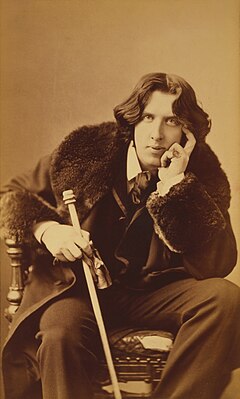
http://upload.wikimedia.org/wikipedia/commons/thumb/e/e6/Oscar_Wilde_portrait_by_Napoleon_Sarony_-_albumen.jpg/240px-Oscar_Wilde_portrait_by_Napoleon_Sarony_-_albumen.jpg

Relationship choices are a little bit like the old military saying that generals are always preparing to fight the last war. Military men are apt to focus closely on past mistakes, without realizing the dangers of a new strategy, perhaps inadequate for whatever lies ahead.

In the same way, we try to avoid past relationship mistakes, without being aware our strategy might produce new, unfortunate problems in the future.

Let’s take an example. Suppose your last relationship was with an authoritarian, demanding, insensitive, maybe even somewhat abusive man. Now you want a lover who won’t be like him. Now you want someone who won’t push you around in any sense of the word — a companion less threatening and more accommodating. This might work well – for a while.

But, perhaps gradually, you will notice the same person who gives-in to you is also giving-in to others; not standing up for himself or for you; spending too much time away from you, instead doing favors for his parents or his friends. Perhaps you will conclude he is too passive and, that while he won’t often say “no” to you, you must push him to do the things you want.

Or maybe your last boyfriend wasn’t ambitious and industrious. You had to lend him money or serve as his source of financial support. You got tired of this of course. Now, you only choose to date someone who is hard-working and successful. You pick a workaholic mate and hardly ever see him, and you must do the job of raising the children pretty much on your own, even if the joint bank account is substantial

Or the discarded mate was easy with money and piled up debt. So now you select somebody with a dead-bolt lock on his wallet, cheap in the extreme, frugal to the point of wanting an accounting of every dollar spent by you, and nearly every small purchase the two of you make is treated with the gravity of buying a house.

Or your last companion didn’t pay much attention to you, seemed more interested in being with friends, playing football and computer games. So you target someone who wants to be with you nearly every minute and gets jealous when you even look at another man – a mate who requires an itinerary of your daily activities and seems interested in controlling you more than loving you.

Last but not least, the boring, by-the-book, ever-cautious man who you trade-in for a dashing, spontaneous, risk-taking, unpredictable, funny, charming, devil-may-care partner; later discovering he is reckless, unreliable, and inconsiderate.

The list goes on. The point is, as with so many of life’s offerings, the opposite of what you have is often as bad or worse, only in a different way.

Best to consider all sides of the human mating grab bag and not pick someone at either extreme of most any dimension.

Just like King Midas, who wished for the power to turn everything into gold, sometimes you must be careful about getting too much of what you thought would be a good thing.

Or, as Oscar Wilde said, “there are only two tragedies in life: one is not getting what one wants, and the other is getting it.”

—

The image above is Oscar Wilde in a photographic portrait by Napolean Sarony from about 1882, sourced from Wikimedia Commons.

Hope For the New Year: Old Words After a Tough Twelve Months

Its been a tough year, but not the first in human history. These old words from the great nineteenth-century Scottish writer Robert Louis Stevenson seem just right:

“Give us grace and strength to forbear and to persevere. Give us courage and gaiety and the quiet mind. Spare us to our friends and soften us to our enemies. Give us strength to encounter that which is to come, that we may be brave in peril, constant in tribulation, temperate in wrath and in all changes of fortune, and down to the gates of death loyal and loving to one another.”

Are You Too Emotional?

http://upload.wikimedia.org/wikipedia/commons/thumb/7/7d/Frenchmanweeps1940.jpg/512px-Frenchmanweeps1940.jpg

You’ve heard it before — “You are too emotional!” Surely you heard it as a child, at least once. But, what does it mean? How do you know if it is true? What is the proper place of emotions in any life? And, if you are “too emotional,” what should you do about it?

First let us establish some ground rules. Emotion is necessary. Imagine a life without it. No  love, no families based on that love, no compassion, no empathy, no righteous anger. What would be left? A life of relating to others as objects, like chairs or tables, their only value in utility — the function that they perform; only reason would be left — cold computation of what to do and how to do it. No laughter, no tears, no gratitude, no passion.

If you agree with what I’ve just said, then it is clear that emotion has a place. It binds us to others, plays a part in letting us know when we have been injured, allows for the possibility of good relationships and a joy in living. It also creates an energy that is necessary for self-defense and for the pursuit of causes. Emotion motivates us and permits the creation of communities.

But, when you are called “too emotional,” the accuser usually isn’t referring to love or happiness or even anger. No, usually he means that you are too easily hurt. And, when you are young, especially if you are male, you are encouraged to “be a man” and live by the “athlete’s creed;” if you are hurt, in other words, rub some dirt on the injury and get back into the game. Don’t complain; that is for whiners and wimps and little kids.

Well, if you are an athlete, that is what you have to do. Think too much about the injury and you won’t be able  to perform. Moreover, if you even think too much about your past failure in the game, you won’t have the confidence and focus to be able to succeed in the remainder of the contest. So, under those circumstances, being “emotional” does, indeed, get in the way. Similarly, emotion interferes with necessary behavior in war-time or in other crises that require focus, indifference to pain, and steadfast action.

But how about situations that are less demanding and fraught with danger or competition?

For me at least, emotion has become, for the most part, a friend. I can be moved by the sadness of my patients and those in my life who I love. I do not consider it a weakness. It is simply a part of being the responsive, sensitive person I aspire to be. And I can be moved by music or drama, again to the point of a tear. Life seems richer, warmer, more eventful and worthwhile that way. I don’t feel the need to keep up a brave front, an appearance of having tamed my emotions.

No, I’m not often whipsawed by my feelings, but, in part, that is because I give them their place in things and don’t keep them all bottled-up, looking for a way to burst out of the container that I would otherwise have put them in. And, when it is required, I am prepared to seek solace from a few of those closest to me, just as I give solace to my patients and those I love.

True, being emotionally vulnerable means that you can be injured. But, don’t fool yourself, life will have its way with you whether you are deadened to feelings or not. By killing your emotions, you are probably only succeeding in limiting the fullness of your life while attempting to create an illusion of strength.

Put another way, it is only human to have emotions and best if you are comfortable with that fact almost all the time.

But, beware when the emotions have you!

At the extreme is a condition called Borderline Personality Disorder (BPD).

The Diagnostic and Statistical Manual of Mental Disorders, Fourth Edition, states that “the essential feature of BPD is a pervasive pattern of instability of interpersonal relationships, self-image, and affects (emotions), and marked impulsivity that begins by early adulthood and is present in a variety of contexts.” These folks are, unfortunately prone to “frantic efforts to avoid real or imagined abandonment,” instability, recklessness, suicidal behavior, rapid and intense mood changes, emptiness, and anger. They are the flesh-and-blood definition of what it means to be “too emotional.” And, not surprisingly, they are difficult to treat, although Dialectical Behavior Therapy is a treatment specifically designed to do so, and has demonstrated great promise with this patient group.

For those who are not categorized with this diagnostic label, how do you know if you are too emotional? Here are a few questions you might ask yourself:

1. Do people, not only family members, often tell you that you are too emotional?

2. In an over-heated moment do you tend to make impulsive decisions that you later regret?

3. Do you have many arguments and blow up easily?

4. Do friends and relatives have to handle you with kid gloves?

5. Do your emotions suck the life out of you, change easily and quickly, and generally whip you around?

6. Do you weep easily and often in the absence of major set-backs or great losses (I’m not talking about having a tear come to your eye here, but something more gut-wrenching)?

7. If you are in mid-life, are you no less emotional than you were in your teens? (Most of us become less volatile, more in-balance, over time).

If you’ve answered too many of these in the affirmative, you may want to seek counseling.

A last word or two. Life is challenging. We need to permit ourselves feelings and we need to express them, within limits, and to have a sympathetic soul there to bear witness and listen to us. Balance is the key most of the time. It may help to remember a portion of the “serenity prayer:”

God grant me the serenity

to accept things I cannot change;

courage to change the things I can;

and wisdom to know the difference.

If you do not “know the difference,” often enough and go to emotional extremes over the routine ups and downs of life, if even the small things seem too big, then it might be time to seek professional help. Not to kill your feelings, but to make sure that they don’t destroy your ability to have a good life.

—

You may find the following post of related interest: Vampires and Buried Feelings: The Therapy of Getting Over Your Hurt.

—

The above scene, Frenchman Weeps 1940, was used in the 1943 US Army propaganda film Divide and Conquer (Why We Fight #3) directed by Frank Capra. The photo shows “French people staring and waving at remaining troops of the French Army leaving metropolitan France at Toulon Harbour, 1940, to reach the French colonies in Africa where they will be organized as Free French Forces fighting on the Allied side, while France is taken over by the Nazis and the Petain regime collaborating with them.”

Wikimedia Source: Records of the Office of War Information, NARA. *Date: June 14, 1940 *L.

Surely, under the circumstances, this man’s emotions were quite appropriate.

He Who Hesitates is (Sometimes) Lost

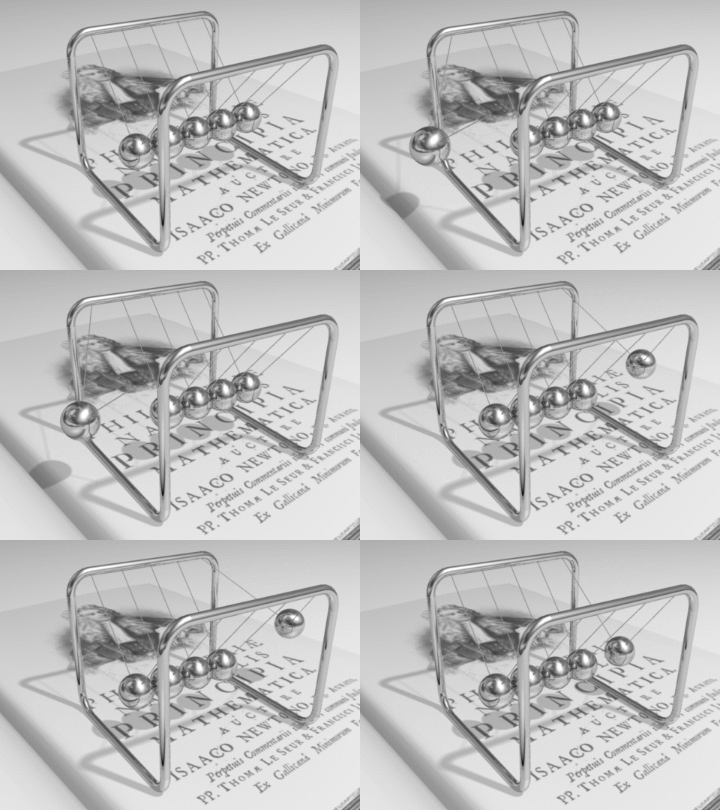
http://upload.wikimedia.org/wikipedia/commons/0/02/Newtons_cradle_animation_smooth.gif

Fear and hesitation go hand in hand. They hold you back, creating a slow motion to your progress (see above) and sometimes no progress at all. The trick is to separate the two, to recognize that you needn’t wait until you are free of fear in order to act. Indeed, if that were the case, most of the people whom we consider brave would still be waiting for the moment of bold action that earned them the appellation “hero.”

Years ago I heard a panel discussion on the subject of Wagner’s opera cycle The Ring of the Nibelung that actually touched on the issue of courage and decisive action. The experts focused on the character Siegfried, who is described as someone who has never known an instant of fear in his life. Should we therefore consider Siegfried’s fearless behavior to be indicative of heroism and bravery? The panel in question concluded it did not. After all, they reasoned, how can one be a hero without fear to overcome? Only a fool would rush to action without being aware of the attendant dangers. But a brave and courageous man would know the perils facing him and choose to act in any case.

Most of us won’t face dragons or fire, of course, but we still will all have numerous chances to act decisively or to hold back. Here is a trivial, but instructive example from my own life. In college, I was fulfilling a PE requirement by taking fencing. Now, I wasn’t a very good fencer, despite being a reasonably good athlete. And, my heavy academic course load didn’t permit me the luxury of spending time outside of class to practice fencing. Thus, in the first seven matches I had against my classmates, I won only three, a pretty mediocre showing.

Nonetheless, I was competitive enough to want to win more often, so I reasoned that there just might be a way that wouldn’t take time away from my other studies. I realized that I was a relatively tentative fencer, and so I decided to become more aggressive. I set myself the task of getting in the first “touch” as soon as each new match began. The strategy worked. Of the next 17 matches, I won 14. I was almost always able to get a 1 to 0 lead within a few seconds of the start of the competition by catching my adversaries off-guard. Yet, despite my new found success, I was really no better at fencing than I’d been when my record was three wins and four losses. I was simply less hesitant, more aggressive.

I once had a biology professor named Hudson who conducted the “Quiz” portion of his classes in a way to encourage behavior similar to my fencing experience. You were graded on the number of questions you answered correctly and lost points if you answered the interrogatories wrong. Hudson asked the questions aloud and it was a race to get your hand up first and have him call on you to answer. Naturally, you had to make a quick decision as to whether you had the right answer. Very fast indeed. Those who hesitated were, as the saying goes, “lost.”

But how does this all apply to daily life, the life outside of the university. You might say that “normal” life is less competitive than my examples suggest, but is it? To answer that question, ask yourself how often you hesitate to do things, take chances, give public voice to concerns that might engender disapproval, avoid tasks that are difficult or challenging? Do you ask out the beautiful woman, or do you wait until you feel “ready,” only to watch someone else beat your time in getting her attention? Do you, at least sometimes, see a crisis as an opportunity? Or do you hold back, put things off, wait and hope that another or better time for action will come? Sometimes it will, but sometimes it won’t.

If your “default” strategy, your habitual tendency, is to wait, you have a similar problem to those whose standard operating procedure is to act impulsively, without thinking. It may be the case that “fools rush in where angels fear to tread,” but it is also true that you are an equal fool if you forever hold back, hesitate, and watch the moment pass or see someone else “seize the day (carpe diem).”

What I am talking about is fear and the uncertainty that fuels it. When we are fearful and decide not to take action, most of us feel an immediate sense of relief. That relief reinforces our hesitation, while simultaneously depriving us of the opportunity to succeed in the endeavor. Soon enough the relief will pass, but not the self-doubt and lack of personal esteem and confidence that might have been won by an effective action.

The danger in allowing too many chances to pass by is a life of “quiet desperation,” a life on the sidelines, watching others play the game, but not playing it ourselves. And, at the end of life, regret for the opportunities passed and the chances not taken is more likely to be troubling than the failed efforts made. Beware the heartache of the words “what if?” True, acting boldly often fails; but, it also sometimes succeeds.

No wonder, then, that musicians spend relatively little time passively listening to music. They are too busy making it.

Make music of your life, then. Let the trumpet announce (or remind) the world of your presence. Sing your song. And if you cannot, find a therapist who will give you the tools to beat back your fear and help encourage you.

—

The above image is an Animation of Newton’s Cradle created on August 8, 2006 by Demon Deluxe and sourced from Wikimedia Commons.

Making the Same Mistakes Over and Over: How to Learn From Childhood

There are few perfect childhoods out there. Indeed, it’s the nature of childhood to have some tough times. You are small, you don’t know anything, everything has to be learned for the first time. No wonder its a challenge! The adults tower over you and the big kids can belittle you, push you around, and trip you up. Literally.

So what do we do to survive childhood? Well, we figure out some strategies to deal with the problems that we face. For example, if you have an angry parent, you might learn to be sensitive to signs of upset in someone else, know when to keep your head down, try not to ruffle feathers. On the other hand, if you had a parent who only gave you attention when you were helpful and solicitous, doing things like looking after your younger siblings, you could have learned how to take care of others and seen that quality as, perhaps, one of your only virtues.

Often, the solutions that were necessary early in your life don’t work very well in the “older” (which is to say “current”) version of you. Being sensitive to possible anger in friends, lovers, and coworkers could well find you cowering unnecessarily, accepting half-a-loaf because your are afraid that if you speak up, you will get none. Being a care-taker as an adult might get you some initial approval, but it can prove unsatisfying when the person you are with expects that you will do all the caring and give all the help in the relationship, but doesn’t think to give much back to you.

It’s a little bit like this: Imagine that you were born in Alaska, learned to wear heavy clothes and multiple layers. It was a solution that was necessary and one that worked. If you continue to live in Alaska, you will find success if you use the same solution forever. But, should you move to South Florida and operate by the same set of internalized rules, now you will have quite a problem!

Childhood solutions only are useful to adults if you continue to live in circumstances similar to your childhood. But, by definition, most of us live in different circumstances. We are not any longer so small and defenseless, so unworldly and innocent. We now have much more capability to change the world around us. Unfortunately, some of us don’t know it.

Are you doing the same things that you did as a kid, using solutions that haven’t solved anything for a while? Are you suppressing emotions because that  was a good strategy in an uncaring childhood home? Are you still afraid of situations that resemble your early life challenges? Do you still avoid difficulties, never having figured out how to face them?

It’s worth taking an inventory of your early life and, even more importantly, your current life.  Look frankly at what did or didn’t work as a kid (and what does or doesn’t work now), asking yourself whether youthful difficulties produced a way of being that isn’t helpful. If you keep using failed solutions, you will likely continue to experience failure. Most of our problems are patient. They wait for us to recognize them and then to solve them. They can wait a lifetime.

Is that how you want to spend the rest of your life, making the same mistakes, accepting less than what might be possible and good for you? If you are willing to wait in that way, don’t call a therapist; you are too patient and not sufficiently motivated to change. But if you are beginning to be aware of how unsatisfying your way of living is and have the courage to face that fact, do call. That’s what therapists are there for.